- Company Articles
- Products and Technology
- Product knowledge
- Lean Pipe Fixed Clamps in Electronic Manufacturing: Precision & Safety

Lean Pipe Fixed Clamps in Electronic Manufacturing: Precision & Safety
Related Product
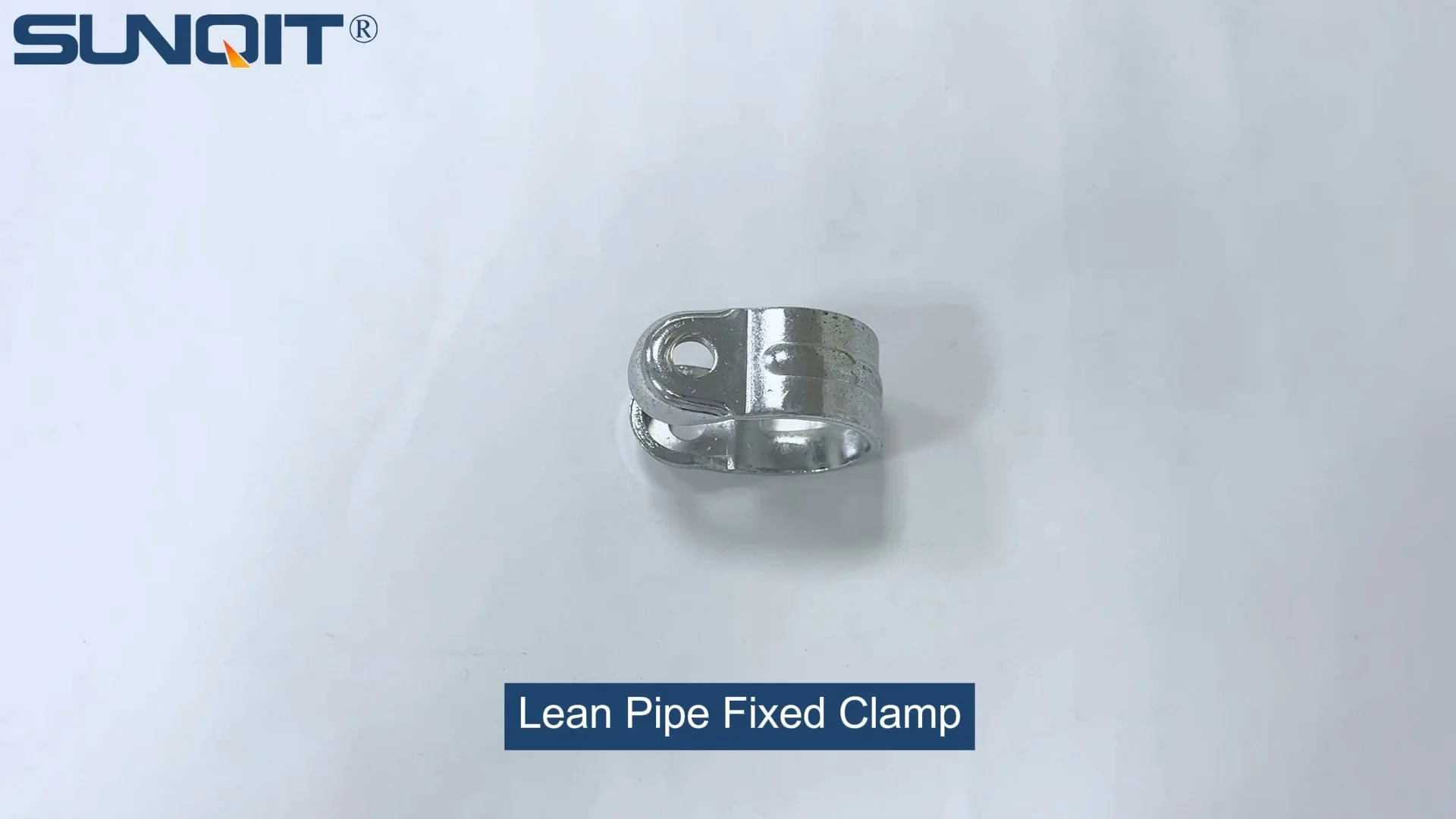
Lean Pipe Fixed Clamp
Lean pipe fixed clamp is used for pipe connector fixing the correct position during workbench flow rack hand trolley assemble work.
Walk into any electronic manufacturing facility, and you'll feel it immediately—the hum of purpose. Circuit boards glide along conveyor belts, robotic arms dance with millimeter precision, and workers in static-resistant gear huddle over workbenches, assembling components smaller than a grain of rice. In this world, precision isn't just a goal; it's the oxygen that keeps production alive . A misaligned resistor here, a loose cable there, and suddenly, hundreds of dollars (or more) in products are rendered useless. And then there's safety—electrostatic discharge (ESD) lurking like a silent saboteur, ready to fry sensitive microchips with a single spark. It's a high-stakes environment where the smallest details matter most. That's where lean pipe fixed clamps come in. These unassuming little tools might not grab headlines, but they're the unsung heroes holding it all together.
What Are Lean Pipe Fixed Clamps, Anyway?
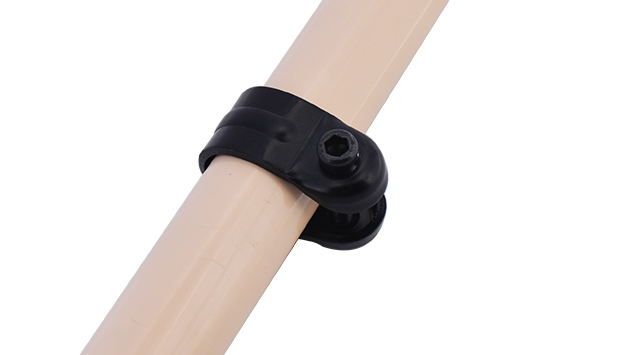
Let's start with the basics. Lean pipe fixed clamps are the connective tissue of lean manufacturing systems. Picture this: you've got a network of metal or aluminum pipes (lean pipes) forming the skeleton of your production line—think workbenches, material racks, or roller tracks. These pipes need to stay put, aligned exactly where you need them, no matter how much vibration, weight, or daily wear they endure. That's the job of the fixed clamp. It's a small, often C-shaped or U-shaped device that wraps around two pipes (or a pipe and a joint) and tightens down, locking them into position with unwavering grip.
But they're not one-size-fits-all. Some are made of hardened steel for heavy-duty applications, others of lightweight aluminum for flexibility. You'll find them with rubberized liners to dampen vibration, or coated in conductive materials to channel static away from sensitive electronics. At their core, though, they all share a simple mission: to eliminate movement where movement shouldn't be . And in electronic manufacturing, where even a millimeter of shift can throw off a PCB assembly, that mission is critical.
Precision: The Hidden Cost of "Good Enough"
Let's talk about precision first—because in electronics, "close enough" is never enough. Imagine you're assembling a smartphone motherboard. The CPU, GPU, and memory chips are tiny, with pins spaced just 0.5mm apart. If the workbench surface vibrates even slightly, or the component holder shifts mid-assembly, those pins won't align with the circuit board's sockets. The result? A dead motherboard, and a production line that grinds to a halt while technicians troubleshoot the issue. Now multiply that by hundreds of boards per day, and you're looking at lost time, wasted materials, and frustrated teams.
This is where lean pipe fixed clamps shine. By securing the frame of the workbench (often built from aluminum profiles or lean pipes), they eliminate that unwanted movement. Think of it like a photographer's tripod: without the legs locked tight, the camera shakes, and the photo blurs. With the clamps locked, the workbench becomes a rock-solid platform, so even the steadiest hand (or the most precise robot) can do its job without interference. And it's not just workbenches—roller tracks that feed components to the assembly line rely on clamps to keep their rails aligned. If a roller track sags or shifts, components might jam, or worse, slide off the track entirely. A few well-placed clamps ensure the track stays level, so parts glide smoothly, one after another, exactly where they need to be.
But precision isn't just about stability—it's about consistency. In high-volume manufacturing, every workbench, every material rack, every station needs to be identical. If Operator A's workbench is 2 degrees off-kilter compared to Operator B's, their assembly quality will vary, leading to inconsistent product performance. Lean pipe fixed clamps solve this by making setup repeatable. Once you've dialed in the perfect angle or height for a pipe, you tighten the clamp, and that setting is locked in. No more "eyeballing it" or relying on loose joints that drift over time. It's precision you can replicate across the entire factory floor, shift after shift, day after day.
Safety: More Than Just Avoiding Accidents
In electronic manufacturing, safety has two faces: protecting people, and protecting products. Let's start with the latter, because ESD is a silent killer. Static electricity is everywhere—generated by workers moving, plastic packaging, even the air itself. When that static discharges onto a microchip, it can burn tiny holes in its circuits, rendering it nonfunctional. The worst part? You might not even know it happened until the product fails a final test (or worse, reaches the customer). That's why ESD workstations are non-negotiable, and lean pipe fixed clamps play a quiet but crucial role here.
Many clamps are made with conductive materials or coated in anti-static compounds. When they're used to build an ESD workstation , they don't just hold the pipes together—they create a path for static to flow safely to the ground. Imagine a workstation frame built with aluminum lean pipes, connected by conductive clamps. Any static charge that builds up on the workbench surface (from a worker's wrist strap, or a component being placed down) travels through the pipes, through the clamps, and into the facility's grounding system. No spark, no damage, no lost products. It's a simple solution, but one that saves manufacturers thousands (if not millions) in ESD-related losses.
Then there's the human side of safety. A loose pipe on a material rack could collapse under the weight of heavy components, injuring a worker. A wobbly workbench might cause a technician to strain their back leaning over an unstable surface. Lean pipe fixed clamps prevent these scenarios by ensuring structural integrity. When a clamp is properly tightened, it turns a flimsy frame into a rigid, load-bearing structure. Workers can trust that the racks won't tip, the workbenches won't sway, and the tools they rely on won't suddenly give way. In a industry where focus is everything, that peace of mind is priceless.
| Clamp Type | Material | Best For | Key Benefit | ESD-Safe? |
|---|---|---|---|---|
| Steel Fixed Clamp | Hardened Steel | Heavy workbenches, material racks | Maximum load capacity (up to 500kg) | No (unless coated) |
| Aluminum Fixed Clamp | Anodized Aluminum | Lightweight roller tracks, mobile trolleys | Corrosion-resistant, easy to adjust | Yes (with conductive coating) |
| Rubber-Lined Clamp | Steel with Rubber insert | Vibration-prone areas (e.g., near machinery) | Dampens vibration, prevents pipe damage | Depends on rubber type |
| Conductive Fixed Clamp | Steel/Aluminum with Conductive Coating | ESD workstations, PCB assembly lines | Channels static to ground, protects electronics | Yes |

Playing Well with Others: Clamps and the Lean Ecosystem
Lean pipe fixed clamps don't work alone. They're part of a larger ecosystem of components that make lean manufacturing tick—aluminum profiles, roller tracks, ESD workstations, and more. Let's break down how they integrate with these pieces to create a seamless production line.
Aluminum Profiles: The Perfect Pair
Aluminum profiles are the backbone of modern lean systems. These extruded aluminum beams have T-slots running along their length, making it easy to attach accessories like shelves, lights, or tool holders. But to build a frame with aluminum profiles, you need to connect them at corners, T-junctions, or straight lines. Enter the fixed clamp. Unlike traditional bolts (which can loosen over time), a clamp wraps around the profile and the connecting pipe, creating a joint that stays tight even with repeated use. This is especially useful in modular systems, where you might need to reconfigure the line as production needs change. Loosen the clamps, adjust the profiles, retighten—and you're good to go. No drilling, no welding, no downtime.
Roller Tracks: Keeping the Flow Smooth
Roller tracks are the arteries of the production line, carrying components from one station to the next. But for parts to flow smoothly, the track needs to be perfectly level and aligned. Even a slight dip or bend can cause jams or slowdowns. That's where clamps come in. They secure the roller track's frame to the floor or workbench, ensuring it doesn't sag under the weight of moving parts. For example, a 10-foot roller track might have clamps every 2 feet, anchoring it to a base frame of aluminum lean pipes. This prevents the track from warping over time, so PCBs or component trays glide along without a hitch. It's a small detail, but it keeps the entire line moving at peak efficiency.
ESD Workstations: The Final Line of Defense
An ESD workstation isn't just a table—it's a controlled environment designed to protect sensitive electronics from static damage. It includes conductive work surfaces, wrist straps, ionizers, and grounded shelving. And at the heart of it all? A frame built with lean pipes and fixed clamps. The clamps ensure the frame is rigid (so the work surface doesn't flex) and that every part of the workstation is electrically connected (so static can't build up). For instance, the legs of the workstation might be aluminum pipes connected by conductive clamps, which are then bolted to a grounded floor plate. The work surface, mounted to the frame, is thus grounded through the clamps, creating a continuous path for static to escape. Without those clamps, the frame might shift, breaking the ground connection—and suddenly, the workstation is no longer ESD-safe. It's a reminder that even the most advanced safety systems rely on the basics.

Real-World Impact: A Day in the Life
Let's put this into context with a story. Meet Maria, a production manager at a mid-sized electronics plant that assembles IoT sensors. A few months ago, her team was struggling with a frustrating problem: about 5% of their sensors were failing final testing, and the root cause was a mystery. The PCBs looked perfect, the components were all within spec—but when technicians probed deeper, they found tiny solder bridges between pins on the microcontroller. After weeks of troubleshooting, they traced it back to the assembly workbench. The bench, built from old steel pipes with loose, worn-out clamps, was vibrating slightly every time the nearby conveyor belt started up. That vibration was causing the soldering iron to wobble, leaving those tiny bridges. Maria's solution? She replaced the old clamps with new steel fixed clamps, tightened them down, and added rubber-lined clamps at the base to dampen conveyor vibrations. The result? The failure rate dropped to 0.5% overnight. "We were chasing ghosts for weeks," she recalls. "Turns out, it was just a few loose clamps. Who knew something so small could make such a big difference?"
Or take Raj, an ESD specialist at a semiconductor factory. A year ago, his team had a near-disaster: a batch of 200 microprocessors was ruined by static discharge during packaging. The culprit? A material rack that had been reconfigured without rechecking the ground connection. The rack's frame, held together by non-conductive plastic clamps, had become electrically isolated from the grounding system. Static built up on the trays of processors, and when a worker touched them, it discharged—frying the chips. Raj's fix? He swapped out the plastic clamps for conductive aluminum fixed clamps, ensuring the entire rack was grounded. Since then, they've had zero ESD-related losses. "Clamps aren't just about holding things together," he says. "They're about keeping the entire system safe."
The Bottom Line: Why Manufacturers Can't Afford to Skimp
At the end of the day, lean pipe fixed clamps are an investment in reliability. They might cost just a few dollars each, but their impact ripples through the entire production process. Think about it: fewer defects mean less scrap, less rework, and higher customer satisfaction. Reduced downtime means more products out the door, and more revenue in the bank. Improved safety means happier, more productive workers, and fewer costly accidents. For manufacturers operating on tight margins, these benefits add up fast.
And let's not forget flexibility. Lean manufacturing is all about adapting to change—whether it's a new product design, a shift in demand, or a need to scale production up (or down). Fixed clamps make reconfiguration easy. Need to shorten a workbench? Loosen the clamps, adjust the pipes, retighten. Want to add a new roller track to the line? Clamp it to the existing frame. This agility is priceless in an industry where change is constant.
Looking Ahead: The Future of Lean Clamps
As electronic manufacturing evolves, so too will the tools that support it. We're already seeing innovations in clamp design—like smart clamps with built-in sensors that alert maintenance teams when they start to loosen (via IoT connectivity). Imagine a clamp that sends a notification to your phone if vibration levels exceed a threshold, or if the ground connection is lost. It's predictive maintenance at its finest, preventing issues before they cause downtime.
There's also a push toward more sustainable materials. Manufacturers are experimenting with recycled steel and aluminum clamps, or biodegradable coatings, to reduce their environmental footprint. And as miniaturization continues (think: even smaller chips for AI or quantum computing), we'll see clamps designed for even tighter tolerances—holding pipes in place with micrometer-level precision.
Conclusion: The Quiet Power of Getting It Right
In the grand scheme of electronic manufacturing, lean pipe fixed clamps might seem insignificant. They're not flashy like robotic arms, or as high-tech as AI-driven quality control systems. But they're the glue that holds the operation together—literally and figuratively. They ensure precision when a fraction of a millimeter matters, safety when a single spark could ruin everything, and reliability when the line can't afford to stop.
So the next time you pick up a smartphone, or use a laptop, or turn on a smart home device, take a moment to appreciate the unseen heroes. Somewhere, in a factory far away, a lean pipe fixed clamp did its job—quietly, reliably, and without fanfare—so that device could come to life. In electronic manufacturing, the little things aren't just important. They're everything.