- Company Articles
- Products and Technology
- Product knowledge
- Lean Pipe Fixed Clamps in Mechanical Manufacturing: Heavy-Duty Applications

Lean Pipe Fixed Clamps in Mechanical Manufacturing: Heavy-Duty Applications
Related Product
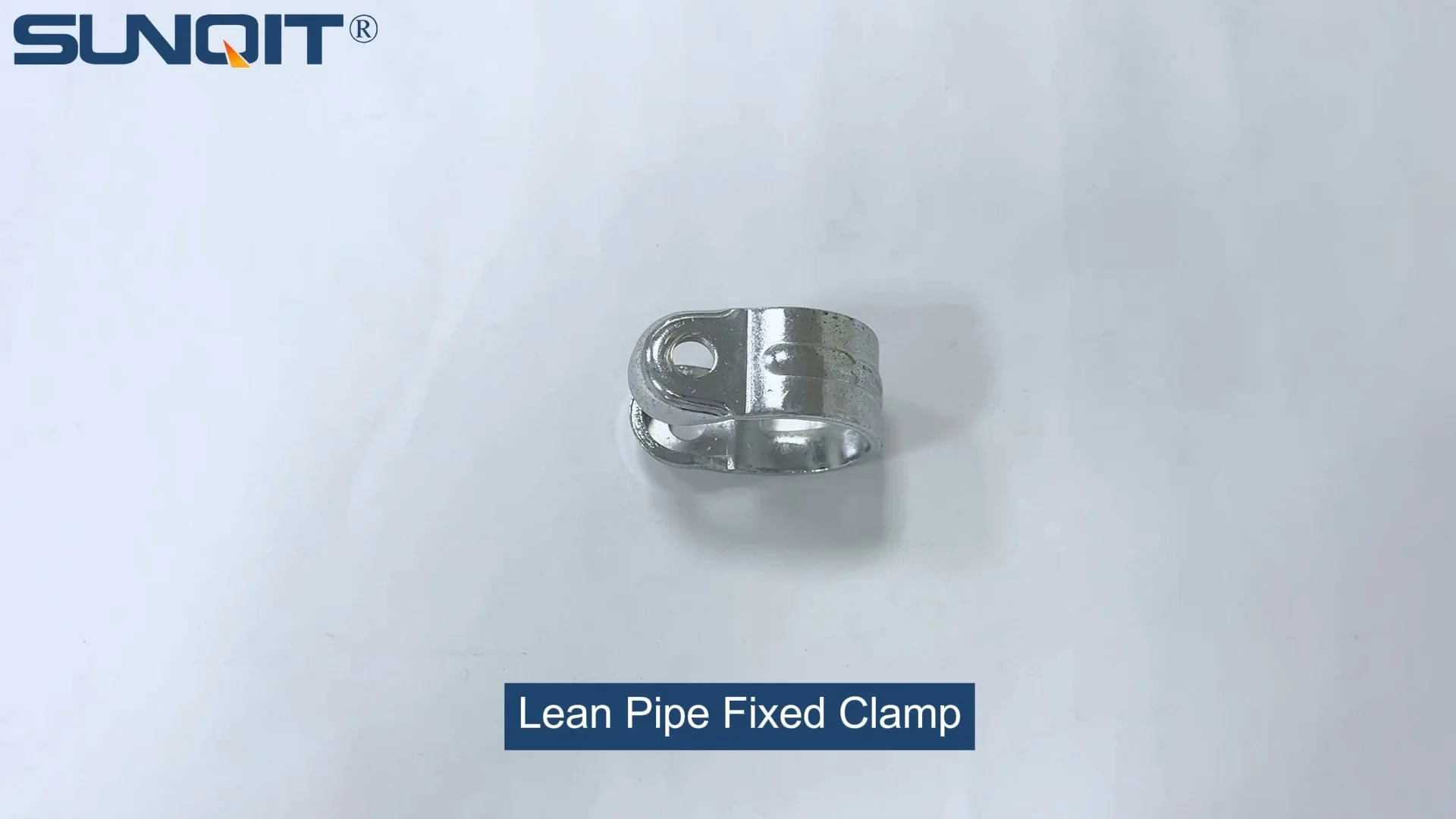
Lean Pipe Fixed Clamp
Lean pipe fixed clamp is used for pipe connector fixing the correct position during workbench flow rack hand trolley assemble work.
Introduction: The Unsung Heroes of Modern Manufacturing
Walk into any modern manufacturing facility, and you'll likely notice a symphony of activity: workers assembling components with precision, robots gliding along tracks, and materials flowing seamlessly from one station to the next. Behind this efficiency lies a quiet revolution in how factories are designed—one driven by the principles of lean manufacturing. At the heart of this revolution are unassuming yet critical components that hold everything together: lean pipe fixed clamps. These small, versatile tools are the backbone of flexible, adaptable workspaces, enabling teams to build, reconfigure, and optimize their operations with unprecedented speed.
In an industry where change is constant—whether due to shifting consumer demands, new product launches, or evolving safety standards—rigidity is the enemy. Traditional manufacturing setups, with their welded steel frames and permanent workstations, often struggle to keep up. They're expensive to modify, time-consuming to adjust, and prone to becoming obsolete as needs change. Lean pipe fixed clamps, by contrast, offer a different approach. They're modular, durable, and surprisingly simple, turning ordinary pipes into customizable structures that grow and adapt with your business. But what exactly are these clamps, and why do they matter so much in heavy-duty manufacturing environments?
What Are Lean Pipe Fixed Clamps? Breaking Down the Basics
At their core, lean pipe fixed clamps are mechanical fasteners designed to connect and secure lean pipes (also known as "lean tubes") in a wide range of configurations. Unlike temporary ties or adhesive bonds, these clamps create rigid, load-bearing connections that can withstand the demands of heavy-duty manufacturing—think assembly lines handling automotive parts, warehouses moving bulk materials, or production floors where precision and stability are non-negotiable.
Most lean pipe fixed clamps are made from high-grade materials like stainless steel or aluminum, chosen for their strength, corrosion resistance, and longevity. Stainless steel clamps, part of the broader "stainless steel pipe series," are ideal for environments with moisture, oils, or chemicals, while aluminum clamps (often paired with "aluminum lean pipe") offer a lighter alternative without sacrificing durability. This diversity in materials ensures that there's a clamp for every application, from cleanrooms in electronics manufacturing to rugged automotive workshops.
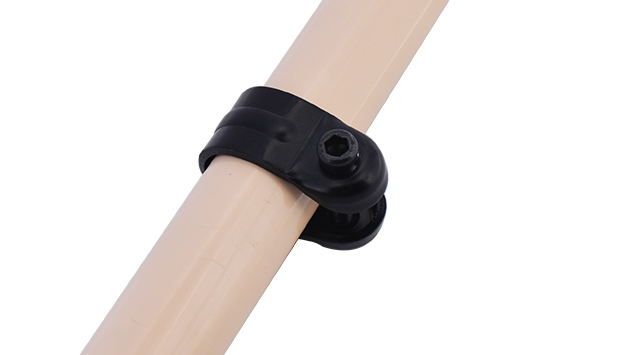
One of the key features of these clamps is their simplicity. Most designs consist of a two-piece bracket that wraps around the lean pipe, secured by a bolt or screw. Tightening the bolt compresses the bracket, creating a firm grip that won't slip under load. This straightforward mechanism means no special tools are required for installation—just a wrench or hex key—and even new employees can learn to use them in minutes. As Maria Gonzalez, a production supervisor at a mid-sized electronics plant, puts it: "We used to rely on contractors to weld new workstations whenever we launched a product. Now, with these clamps, my team can build a custom setup in an afternoon. It's changed how we think about flexibility."
Lean pipe fixed clamps come in various angles and configurations to suit different structural needs. For example, "180° fixed lean pipe joint" clamps connect pipes in a straight line, while "90° fixed lean pipe joint" clamps create right-angle corners—perfect for building workbench frames or shelving units. There are also adjustable clamps that allow for minor angle tweaks, though fixed clamps are prized for their stability in applications where movement isn't desired. This versatility makes them a cornerstone of the "lean system," the broader framework of tools and processes that prioritize efficiency, waste reduction, and continuous improvement.
The Role of Lean Pipe Fixed Clamps in the Lean System
Lean manufacturing isn't just a buzzword—it's a philosophy centered on eliminating waste, optimizing flow, and empowering workers. At its core, a lean system aims to create value by streamlining every aspect of production, from how materials are stored to how workstations are arranged. Lean pipe fixed clamps play a pivotal role in this by turning abstract principles into tangible, functional workspaces.
Consider the concept of "just-in-time" (JIT) production, where materials are delivered exactly when needed to minimize inventory costs. For JIT to work, material flow must be smooth and predictable. Lean pipe fixed clamps help achieve this by enabling the construction of custom roller tracks and flow racks. These structures, built with aluminum or steel pipes secured by clamps, guide materials from storage to assembly stations with minimal manual handling. If a production line needs to be reconfigured to accommodate a new part size, workers can simply loosen the clamps, adjust the roller track, and retighten—no welding, no downtime, no waste.
Another pillar of lean manufacturing is "respect for people," which emphasizes creating work environments that prioritize ergonomics and worker well-being. Fixed clamps make this possible by allowing workstations to be tailored to individual needs. A tall worker might need a higher workbench, while a shorter colleague requires a lower one; with clamps, adjusting the height is as simple as moving the pipes and resecuring the connections. This adaptability reduces fatigue, lowers the risk of injury, and boosts morale—all of which translate to higher productivity.
"We used to have a one-size-fits-all approach to workstations, and it showed. Workers were straining to reach tools, and we had more ergonomic complaints than we could handle. After switching to lean pipe workbenches with fixed clamps, we've cut those complaints by 60%. People feel heard, and they work better because of it." — James Chen, Operations Manager at a medical device manufacturer
Perhaps most importantly, lean pipe fixed clamps support the "continuous improvement" ethos of lean systems. In traditional setups, making even small changes—like adding a shelf to a workstation or extending a material rack—requires approval, budget, and often external contractors. With clamps, frontline workers can experiment with improvements on their own. A team might notice that a roller track is causing bottlenecks, so they adjust the angle using clamps and test the new setup the same day. This culture of experimentation leads to faster innovation and a workforce that feels ownership over their space.

Heavy-Duty Applications: Where Clamps Shine Brightest
While lean pipe fixed clamps are versatile enough for light-duty tasks, their true value shines in heavy-duty manufacturing environments. These are settings where loads can exceed hundreds of pounds, vibrations are constant, and reliability is non-negotiable. Let's explore some of the most common applications where fixed clamps prove their mettle.
Workbenches: The Foundation of Productivity
Workbenches are the workhorses of manufacturing, serving as the primary space for assembly, inspection, and repair. In heavy-duty settings—like automotive part assembly or industrial machinery production—these workbenches must support heavy tools, bulky components, and constant use. Lean pipe fixed clamps are instrumental in building workbenches that meet these demands.
Take the "workbench e (single deck-without caster)" as an example. This popular model features a single, sturdy deck mounted on a frame of aluminum or steel lean pipes, secured at every joint with fixed clamps. The clamps ensure that the frame doesn't wobble or flex, even when a worker is using a torque wrench or hammer on the deck. What's more, if the workbench needs to be reinforced—say, to handle heavier parts—the team can simply add extra support pipes and secure them with additional clamps. No need to replace the entire bench; just upgrade as needed.
In environments where electrostatic discharge (ESD) is a risk—such as electronics manufacturing—clamps also play a role in grounding. Many ESD workbenches use conductive lean pipes and clamps to dissipate static electricity, protecting sensitive components from damage. The clamps ensure a continuous electrical path, making them as critical for safety as they are for structure.
Roller Tracks: Keeping Materials Moving
Efficient material flow is the lifeblood of manufacturing, and roller tracks are the arteries that carry this flow. These tracks use gravity or motorized rollers to move parts, bins, and pallets between stations, reducing manual labor and minimizing delays. To function properly, roller tracks must be perfectly aligned and securely mounted—tasks that rely heavily on lean pipe fixed clamps.
Roller tracks are typically mounted on aluminum profile frames, with clamps securing the track to the frame at regular intervals. This ensures that the track doesn't shift under the weight of moving materials, preventing jams and spills. For example, "roller track placon mount for aluminum profile flat" clamps are designed to attach roller tracks to flat aluminum profiles, creating a stable base that can handle heavy loads. Similarly, "end support for roller track placon mount with stop" clamps add extra stability at the end of the track, preventing materials from sliding off.
In warehouses, roller tracks often span long distances, connecting storage areas to production lines. Here, clamps are used to join sections of track together, creating a seamless path for materials. The "roller track placon mount connector" is a specialized clamp designed for this purpose, ensuring that adjacent track sections align perfectly and don't separate under stress. This level of precision is crucial for preventing bottlenecks and keeping the entire operation running smoothly.
Turnover Trolleys and Material Racks: Mobility Without Compromise
Turnover trolleys and material racks are essential for moving materials around the factory floor. In heavy-duty applications—like transporting engine blocks or large industrial parts—these trolleys must be both mobile and incredibly stable. Lean pipe fixed clamps are key to balancing these two needs.
A typical turnover trolley might feature a frame built from steel lean pipes, with shelves or bins mounted using fixed clamps. The clamps ensure that the shelves don't shift during transport, even when the trolley hits a bump or is pushed quickly. Casters (wheels) are also attached to the frame with clamps, creating a secure connection that can support the trolley's total weight (often over 500 pounds). For added safety, many trolleys use locking clamps to secure the casters in place when loading or unloading, preventing accidental movement.
Material racks, like the "material rack b (3 row and 3 floor)," face similar demands. These racks store everything from raw materials to finished products, and their shelves must withstand heavy loads without bending or collapsing. Fixed clamps secure each shelf to the rack's vertical pipes, distributing weight evenly and ensuring that the rack remains stable even when fully loaded. If the rack needs to be reconfigured—say, to accommodate taller boxes—the shelves can be moved up or down and resecured with clamps in minutes.

Why Lean Pipe Fixed Clamps Outperform Traditional Fasteners
To truly appreciate the value of lean pipe fixed clamps, it helps to compare them to traditional fastening methods like welding, bolts, or adhesives. While these older methods have their place, they often fall short in the dynamic, fast-paced world of modern manufacturing. Let's break down the key advantages that make fixed clamps the superior choice for heavy-duty applications.
| Feature | Lean Pipe Fixed Clamps | Traditional Welding/Bolts |
|---|---|---|
| Flexibility | Easy to disassemble and reconfigure; pipes can be reused in new setups. | Permanent connections; modifications require cutting/welding or drilling new holes. |
| Installation Time | Minutes to assemble; no special tools or training needed. | Hours or days; requires skilled labor (e.g., welders) and specialized equipment. |
| Cost | Lower long-term costs due to reusability and reduced labor for changes. | Higher upfront and maintenance costs; frequent replacements for outdated setups. |
| Durability | High-grade stainless steel/aluminum resists corrosion and wear; secure grip under load. | Welds can weaken over time; bolts may loosen due to vibration. |
| Safety | No open flames or sharp edges during assembly; easy to inspect for tightness. | Welding poses fire/respiratory risks; sharp edges from cut metal; loose bolts can cause collapses. |
Adaptability: The Ability to Pivot Without Pain
In manufacturing, the only constant is change. A product line that's profitable today might be replaced by a new model tomorrow, or a global supply chain disruption might require a sudden shift in production priorities. Traditional fixed setups struggle with these changes—welded frames can't be easily modified, and bolted structures often get damaged when taken apart. Lean pipe fixed clamps, by contrast, thrive on change.
Consider a scenario where a manufacturer needs to switch from producing small components to larger, bulkier items. With a welded workbench, they'd need to either buy a new bench or hire a welder to cut and extend the existing frame—both costly and time-consuming. With a lean pipe workbench secured by fixed clamps, the team can simply loosen the clamps, add longer pipes to the frame, and resecure everything in under an hour. The old pipes can then be stored and reused for future projects, reducing waste and saving money.
Durability: Built to Last in Harsh Environments
Heavy-duty manufacturing environments are tough on equipment. There's exposure to oils, coolants, chemicals, and constant vibration—all of which can degrade traditional fasteners over time. Welds may develop cracks, bolts can rust or loosen, and adhesives can fail under stress. Lean pipe fixed clamps, however, are engineered to withstand these conditions.
Stainless steel clamps, part of the "stainless steel pipe series," are resistant to rust and corrosion, making them ideal for wet or chemical-heavy environments like food processing or automotive painting shops. Aluminum clamps, paired with "aluminum lean pipe," offer similar durability with the added benefit of being lightweight—perfect for mobile setups like turnover trolleys. Even after years of use, a quick inspection and tightening of the clamp bolts are usually all that's needed to keep them performing like new.
Safety: Reducing Risks for Workers
Safety is paramount in any manufacturing setting, and fixed clamps contribute to a safer workplace in several ways. First, their simple assembly process eliminates the need for open flames (unlike welding) or power tools that can cause injuries. Workers can assemble structures using basic hand tools, reducing the risk of accidents.
Second, fixed clamps create secure connections that are easy to inspect. Unlike hidden welds or bolts buried in concrete, clamps are visible and accessible. A quick visual check during routine maintenance can identify loose connections before they become hazards. This transparency gives workers confidence that their workstations and material racks are stable, reducing anxiety and improving focus.
Choosing the Right Clamps: Key Considerations for Heavy-Duty Success
Not all lean pipe fixed clamps are created equal. To ensure your heavy-duty applications perform as expected, it's critical to choose the right clamps for the job. Here are the key factors to consider when selecting clamps for your manufacturing setup.
Material: Matching Clamps to the Environment
The first decision is material: stainless steel, aluminum, or another alloy? As mentioned earlier, stainless steel clamps are best for corrosive environments, while aluminum clamps are lighter and work well with aluminum lean pipes. For even heavier loads, consider "2.0mm stainless steel pipe series" clamps, which offer extra thickness and strength. If weight is a concern—for example, in mobile trolleys—aluminum clamps paired with "basic aluminum tube" can reduce overall weight without sacrificing stability.
Load Capacity: Know Your Limits
Every clamp has a maximum load rating, which indicates how much weight it can safely support. This rating varies based on the clamp's size, material, and design. For example, a small "30° fixed lean pipe joint" clamp might support 50 pounds, while a heavy-duty "90° straight lean pipe joint chrome" clamp could handle 500 pounds or more. Always check the manufacturer's specifications to ensure the clamp matches the load requirements of your application. When in doubt, err on the side of caution—overloading a clamp can lead to structural failure and injury.
Compatibility: Working with Your Existing System
Lean pipe systems are only as good as their components work together. Before purchasing clamps, ensure they're compatible with your existing lean pipes, joints, and accessories. Most clamps are designed to fit standard pipe diameters (e.g., 28mm for traditional lean pipes or 40mm for aluminum profiles), but it's always wise to double-check. For example, "aluminum guide rail a" or "plastic roller track guide rail yellow" might require specific clamp designs to attach properly to roller tracks. Mismatched components can lead to loose connections, instability, and wasted money.
Ease of Use: Simplifying Assembly for Your Team
Even the strongest clamp is useless if your team can't assemble it quickly and correctly. Look for clamps with user-friendly designs: clear tightening instructions, standard tool compatibility (e.g., hex keys instead of proprietary wrenches), and intuitive alignment features. Some clamps even come with built-in indicators to show when they're properly tightened, reducing the risk of human error. Remember: the goal is to empower your team to make changes independently, so choose clamps that prioritize simplicity.
Maintenance and Care: Keeping Clamps Performing at Their Best
Like any tool, lean pipe fixed clamps require regular maintenance to ensure they continue to perform in heavy-duty applications. Fortunately, caring for these clamps is simple and straightforward—just a few routine steps can extend their lifespan and keep your manufacturing setup running smoothly.
First, inspect clamps regularly for signs of wear or damage. Check for loose bolts, cracks in the bracket, or deformation of the clamping surface. In high-vibration areas—like near stamping machines or conveyor belts—inspect clamps weekly, as vibration can loosen bolts over time. Tighten any loose bolts with a wrench, and replace any clamps that show signs of damage (e.g., stripped threads or bent brackets). It's better to replace a $10 clamp than risk a workstation collapse that could injure workers or damage equipment.
Second, keep clamps clean. Dirt, grease, and debris can interfere with the clamp's grip, especially in moving parts like adjustable joints. Wipe down clamps with a damp cloth or mild detergent to remove buildup, and dry thoroughly to prevent rust (especially for steel clamps). In particularly dirty environments, consider applying a light coat of anti-corrosion spray to steel clamps as an extra layer of protection.
Finally, train your team on proper clamp usage. Even the best clamps will fail if they're installed incorrectly. Ensure everyone knows how to tighten bolts to the manufacturer's recommended torque (usually printed on the clamp or in the manual), and avoid over-tightening, which can strip threads or damage the pipe. Simple, regular training sessions can go a long way in preventing mistakes and extending the life of your clamps.
Conclusion: The Future of Manufacturing is Flexible—And It Starts with Clamps
In the fast-paced world of mechanical manufacturing, adaptability isn't just a nice-to-have—it's a survival skill. Lean pipe fixed clamps embody this adaptability, offering a simple, cost-effective way to build workspaces that grow, change, and evolve with your business. From heavy-duty workbenches and roller tracks to turnover trolleys and material racks, these unassuming components are the quiet force driving efficiency, safety, and innovation in factories around the world.
As manufacturing continues to evolve—with trends like automation, smart factories, and mass customization reshaping the industry—lean pipe fixed clamps will only grow in importance. They're the bridge between rigid, traditional setups and the flexible, agile systems of the future. Whether you're a small workshop looking to optimize your assembly line or a large manufacturer scaling up production, investing in quality clamps is an investment in your team's productivity, your customers' satisfaction, and your company's long-term success.
So the next time you walk through your factory, take a moment to appreciate the lean pipe fixed clamps holding everything together. They may not be as flashy as a new robot or as high-tech as a digital dashboard, but in their simplicity and reliability, they're the unsung heroes keeping your operation moving forward—one tight connection at a time.