- Company Articles
- Products and Technology
- Product knowledge
- Lean Pipe System Essentials: Adjustable Leveling Feet for Sustainable Improvement

Lean Pipe System Essentials: Adjustable Leveling Feet for Sustainable Improvement
Related Product
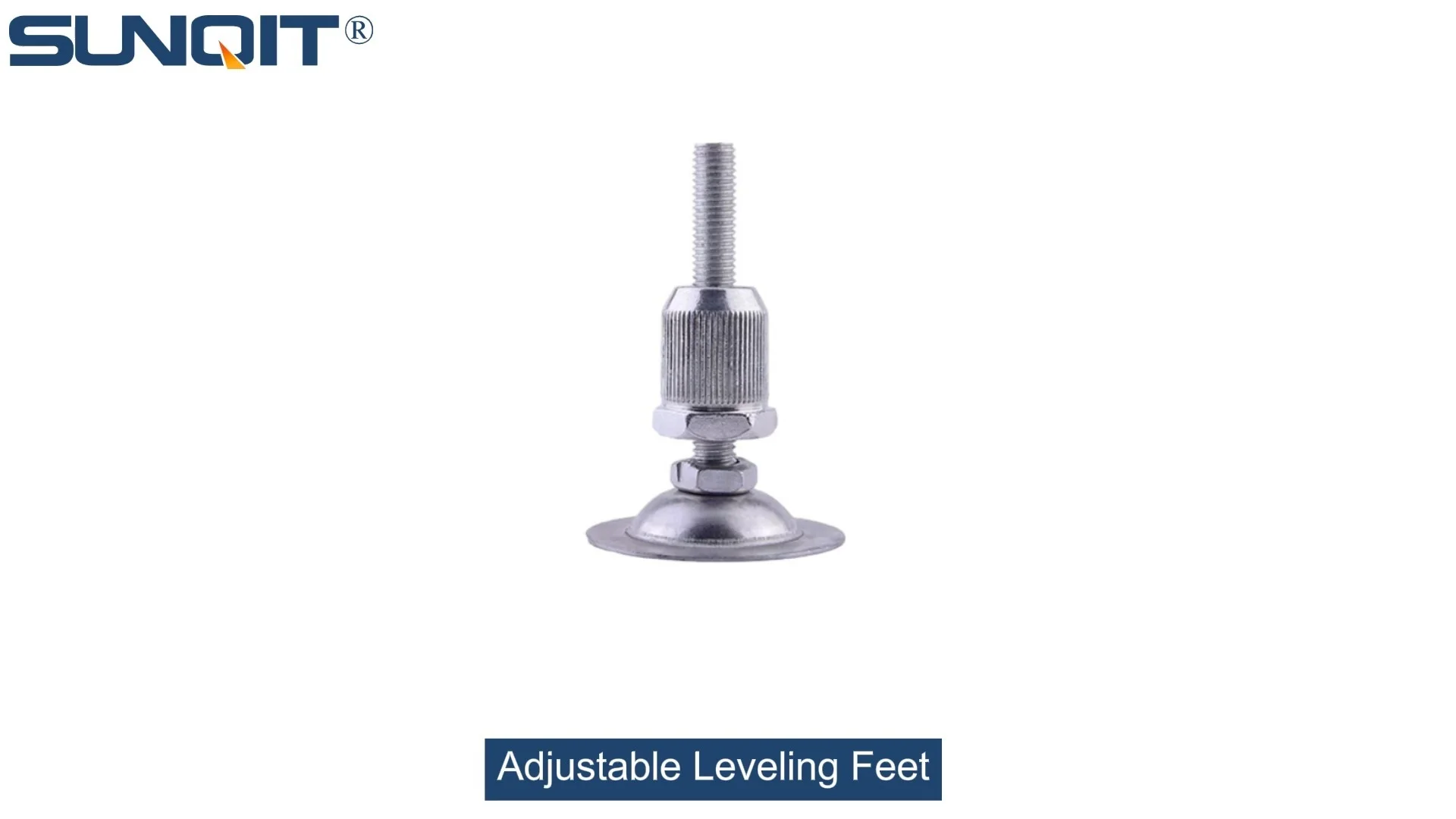
Adjustable Leveling Feet
Adjustable leveling feet are designed to keep machines level when placed on uneven or sloped ground. Otherwise known as adjustable equipment feet, they are available to order in a wide variety of size and load capacity combinations.
1. Introduction: Lean Manufacturing and the Backbone of Efficiency
In the fast-paced world of modern manufacturing, where every second and every cent counts, lean manufacturing has emerged as more than just a buzzword—it's a philosophy that shapes how businesses survive and thrive. At its core, lean is about eliminating waste, streamlining processes, and creating value for customers. But here's the thing: you can't build a lean operation on shaky ground—literally. The physical infrastructure that supports your workflow, from the workbenches where products are assembled to the roller tracks that move materials across the floor, plays a silent yet critical role in making lean principles a reality.
Enter lean pipe systems: the versatile, modular frameworks that have become the backbone of efficient production lines. Made from materials like aluminum, stainless steel, or PE-coated steel, these systems are designed to adapt to changing needs—whether you're reconfiguring a work cell for a new product or scaling up production. But even the most flexible lean pipe setup can fall short if one small, often overlooked component is missing: adjustable leveling feet. These unassuming devices might not grab headlines, but they're the unsung heroes that keep your workbenches stable, your roller tracks aligned, and your entire operation running like a well-oiled machine. In this article, we'll dive into why adjustable leveling feet are non-negotiable for anyone serious about sustainable improvement in lean manufacturing.
2. Understanding Lean Pipe Systems: Beyond the Basics
Before we zoom in on adjustable leveling feet, let's take a step back to understand the star of the show: lean pipe systems. If you've ever walked through a well-organized factory or warehouse, you've probably seen them—structures built from lightweight, durable pipes connected by joints, forming everything from workbenches and material racks to flow racks and turnover trolleys. What makes these systems "lean" is their ability to be customized, reconfigured, and repurposed with minimal effort, aligning perfectly with the lean goal of eliminating waste (in this case, waste from rigid, one-size-fits-all equipment).
Lean pipe systems come in various materials, each suited to different environments. Aluminum lean pipe, for example, is lightweight and corrosion-resistant, making it ideal for cleanrooms or industries where hygiene is critical, like pharmaceuticals or food processing. Stainless steel pipe series, on the other hand, offer unmatched durability for heavy-duty applications, such as automotive manufacturing. PE-coated lean pipes, with their colorful exteriors (often yellow or grey), are a popular choice for general assembly lines, providing a balance of strength and affordability.
But a lean pipe system is more than just pipes. It's a ecosystem of components: joints that lock pipes into place at any angle, roller tracks that let materials glide smoothly from one station to the next, casters that turn static workbenches into mobile workstations, and accessories like gussets and end caps that add stability and finish. Together, these parts create a framework that grows with your business. Need to add a shelf to a workbench? Swap out a joint. Want to redirect a roller track to accommodate a new machine? Adjust the supports. This flexibility is why lean pipe systems have become a staple in industries ranging from electronics to logistics.

3. The Unsung Hero: Why Stability Matters in Lean Environments
Imagine a scenario (oops, scratch that—let's describe a scenario): It's Monday morning on the assembly line. Your team is gearing up to hit their daily production target, and the pressure is on. A worker at a lean pipe workbench reaches for a component, only to have the bench wobble under their arm, sending a small part skittering across the floor. They pause, retrieve the part, and get back to work—but that 10-second delay, multiplied by 20 workers and 200 workdays a year, adds up to over 11 hours of lost productivity. Now multiply that by the risk of errors from an unstable surface, or worse, workplace injuries from a tipping trolley. Suddenly, "stability" isn't just a nice-to-have—it's a make-or-break factor for your bottom line.
In lean environments, where every movement is optimized to eliminate waste, instability is the ultimate waste generator. Uneven floors are a common culprit. Most factory floors, even those that look smooth, have slight dips, cracks, or slopes from years of heavy machinery use. When you place a rigid workbench or a long roller track on such a floor, the result is uneven weight distribution. A workbench might rock, causing tools to slide off. A roller track might sag in the middle, leading to jams as materials get stuck on misaligned rollers. Over time, this not only slows down production but also wears out your equipment faster—joints loosen, pipes bend, and rollers degrade unevenly.
Then there's the human factor. Workers standing at a wobbly workbench are more likely to experience fatigue or discomfort, which can lead to mistakes or even repetitive strain injuries. In industries where precision is key—like electronics assembly, where components are smaller than a fingernail—even a tiny vibration from an unstable surface can mean the difference between a functional product and a defective one. And let's not forget safety: a material rack that's not level is a ticking time bomb, especially if it's loaded with heavy parts. One wrong bump, and you could be looking at damaged inventory or, worse, a workplace accident.
This is where adjustable leveling feet enter the picture. These simple devices are designed to compensate for uneven floors, ensuring that every part of your lean pipe system sits solidly in place. They're like the foundation of a house—you don't notice them until they're missing, but everything else relies on them.

4. Adjustable Leveling Feet: Engineering for Precision and Adaptability
So, what exactly are adjustable leveling feet? At their most basic, they're threaded supports that attach to the bottom of workbenches, racks, or roller track stands, allowing you to tweak their height individually to level the structure. But don't let their simplicity fool you—modern leveling feet are engineered with precision to handle the unique demands of lean manufacturing environments.
Let's break down their anatomy. Most adjustable leveling feet consist of three parts: a base, a threaded stem, and a mounting bracket. The base, often made of rubber or plastic, sits on the floor, providing grip to prevent slipping. Rubber bases are especially popular because they absorb vibrations and won't scratch delicate floors, making them ideal for cleanrooms or areas with polished concrete. The threaded stem, usually steel or aluminum, screws into the mounting bracket, which attaches to the leg of the workbench or rack. By twisting the stem, you raise or lower that corner of the structure until it's perfectly level.
But not all leveling feet are created equal. They come in a variety of styles to suit different needs. Take rubber leveling feet , for example. The M10*56 rubber leveling foot is a common model, with a 10mm thread diameter and a 56mm stem length—long enough to compensate for most floor irregularities. These are workhorses, suitable for general-purpose workbenches and light material racks. For heavier loads, heavy-duty split foot seats are the way to go. These feature a larger, metal base that distributes weight over a wider area, making them perfect for 3-row, 3-floor material racks (like Material Rack B) loaded with bulky components.
Then there are specialized options, such as suction cup anti-slip feet . These use a vacuum-like seal to grip smooth floors, preventing movement even in high-traffic areas. They're a favorite in industries where hygiene is critical, like medical device manufacturing, because their smooth surfaces are easy to clean. For environments with corrosive substances, stainless steel leveling feet offer resistance to rust and degradation, ensuring longevity in harsh conditions.
To help you visualize the differences, here's a comparison of common adjustable leveling foot types:
| Type of Leveling Foot | Primary Material | Max Load Capacity (per foot) | Ideal Application | Key Advantage |
|---|---|---|---|---|
| Rubber-Threaded (e.g., M10*56) | Rubber (base), Steel (stem) | Up to 500 kg | General workbenches, light roller tracks | Vibration absorption, affordable |
| Heavy-Duty Split Foot Seat | Cast Iron (base), Steel (stem) | Up to 1,500 kg | Multi-tier material racks, heavy machinery supports | Distributes weight to prevent floor damage |
| Suction Cup Anti-Slip | Rubber (suction cup), Aluminum (stem) | Up to 300 kg | Cleanrooms, smooth-floor assembly lines | Extra grip to prevent sliding |
| Stainless Steel | Stainless Steel (base and stem) | Up to 800 kg | Wet environments, chemical processing | Corrosion resistance |
The beauty of adjustable leveling feet lies in their adaptability. Whether you're setting up a new workbench, reconfiguring a roller track, or retrofitting an old material rack, they allow you to fine-tune each structure to its environment. And because they're modular, you can mix and match types based on the load and conditions—no need to replace an entire system when you just need a stronger foot for one corner.

5. Integrating Adjustable Leveling Feet with Lean Pipe Workbenches
Let's zoom in on one of the most common applications of adjustable leveling feet: lean pipe workbenches. These workhorses of the assembly line are where the magic happens—where components become products, and ideas become reality. A well-designed workbench should be sturdy, ergonomic, and adaptable. But without proper leveling, even the best-designed bench becomes a liability.
Consider the Workbench E (single deck-without caster) , a popular model in lean setups. It's a simple, no-frills design: a single aluminum or PE-coated pipe frame with a solid top (often made of aluminum honeycomb panel for lightweight strength). Without casters, it relies entirely on its feet for stability. Installing adjustable leveling feet here isn't just about preventing wobbles—it's about creating a consistent, comfortable workspace for the person using it. A bench that's level from front to back reduces strain on the worker's back and shoulders, as they don't have to compensate for an uneven surface. A bench that's level side to side ensures tools and components stay in place, reducing the risk of spills or lost parts.
Installing leveling feet on a Workbench E is straightforward, but attention to detail matters. Start by assembling the bench frame according to the manufacturer's instructions, leaving the feet off for now. Place the frame on the factory floor where it will be used, and use a spirit level to check for unevenness. Most frames will have pre-drilled holes at the bottom of each leg for attaching feet—simply screw in the leveling feet by hand until they're snug. Then, adjust each foot individually: if the front left corner is low, twist the stem clockwise to raise it; if the back right is high, twist counterclockwise to lower it. Check the level again, and repeat until the bubble is centered in both directions. Finally, lock the feet in place (some models have a locking nut that tightens against the leg to prevent loosening over time) and attach the worktop. Done.
But the benefits go beyond day-one setup. Over time, factory floors can shift, or the bench might need to be moved to a new location. With adjustable feet, you don't have to replace the entire bench—just readjust the feet. This adaptability is a cornerstone of lean thinking: it extends the life of your equipment, reduces waste from premature replacements, and keeps your workflow flexible. Imagine needing to relocate a workbench to make space for a new machine. Without leveling feet, you'd either have to shim the legs with pieces of wood (temporary and unstable) or buy a new bench. With leveling feet, you wheel it (if it has casters) or carry it to the new spot, tweak the feet, and you're back in business in 10 minutes.
For businesses that prioritize ergonomics, adjustable leveling feet offer another perk: the ability to customize the bench height for individual workers. While most workbenches are designed for an average height (around 80cm), not all workers are average. A taller worker might prefer a bench that's 5cm higher to avoid hunching, while a shorter worker might need it 5cm lower. By adjusting the feet, you can tailor the height to each user, boosting comfort and productivity. It's a small change that makes a big difference in employee satisfaction—and in lean, happy workers are efficient workers.
6. Beyond Workbenches: Leveling Feet in Roller Tracks and Material Racks
Adjustable leveling feet aren't just for workbenches—they're equally critical in roller tracks and material racks, two other pillars of lean material flow. Roller tracks, which use a series of wheels or balls to move materials from one station to another, rely on precise alignment to function smoothly. Even a slight dip in the track can cause products to get stuck, leading to bottlenecks and frustrated workers. Material racks, especially multi-tiered ones like Material Rack B (3 row and 3 floor), need stable bases to prevent tipping when loaded with heavy items.
Let's start with roller tracks. These systems come in various configurations: aluminum roller tracks with yellow or grey plastic guide rails for lightweight parts, steel roller tracks with black ESD wheels for electronics (to prevent static damage), and even mini aluminum roller tracks for small components. Regardless of the type, the track's supports—whether they're attached to the floor, a wall, or a rack—must be level. If one support is higher than the others, the track will slope, causing materials to roll too fast (risking damage) or too slow (wasting time). If a support is lower, materials can jam, requiring manual intervention to free them.
This is where leveling feet shine, particularly in roller track accessories like the roller track placon mount for aluminum profile flat or the end support for roller track placon mount with stop . These mounts attach the track to aluminum profiles (the vertical supports), and many are designed to accept adjustable feet. By screwing a leveling foot into the bottom of the mount, you can (fine-tune) the height of each support along the track. For example, in a 10-meter roller track spanning from a storage area to an assembly line, you might need to adjust 5-6 supports to ensure the track has a consistent, gentle slope for gravity-fed flow. Without leveling feet, achieving that consistency would be nearly impossible on an uneven floor.
Now, material racks. A 3-row, 3-floor material rack is a workhorse, holding everything from raw materials to finished goods. When fully loaded, it can weigh hundreds of kilograms. If the rack isn't level, that weight becomes unevenly distributed, putting stress on the joints and pipes. Over time, this can cause the rack to warp, or worse, collapse. Adjustable leveling feet at the base of each rack leg distribute the weight evenly, reducing stress and extending the rack's lifespan. They also make it easier to load and unload items: a level rack ensures that bins or boxes sit flat, so you don't have to fight to pull a bin out of a tilted shelf.
Here's a real-world example: A automotive parts manufacturer was struggling with frequent jams on their roller track system, which moved brake components from the machining area to assembly. The track ran along a floor that had a slight slope, causing parts to bunch up at the low end. After installing leveling feet on the track's supports and adjusting them to create a consistent 1-degree slope, jams decreased by 90%, and the team saved 2 hours per day previously spent unjamming the track. That's the power of proper leveling.
7. Sustainable Improvement: Long-Term Benefits of Quality Leveling Solutions
In lean manufacturing, "sustainable improvement" isn't just about reducing waste today—it's about building systems that continue to deliver value tomorrow, next year, and beyond. Adjustable leveling feet contribute to this sustainability in three key ways: durability, adaptability, and safety.
First, durability. Investing in high-quality adjustable leveling feet might cost a bit more upfront, but it pays off in the long run. Cheap, plastic feet can crack under heavy loads or degrade from exposure to oils, chemicals, or extreme temperatures. Quality feet, made from materials like rubber, steel, or stainless steel, stand up to harsh factory environments, reducing the need for frequent replacements. This not only saves money on replacement parts but also reduces downtime—no more stopping production to swap out a broken foot.
Second, adaptability. Lean manufacturing isn't static; your needs today might be different six months from now. Maybe you'll launch a new product that requires a taller workbench, or expand your production line to include a longer roller track. Adjustable leveling feet make it easy to reconfigure your existing lean pipe systems to meet these new needs. For example, if you need to raise a workbench by 5cm to accommodate a new tool, you can simply swap out your current leveling feet for longer-stemmed ones (like M10*70 instead of M10*56) instead of buying a whole new bench. This adaptability reduces waste from discarded equipment and keeps your capital focused on growth, not replacement.
Third, safety. A stable workplace is a safe workplace. According to OSHA, slips, trips, and falls are among the most common workplace injuries, often caused by unstable equipment or uneven surfaces. Adjustable leveling feet reduce these risks by keeping workbenches, racks, and roller tracks firmly planted. They also prevent equipment from tipping, which can cause serious injuries or damage to inventory. In industries where compliance with safety standards is non-negotiable—like aerospace or medical device manufacturing—leveling feet aren't just a convenience; they're a regulatory requirement.
There's also an environmental angle to consider. By extending the lifespan of your lean pipe systems, adjustable leveling feet reduce the demand for new materials. Every workbench or rack that doesn't end up in a landfill saves energy and resources that would have been used to manufacture a replacement. It's a small contribution, but when multiplied across thousands of factories worldwide, it adds up to a significant environmental impact.
8. Choosing the Right Adjustable Leveling Feet: A Buyer's Guide
Now that you understand why adjustable leveling feet are essential, how do you choose the right ones for your needs? It starts with asking the right questions:
1. What's the load capacity? This is the most critical factor. Calculate the total weight of your equipment (workbench, rack, etc.) plus the maximum weight it will hold, then divide by the number of feet to get the load per foot. For example, a 200kg workbench that holds 300kg of parts has a total weight of 500kg. With 4 feet, each foot needs to support at least 125kg. Always choose feet with a load capacity higher than your calculated needs to account for unexpected stress.
2. What type of floor do you have? Smooth concrete floors work well with rubber or plastic bases. Rough or uneven floors might require larger bases or suction cup feet for better grip. If your floor is prone to moisture or chemicals, stainless steel or corrosion-resistant feet are a must.
3. What's the environment like? Cleanrooms need non-porous, easy-to-clean feet (like suction cup or smooth rubber). Heavy industrial environments might require steel or cast iron feet for durability. ESD-sensitive areas (like electronics manufacturing) might benefit from conductive rubber feet to dissipate static.
4. How much adjustment do you need? Measure the worst-case unevenness of your floor (use a spirit level and a ruler to find the difference between the highest and lowest points in your workspace). Choose feet with a stem length that can compensate for that difference. A stem length of 50-60mm (like the M10*56) is usually sufficient for most factory floors, but if you have significant dips, you might need longer stems.
5. Are they compatible with your lean pipe system? Most leveling feet are designed to fit standard pipe sizes (e.g., 28mm for lean pipes, 40mm for aluminum profiles). Check the thread size (M10, M12, etc.) and mounting style (threaded, bolt-on) to ensure they'll attach to your workbench legs, roller track mounts, or rack bases. If you're unsure, ask your lean pipe supplier for recommendations—they'll be familiar with which feet work best with their systems.
6. Do they need to lock in place? Some feet come with locking nuts to prevent them from loosening over time (a common issue with vibrating equipment). If your application involves a lot of vibration (like near a stamping machine), locking feet are a smart investment.
Avoid common pitfalls, like underestimating the load or choosing the cheapest option without considering durability. A $5 foot that fails after 6 months will cost more in downtime and replacements than a $10 foot that lasts 5 years. Also, don't overlook the importance of testing. Once you've installed the feet, test the stability by applying gentle pressure to different parts of the equipment—if it moves, readjust the feet. It's better to spend an extra 10 minutes testing now than to deal with problems later.
9. Future Trends: Innovations in Lean Pipe Systems and Leveling Technology
As manufacturing continues to evolve, so too do the tools that support it. Lean pipe systems and adjustable leveling feet are no exception. Here are a few trends to watch:
Smart Leveling Feet: Imagine leveling feet with built-in sensors that monitor stability in real time. These sensors could detect when a foot starts to loosen (due to vibration) and send an alert to maintenance staff before it causes a problem. Some might even have motorized stems that automatically adjust to keep the equipment level, using data from floor sensors to predict and prevent unevenness. While still in the prototype stage, this technology could revolutionize how we maintain lean systems.
Lightweight, High-Strength Materials: Aluminum alloys are getting stronger and lighter, making aluminum lean pipes and leveling feet more appealing for portable systems. Carbon fiber composites, though currently expensive, could one day offer even greater strength-to-weight ratios, opening up new possibilities for modular, lightweight lean setups.
Modular Leveling Systems: Instead of individual feet, we might see modular bases that combine leveling, locking, and mobility (casters) in one unit. For example, a base with adjustable feet that can be swapped out for casters when you need to move the equipment, then locked back into place with leveling feet when you're done. This would make reconfiguration even faster and easier.
Sustainability Focus: Manufacturers are increasingly using recycled materials in leveling feet (e.g., recycled rubber bases) and designing them for easy disassembly and recycling at the end of their lifespan. This aligns with the growing emphasis on circular economy principles in manufacturing.
10. Conclusion: The Foundation of Lean Excellence
In the world of lean manufacturing, success lies in the details. It's about optimizing the small things so the big things take care of themselves. Adjustable leveling feet might not be the most glamorous part of your lean pipe system, but they're the foundation upon which efficiency, safety, and sustainability are built. They keep your workbenches stable, your roller tracks aligned, and your team productive. They reduce waste, prevent injuries, and extend the life of your equipment. In short, they're the quiet partners in your journey toward lean excellence.
As you build or upgrade your lean pipe system, don't overlook these critical components. Take the time to assess your needs, choose quality feet that match your environment, and work with a trusted supplier who understands the nuances of lean manufacturing. Your team, your bottom line, and your customers will thank you.
After all, in lean, the goal is to create value with every resource. And when it comes to adjustable leveling feet, the value they create is immeasurable.