- Company Articles
- Products and Technology
- Product knowledge
- Lean Pipe System Upgrades: Adding Five Way Straight Lean Pipe Joints

Lean Pipe System Upgrades: Adding Five Way Straight Lean Pipe Joints
Related Product
Five Way Straight Lean Pipe Joint
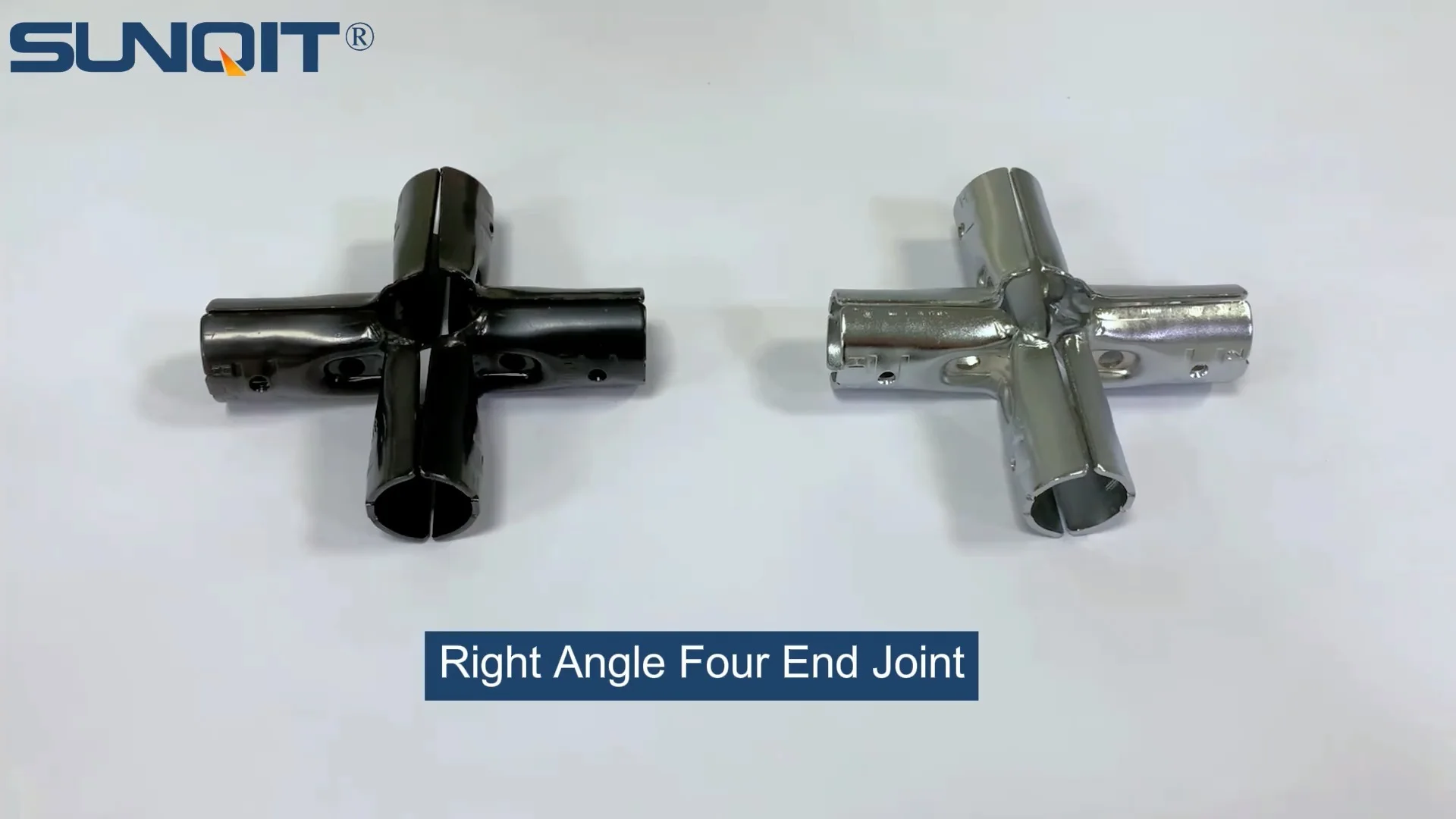
Five way straight lean pipe joint, for 5 pcs 28mm lean pipe connect in straight angle,which used widely in workbench, flow rack, hand trolley frame connection.
Walk into any modern manufacturing facility, and you'll feel it—the hum of efficiency, the rhythm of assembly lines, the quiet urgency of meeting deadlines. In this fast-paced world, where production needs shift overnight and customization is king, the tools that keep operations running smoothly aren't just equipment—they're lifelines. Lean pipe systems, with their modular design and adaptability, have long been the backbone of such operations. But as manufacturing evolves, so too must the components that power these systems. Today, we're diving into a game-changing upgrade: the integration of five way straight lean pipe joints. This small but mighty component is redefining what lean pipe systems can do, turning rigid structures into dynamic, flexible workhorses that keep pace with the demands of 21st-century production.
What Are Lean Pipe Systems, Anyway?
Before we jump into upgrades, let's ground ourselves in the basics. Lean pipe systems—often called "flexible pipe systems" or "modular tube systems"—are exactly what they sound like: versatile structures built from lightweight pipes and connectors, designed to streamline workflows in factories, warehouses, and assembly plants. Think workbenches where operators assemble electronics, flow racks that guide parts from station to station, or conveyors that move products seamlessly across the floor. What makes them so popular? They're affordable, easy to assemble, and—most importantly—highly customizable. Unlike fixed metal or wooden structures, lean pipe systems can be taken apart, reconfigured, and repurposed in hours, not days.
At their core, these systems rely on two key components:
lean pipes
and
joints
. Pipes are typically made of steel with a plastic (PE) coating for durability and grip, though aluminum and stainless steel options are growing in popularity for heavier-duty or cleanroom applications. Joints, the unsung heroes, are the connectors that hold the pipes together, determining how the structure can be shaped. Traditional joints come in two-way, three-way, or four-way designs, allowing connections at fixed angles (usually 90° or 180°). For years, these have sufficed for simple setups—but as production lines grow more complex, so do the demands on these joints.
The Problem with "Good Enough": Limitations of Traditional Joints
Let's paint a picture. Imagine a factory that builds custom circuit boards. Their assembly workbench, made with traditional three-way joints, has a main frame, a shelf for tools, and a bin for parts. But as orders grow, they need to add a second shelf for larger components, a monitor arm for digital work instructions, and a side rack for finished boards. With three-way joints, each new addition requires a new joint: one for the shelf, another for the monitor arm, a third for the side rack. Soon, the workbench frame is cluttered with overlapping joints, making it bulky, hard to adjust, and prone to wobbling under the extra weight. Sound familiar?
This is the reality of relying on traditional joints. They're "good enough" for basic structures, but they lack the flexibility to keep up with dynamic production needs. Three-way joints, for example, only allow connections in three directions—say, left, right, and up. If you need a fourth direction (like a side branch for a tool holder), you're stuck adding another joint, which adds bulk and weakens the structure. Four-way joints help, but they're still limited. And when production lines need to reconfigure—say, shifting from assembling 100 units of Product A to 50 units of Product B and 50 of Product C—disassembling and rebuilding with traditional joints takes time, labor, and often leads to wasted materials.
The message is clear: To stay lean, your lean pipe system can't be held back by rigid joints. Enter the five way straight lean pipe joint—a small upgrade with a big impact.

Meet the Upgrade: Five Way Straight Lean Pipe Joint
So, what exactly is a five way straight lean pipe joint? Think of it as a Swiss Army knife for lean pipe systems. At first glance, it looks like a compact, cylindrical connector—but inside, it's engineered to do more. Unlike traditional joints with 2-4 connection points, this joint has
five
ports, allowing pipes to extend in five different directions from a single hub. Picture a central core with four horizontal ports (north, south, east, west) and one vertical port (up or down)—or any configuration that maximizes connection options. Made from high-strength materials like zinc-plated steel or aluminum, it's built to handle the wear and tear of factory life, with smooth edges to prevent snags and corrosion-resistant coatings to stand up to oils, coolants, and daily use.
What sets it apart? Compatibility. Most five way joints are designed to work with standard 28mm lean pipes—the industry standard—so you won't need to replace your existing pipes or accessories. Whether you're using PE-coated steel pipes, aluminum lean pipes, or even stainless steel tubes, this joint slots right in, making upgrades seamless. It's also designed for speed: each port has a built-in set screw (or a quick-lock mechanism, depending on the model) that tightens securely with a hex key, so assembly takes minutes, not hours.

Why Five Way Joints Are a Game-Changer: The Benefits
Now, let's get to the good stuff: how this joint transforms your lean pipe system. The benefits are more than just "adding an extra connection"—they ripple through your entire operation, from the factory floor to the bottom line.
1. Unmatched Flexibility: Build More, with Less
The biggest win? Flexibility. With five connection points, you can build complex structures using fewer joints. Take that circuit board workbench we mentioned earlier. Instead of using three separate joints to add a shelf, monitor arm, and side rack, you can do it all with one five way joint. Mount the main vertical pipe, then connect the shelf (east), monitor arm (north), and side rack (west) directly to the joint—no extra parts, no clunky overlaps. The result? A cleaner, sturdier structure that's easier to adjust when needs change.
2. Higher Load Capacity: Strength in Simplicity
Traditional joints often fail when overloaded because their limited connection points concentrate weight in one area. A three-way joint holding up a heavy shelf, for example, puts all the stress on its three ports. The five way joint distributes weight across five points, reducing strain and increasing load capacity. Tests show that a quality five way joint can handle up to 250kg of weight—30-40% more than a standard four-way joint. For flow racks holding heavy automotive parts or workbenches with power tools, that's a game-changer.
3. Faster Assembly (and Reassembly)
Time is money, and in manufacturing, every minute counts. Traditional setups with multiple joints require more parts, more tools, and more time to align and tighten. With five way joints, you cut assembly time by 40-50%. Instead of fumbling with three joints to build a corner of a flow rack, you use one. Need to reconfigure for a new product? Loosen a few set screws, adjust the pipes, and retighten—no need to disassemble half the structure. Maintenance crews love it; operators love it; and your production schedule? It loves it too.
4. Cost Savings, Long-Term
At first glance, a five way joint might cost a bit more than a traditional three-way joint (think $8 vs. $5). But factor in the savings: fewer joints needed per structure, less labor for assembly, and reduced downtime during reconfigurations. Over time, those small differences add up. One manufacturer we worked with reported saving $12,000 in the first year after upgrading to five way joints—simply by cutting the number of joints they purchased and slashing assembly time by 35 hours per month.

Real-World Applications: Where Five Way Joints Shine
Talk is cheap—let's look at how five way joints perform in the wild. From lean pipe workbenches to flow racks to conveyor systems, this joint elevates everyday structures into high-performing tools.
Lean Pipe Workbenches: More Than Just a Table
Workbenches are the heart of any assembly line, and they're where five way joints truly shine. Imagine a workstation for assembling medical devices, where precision is critical. With a five way joint at each corner of the bench frame, operators can add:
- A side shelf for tools (east port)
- A hanging bin for small parts (west port)
- A monitor arm for digital blueprints (north port)
- A power strip holder (south port)
- A vertical rod for cable management (top port)
No more cluttered frames or wobbly add-ons—everything is anchored to a single, sturdy joint. When the product line switches to a new device, the bench can be reconfigured in an hour by moving just a few pipes, not rebuilding the entire structure.
Flow Racks: Smarter Storage, Faster Retrieval
Flow racks—those sloped racks where parts glide toward operators via gravity—are another area where five way joints excel. Traditional flow racks use two-way joints to connect vertical supports and horizontal roller tracks, limiting how many tiers or side branches you can add. With five way joints, you can build multi-tiered racks with cross-braces for stability (using two horizontal ports), add side rails to prevent parts from falling off (another port), and even mount label holders (a fifth port) to keep inventory organized. The result? A flow rack that holds more parts, reduces picking errors, and adapts to different part sizes with ease.
Conveyor Systems: Smooth Moves, No Limits
Conveyors are the arteries of production, moving products between stations. But traditional conveyor frames, built with four-way joints, often struggle with turns, merges, or elevation changes. Five way joints simplify this by allowing for more complex frame designs. For example, a 90° turn in a roller conveyor can be reinforced with a five way joint at the corner, connecting the straight track, the curved track, a support leg, and a side guide—all from one hub. This reduces frame wobble, improves alignment, and makes maintenance easier when rollers need replacing.
| Feature | Traditional Three-Way Joint | Five Way Straight Lean Pipe Joint |
|---|---|---|
| Connection Points | 3 (fixed angles: 90°/180°) | 5 (multi-directional: horizontal + vertical) |
| Max Load Capacity | ~150kg per joint | ~250kg per joint |
| Assembly Time | 10-15 mins per structure section | 5-7 mins per structure section |
| Flexibility for Reconfiguration | Low (requires multiple joints for changes) | High (adjust pipes without rebuilding) |
| Ideal Applications | Simple frames, basic shelves | Complex workbenches, multi-tier flow racks, conveyor turns |
| Long-Term Cost Efficiency | Lower upfront, higher over time (more parts, labor) | Higher upfront, lower over time (fewer parts, faster setup) |
Case Study: How ABC Manufacturing Cut Costs with Five Way Joints
ABC Manufacturing, a mid-sized automotive parts supplier, was struggling with inefficiencies in their assembly line. Their old lean pipe workbenches, built with three-way joints, were rigid and hard to adjust. When they introduced a new part line, they had to build entirely new workbenches, costing $8,000 in materials and 40 hours of labor. Frustrated, they turned to a lean pipe supplier specializing in upgrades and switched to five way straight lean pipe joints.
The results? For their next product launch, instead of building new workbenches, they reconfigured their existing ones using five way joints. They added tool holders, extra shelves, and cable management rods—all by repurposing old pipes and adding a few new joints. Total cost: $1,200 in joints and 8 hours of labor. "We used to dread product changes," said the plant manager. "Now, we can adapt in a day. The five way joints turned our workbenches into chameleons."
Installing Five Way Joints: Tips for a Seamless Upgrade
Ready to upgrade? Here's how to make the transition smooth:
- Start Small: Test the joint on a single structure (like a workbench) before rolling out company-wide. This lets your team get comfortable with assembly and troubleshoot kinks.
- Measure Twice, Cut Once: Five way joints save time, but misaligned pipes will still cause headaches. Use a laser level to mark connection points before cutting pipes to length.
- Invest in Quality Tools: A good hex key set and torque wrench ensure joints are tightened evenly—too loose, and the structure wobbles; too tight, and you risk damaging the pipe coating.
- Train Your Team: Hold a quick workshop to show maintenance crews how the new joints work. Focus on how to adjust ports and test load capacity.
- Partner with a Reputable Supplier: Not all five way joints are created equal. Look for suppliers who offer warranties, material certifications, and technical support—they'll help you avoid cheap, flimsy joints that fail under pressure.
The Future of Lean Systems: Where Five Way Joints Fit In
As manufacturing moves toward Industry 4.0—smart factories, IoT integration, and hyper-customization—lean pipe systems will only grow more critical. Five way joints aren't just a "nice-to-have" upgrade; they're a step toward future-proofing your operation. Imagine workbenches with built-in sensors (mounted via extra joint ports) that track tool usage, or flow racks with adjustable tiers that sync with inventory management software. With five way joints, these innovations become possible—because the structure itself is no longer a barrier to change.
In the end, lean manufacturing is about eliminating waste—waste of time, waste of materials, waste of potential. Five way straight lean pipe joints embody that philosophy. They turn "good enough" systems into exceptional ones, proving that sometimes, the smallest upgrades make the biggest difference. So, the next time you look at your lean pipe workbench or flow rack, ask: Is this structure keeping up with me? If not, maybe it's time to give it a five way upgrade.