- Company Articles
- Products and Technology
- Product knowledge
- Lean Pipe Systems: Role of Internal Straight Aluminum Joints in Reconfigurable Layouts

Lean Pipe Systems: Role of Internal Straight Aluminum Joints in Reconfigurable Layouts
Related Product
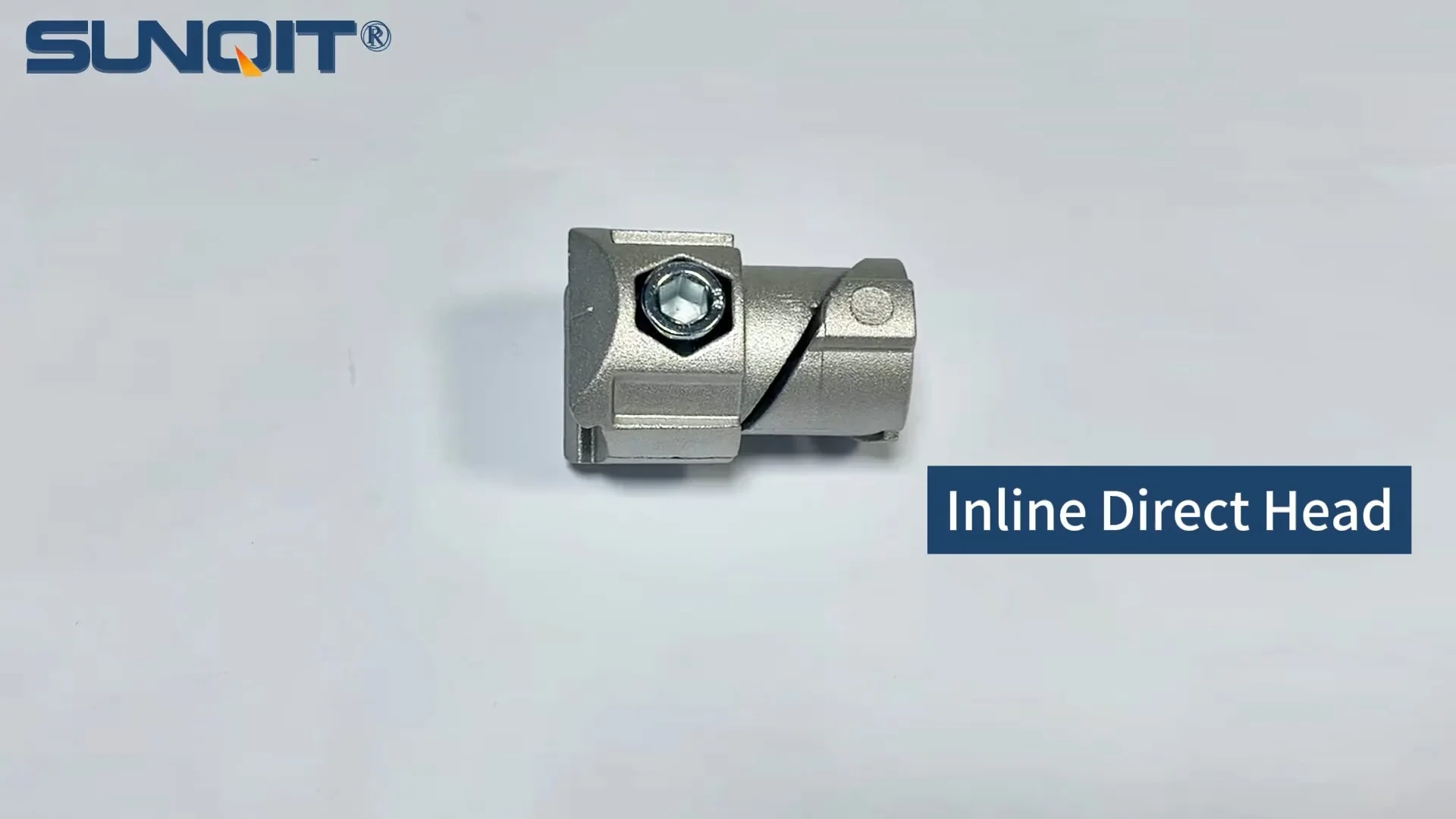
Internal straight aluminum joint
Aluminum pipe joint inside connection used for two pcs 28pcs aluminum pipe connection in straight angle,it connects two pcs pipe from inside.
Walk into any thriving manufacturing plant today, and you'll likely notice a subtle but powerful shift: the factory floor isn't just a place of production—it's a space that adapts. One week, a line might assemble small electronic components; the next, it's retooled for larger machinery parts. This isn't chaos—it's the result of lean manufacturing principles in action, and at the heart of this adaptability lies a quiet workhorse: lean pipe systems. But what makes these systems so flexible? The answer often comes down to one unsung component: the internal rotary aluminum joint. In this article, we'll explore how aluminum lean pipe, paired with smart joints and aluminum profile accessories, is redefining what it means to build a truly reconfigurable factory layout.
The Rise of Lean Manufacturing: Why Flexibility Isn't Optional Anymore
Gone are the days when factories could rely on static, one-size-fits-all production lines. Today's market demands speed, customization, and the ability to pivot at a moment's notice. A consumer electronics brand might need to ramp up production for a new smartphone launch; a medical device manufacturer could face sudden surges in demand for critical equipment. In these scenarios, rigid layouts—with welded steel frames, fixed conveyor belts, and permanent workbenches—become liabilities. They take weeks to modify, cost a fortune to replace, and leave little room for experimentation.
This is where lean manufacturing steps in. At its core, lean is about eliminating waste—whether that's wasted time, materials, or space. But in recent years, "lean" has also become synonymous with "flexible." Modern manufacturers don't just want to produce more with less; they want to produce differently with ease. And that's where lean pipe systems enter the picture. These modular systems, built from lightweight pipes, joints, and accessories, are designed to be assembled, disassembled, and reassembled in hours—not months. They're the physical embodiment of lean's "adapt or stagnate" philosophy.
Lean Pipe Systems 101: More Than Just Pipes and Joints
If you're new to lean pipe systems, you might picture basic steel pipes connected with clunky plastic joints. But today's systems are a far cry from those early designs. The biggest evolution? The shift to aluminum lean pipe. Unlike traditional steel, aluminum offers a winning combination of strength, lightness, and corrosion resistance. It's easy to handle (no need for heavy lifting equipment), won't rust in humid factory environments, and can be recycled, aligning with sustainability goals. But aluminum lean pipe alone isn't enough to create a flexible system. To truly enable reconfigurability, you need the right joints—and that's where the internal rotary aluminum joint shines.
Think of lean pipe systems as the "LEGOs of manufacturing." The pipes are the bricks, and the joints are the connectors that hold everything together. But not all connectors are created equal. Fixed joints might work for static structures, but for layouts that need to evolve, you need joints that can rotate, lock, and release with minimal effort. Enter the internal rotary aluminum joint: a small but mighty component that sits inside the aluminum lean pipe, allowing for 360-degree rotation and secure locking at any angle. No welding, no drilling, no special tools—just a simple twist or clamp, and you're ready to reconfigure.

Reconfigurable Layouts: The "Why" Behind the Hype
Before we dive deeper into the mechanics of internal rotary aluminum joints, let's pause to ask: Why does reconfigurability matter so much? Let's break it down with a real-world example. Imagine a mid-sized automotive parts supplier. One quarter, they're producing brake components for a sedan; the next, they're tasked with manufacturing suspension parts for an SUV. The sedan parts are small and lightweight, moving along low-profile roller tracks. The SUV parts are bulkier, requiring taller material racks and sturdier workbenches. With a traditional fixed layout, the supplier would need to shut down production for days, hire contractors to weld new frames, and possibly invest in entirely new equipment. The cost? Tens of thousands of dollars, plus lost revenue from downtime.
With a reconfigurable lean pipe system, the story is different. The team can disassemble the existing roller track setup, adjust the height of the aluminum lean pipe frames using internal rotary joints, and reassemble the structure to accommodate the larger parts—all in a single shift. No contractors, no welding fumes, no lost production days. That's the power of reconfigurability: it turns downtime into uptime, and capital expenses into operational flexibility.
To put this in perspective, let's compare traditional and reconfigurable layouts side by side:
| Aspect | Traditional Fixed Layouts | Reconfigurable Lean Pipe Layouts |
|---|---|---|
| Setup/Modification Time | Weeks to months (requires welding, custom fabrication) | Hours to days (tool-free assembly with joints) |
| Cost to Modify | High (new materials, labor, downtime) | Low (reuse existing components, minimal labor) |
| Adaptability to Volume Changes | Limited (fixed capacity; scaling requires new infrastructure) | High (easily add/remove sections to match demand) |
| Ergonomic Flexibility | Poor (fixed heights; no adjustment for worker needs) | Excellent (heights/angles adjustable via rotary joints) |
| Waste Reduction | High (scrapped materials when layouts change) | Low (components reused across configurations) |

Internal Rotary Aluminum Joints: The Secret to Seamless Reconfiguration
Now, let's zoom in on the star of the show: the internal rotary aluminum joint. At first glance, it might look like a simple metal cylinder, but its design is surprisingly clever. Unlike external joints, which clamp around the outside of the pipe, internal joints fit snugly inside the aluminum lean pipe. This internal fit creates a stronger connection (no bulging clamps to catch on equipment) and allows for smooth rotation. Most internal rotary joints feature a locking mechanism—often a set screw or cam lever—that, when tightened, secures the joint in place. Loosen it, and the joint rotates freely, letting you adjust the angle or position of the pipe.
Why Internal Rotary Joints Beat Traditional Connectors
So, what makes these joints so special? Let's count the ways:
1. Tool-Free Adjustment: Traditional joints often require wrenches, hex keys, or even power tools to tighten or loosen. Internal rotary aluminum joints, by contrast, can often be adjusted by hand. A quick twist of a lever or a turn of a thumb screw, and you're ready to reposition the pipe. This is a game-changer for factory floor teams, who can make adjustments on the fly without hunting for tools.
2. Durability Without Compromise: Aluminum is naturally resistant to corrosion, but the internal design of these joints adds another layer of protection. By sitting inside the pipe, the joint is shielded from dust, moisture, and impact—common hazards in factory environments. This means fewer replacements and longer system lifespans, even in high-traffic areas.
3. Compatibility with Aluminum Profile Accessories: A joint is only as useful as the accessories it works with. Internal rotary aluminum joints are designed to play well with a wide range of aluminum profile accessories—think roller track guides, caster wheels, and workbench brackets. This compatibility means you can mix and match components to create custom solutions. Need to add a shelf to a material rack? Attach an aluminum profile bracket to the joint. Want to make a workbench mobile? Screw on caster wheels. The possibilities are nearly endless.
4. Precision and Stability: You might think a rotating joint would be wobbly, but modern internal rotary designs are engineered for stability. The internal fit ensures a tight connection, and locking mechanisms hold the joint firmly in place, even under heavy loads. This is crucial for applications like conveyor systems or workbenches, where vibration or movement could compromise safety or accuracy.
A Day in the Life: Reconfiguring a Workbench with Internal Rotary Joints
Let's make this tangible with a step-by-step example. Suppose a team in a electronics assembly plant needs to reconfigure their workbench (a common fixture in lean systems) to accommodate a new, larger circuit board. Here's how it might go:
Step 1: Assess the Current Setup The existing workbench is a single-deck design (similar to "workbench e (single deck-without caster)" in many catalogs), built with aluminum lean pipe and basic fixed joints. The surface is 30 inches high—perfect for small circuit boards but too low for the new, larger boards, which require workers to bend over, risking ergonomic strain.
Step 2: Gather Tools (Minimal Ones!) The team grabs a rubber mallet (to gently tap pipes loose) and a hex key (for the internal rotary joints' locking screws). No power tools needed.
Step 3: Disassemble the Frame They loosen the internal rotary joints at the base of the workbench legs, allowing the aluminum lean pipes to rotate freely. They then remove the cross-braces that stabilize the frame, setting them aside for later use.
Step 4: Adjust the Height Using the internal rotary joints, the team rotates the legs to extend them by 6 inches (using pre-drilled holes in the aluminum lean pipe for height increments). They lock the joints into place with a quick turn of the hex key, ensuring the legs are stable and level.
Step 5: Reassemble and Reinforce They reattach the cross-braces, this time using longer aluminum lean pipes to match the new height. The internal rotary joints allow them to angle the braces slightly for better stability, adapting to the taller frame.
Step 6: Add Accessories Finally, they attach a new, larger work surface and add aluminum profile accessories like tool hooks and a small roller track for moving components across the bench. Total time? Less than two hours.
Compare this to a traditional wooden or steel workbench, which would need to be completely replaced or cut and welded—a process that could take a full day and require specialized labor. The internal rotary aluminum joint turns a major project into a minor task.
Aluminum Profile Accessories: The Glue That Holds Reconfigurable Systems Together
While internal rotary aluminum joints are the "muscles" of reconfigurable layouts, aluminum profile accessories are the "nerves"—they add functionality and ensure the system works as a cohesive unit. Let's take a closer look at some key accessories and how they complement the joints:
Roller Track and Guides: Roller tracks (like the "plastic roller track guide rail yellow" or "aluminum guide rail a" from supplier catalogs) are essential for moving materials smoothly across workbenches or between stations. When paired with internal rotary joints, these tracks can be angled, elevated, or lowered to match the flow of production. For example, a roller track that once sloped gently for small parts can be repositioned to a steeper angle for heavier items, simply by adjusting the aluminum lean pipe supports via the joints.
Caster Wheels and Brakes: Adding mobility to a reconfigurable system is often as simple as attaching caster wheels to the base of a frame. Aluminum profile accessories like "caster installation base" plates make it easy to mount wheels to aluminum lean pipe frames. And because the internal rotary joints allow for height adjustment, you can ensure the casters are level, even on uneven factory floors—no more wobbly carts!
Workbench Tops and Shelves: From solid aluminum panels to anti-static ESD surfaces, workbench tops are critical for ergonomics and productivity. Aluminum profile accessories like "aluminum pipe with board holder" brackets let you attach these tops to the frame, and internal rotary joints let you adjust the height or angle of the top to suit different tasks—whether that's assembly, testing, or packaging.
The Role of the Lean System Supplier: More Than Just a Parts Provider
Building a reconfigurable layout isn't just about buying pipes and joints—it's about partnering with a lean system supplier who understands your unique needs. The best suppliers don't just sell components; they offer expertise, custom design support, and training to help your team get the most out of their lean pipe system. For example, a good supplier might recommend specific internal rotary joints for heavy-load applications versus lighter ones for assembly lines. They might also provide 3D models of reconfigurable layouts, letting you test different configurations virtually before building them on the factory floor.
Moreover, reputable lean system suppliers ensure that their components—from aluminum lean pipe to internal rotary joints to aluminum profile accessories—are compatible across product lines. This means you can mix and match parts from different systems (e.g., using a roller track from one project on a material rack in another) without worrying about fit issues. Compatibility is key to reconfigurability; without it, you're just collecting a bunch of parts, not building a system.
The Future of Lean Pipe Systems: What's Next?
As manufacturing continues to evolve, so too will lean pipe systems. We're already seeing exciting innovations, like aluminum lean pipe made from recycled materials (boosting sustainability) and "smart" internal rotary joints with built-in sensors that alert teams when a joint is loose or approaching wear. Imagine a joint that sends a notification to a supervisor's tablet when it needs maintenance—preventing downtime before it happens.
Another trend is the integration of lean pipe systems with automation. Collaborative robots ("cobots") are becoming more common on factory floors, and reconfigurable lean layouts make it easy to move these robots alongside human workers. Internal rotary joints allow for quick adjustments to robot workstations, ensuring the cobot is always in the optimal position to assist.
Conclusion: Adaptability Starts with the Right Components
In a world where change is the only constant, reconfigurable layouts aren't just a nice-to-have—they're a competitive necessity. And at the heart of these layouts lies the humble internal rotary aluminum joint. Paired with aluminum lean pipe and aluminum profile accessories, these joints transform rigid factories into dynamic, adaptable spaces where production lines evolve as quickly as market demands.
Whether you're building a simple workbench or a complex conveyor system, the message is clear: flexibility matters. And when it comes to flexibility, few components deliver like the internal rotary aluminum joint. It's not just a connector—it's the key to unlocking a leaner, more agile, and more profitable manufacturing future.