- Company Articles
- Products and Technology
- Product knowledge
- Lean Pipe Workbench E Stability: Why Adjustable Leveling Feet Are a Must-Have

Lean Pipe Workbench E Stability: Why Adjustable Leveling Feet Are a Must-Have
Related Product
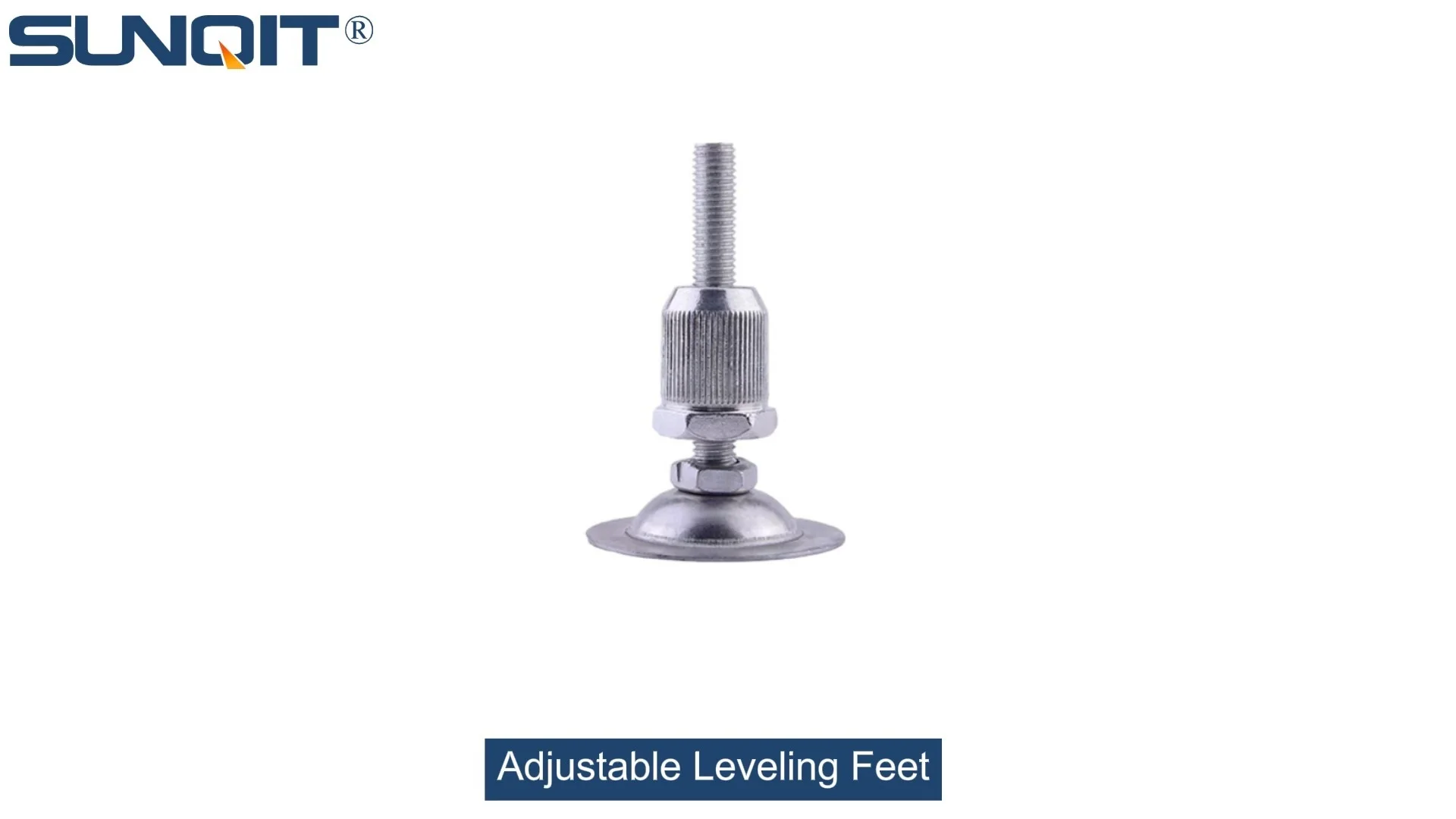
Adjustable Leveling Feet
Adjustable leveling feet are designed to keep machines level when placed on uneven or sloped ground. Otherwise known as adjustable equipment feet, they are available to order in a wide variety of size and load capacity combinations.
Walk into any production floor, and you'll notice the unsung heroes holding everything together: workbenches. They're where components become products, where precision meets purpose, and where the rhythm of production assemble truly comes to life. But not all workbenches are created equal. Among the most relied-upon designs is the Lean Pipe Workbench E (single deck-without caster)—a staple in lean manufacturing setups. Yet, even the best workbench design can fall short without one critical component: adjustable leveling feet. Today, we're diving into why these small but mighty tools are non-negotiable for anyone serious about maintaining stability, efficiency, and safety in their lean system .
First Things First: What is Lean Pipe Workbench E?
Before we talk about stability, let's get to know the star of the show: the Lean Pipe Workbench E (single deck-without caster). Designed with the principles of lean manufacturing in mind, this workbench is built for simplicity, flexibility, and durability. Its single-deck surface provides a clean, uncluttered workspace—perfect for assembly tasks where organization is key. Unlike workbenches with casters, it's stationary by design, meant to stay rooted in one spot as a reliable hub for repetitive or detailed work. Think of it as the steady hand in a fast-paced production assemble line: it doesn't move, so your focus can stay on the task at hand.
But here's the catch: stationary doesn't automatically mean stable. Even the sturdiest workbench can wobble, shift, or tilt if the ground beneath it isn't perfectly level. And let's be real—how many factory floors are truly, 100% flat? Years of heavy machinery rolling over concrete, temperature fluctuations causing minor cracks, or even slight grading during construction can leave floors uneven. Add to that the weight of tools, materials, and the constant motion of workers leaning, placing, and lifting, and you've got a recipe for instability. That's where adjustable leveling feet step in.
The Hidden Cost of an Unstable Workbench
Imagine this: You're on the assembly line, midway through attaching delicate components to a circuit board. The workbench beneath you feels off-kilter—a small rock to the left when you lean on it, a slight dip to the right when you place a tool down. You pause, adjust your posture, and refocus. But that split second of distraction? It's a waste of time. Multiply that by hundreds of workers across a shift, and suddenly "minor" instability becomes a major drain on productivity.
But the costs go beyond time. An unstable workbench can damage materials: a wobbly surface might cause small parts to slide off, leading to scrap or rework. It can compromise safety, too—tools could topple, or workers might overcompensate with awkward movements, increasing the risk of strain injuries. In a lean system , where every second and every resource counts, instability isn't just an annoyance; it's a form of waste. And waste, as any lean practitioner will tell you, is the enemy of efficiency.

Adjustable Leveling Feet: The Stability Solution You Didn't Know You Needed
So, what makes adjustable leveling feet the antidote to workbench instability? Let's break it down. At their core, these feet are simple: a threaded stem that screws into the workbench leg, topped with a flat or padded base that rests on the floor. By twisting the stem, you can raise or lower each foot individually, fine-tuning the workbench's height and balance. It's like giving your workbench tiny, customizable stilts—ones that adapt to whatever the floor throws at them.
But their simplicity is part of their genius. Let's say your Lean Pipe Workbench E is placed on a floor with a 1/4-inch slope across its length. Without leveling feet, one end would sit higher than the other, creating a tilt. With adjustable feet, you'd simply extend the feet on the lower side until the surface is perfectly horizontal. No shimming with cardboard or wood scraps (we've all been there), no permanent modifications—just quick, precise adjustments that lock in stability.
Modern adjustable leveling feet are built to handle the demands of industrial environments, too. Many are made with robust materials like steel or aluminum (sometimes even incorporating aluminum profile components for lightweight strength), with bases that grip floors to prevent slipping. Some feature anti-vibration pads, which are a game-changer for tasks involving sensitive equipment or precision measurements. And because they're designed to bolt directly to the workbench legs, they add minimal bulk while delivering maximum support.

How Adjustable Leveling Feet Stack Up: A Quick Comparison
Still not convinced? Let's put adjustable leveling feet head-to-head with other common workbench support options. The table below compares three popular choices: fixed feet (non-adjustable), caster wheels, and adjustable leveling feet. Spoiler: When it comes to stability for a stationary workbench like Lean Pipe Workbench E, there's a clear winner.
| Feature | Fixed Feet | Caster Wheels | Adjustable Leveling Feet |
|---|---|---|---|
| Stability on Uneven Floors | Poor—no way to compensate for dips or slopes | Very Poor—casters roll, even on slight inclines | Excellent—individual height adjustment for perfect balance |
| Load Capacity | Good, but uneven weight distribution can cause stress | Limited—casters have weight limits; prone to wobbling under heavy loads | Superior—evenly distributes weight across all feet, reducing leg strain |
| Suitability for Stationary Work | Okay, but only if floors are perfectly level | Poor—casters can drift, requiring constant readjustment | Perfect—locks the workbench in place with zero movement |
| Safety | Risk of tipping if uneven; no grip on smooth floors | High risk of rolling away; tripping hazard from wheels | Low risk—stable base reduces tipping; non-slip pads prevent movement |
| Adaptability | None—fixed height and angle | High mobility, but low adaptability to terrain | High—adjusts to any floor condition; can even compensate for future floor shifts |
As the table shows, adjustable leveling feet outshine the competition in every category that matters for a stationary, high-use workbench like Lean Pipe Workbench E. They're not just a "nice-to-have"—they're a foundational element of a stable, efficient workspace.

Beyond Stability: The Ripple Effects on Your Lean System
In a lean system , every decision is measured by how it reduces waste and increases value. Adjustable leveling feet do both, in ways that might surprise you. Let's start with waste reduction: A stable workbench means fewer dropped parts, less rework, and less time spent readjusting tools or chasing rolling components. It also reduces motion waste—workers no longer have to lean awkwardly or overcompensate for a wobbly surface, keeping their movements efficient and ergonomic.
Then there's value creation. When your Lean Pipe Workbench E is stable, tasks are completed faster and with more precision. Think about a quality inspection station: a level surface ensures measurements are accurate, reducing the chance of defective products reaching customers. Or consider a soldering station: a steady workbench minimizes, leading to cleaner, more reliable joints. Over time, these small improvements add up to big gains in productivity and product quality—exactly what lean manufacturing is all about.
And let's not forget about employee morale. No one likes working at a wobbly table. It's frustrating, distracting, and can make even simple tasks feel like a chore. By investing in adjustable leveling feet, you're sending a message: "We care about your workspace, and we care about making your job easier." Happy, comfortable workers are more engaged, more focused, and less likely to burn out—another win for your lean system.
Pro Tips: Getting the Most Out of Your Adjustable Leveling Feet
Now that you're sold on adjustable leveling feet, here are a few tips to ensure you get the most out of them:
1. Check them regularly. Even the best feet can loosen over time, especially in high-vibration environments. Make it part of your weekly maintenance routine to inspect and tighten each foot. A quick twist with a wrench is all it takes to keep things stable.
2. Match the feet to your floor type. If your workspace has smooth concrete, opt for feet with rubber or plastic bases to prevent slipping. For rough or uneven floors, consider feet with larger, more robust bases to distribute weight better.
3. Don't over-tighten. While you want a snug fit, cranking the feet too hard can strip the threads or damage the workbench legs. Tighten until the workbench is stable, then stop—you'll avoid unnecessary wear and tear.
4. Consider load capacity. Not all leveling feet are created equal. Make sure the ones you choose can handle the maximum weight your workbench will support, including tools, materials, and workers leaning on the surface. Most manufacturers list load ratings, so check the specs before buying.
Final Thoughts: Stability Isn't Optional—It's Essential
At the end of the day, the Lean Pipe Workbench E (single deck-without caster) is a fantastic tool for production assemble and lean systems. But like any tool, it's only as good as its foundation. Adjustable leveling feet provide that foundation—turning a good workbench into a great one by ensuring stability, efficiency, and safety.
In a world where every detail matters, where waste is the enemy and precision is king, adjustable leveling feet aren't just an upgrade—they're a must-have. They're the quiet assurance that your workbench will stay steady, your team will stay focused, and your lean system will keep running like a well-oiled machine. So the next time you're setting up a workspace, don't overlook the small stuff. Your productivity, your products, and your people will thank you.