- Company Articles
- Products and Technology
- Product knowledge
- Lean Pipe Workbench E: Why Flat Swivel Castor Wheels with Brake Are Essential for Mobility

Lean Pipe Workbench E: Why Flat Swivel Castor Wheels with Brake Are Essential for Mobility
Related Product
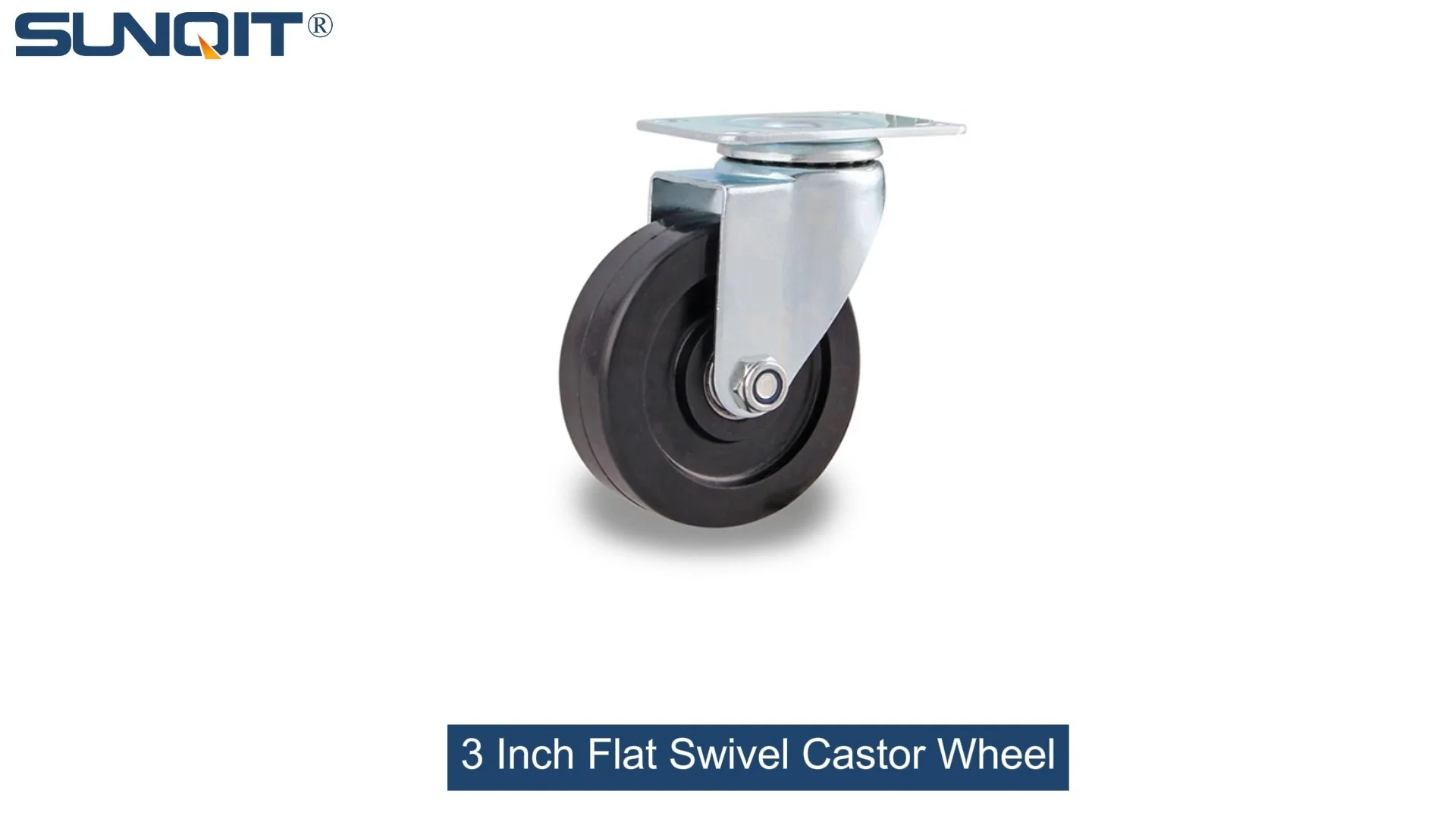
Flat Swivel Castor Wheel
Chair Casters Ball Bearing Wheels Rubber Base. Resistant to abrasion, impact and corrosion. Heavy payload can hold 70-90Kgs per pcs,which can make it works at a stable and smooth status.
Walk into any modern manufacturing facility, and you'll notice a quiet revolution happening on the factory floor. It's not just about machines or robots—it's about how workspaces adapt, flow, and empower the people behind the production line. At the heart of this revolution lies a humble yet powerful tool: the workbench. But not just any workbench. Today, we're diving into the Lean Pipe Workbench E —a staple in lean manufacturing setups—and uncovering why one component, in particular, transforms it from a static piece of furniture into a dynamic asset: Flat Swivel Castor Wheels with Brake .
In a world where every second counts and floor plans shift faster than market demands, mobility isn't a luxury—it's a necessity. Imagine a workbench that stays put when you need precision, glides smoothly when you need flexibility, and keeps your team safe every step of the way. That's the promise of pairing Workbench E with the right castors. Let's explore why this combination is becoming the backbone of efficient, people-centric production environments.
First, Let's Get to Know Lean Pipe Workbench E
Before we dive into castors, let's set the stage with the star of the show: the Lean Pipe Workbench E . If you're familiar with lean manufacturing, you know the goal is to eliminate waste, streamline processes, and create value at every turn. Workbench E embodies this philosophy from the ground up.
Designed as a single-deck workbench (initially without casters, as the name "Workbench E (single deck-without caster)" suggests), it's built using durable lean pipes—often aluminum or steel—and modular components that make customization a breeze. Think of it as a blank canvas for your production needs: add shelves, tool holders, or bins, and it adapts to whatever task comes its way. But here's the catch: without mobility, even the most customizable workbench can become a bottleneck.
Picture this: A team on the night shift needs to reconfigure their assembly line to accommodate a rush order. Their fixed workbench? It's stuck in place, forcing them to carry materials back and forth, wasting time and energy. A mobile workbench, on the other hand, can be wheeled right to the action, cutting down on unnecessary movement and keeping the focus on what matters—building quality products.
The Problem with "Stuck" Workbenches: Why Mobility Matters
Fixed workbenches have been around for decades, and for good reason—they're sturdy, reliable, and cheap. But in today's fast-paced manufacturing landscape, they come with a hidden cost: rigidity. Let's break down the pain points:
- Wasted Time on Material Handling: Workers spend precious minutes walking between workbenches and storage areas. In a 8-hour shift, those minutes add up to hours of lost productivity.
- Limited Floor Plan Flexibility: When production needs change—say, a new product line is introduced or demand spikes—rearranging fixed workbenches requires heavy lifting, tools, and downtime.
- Poor Space Utilization: A workbench that's only used for 2 hours a day sits idle, taking up valuable real estate that could be used for other tasks.
- Increased Worker Fatigue: Constant bending, lifting, and walking to retrieve tools or materials leads to tired employees and higher risk of injury.
These aren't just minor inconveniences—they directly contradict the principles of lean systems , which prioritize efficiency, respect for people, and continuous improvement. So, how do we fix this? The answer lies in adding mobility without sacrificing stability. Enter Flat Swivel Castor Wheels with Brake .
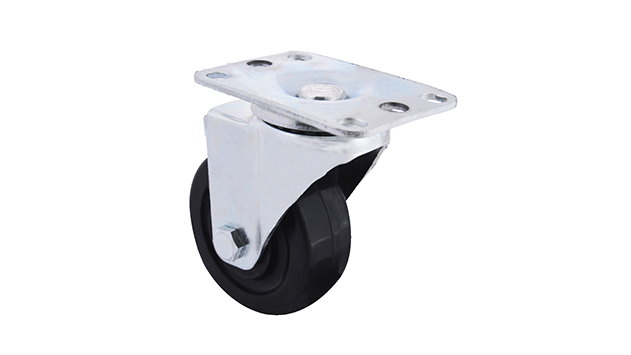
Flat Swivel Castor Wheels with Brake: The Unsung Heroes of Mobility
Not all castors are created equal. You've probably seen cheap plastic wheels that wobble under load or brakes that slip when you need them most. But the Flat Swivel Castor Wheels with Brake designed for Workbench E are a different breed. Let's unpack what makes them essential:
1. 360° Swivel: Maneuverability in Tight Spaces
Ever tried pushing a cart that only moves forward and backward? It's like trying to park a truck in a garage—frustrating and time-consuming. Flat swivel castors solve this with a 360° rotating design, allowing Workbench E to glide around corners, navigate narrow aisles, and position itself exactly where it's needed. Whether you're moving it to a flow rack for material replenishment or shifting it closer to a conveyor belt, the swivel action makes even heavy loads feel light.
2. Brake Mechanism: Stability When You Need It Most
Mobility is great, but a workbench that rolls away mid-assembly is a disaster waiting to happen. That's where the brake comes in. A quality brake locks both the wheel and the swivel mechanism, ensuring Workbench E stays rock-solid during use. No more wobbly surfaces when tightening bolts or assembling delicate components. Just flip the brake lever, and the workbench becomes as stable as its fixed counterpart—with the added bonus of being movable when the job is done.
3. Durability for the Long Haul
Manufacturing floors are tough environments—dust, oil, heavy loads, and constant use take a toll on equipment. These castors are built to withstand the chaos. They feature robust materials like polyurethane or rubber wheels (which won't mark floors), steel frames, and corrosion-resistant coatings. Even with daily use, they'll keep rolling smoothly for years, making them a smart investment for any facility.
4. Load Capacity That Keeps Up with Your Workbench
Workbench E isn't just for light tasks—it's built to handle heavy tools, materials, and assemblies. The castors must match that strength. Look for models with a load capacity of at least 150-200 kg per wheel (depending on the workbench size). That means even when fully loaded with parts and equipment, Workbench E remains easy to push and stable to use.

Why These Castors Are Non-Negotiable for Workbench E
Now that we know what makes these castors special, let's connect the dots: why are they essential for Lean Pipe Workbench E specifically? It all comes down to alignment with lean principles and real-world functionality.
Aligning with Lean Systems: 5S and Beyond
Lean systems thrive on organization, cleanliness, and efficiency—principles embodied in the 5S methodology (Sort, Set in Order, Shine, Standardize, Sustain). A mobile Workbench E with reliable castors makes 5S implementation a breeze:
- Sort (Seiri): Easily move the workbench to sort tools and materials, keeping only what's needed within arm's reach.
- Set in Order (Seiton): Position the workbench exactly where it fits best in the workflow, reducing unnecessary movement.
- Shine (Seiso): Roll the workbench aside to clean the floor underneath—no more dust bunnies hiding in hard-to-reach corners.
- Standardize (Seiketsu): Create consistent workstations by moving the bench to predefined spots, ensuring every team member knows where to find what they need.
- Sustain (Shitsuke): Empower workers to maintain order by giving them the flexibility to adjust their workspace as needed.
In short, these castors turn Workbench E into a tool for continuous improvement, not just a place to work.
Boosting Productivity: From "Go Fetch" to "Get to Work"
Let's do the math. Suppose a worker spends 5 minutes per hour walking to retrieve materials from a flow rack 20 feet away from their fixed workbench. In an 8-hour shift, that's 40 minutes of walking—time that could be spent assembling products, inspecting quality, or collaborating with teammates. With Workbench E on castors, the worker can wheel the bench right to the flow rack, cutting that 5 minutes down to 30 seconds. Over a week, that's 3+ hours saved per worker. Multiply that by a team of 10, and you're looking at 30+ hours of regained productivity—time that can be invested in innovation or meeting tight deadlines.
Safety First: No More Compromises
A workbench that moves easily reduces the need for manual lifting and carrying, lowering the risk of strains and sprains—the most common workplace injuries in manufacturing. The brake feature adds another layer of safety: during use, the bench stays put, preventing accidental movement that could knock over tools or damage products. Plus, high-quality castors with non-slip wheels reduce the risk of slips and falls, even on smooth or oily floors.

Integrating with the Lean Ecosystem: Workbench E, Flow Racks, and Aluminum Profile Accessories
Workbench E doesn't exist in a vacuum—it's part of a larger ecosystem of lean tools, including flow racks , conveyors, and aluminum profile accessories . Let's see how the castors help it play well with others:
Flow Racks: These gravity-fed racks keep materials organized and easily accessible. With Workbench E on castors, workers can position the bench directly in front of the flow rack, minimizing the distance materials need to travel. It's like having a mini assembly line right at your fingertips.
Aluminum Profile Accessories: Workbench E's modular design means you can add everything from tool hooks to monitor mounts using aluminum profile accessories. But what good are these accessories if the bench can't be positioned to use them effectively? Castors let you adjust the bench's height (if paired with adjustable feet) or angle, ensuring tools and screens are at the optimal ergonomic position for each worker.
Conveyors: When assembling products that move along a conveyor, a mobile workbench can be wheeled parallel to the line, keeping workers in sync with the flow of materials. No more stretching or leaning to reach the conveyor—just smooth, efficient collaboration between human and machine.
Real-World Impact: A Day in the Life with Mobile Workbench E
Let's paint a picture of how this plays out on the factory floor. Meet Maria, an assembly line worker at a electronics manufacturer. Her team builds circuit boards, and until recently, they used fixed workbenches bolted to the floor.
"Before the mobile Workbench E, I'd spend half my day walking to the flow rack to get components," Maria says. "If a new order came in with different parts, we'd have to carry everything back to our bench. It was exhausting, and I'd often rush to keep up, which meant more mistakes."
Then the company added Flat Swivel Castor Wheels with Brake to their Workbench E setups. "Now, I wheel my bench right to the flow rack, load up the parts I need, and lock the brakes. No more walking—just focus on building. And when we need to reconfigure the line for a new product? We move the benches in 10 minutes instead of 2 hours. My team's productivity is up, and I go home less tired. It's a game-changer."
Maria's story isn't unique. Across industries—from automotive to pharmaceuticals—mobile workbenches are transforming how teams operate. They're not just tools; they're enablers of a more human-centric workplace, where workers have the flexibility to do their best work.
Technical Deep Dive: What to Look for in Castors for Workbench E
If you're convinced that Flat Swivel Castor Wheels with Brake are a must for your Workbench E, here's what to consider when choosing the right ones:
- Load Capacity: Check the workbench's weight (empty and fully loaded) and choose castors that can handle at least 120% of that weight (to be safe).
- Wheel Material: Polyurethane wheels are ideal for most factory floors—they're durable, non-marking, and provide good traction. Rubber wheels work well on uneven surfaces, while nylon is better for heavy loads.
- Brake Type: Look for "total lock" brakes that lock both the wheel and the swivel plate. This prevents both rolling and swiveling, ensuring maximum stability.
- Mounting Style: Workbench E typically uses plate-mounted castors, which are bolted to the bench's base for security. Ensure the castor plates match the bench's mounting holes.
- Swivel Radius: A smaller swivel radius means better maneuverability in tight spaces. Look for castors with a swivel radius of 2-3 inches for optimal performance.
Pro tip: Don't skimp on quality. Cheap castors may save money upfront, but they'll wear out quickly, leading to frequent replacements and downtime. Invest in castors from a reputable lean pipe supplier who understands the demands of manufacturing environments.
Workbench E with Castors vs. Fixed Workbench: The Numbers Speak
| Feature | Workbench E with Flat Swivel Castor Wheels with Brake | Standard Fixed Workbench |
|---|---|---|
| Setup Time for New Layout | 10-15 minutes | 2-3 hours (requires tools/lifting) |
| Worker Movement per Shift | Reduced by 60-70% | High (constant trips to storage) |
| Space Utilization | High (can be moved when not in use) | Low (permanently occupies space) |
| Safety Risk | Low (reduced lifting, stable when braked) | Higher (more lifting, fixed position may cause strain) |
| Alignment with Lean Systems | Excellent (supports 5S, continuous improvement) | Limited (rigid, resists change) |
Conclusion: Mobility as a Catalyst for Lean Success
In the world of lean manufacturing, every detail matters. From the tools we use to the way we arrange our workspaces, small changes can lead to big results. The Lean Pipe Workbench E paired with Flat Swivel Castor Wheels with Brake is more than just a workspace upgrade—it's a statement that your team values efficiency, safety, and adaptability.
These castors turn a static workbench into a dynamic tool that aligns with lean systems , integrates seamlessly with flow racks and aluminum profile accessories , and empowers workers to do their best. They're not just wheels—they're the key to unlocking a more productive, flexible, and human-centric factory floor.
So, if you're still using fixed workbenches, ask yourself: What could your team accomplish with a little more mobility? The answer might surprise you. After all, in lean manufacturing, the goal isn't just to work harder—it's to work smarter. And with Workbench E on the right castors, smart work becomes second nature.