- Company Articles
- Products and Technology
- Product knowledge
- Lean Sustainability: Reusable Flat Swivel Castor Wheel with Brake for Continuous Improvement Systems

Lean Sustainability: Reusable Flat Swivel Castor Wheel with Brake for Continuous Improvement Systems
Related Product
Flat Swivel Castor Wheel With Brake
Chair Casters Ball Bearing Wheels Rubber Base with brake design. Resistant to abrasion, impact and corrosion. Heavy payload can hold 70Kgs per pcs,which can make it works at a stable and smooth status.
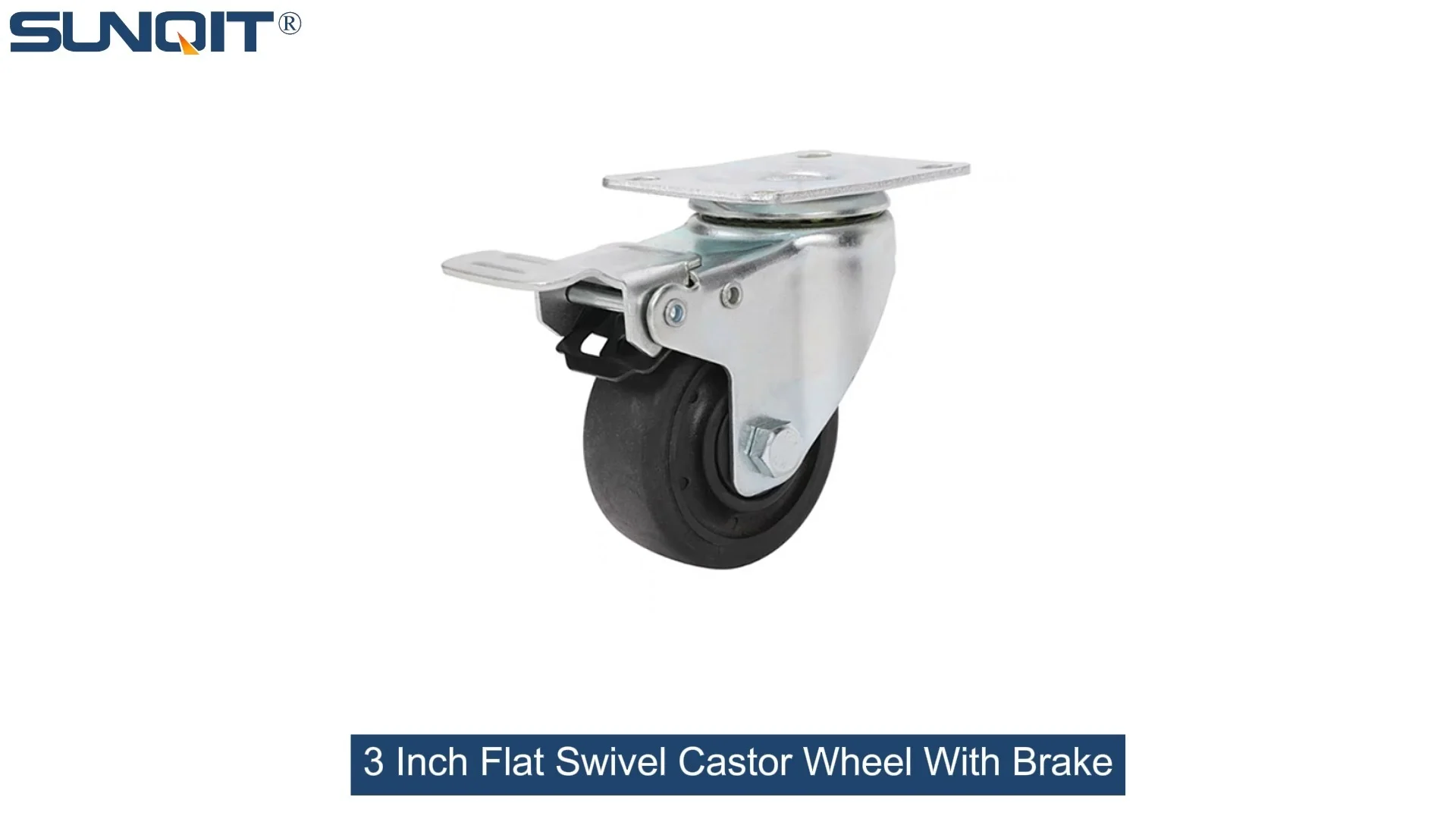
Walk into any manufacturing facility, warehouse, or assembly plant, and you'll quickly notice a silent workforce MVP: the humble castor wheel. Tucked under workbenches, bolted to turnover trolleys, and supporting material racks, these small components carry the weight of daily operations—literally. But not all castors are created equal. For teams striving to build lean, sustainable systems, the difference between a frustrating, short-lived castor and a reliable, long-lasting one can mean the difference between wasted hours and seamless efficiency. Today, we're zeroing in on a game-changer in this space: the flat swivel castor wheel with brake . More than just a mobility tool, it's a quiet contributor to lean principles, sustainability goals, and the never-ending pursuit of continuous improvement.
Why Lean Systems Depend on the "Small Stuff"
Lean manufacturing isn't just about big-picture strategies like process mapping or waste reduction workshops. It's about the details—the way a trolley glides around a corner, the stability of a workbench during assembly, or the ease of reconfiguring a production line to meet shifting demand. These "small stuff" moments add up. A stuck castor that requires a worker to exert extra force? That's wasted labor. A trolley that drifts when loaded, risking product damage? That's potential defects. A castor that wears out after six months, requiring replacement? That's unnecessary waste and cost.
In lean systems, every component must pull its weight. It should be durable enough to minimize replacement, flexible enough to adapt to changing needs, and efficient enough to reduce friction—both physical and operational. The flat swivel castor wheel with brake checks all these boxes, and then some. Let's break down why it matters, starting with the twin pillars of lean and sustainability.
Lean + Sustainability: A Match Made in the Factory Floor
Lean principles and sustainability might seem like separate goals, but they're deeply intertwined. Lean aims to eliminate waste (muda), while sustainability focuses on reducing environmental impact and preserving resources. The magic happens when a single component serves both: cutting waste and minimizing resource use. That's where reusable, durable tools like the flat swivel castor with brake shine.
Consider this: A standard plastic castor might last a year in a busy facility before cracking or losing its grip. Each replacement means new materials, manufacturing energy, and disposal of the old part—all environmental costs. Now, imagine a castor built with high-grade materials, designed for easy repair (thanks to accessible caster accessories like replacement wheels or brake pads), and engineered to withstand heavy use for 5+ years. Suddenly, you're not just saving on replacement costs—you're slashing waste and lowering your carbon footprint. That's lean sustainability in action.
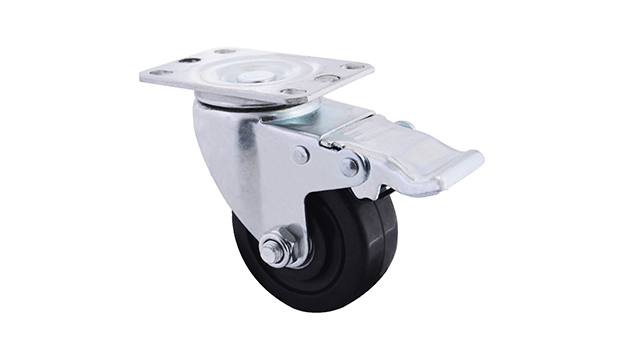
Meet the Star: Flat Swivel Castor Wheel with Brake
Let's get up close with the star of the show. The flat swivel castor wheel with brake is designed with one goal in mind: to make mobility predictable, safe, and sustainable. Unlike bulkier castors that add unnecessary height or weight, its "flat" design keeps the center of gravity low, reducing the risk of tipping—critical when moving heavy loads on workbenches or turnover trolleys. The "swivel" feature allows 360-degree movement, so workers can maneuver tight corners or reposition equipment with minimal effort. And the "brake"? It's the unsung hero of stability, locking the wheel in place to prevent accidental movement during loading, unloading, or assembly.
Key Features That Make a Difference
What sets this castor apart from generic options? Let's dive into the details:
- Durable Materials: Typically constructed with a high-quality plastic wheel (resistant to oils, chemicals, and wear) and a reinforced steel or aluminum frame. This combo balances strength with lightweight mobility, ensuring it can handle daily use without rusting or warping.
- Low-Profile Design: The flat mounting plate sits close to the ground, lowering the overall height of equipment like workbenches or trolleys. This not only improves stability but also makes it easier to slide under shelves or into tight spaces.
- Smooth Swivel Mechanism: A precision ball bearing system in the swivel head ensures effortless rotation, even when fully loaded. No more struggling to turn a heavy trolley—this castor glides with minimal force, reducing worker fatigue.
- Reliable Brake System: The brake engages both the wheel and the swivel head, preventing both rolling and rotation. This dual-lock feature is a game-changer for safety, especially on uneven floors or when workers need to keep a workbench steady during detailed assembly tasks.
- Reusable & Repairable: Unlike disposable castors, this model is designed for longevity. Most parts (wheels, brakes, bearings) can be replaced individually using standard caster accessories , extending its life cycle and reducing waste.
| Feature | Flat Swivel Castor with Brake | Standard Fixed Castor | Generic Swivel Castor (No Brake) |
|---|---|---|---|
| Mobility | 360° swivel + smooth rolling | Fixed direction only | 360° swivel, but may stick under load |
| Stability | Low profile + dual-lock brake | Stable but immobile | Prone to drifting when loaded |
| Sustainability | Repairable parts, 5+ year lifespan | Disposable, 1–2 year lifespan | Wears quickly; entire unit replaced |
| Worker Fatigue | Minimal effort to move/lock | Requires lifting to reposition | Struggling with swivel or drift |

Where It Shines: Real-World Applications
The flat swivel castor wheel with brake isn't a one-trick pony. Its versatility makes it a staple in lean systems across industries. Let's explore some common applications where it truly makes a difference:
1. Workbenches: The Heart of Assembly Lines
A workbench is more than just a table—it's a command center for assembly, testing, or packaging. When outfitted with flat swivel castors with brakes, it transforms from a stationary fixture into a mobile workstation. Need to reconfigure the line for a new product? Unlock the brakes, glide the workbench into place, and lock it down. No more heavy lifting or disrupting the entire workflow. The low profile ensures the work surface stays at a comfortable height, while the brake keeps tools and parts from sliding during use.
2. Turnover Trolleys & Material Racks
In warehouses, turnover trolleys and material racks (like Material Rack B, with its 3 rows and 3 floors) are constantly on the move, ferrying parts from storage to the production line. A stuck or wobbly castor here can grind operations to a halt. The flat swivel castor's smooth rolling and dual-lock brake mean workers can load the trolley, navigate narrow aisles, and lock it securely at the assembly station—all without breaking a sweat. And because it's built to last, there's no need to replace castors every few months, keeping maintenance costs and downtime to a minimum.
3. Mobile Testing Stations
Quality control teams often need to move testing equipment to different parts of the factory. Whether it's a weight scale, a calibration tool, or an inspection station, the flat swivel castor with brake ensures the station stays steady during testing (thanks to the brake) and moves easily between locations (thanks to the swivel). This flexibility reduces the need for multiple fixed stations, saving space and resources.

The Lean Impact: How It Drives Continuous Improvement
Lean systems thrive on continuous improvement—small, incremental changes that add up to big results. The flat swivel castor wheel with brake contributes to this in three key ways:
1. Reducing Waste (Muda)
In lean terms, "waste" includes everything from excess inventory to unnecessary motion. This castor attacks both. By lasting longer and being repairable, it cuts down on "waste of defects" (broken castors) and "waste of overproduction" (manufacturing replacement castors). Its smooth movement also reduces "waste of motion"—workers no longer spend time struggling with stuck or heavy trolleys, freeing them up for more value-added tasks.
2. Enhancing Flexibility (Heijunka)
Heijunka, or load balancing, is about adapting to demand without chaos. With mobile, lockable equipment, teams can quickly rebalance workflows. For example, if one assembly line gets backed up, a workbench on flat swivel castors can be moved to support that line—no delays, no hassle. This flexibility makes it easier to handle variable demand, keeping production steady and efficient.
3. Improving Safety & Morale
A safe, efficient workplace isn't just good for operations—it's good for people. When workers don't have to fight with uncooperative equipment, they're less frustrated, less fatigued, and more engaged. The brake feature also reduces the risk of accidents, from tipped trolleys to sliding tools. Happier, safer teams are more likely to contribute ideas for improvement, creating a culture of continuous growth.
Sustainability Beyond the Factory Floor
Sustainability isn't just about reducing waste in production—it's about building a circular economy. The flat swivel castor wheel with brake aligns with this by being reusable and repairable . When the wheel finally wears out (after years of use), the frame and brake components can be kept, and only the wheel replaced. This modularity extends the product's life cycle, reducing the need for raw materials and energy in manufacturing new castors. Even better, many suppliers (like lean system suppliers specializing in these components) offer recycling programs for old castors, ensuring they don't end up in landfills.
For companies aiming for green certifications or sustainability reports, these small choices add up. A facility using 100 reusable castors instead of disposable ones could save hundreds of pounds of waste over five years—not to mention the energy and water used in manufacturing replacements.
The Bottom Line: Small Component, Big Impact
In the world of lean sustainability, the flat swivel castor wheel with brake is a reminder that greatness lies in the details. It's not flashy or high-tech, but it does its job quietly, reliably, and sustainably. By reducing waste, improving efficiency, and supporting continuous improvement, it helps turn factory floors into hubs of productivity and purpose.
So the next time you walk through a manufacturing facility, take a moment to notice the castors under those workbenches and trolleys. The right ones aren't just moving equipment—they're moving the needle on lean goals, sustainability, and the well-being of the people who keep operations running. And that, in the end, is what continuous improvement is all about: building systems that work for people, not against them.