- Company Articles
- Products and Technology
- Technology Sharing
- Lean System Upgrades: Replacing Old Joints with Four Way Straight Lean Pipe Joint Chrome

Lean System Upgrades: Replacing Old Joints with Four Way Straight Lean Pipe Joint Chrome
Related Product
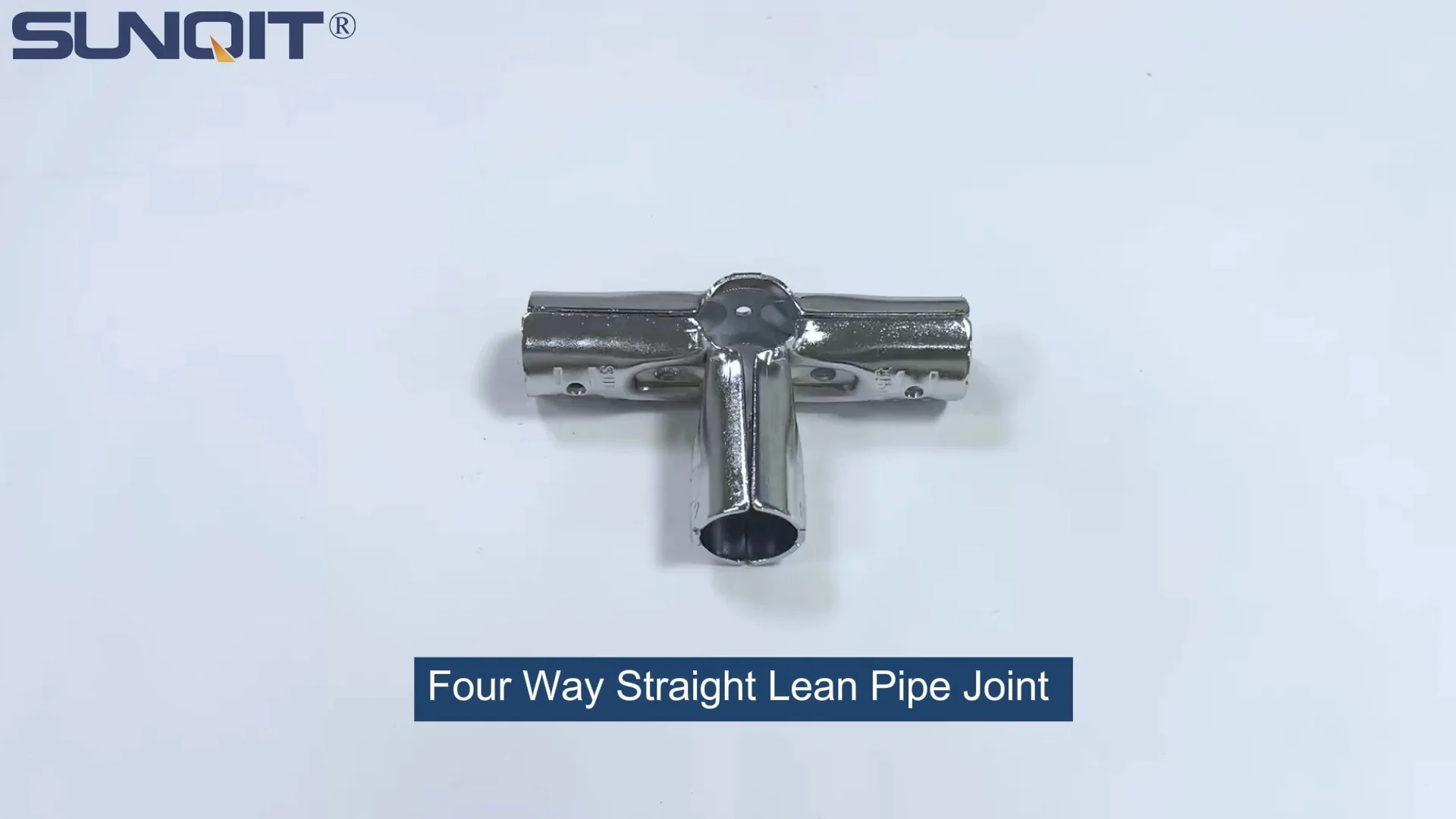
Four Way Straight Lean Pipe Joint Chrome
Four way lean pipe joint for 4 pcs 28MM lean pipe connection in straight angle, which used widely in workbench, flow rack, hand trolley frame connection.
Let's start with a familiar scene: It's 8:15 AM on a Tuesday, and Maria, the production floor manager at a mid-sized electronics assembly plant, is already juggling two urgent issues. The third workbench in Line B has started wobbling again—one of its joints came loose overnight, and the morning shift is struggling to keep up with the pace. Down the hall, the flow rack that feeds components to Line D keeps jamming; a quick check reveals a cracked joint where the roller track connects to the frame. "Not again," she mutters, grabbing her walkie-talkie to call maintenance. By 9 AM, two hours of potential productivity have slipped away, and Maria is staring at a growing backlog. Sound familiar?
If you've spent any time managing a production environment, you know that small, overlooked components can cause the biggest headaches. Today, we're zeroing in on one such component: the humble lean pipe joint. Specifically, why upgrading to a four way straight lean pipe joint chrome might be the silent hero your workflow needs—and how it can transform everything from your lean pipe workbench stability to your flow rack efficiency.
The Hidden Cost of "Good Enough" Joints
For years, many facilities have relied on basic, single- or two-way joints to build their lean systems. These joints do the job… at first. But over time, their limitations become impossible to ignore. Let's break down the usual suspects:
- Rigidity: Old-style joints often lock into fixed angles, making it nearly impossible to reconfigure workbenches or racks when production needs change. Want to add a shelf to a workbench? You'll likely need to disassemble half the structure.
- Wear and Tear: Cheap plastic or uncoated metal joints corrode quickly in busy environments, especially where oils, coolants, or humidity are present. A rusted joint doesn't just look bad—it weakens the entire structure, risking product damage or worker injury.
- Assembly Headaches: Many require special tools or even welding to install, turning a 30-minute setup into a 2-hour project. And if a joint cracks mid-shift? Good luck finding a replacement that fits—most older models are discontinued, leaving you with mismatched parts.
Maria's plant was stuck in this cycle. Their lean systems, built five years ago with basic two-way joints, had become more of a liability than an asset. "We were spending so much time fixing joints instead of improving processes," she recalls. "It was like trying to build a house with rotting nails—no matter how good the walls looked, the foundation was crumbling."
Enter the Four Way Straight Lean Pipe Joint Chrome: A Game-Changer in Disguise
After months of frustration, Maria reached out to a trusted lean system supplier she'd worked with on a previous conveyor upgrade. "I told them I needed joints that could keep up with us—not slow us down," she says. Their recommendation? The four way straight lean pipe joint chrome. At first glance, it might seem like just another metal piece, but its design solves the old problems in clever, practical ways.
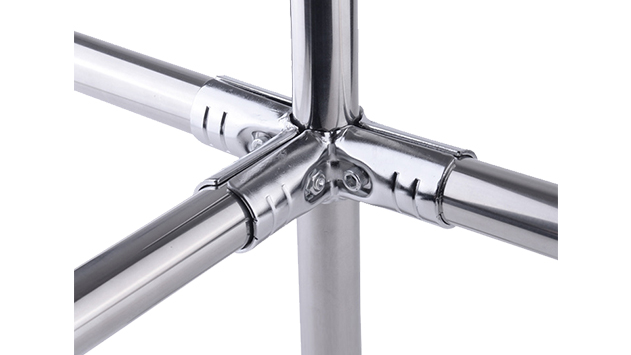
Let's start with the basics: This joint is exactly what its name suggests—a chrome-plated metal connector with four ports, allowing lean pipes to extend in four directions (up, down, left, right) from a single point. But it's the details that make it stand out:
Chrome Plating: Unlike uncoated steel, the chrome finish resists corrosion, scratches, and chemical damage. Maria's plant, which uses water-based coolants on the assembly line, saw immediate results—after six months, the joints still look brand-new, with no signs of rust.
Tool-Free Adjustability: The joint's internal locking mechanism tightens with a standard hex key, but here's the kicker: It holds firm under heavy loads (up to 200 lbs per joint, in most cases) but can be loosened in seconds to reposition pipes. Need to angle a flow rack downward by 5 degrees to speed up material flow? Just twist the joint—no disassembly required.
Universal Compatibility: Designed to fit standard 28mm lean pipes (the industry standard), it works seamlessly with existing systems. Maria was able to retrofit her old workbenches and flow racks with the new joints without replacing all the pipes—saving thousands in upfront costs.
From Wobbly Workbenches to Rock-Solid Results: Real-World Impact
To understand the difference, let's compare the old setup vs. the upgraded system at Maria's plant. The table below breaks down key metrics before and after installing four way straight lean pipe joint chrome:
| Metric | Before (Old Joints) | After (Four Way Chrome Joints) |
|---|---|---|
| Weekly maintenance hours on workbenches/racks | 8-10 hours | 1-2 hours |
| Workbench reconfiguration time (e.g., adding a shelf) | 90 minutes | 15 minutes |
| Flow rack jams per week | 5-7 incidents | 0-1 incidents |
| Joint replacement cost (annual) | $1,200 (replacing ~30 joints) | $0 (no replacements needed in 12 months) |
But numbers only tell part of the story. "The biggest change was the team's morale," Maria says. "When the workbenches stopped wobbling, and the flow racks fed parts smoothly, the operators didn't have to waste mental energy compensating for the tools. They could focus on building better products, not fixing the equipment."
Case Study: A Day in the Life Post-Upgrade
Let's fast-forward to a typical day at Maria's plant now, six months after installing the four way chrome joints. At 8:00 AM, Line B's workbench is steady as a rock—the new joints have held firm through daily use, even with operators leaning on the edges while assembling circuit boards. At 10:30 AM, a last-minute order comes in for a custom component, requiring Line D's flow rack to be reconfigured to accommodate a taller bin. Instead of calling maintenance, the line lead grabs a hex key, loosens three joints, adjusts the frame, and tightens them back up—done in 12 minutes. By 3:00 PM, production is 15% ahead of schedule, and Maria hasn't had to field a single equipment-related complaint.
"It's not just about the joints," she reflects. "It's about building a system that adapts with you. The four way chrome joint isn't just a part—it's permission to be flexible, to innovate, and to stop fighting your tools."

Why Partnering with the Right Lean System Supplier Matters
Upgrading to a four way straight lean pipe joint chrome is a smart move, but it's only as effective as the supplier behind it. Here's what to look for when choosing a partner:
Quality Materials: Not all chrome-plated joints are created equal. Look for suppliers who use high-grade steel with a thick chrome coating (at least 0.0005 inches) to ensure durability. Ask for test reports on corrosion resistance—reputable suppliers will happily share them.
Range of Accessories: A great joint is even better when paired with compatible parts. Your supplier should offer everything from aluminum profile accessories (like end caps and connectors) to roller track guides, ensuring a seamless upgrade across your entire system.
Technical Support: Even the best parts need guidance. Choose a supplier with a responsive support team that can help you design custom configurations or troubleshoot installation issues. Maria's supplier sent a technician to train her team on joint assembly—"That 2-hour session saved us weeks of trial and error," she says.
Is It Time for Your Lean System to Grow Up?
If you're still dealing with wobbly workbenches, jammed flow racks, or the constant need to replace worn joints, it's time to ask: What's the real cost of sticking with "good enough"? The four way straight lean pipe joint chrome isn't a luxury—it's an investment in your team's productivity, your product quality, and your peace of mind.
Maria's plant isn't just meeting production targets now—they're exceeding them. And it all started with a small change: swapping out old joints for ones that could keep up. "You don't realize how much energy you're wasting until you stop wasting it," she says. "Today, we're not just building products—we're building a system that grows with us. And that's the real power of lean."
So, what's your first step? Grab a wrench, head to your shakiest workbench, and take a close look at those joints. If they're rusted, cracked, or limiting your flexibility, it's time for an upgrade. Your future self (and your production numbers) will thank you.