Lean Workstations for 3C Industry: Integrating 40 Steel Roller Track Black Wheels

Related Product
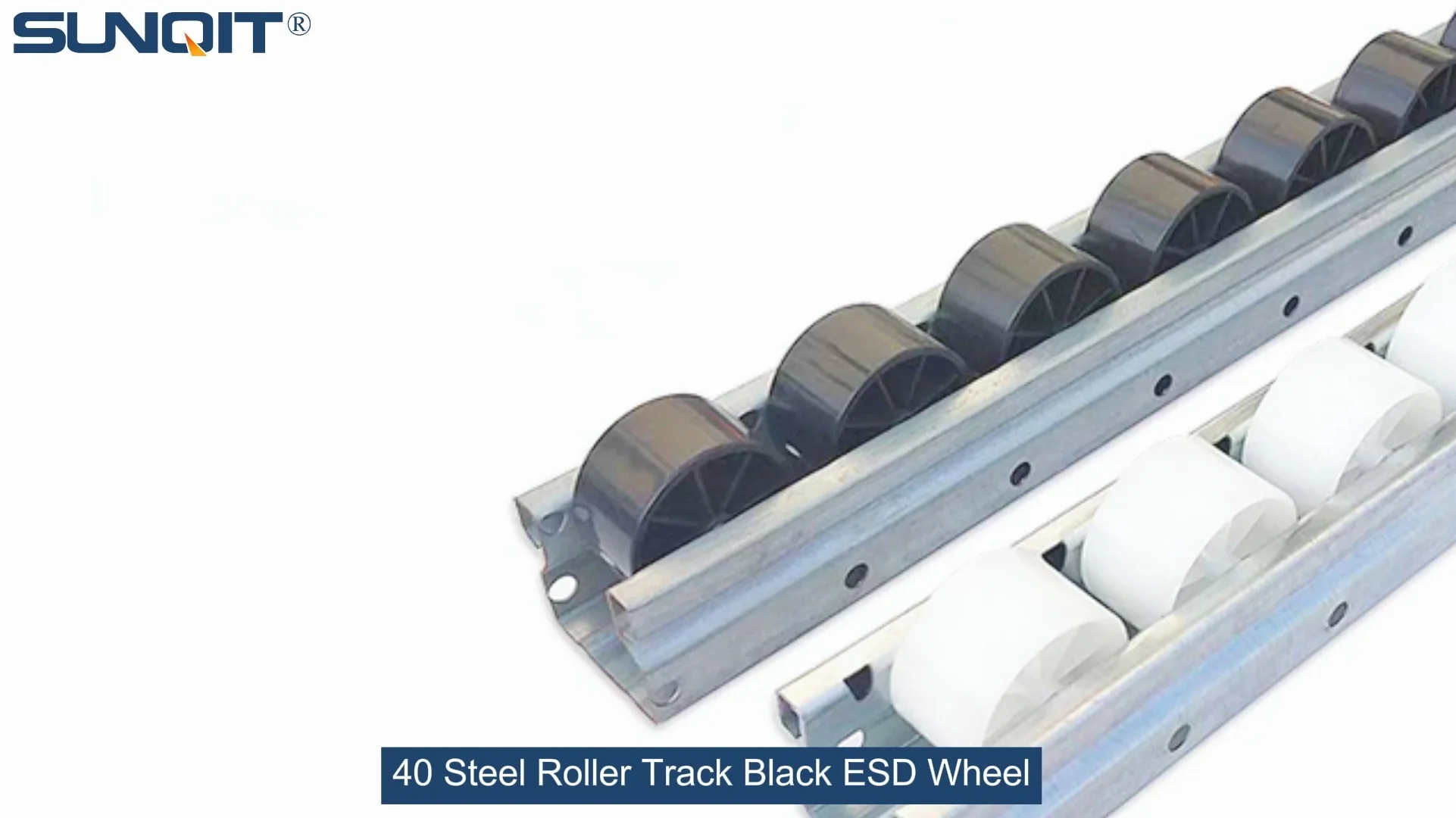
40 Steel Roller Track Black Wheel
The roller track can be installed with multiple accessories to create different slopes and configurations of flow racks.All steel conveyor 40 roller track accessories are engineered to perfectly fit the sliding rail.
40 Steel Roller Track Black Wheel

Walk into any modern 3C manufacturing plant, and you'll immediately sense the energy—lines humming with activity, workers focused on assembling the latest smartphones, tablets, or wearables, and a constant push to meet tight production deadlines. In an industry where product life cycles can be measured in months, not years, flexibility and efficiency aren't just buzzwords; they're the difference between keeping up with demand and falling behind. That's why more and more 3C manufacturers are turning to lean workstations, and one component that's becoming indispensable in these setups is the 40 steel roller track with black wheels. Let's dive into how this combination is transforming 3C assembly lines, making them smarter, faster, and more adaptable than ever before.

The 3C Industry Challenge: Speed, Precision, and Change

3C products—consumer electronics like smartphones, laptops, and smart home devices—are defined by rapid innovation. A new model might require slight changes in component placement, different testing procedures, or even a complete layout shift on the assembly line. Traditional workstations, often built with fixed metal frames or welded structures, simply can't keep pace. They're heavy, hard to reconfigure, and when production needs change, they often end up gathering dust in a corner, wasting both space and resources.

Add to that the need for precision. 3C components are getting smaller and more delicate; a single static discharge or a jolt during material handling can ruin a circuit board or a microchip. And with profit margins tightening, minimizing waste—whether in time, materials, or labor—is non-negotiable. This is where lean manufacturing principles step in, and at the core of that philosophy are workstations designed to be flexible, efficient, and built for continuous improvement.

Why Lean Workstations Matter in 3C Assembly

Lean workstations aren't just about saving space—they're about creating a workflow that adapts to your needs, not the other way around. The idea is simple: eliminate unnecessary steps, reduce movement, and make sure every part of the workstation serves a purpose. For 3C manufacturers, this translates to:

  • Faster changeovers: When a new product model launches, you need to reconfigure your line quickly. Lean workstations, built with modular components, let you adjust heights, add or remove shelves, or rearrange material flow paths in hours, not days.
  • Reduced waste: By streamlining how materials move from one station to the next, you cut down on excess inventory and waiting times. Components arrive exactly when they're needed, and finished products move out faster.
  • Better ergonomics: Happy, comfortable workers are more productive. Lean workstations can be adjusted to fit different operators, reducing strain and fatigue during long shifts.
  • Sustainability: Many lean components are reusable and recyclable, aligning with the growing focus on eco-friendly manufacturing practices. Instead of replacing an entire workstation, you just swap out the parts you need.

But none of this works without the right components. And that's where the 40 steel roller track with black wheels comes into play—it's the unsung hero that keeps materials moving smoothly, quietly, and reliably, even in the busiest 3C assembly environments.

The Star Component: 40 Steel Roller Track with Black Wheels

You might not think much about a roller track, but in a lean workstation, it's the backbone of material flow. The 40 steel roller track, specifically designed with black wheels, is a game-changer for 3C assembly lines. Here's why:

Built to handle 3C's demands: 40mm steel tracks are sturdy enough to carry the weight of circuit boards, small components, and even partially assembled devices without bending or warping. The black wheels, often made from high-quality rubber or polyurethane, offer just the right amount of grip—enough to keep materials from sliding unexpectedly, but smooth enough to let them glide with minimal effort. This is crucial when you're moving delicate items that can't afford rough handling.

Quiet operation, less distraction: 3C assembly lines can get noisy with machinery and tools. The 40 steel roller track's black wheels are designed to reduce friction, which means less squeaking and rattling. A quieter workspace isn't just nicer for employees; it helps them stay focused, reducing errors in tasks that require extreme precision.

ESD protection built-in: Static electricity is the enemy of electronics. Many black wheels in these roller tracks are made with conductive materials, dissipating static charges to protect sensitive components. This is a huge plus for 3C manufacturers, where even a tiny static discharge can lead to costly defects or product failures.

Durability that lasts: Steel tracks resist corrosion and wear, even in the dusty or slightly humid environments common in manufacturing plants. The black wheels hold up well to constant use, meaning less downtime for replacements and lower maintenance costs over time.

But the 40 steel roller track doesn't work alone. It's part of a larger ecosystem of lean components that together create a workstation that's greater than the sum of its parts. Let's take a look at the key players that make these workstations truly effective.

Key Components: Beyond the Roller Track

A lean workstation is like a puzzle—each piece needs to fit perfectly to create a seamless workflow. Alongside the 40 steel roller track, three components stand out: the lean pipe workbench, ESD workstation, and aluminum joints. Let's break them down.

Lean Pipe Workbench: The Foundation of Flexibility

At the heart of any lean workstation is the lean pipe workbench. These aren't your average worktables; they're built with lightweight but strong aluminum pipes (or "lean tubes") and modular joints, making them incredibly versatile. Take the Workbench E, for example—a single-deck design without casters, perfect for fixed assembly stations in 3C lines. What makes it special?

  • Modular by design: You can add shelves, tool holders, or even integrate the 40 steel roller track directly into the bench. Need a place to hold small screws? Attach a parts bin. Want to mount a monitor for assembly instructions? Just add a bracket. It's like building with Legos for adults—no welding or special tools required.
  • Quick to assemble, even quicker to reconfigure: With simple aluminum joints, putting together a lean pipe workbench takes hours, not days. And when production needs change, you can take it apart and rebuild it in a new layout just as fast. For 3C manufacturers testing a new product prototype, this flexibility is a lifesaver.
  • Lightweight but strong: Aluminum pipes are lighter than steel, making the workbench easy to move (if you add casters) or adjust. But don't let the weight fool you—they can handle the day-to-day demands of assembly work, from clamping tools to supporting heavy equipment.
ESD Workstation: Protecting What Matters Most

In 3C manufacturing, static electricity is a silent threat. An ESD workstation—short for electrostatic discharge workstation—is designed to neutralize that threat, and it's often integrated with the lean pipe workbench and 40 steel roller track. Here's how it works:

ESD workstations come with conductive surfaces, wrist straps for operators, and sometimes even ionizers to keep the air around the workstation static-free. When paired with the 40 steel roller track's black ESD wheels, the entire material flow process becomes protected. Components move from storage to the ESD workstation on the roller track, where they're assembled without risk of static damage. It's a closed loop of safety that gives manufacturers peace of mind, especially when working with high-value components like microprocessors or camera modules.

Aluminum Joints: The Glue That Holds It All Together

You can have the best pipes and roller tracks, but without reliable joints, your workstation will fall apart—literally. Aluminum joints, especially the internal rotary type, are what make lean workstations so adaptable. These small but mighty connectors let you pivot, rotate, and lock pipes into place at almost any angle. Need to adjust the height of a shelf? Loosen the joint, move it, and tighten it back up. Want to angle the roller track slightly to help materials flow downhill? The internal rotary joint makes it easy.

What's more, aluminum joints are durable and resistant to wear, even with frequent adjustments. They're also lightweight, so they don't add unnecessary bulk to the workstation. For 3C lines that need to tweak their setup every few months (or even weeks), these joints are indispensable—they turn a rigid structure into a dynamic, evolving workspace.

From Components to Complete Solutions: Lean Customization for 3C

While individual components like the 40 steel roller track or lean pipe workbench are powerful, the real magic happens when they're combined into a custom lean solution. Every 3C manufacturer has unique needs—maybe you're assembling smartwatches with tiny components, or large-screen TVs that require different handling. A one-size-fits-all workstation just won't cut it. That's where tailored lean solutions come in.

Imagine a scenario: a smartphone manufacturer needs to switch from assembling a 6-inch model to a 6.7-inch model. The battery is slightly larger, and the camera module has a new layout. A custom lean solution would involve reconfiguring the lean pipe workbench to accommodate the new component sizes, adjusting the 40 steel roller track to route materials to the new assembly stations, and adding ESD protection in key areas where the new components are most sensitive. All of this can be done without replacing the entire line—just by swapping out parts, adjusting joints, and repositioning the roller track.

These solutions also focus on "reusability and continuous improvement," two pillars of lean manufacturing. When the next model comes out, the same workstation can be adapted again, reducing waste and keeping costs low. It's a sustainable approach that aligns with both business goals and environmental responsibility.

Traditional vs. Lean: A Clear Advantage

Still not convinced that lean workstations with 40 steel roller track black wheels are right for your 3C line? Let's put it side by side with traditional workstations in a quick comparison:

Feature Traditional Workstations Lean Workstations (w/ 40 Steel Roller Track Black Wheels)
Flexibility Low—fixed structure, hard to reconfigure High—modular components, easy to adjust or rebuild
Material Flow Slow—manual handling or rigid conveyors Fast—smooth roller track reduces wait times
ESD Protection Often limited or add-on Integrated (black wheels, ESD workbench surfaces)
Changeover Time Days or weeks (requires new parts/welding) Hours or days (modular adjustments)
Long-Term Cost Higher—frequent replacements, waste Lower—reusable components, less waste

The difference is clear: lean workstations are built for the way 3C manufacturing works today—fast, flexible, and focused on continuous improvement. The 40 steel roller track with black wheels isn't just a part of that; it's the key that unlocks smoother flow, better protection, and greater adaptability.

Why Choose a Trusted Lean Solution Provider?

With so many components and customization options, partnering with the right supplier matters. You need someone who understands both lean principles and the unique challenges of the 3C industry. A good provider won't just sell you parts—they'll work with you to design a solution that fits your specific assembly line, your product needs, and your long-term goals.

Look for a supplier with experience in 3C applications, a wide range of quality components (from 40 steel roller tracks to aluminum joints), and a commitment to customer support. They should be able to walk you through the design process, help you troubleshoot adjustments, and even provide training for your team on how to reconfigure the workstation as needs change. After all, a lean solution is only as good as the support behind it.

Final Thoughts: Building the Future of 3C Assembly

The 3C industry waits for no one. To stay competitive, manufacturers need tools that can keep up with innovation, adapt to change, and protect the precision components that make their products great. Lean workstations, integrated with components like the 40 steel roller track with black wheels, lean pipe workbenches, ESD protection, and flexible aluminum joints, are proving to be those tools.

They're not just about efficiency—they're about empowering teams to work smarter, reducing waste in every form, and building a production line that can evolve as quickly as the products it assembles. So whether you're assembling the next flagship smartphone or a breakthrough wearable device, consider this: the right lean workstation might be the difference between keeping up with the competition and leading the pack.

Ready to transform your 3C assembly line? It all starts with a conversation about your needs—and a lean solution designed to grow with you.


Get In Touch with us

Hey there! Your message matters! It'll go straight into our CRM system. Expect a one-on-one reply from our CS within 7×24 hours. We value your feedback. Fill in the box and share your thoughts!