- Company Articles
- Products and Technology
- Product knowledge
- Light-Duty vs Heavy-Duty Swivel Stem Caster Wheels: Use Cases Defined

Light-Duty vs Heavy-Duty Swivel Stem Caster Wheels: Use Cases Defined
Related Product
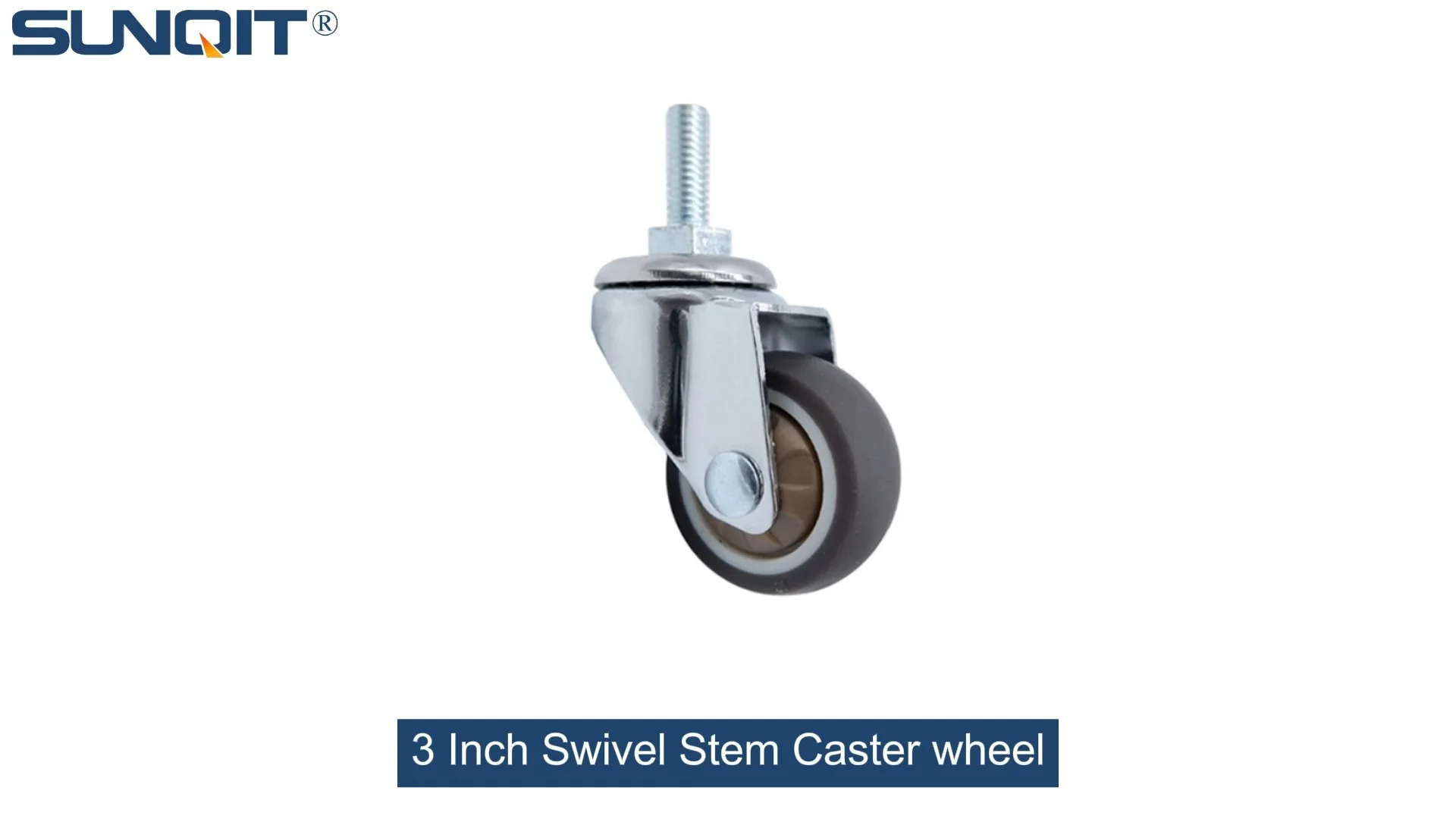
Swivel Stem Caster wheel
360 Degree Swivel Stem Caster. Threaded-post mount design, castors diameter 3 inch.Each swivel caster wheels loading 70KGS. Heavy enough and widely suit for carts, chairs, cabinet, flow rack, workbench, turnover rolley.
Ever tried pushing a loaded cart across a warehouse floor, only to have the wheels stick or wobble? Or struggled to keep an office trolley steady while loading files? The secret often lies in the caster wheels beneath—specifically, whether you're using light-duty or heavy-duty swivel stem casters. These small but critical components are the unsung heroes of mobility, turning static objects into movable assets. But choosing the wrong type can lead to frustration, damaged equipment, or even safety risks. Let's unpack the differences, uses, and key considerations to help you pick the perfect caster wheel for your needs.
In this guide, we'll start by understanding what swivel stem caster wheels are, then dive into how light-duty and heavy-duty models differ in design, materials, and performance. We'll explore real-world use cases where each type shines, break down a side-by-side comparison, and share tips for maintenance and selection. By the end, you'll know exactly whether a light-duty caster or a heavy-duty swivel stem caster wheel with brake is the right fit for your project.
What Are Swivel Stem Caster Wheels?
At their core, swivel stem caster wheels are mobility devices consisting of a wheel mounted on a pivoting frame (called a yoke), attached to a vertical stem that secures to equipment. The "swivel" feature allows 360-degree rotation, making tight turns and precise movement possible—unlike rigid casters, which only roll forward and backward. The "stem" is the metal rod that screws or inserts into the base of the item being moved, whether it's a cart, chair, or rack.
These casters are everywhere, from your office chair to hospital beds, factory carts, and even home furniture. Their versatility comes from their ability to balance mobility with stability. Add a brake, like in a swivel stem caster wheel with brake, and you gain control over that movement—critical for situations where equipment needs to stay put during use, like loading a trolley or performing tasks on a workbench.
But here's the catch: not all swivel stem casters are built to handle the same workload. A caster designed for a 50-pound office cart won't survive under a 500-pound industrial machine, just as a heavy-duty caster would be overkill (and expensive) for a lightweight bookshelf. That's where the light-duty vs. heavy-duty distinction becomes essential.
Light-Duty Swivel Stem Caster Wheels: For Everyday, Low-Weight Tasks
What Defines "Light-Duty"?
Light-duty swivel stem casters are engineered for light loads and occasional use. Typically, they handle 50–200 pounds per caster, though smaller models may max out at 30 pounds. These casters prioritize affordability, maneuverability, and floor-friendliness over raw strength—perfect for environments where equipment is moved infrequently or carries minimal weight.
Materials play a big role here. Light-duty wheels are often made of plastic (nylon, polypropylene), rubber, or soft polyurethane. These materials are lightweight, quiet, and gentle on floors like hardwood, tile, or carpet. The stems are usually zinc-plated steel or standard steel—thin enough to keep weight down but strong enough for light loads. Swivel mechanisms are simpler too, often using a single ball bearing or plain bearing to enable rotation, which works well for occasional use but isn't built for constant stress.
Key Features of Light-Duty Casters
Let's break down the typical specs of light-duty swivel stem caster wheels:
- Wheel Size: 1.5–5 inches in diameter. Smaller wheels excel in tight spaces (like office cubicles) and on smooth surfaces.
- Wheel Material: Plastic, rubber, or soft polyurethane. Rubber and polyurethane offer better traction and noise reduction, while plastic is budget-friendly and chemical-resistant.
- Stem Type: Threaded stems are most common—they screw directly into pre-drilled holes in equipment bases. Grip-ring or expanding stems are also popular for quick, tool-free installation.
- Brakes: Basic options like wheel locks (which press a pad against the wheel) or swivel locks (which fix rotation). A light-duty swivel stem caster wheel with brake might have a simple foot pedal for occasional use.
- Load Capacity: 50–200 pounds per caster. For a cart with four casters, total capacity ranges from 200–800 pounds (always add a 20% safety margin).
Where Light-Duty Casters Shine
Light-duty swivel stem casters are ideal for applications where weight is low, movement is occasional, and floors are smooth. Here are their most common uses:
Office Furniture: Office chairs, filing cabinets, printer stands, and mobile whiteboards all rely on light-duty casters. The wheels need to be quiet (to avoid disturbing coworkers), gentle on carpet/tile, and easy to swivel for quick adjustments. A swivel stem caster wheel with brake might be used on AV carts to keep them steady during presentations.
Home and Residential Use: Kitchen carts, bar stools, under-bed storage bins, and plant stands often use light-duty casters. They're perfect for moving lightweight items around smoothly—think of a plastic storage bin on casters that you slide out from under the bed, or a small cart for carrying groceries from the car to the kitchen.
Retail and Display: Popup stands, mobile shelving, and clothing racks in stores use light-duty casters to rearrange layouts easily. Wheels need to be unobtrusive and lockable (with brakes) to keep displays steady during customer browsing.
Light Industrial/Workshops: Hobbyist workbenches, small tool carts, or arts-and-crafts stations benefit from light-duty casters. They're affordable enough for home use and maneuverable enough for garage or studio spaces.
Pros and Cons of Light-Duty Casters
Pros:
- Affordable: Budget-friendly for cost-sensitive projects (typically $5–$20 per caster).
- Lightweight: Add minimal weight to equipment, making manual movement easy.
- Quiet and floor-friendly: Soft wheels won't scratch hardwood or tile, and they roll silently.
- Easy to install: Threaded stems screw in by hand; no special tools needed.
Cons:
- Low load capacity: Exceeding weight limits causes wheel damage or swivel failure.
- Not for rough surfaces: Soft wheels wear quickly on concrete, gravel, or uneven floors.
- Limited durability: Simple swivel mechanisms and thin stems aren't built for constant use.

Heavy-Duty Swivel Stem Caster Wheels: Built for the Big Jobs
What Defines "Heavy-Duty"?
Heavy-duty swivel stem caster wheels are engineered for strength, durability, and performance under pressure. They handle 200+ pounds per caster (some industrial models exceed 10,000 pounds!) and are built to withstand frequent use, heavy loads, and harsh environments. These casters are the workhorses of warehouses, factories, and construction sites—where failure isn't an option.
Materials are the first clue. Heavy-duty wheels are made of cast iron, steel, or polyurethane-on-steel cores—tough enough to resist wear, impact, and heat. Stems are thick, high-grade steel (often heat-treated for extra strength) with diameters of 1 inch or more. Swivel mechanisms use double ball bearings, tapered roller bearings, or precision bearings to ensure smooth rotation even under heavy loads. Brakes are robust too: a heavy-duty swivel stem caster wheel with brake might feature a total lock (which stops both wheel rotation and swivel movement) or a heavy-duty foot brake designed for daily use.
Key Features of Heavy-Duty Casters
Here's what sets heavy-duty swivel stem casters apart:
- Wheel Size: 4–12 inches in diameter. Larger wheels roll over cracks, debris, and rough surfaces more easily and distribute weight better.
- Wheel Material: Cast iron (for extreme loads/high temps), steel (for durability), or polyurethane-on-steel (balances strength and floor protection).
- Stem Type: Thick, threaded stems (1–2 inches in diameter) or bolt-on stems for secure attachment. Longer stems accommodate thick equipment bases.
- Brakes: Total-lock brakes (lock wheel + swivel), dual-wheel brakes, or heavy-duty foot brakes with reinforced springs. Critical for safety with heavy loads.
- Load Capacity: 200–2,000+ pounds per caster. A cart with four heavy-duty casters can handle 800–8,000+ pounds (plus safety margin).
Where Heavy-Duty Casters Excel
Heavy-duty swivel stem casters are non-negotiable for high-weight, high-frequency, or harsh-environment applications. Common uses include:
Warehousing and Logistics: Pallet jacks, dollies, and mobile shelving in warehouses rely on heavy-duty casters to move hundreds of pounds of inventory. Larger wheels roll over concrete floors with ease, and robust brakes (like a swivel stem caster wheel with brake) prevent accidental movement during loading/unloading.
Manufacturing: Factory assembly lines use heavy-duty casters on tool carts, parts trolleys, and mobile workstations. These casters must withstand constant movement, metal shavings, and oil spills—so materials like steel or polyurethane-on-steel are essential.
Construction: Job sites demand casters that can handle rough terrain, heavy tools, and weather exposure. Heavy-duty casters with cast iron wheels are used on mobile generators, tool cribs, and material carts.
Medical and Industrial Equipment: Bariatric hospital beds, MRI machines, and industrial ovens use heavy-duty casters to support extreme weights while maintaining maneuverability. Brakes are critical here to ensure patient or operator safety.
Pros and Cons of Heavy-Duty Casters
Pros:
- High load capacity: Handle heavy, frequent loads without failure.
- Durable: Built to withstand rough use, harsh environments, and daily wear.
- All-terrain performance: Larger, tougher wheels roll over cracks, gravel, and debris.
- Safe: Robust brakes and stable swivel mechanisms reduce accident risks.
Cons:
- Cost: More expensive than light-duty models ($20–$100+ per caster).
- Weight: Casters themselves are heavy, making manual movement harder (though motorized carts mitigate this).
- Noise: Hard wheels (like cast iron) can be loud on smooth floors (polyurethane wheels solve this).
- Installation: Thicker stems may require drilling or specialized tools.

Light-Duty vs. Heavy-Duty: Side-by-Side Comparison
Still unsure which type to choose? This table breaks down the key differences:
| Feature | Light-Duty Swivel Stem Casters | Heavy-Duty Swivel Stem Casters |
|---|---|---|
| Load Capacity (per caster) | 50–200 lbs | 200–2,000+ lbs |
| Wheel Materials | Plastic, rubber, soft polyurethane | Cast iron, steel, polyurethane-on-steel |
| Wheel Size | 1.5–5 inches | 4–12 inches |
| Stem Material | Zinc-plated/standard steel (thin gauge) | High-grade, heat-treated steel (thick gauge) |
| Swivel Mechanism | Single ball/plain bearing | Double ball/tapered roller/precision bearings |
| Brakes | Basic wheel/swivel locks | Total-lock, dual-wheel, or heavy-duty foot brakes |
| Best For | Offices, homes, light retail, small carts | Warehouses, factories, construction, heavy equipment |
| Cost (per caster) | $5–$20 | $20–$100+ |

Choosing the Right Caster: Key Considerations
Selecting between light-duty and heavy-duty swivel stem caster wheels boils down to five factors:
1. Load Capacity
Calculate total weight (equipment + max load), divide by the number of casters, and add a 20% safety margin. For example, a 400-pound total weight with 4 casters needs 100-pound capacity per caster—light-duty works here. For 1,000 pounds, you'll need heavy-duty casters rated for 250+ pounds each.
2. Environment
Smooth indoor floors? Light-duty with rubber/polyurethane wheels. Rough concrete or outdoor use? Heavy-duty with large, steel/cast iron wheels. Wet/corrosive environments? Look for stainless steel heavy-duty casters to prevent rust.
3. Usage Frequency
Occasional movement (e.g., monthly office rearrangements)? Light-duty is fine. Daily, all-day use (e.g., factory carts)? Heavy-duty casters with robust bearings and brakes are a must.
4. Maneuverability Needs
Tight spaces (e.g., office cubicles) require small, agile wheels (light-duty). Long distances or rough terrain need larger wheels (heavy-duty) to reduce rolling resistance.
5. Brake Requirements
If the equipment needs to stay stationary during use (e.g., workbenches, medical carts), opt for a swivel stem caster wheel with brake. Light-duty brakes work for light loads; heavy loads demand total-lock or dual brakes.
Caster Accessories to Enhance Performance
Even the best casters can benefit from accessories that extend lifespan or improve functionality. Here are a few key caster accessories to consider:
- Stem Extensions: Add length to stems for thicker equipment bases.
- Wheel Guards: Protect wheels from debris (critical in factories with metal shavings).
- Lubricants: Regularly lubricate swivel joints with 3-in-1 oil to keep rotation smooth.
- Caster Cups: For light-duty casters on hardwood floors, cups prevent indentations.
- Replacement Brakes: Swap out worn brake pads to restore stopping power.
Maintenance Tips for Long-Lasting Casters
Proper maintenance keeps casters rolling smoothly and extends their lifespan. Follow these tips:
- Clean Regularly: Wipe light-duty wheels with a damp cloth; use a brush or compressed air on heavy-duty wheels to remove debris.
- Lubricate Swivel Joints: Apply lubricant every 3–6 months (more often for heavy-duty casters in daily use).
- Inspect Brakes: Test brakes monthly. Tighten loose hardware and replace worn pads.
- Check for Wear: replace wheels with cracks, flat spots, or worn tread. Bent stems or sticky swivels also need replacement.
- Avoid Overloading: Never exceed the caster's rated load capacity—this is the #1 cause of failure.
Final Thoughts: Invest in the Right Caster
Light-duty and heavy-duty swivel stem caster wheels each have their place. Light-duty models are affordable, maneuverable, and perfect for offices, homes, and light retail. Heavy-duty casters—like a heavy-duty swivel stem caster wheel with brake—are built for strength, durability, and industrial use. By considering load capacity, environment, and usage, you can choose casters that make movement easy, safe, and efficient.
Remember: the best caster is the one that matches your needs. Skimping on quality for heavy loads or overspending on light tasks is never a good idea. With the right casters, you'll transform frustration into smooth mobility—whether you're pushing a file cart or a 5,000-pound machine.