- Company Articles
- Products and Technology
- Product knowledge
- Lightweight Advantage: 3060 Aluminum Angle Yards in Mobile Carts

Lightweight Advantage: 3060 Aluminum Angle Yards in Mobile Carts
Related Product
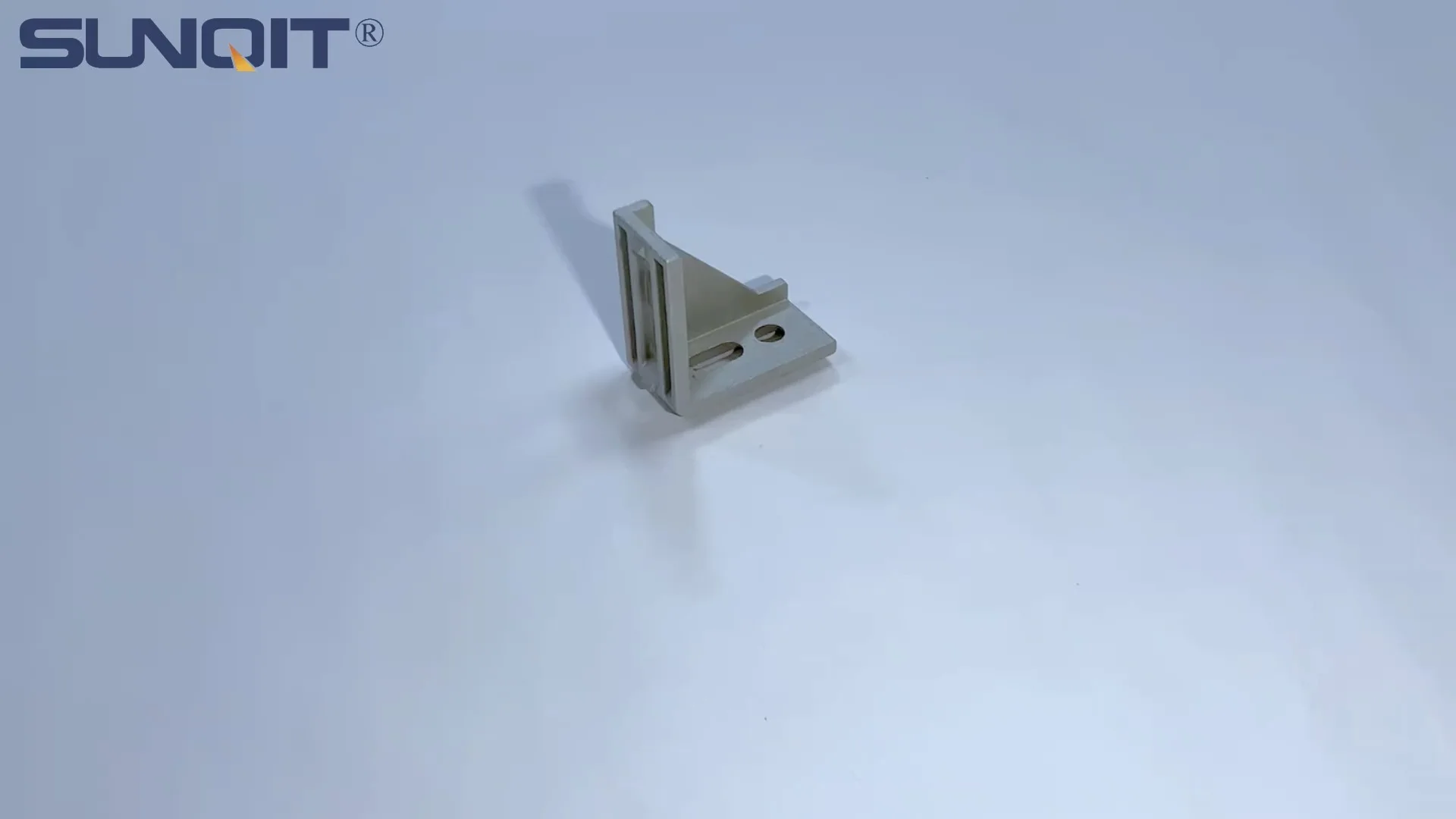
3060 Aluminum Angle Yards
It used for 90° flat connection for 20 series aluminum profile.
In the bustling world of manufacturing plants, warehouses, and distribution centers, mobile carts are the unsung workhorses that keep operations moving. Whether shuttling raw materials to assembly lines, transporting finished products to storage, or organizing tools for maintenance crews, these carts are the backbone of daily logistics. But not all carts are created equal. For years, many facilities relied on heavy steel carts that were durable but cumbersome—hard to push, prone to rust, and rigid in design. Today, a new star has emerged in the world of material handling: 3060 aluminum angle yards. These unassuming components are transforming how mobile carts are built, offering a lightweight yet robust solution that aligns perfectly with the principles of lean systems. Let's dive into why 3060 aluminum angle yards are becoming the go-to choice for businesses aiming to boost efficiency, reduce worker strain, and adapt to ever-changing operational needs.
What Are 3060 Aluminum Angle Yards, Anyway?
Before we explore their benefits, let's clarify what 3060 aluminum angle yards are. Part of the broader family of aluminum profile systems, these components are extruded aluminum pieces shaped like angles—think of a right angle with two legs, where one leg is 30mm wide and the other is 60mm wide. The "3060" designation refers to these dimensions, making them a versatile middle ground between smaller profiles (like 2020 or 3030) and larger ones (like 4080 or 6060). What sets them apart, though, is their T-slot design: along each leg, there are precision-machined slots that allow for easy connection with other aluminum profile accessories, such as brackets, joints, and fasteners. This design isn't just about assembly—it's about flexibility. Unlike welded steel frames, 3060 aluminum angle yards let you build, modify, and reconfigure carts without cutting torches or welding equipment, which is a game-changer for lean system environments where adaptability is key.
These angle yards are typically made from 6063-T5 aluminum alloy, a material prized for its excellent balance of strength, corrosion resistance, and workability. This alloy is commonly used in structural applications where weight and durability matter, from window frames to automotive parts. For mobile carts, this means 3060 angle yards bring the best of both worlds: the sturdiness to handle heavy loads and the lightness to keep carts maneuverable.
The Lightweight Advantage: Why "Less Weight" Equals "More Gains"
The most obvious benefit of 3060 aluminum angle yards is their weight—or rather, their lack of it. Let's put this in perspective: a standard 30mm x 60mm steel angle iron weighs roughly 3.9 kg per meter. In contrast, a 3060 aluminum angle yard of the same dimensions weighs just 1.2 kg per meter. That's a 69% reduction in weight! For a typical mobile cart with a frame made of 6 meters of angle material, that's a difference of over 16 kg—about the weight of a small dog. Imagine pushing a cart that's 16 kg lighter all day: less strain on shoulders, backs, and knees, fewer breaks needed, and a lower risk of workplace injuries like muscle strains or repetitive motion disorders.
But the lightweight advantage goes beyond worker comfort. Lighter carts are easier to maneuver in tight spaces, whether navigating between assembly line workbenches or squeezing through narrow warehouse aisles. This agility translates to faster material transport times, which can add up to significant productivity gains over a shift. For example, a warehouse picker using a lighter cart might complete 5-10 more orders per day simply because they spend less time wrestling with the cart and more time focused on picking items. In lean system terms, this reduces "non-value-added" time—time spent moving the cart rather than adding value to the product or order.
Another hidden perk? Lighter carts are gentler on facility floors. Heavy steel carts can scratch concrete, dent tile, or damage epoxy coatings over time, leading to costly repairs. Aluminum carts, with their lighter weight and softer (yet still durable) material, minimize this wear and tear, extending the lifespan of your facility's flooring.

Durability That Defies Expectations: Lightweight Doesn't Mean Flimsy
Skeptics might wonder: If aluminum is so much lighter than steel, is it strong enough to handle the demands of industrial use? The answer is a resounding yes. 3060 aluminum angle yards, made from 6063-T5 alloy, have a tensile strength of around 215 MPa—comparable to mild steel (which ranges from 200-300 MPa). For context, this means a single meter of 3060 aluminum angle yard can support a static load of over 500 kg when properly mounted—more than enough for most mobile cart applications, which typically carry 100-300 kg of materials. Even in dynamic scenarios, like moving carts over uneven floors or hitting small bumps, aluminum's natural elasticity helps absorb shocks, reducing the risk of damage to both the cart and its contents.
Corrosion resistance is another area where aluminum outshines steel. Unlike steel, which rusts when exposed to moisture, aluminum forms a thin, protective oxide layer when it comes into contact with air. This layer prevents further oxidation, making 3060 aluminum angle yards ideal for use in humid environments, such as food processing facilities, or areas with frequent cleaning (like pharmaceutical labs). For facilities that use water or chemical cleaners, this means carts built with aluminum angle yards will maintain their structural integrity for years, whereas steel carts would require regular painting or coating to prevent rust—a maintenance hassle that eats into lean system efficiency.

Flexibility: The Secret to Adapting in a Lean World
Lean systems thrive on adaptability— the ability to reconfigure workflows, adjust to new product lines, or scale operations up or down quickly. 3060 aluminum angle yards excel here, thanks to their T-slot design and compatibility with a wide range of aluminum profile accessories. Let's say your facility introduces a new product that requires a taller cart to accommodate larger bins. With steel carts, you'd likely need to buy a whole new cart or hire a welder to modify the existing one. With aluminum angle yards? You can simply add extra vertical supports using 90° aluminum profile connectors, attach new shelves with internal straight aluminum joints, and be up and running in an hour. No special tools, no downtime, no wasted money on custom fabrication.
This flexibility extends to the types of carts you can build. Need a turnover trolley and rack to transport delicate electronics? Use 3060 angle yards for the frame, add soft-close doors with nylon hinges, and line shelves with anti-slip mats. Building a workbench on wheels for mobile assembly? Mount an aluminum honeycomb panel top to the angle yard frame, add caster wheels with brakes for stability, and attach tool hooks using T-slot nuts. Even specialized carts, like those with roller tracks for sliding bins or adjustable height shelves, are easy to construct with aluminum angle yards. The possibilities are limited only by your needs, not by the rigidity of the materials.

A Closer Look: How 3060 Aluminum Angle Yards Stack Up Against Alternatives
To truly appreciate the value of 3060 aluminum angle yards, it helps to compare them to the materials they're replacing. Let's take a look at how they measure up against steel angle iron and plastic profiles in key categories:
| Feature | 3060 Aluminum Angle Yards | Steel Angle Iron | Plastic Profiles |
|---|---|---|---|
| Weight (kg/m) | 1.2 | 3.9 | 0.8-1.0 |
| Tensile Strength (MPa) | 215 | 250 | 30-50 |
| Corrosion Resistance | Excellent (no rust) | Poor (requires coating) | Good (varies by plastic type) |
| Installation Ease | High (T-slot, no welding) | Low (requires welding/drilling) | Medium (snap-fit or adhesives) |
| Customization | High (easily modified with accessories) | Low (permanent welds) | Medium (limited load capacity for mods) |
| Cost (Relative) | Medium (higher upfront, lower TCO) | Low (lower upfront, higher maintenance) | Low (cheapest upfront, shortest lifespan) |
| Best For | Industrial mobile carts, lean systems, adaptable workflows | Heavy-duty, static applications (e.g., fixed shelving) | Light-duty, cleanroom, or temporary use |
As the table shows, 3060 aluminum angle yards strike a perfect balance: lighter than steel, stronger than plastic, and infinitely more customizable than both. For mobile carts—where weight, durability, and adaptability are critical—this makes them the clear winner.
Real-World Impact: How Businesses Are Benefiting
Let's take a look at how 3060 aluminum angle yards are making a difference in real facilities. Consider a mid-sized electronics manufacturer in Ohio that recently switched from steel to aluminum carts for its assembly line. The plant had been using steel carts for over a decade, but workers frequently complained about shoulder pain and fatigue, especially during the second half of shifts. Productivity was suffering, and the HR department was seeing an uptick in workers' compensation claims related to musculoskeletal injuries.
After researching alternatives, the plant's operations manager decided to test 10 mobile carts built with 3060 aluminum angle yards. The results were striking: within two months, worker complaints dropped by 75%, and the number of completed assembly tasks per shift increased by 12%. The lighter carts also reduced strain on the plant's aging concrete floors, which had developed cracks from years of heavy steel cart traffic. Best of all, when the plant introduced a new product line six months later, they were able to reconfigure the existing aluminum carts with new shelves and dividers in a single day—no need to purchase new equipment.
Another example comes from a food distribution warehouse in Texas. The warehouse handles perishable goods, so carts are frequently washed down with sanitizing solutions. Their old steel carts rusted quickly, even with regular painting, leading to frequent replacements (every 2-3 years). Switching to carts built with 3060 aluminum angle yards solved this problem: the aluminum frames showed no signs of corrosion after three years of daily washing, and the carts' modular design allowed the warehouse to add extra layers of shelves during peak seasons. The warehouse manager estimated that the switch saved them $20,000 annually in cart replacement costs alone.
Accessories: The Finishing Touches That Make a Great Cart
3060 aluminum angle yards are powerful on their own, but their true potential shines when paired with the right accessories. Let's break down the key components that turn a frame into a fully functional mobile cart:
- Caster Wheels and Brakes: No mobile cart is complete without wheels, and aluminum frames pair perfectly with heavy-duty caster wheels. Look for swivel casters with locking brakes to ensure stability when loading/unloading. Caster accessories like brake pedals and dust covers help extend wheel life.
- Shelving and Panels: Aluminum honeycomb panels are lightweight and strong, making them ideal for cart shelves. They're also easy to cut to size and attach to angle yards using T-slot bolts.
- Handles: Ergonomic handles, often made from aluminum or rubber, can be mounted to the cart frame using 90° aluminum profile connectors, ensuring a comfortable grip for workers of all heights.
- Dividers and Bins: Plastic or metal dividers, attached via T-slot nuts, help organize small parts or tools, keeping items secure during transport.
- Locking Mechanisms: For high-security applications, like transporting sensitive equipment, locking bars or hasps can be added to the cart frame.
These accessories are designed to work seamlessly with 3060 aluminum angle yards, so you don't have to worry about compatibility issues. Most suppliers offer pre-packaged "cart building kits" that include angle yards, connectors, casters, and shelves—perfect for businesses new to aluminum profiles.
Sustainability: Lightweight, Strong, and Eco-Friendly
In today's business landscape, sustainability isn't just a buzzword—it's a priority for customers, employees, and regulators. 3060 aluminum angle yards align with green initiatives in several ways. First, aluminum is 100% recyclable, and recycling it requires just 5% of the energy needed to produce new aluminum from raw bauxite ore. This means at the end of a cart's life, the angle yards can be melted down and reused, reducing waste and lowering your facility's carbon footprint.
Second, the durability of aluminum carts means fewer replacements over time. A well-maintained aluminum cart can last 10+ years, compared to 2-3 years for plastic carts or 5-7 years for steel carts (if not properly maintained). Fewer replacements mean less material consumption and fewer resources spent on manufacturing new carts.
Finally, the lightweight nature of aluminum carts reduces energy consumption indirectly. While the carts themselves don't use electricity, lighter carts require less effort to move, which can lower worker fatigue and reduce the need for powered material handling equipment (like forklifts) in some cases. Over time, this can lead to lower energy bills and a smaller environmental impact.
Cost-Efficiency: Investing in the Long Term
It's true: 3060 aluminum angle yards have a higher upfront cost than steel angle iron. On average, aluminum profiles cost 2-3 times more per meter than steel. But when you factor in the total cost of ownership (TCO)—which includes maintenance, replacement, labor, and downtime—the scales tip in aluminum's favor. Let's crunch the numbers for a typical facility using 10 mobile carts:
- Steel Carts: Initial cost: $300 per cart x 10 = $3,000. Maintenance: $100 per cart per year (painting, rust repair). Replacement every 5 years: $3,000 every 5 years. Labor cost: Workers spend 5 extra minutes per cart per shift due to heavy weight (assuming 250 shifts/year, 10 carts: 5 min x 10 x 250 = 2,083 hours/year; at $20/hour = $41,660/year).
- Aluminum Carts: Initial cost: $600 per cart x 10 = $6,000. Maintenance: $20 per cart per year (minimal cleaning). Replacement every 10 years: $6,000 every 10 years. Labor cost: Workers save 5 minutes per cart per shift (same calculation: $41,660/year saved).
Over 10 years, the steel cart total cost is $3,000 + ($100x10x10) + ($3,000x2) + ($41,660x10) = $424,600. For aluminum carts: $6,000 + ($20x10x10) + $6,000 + ($0 labor savings) = $14,000. The difference? A staggering $410,600 saved over a decade. While these numbers are simplified, they highlight a key point: the higher upfront cost of aluminum is dwarfed by the long-term savings in labor, maintenance, and replacement.
Conclusion: Lightweight, Strong, and Ready to Transform Your Workflow
In the fast-paced world of modern manufacturing and logistics, every second counts. Mobile carts are no longer just tools—they're critical assets that impact productivity, worker safety, and bottom-line results. 3060 aluminum angle yards are redefining what these assets can be: lightweight enough to reduce strain, strong enough to handle industrial loads, flexible enough to adapt to change, and durable enough to last for years. Whether you're building turnover trolley and rack systems, mobile workbenches, or specialized material transport carts, these angle yards offer a solution that aligns with the core principles of lean systems—eliminating waste, improving flow, and empowering workers to do their best.
So, if your facility is still relying on heavy, rigid steel carts, it might be time to make the switch. The initial investment in 3060 aluminum angle yards and accessories will pay off in happier workers, faster operations, and lower long-term costs. After all, in a world where efficiency is king, why carry more weight than you have to?