- Company Articles
- Products and Technology
- Product knowledge
- Lightweight Advantage: Aluminum Pipe with Board Holder Design

Lightweight Advantage: Aluminum Pipe with Board Holder Design
Related Product
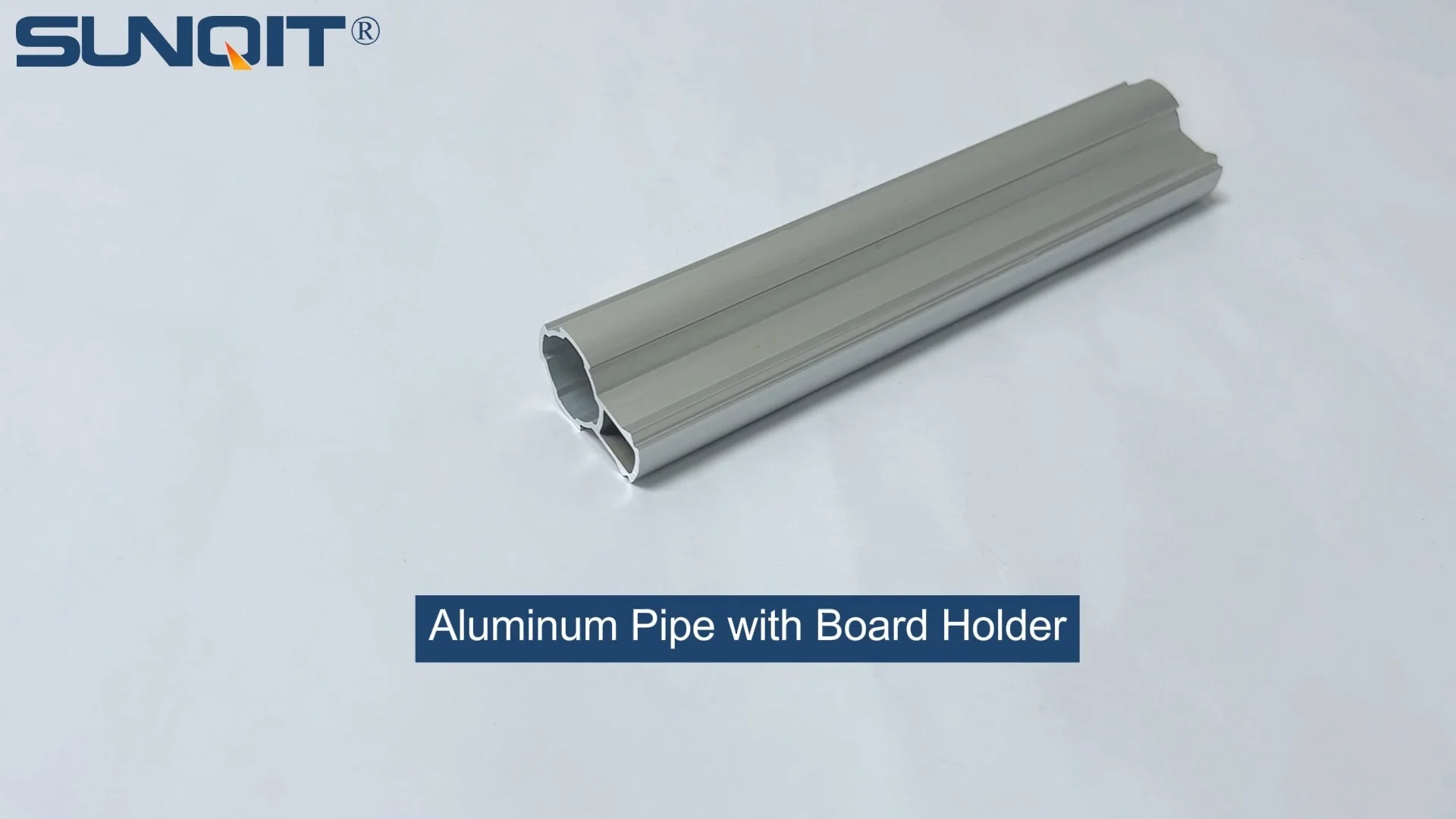
Aluminum Pipe with Board Holder
The linear rolling assembly can be arbitrarily connected in the protruding part of the card slot to increase the rigidity of the track.
Walk into any busy manufacturing facility, warehouse, or assembly plant, and you'll quickly notice a common challenge: the weight of the tools and structures that keep operations running. Workbenches bolted to the floor, material racks that require forklifts to reposition, conveyor systems that feel permanent—these are the silent productivity killers. They lock teams into rigid workflows, slow down adaptation to new demands, and turn even small layout changes into full-day projects. But what if there was a way to build the backbone of your workspace without the bulk? Enter aluminum pipe with board holder design—a solution that marries durability with featherlight flexibility, redefining how we think about industrial workspaces.
What is Aluminum Pipe with Board Holder Design?
At its core, aluminum pipe with board holder design is a modular building system built around lightweight aluminum tubes and specialized accessories that let you attach shelves, work surfaces, or panels (the "board holders") with ease. Unlike traditional steel or even PE-coated lean pipes, aluminum brings a game-changing advantage: it's significantly lighter while retaining impressive strength. Think of it as the industrial equivalent of swapping a concrete block for a high-tech composite—same reliability, fraction of the effort.
The magic lies in its simplicity. The system starts with aluminum pipe —hollow, extruded tubes engineered for strength-to-weight ratio. These pipes connect using aluminum pipe accessories like joints, clamps, and brackets, many of which snap or screw into place without welding or heavy tools. And the board holders? They're the unsung heroes: specialized fixtures that let you mount everything from wooden worktops to plastic bins to metal shelving directly onto the pipe frame. It's a "build-as-you-go" approach that adapts to your needs, not the other way around.
The Lightweight Advantage: More Than Just "Easy to Move"
When we talk about "lightweight," it's easy to focus on the obvious—moving things around. But the benefits run deeper, touching nearly every part of daily operations. Let's break them down:
1. Ergonomics First: Less Strain, More Gains
Heavy equipment isn't just a logistical hassle—it's a safety risk. Workers straining to lift, push, or reposition bulky workbenches face increased odds of back injuries, muscle strains, and fatigue. Aluminum pipe systems cut that risk dramatically. A typical 6-foot aluminum workbench with a board holder might weigh 40-50 pounds, compared to 80-100 pounds for a steel equivalent. That difference means two workers can reposition it in minutes, no forklift required. Over time, this reduces downtime from injuries and keeps teams energized—small changes that add up to big productivity wins.
2. Flexibility That Keeps Pace with Change
Modern manufacturing doesn't stand still. A production line making smartphone components today might switch to smartwatch parts next month, and that means rearranging workstations, adding material racks, or reconfiguring assembly cells. With aluminum pipe, that's not a project—it's a task. Need to add a shelf to a workbench? Grab a board holder, clamp it to the pipe, and you're done. Want to extend a conveyor feed? Connect a few more aluminum pipes with joints, snap in a roller track, and you're operational. Traditional steel structures? They'd require cutting, welding, or hiring a contractor. Aluminum turns "we'll do it next week" into "we'll do it this afternoon."
3. Durability Without the Drag
You might be thinking: "Lightweight sounds great, but will it hold up?" Aluminum's secret is its strength-to-weight ratio. Extruded aluminum pipes are reinforced with internal structures that resist bending or warping, even under heavy loads. And unlike steel, aluminum naturally resists corrosion—no rust, no need for constant painting or coating. That makes it ideal for damp environments, cleanrooms, or outdoor use. Pair that with UV-resistant board holders and weatherproof accessories, and you've got a system built to last, without the weight penalty.

Key Components: The Accessories That Make It Work
A great aluminum pipe system is only as good as its accessories. Let's take a closer look at the parts that turn basic aluminum pipes into a fully functional workspace:
Aluminum Pipe: The Backbone
The star of the show is the aluminum pipe itself. Most systems use 20mm or 30mm diameter pipes, extruded with T-slots or smooth exteriors. T-slotted pipes are especially versatile—they let you slide accessories like board holders or clamps into place anywhere along the pipe, not just at fixed joints. This means you can adjust shelf heights, add tools, or reposition components on the fly.
Board Holders: Your Work Surface's Best Friend
Board holders are exactly what they sound like: brackets or clamps designed to secure flat surfaces (wood, plastic, metal) to the aluminum frame. They come in styles for every need: fixed holders for permanent workbenches, adjustable ones for shelves that need height changes, and even swivel versions for tilting surfaces (perfect for assembly lines where workers need to angle parts). Many are made from reinforced plastic or aluminum, so they're lightweight but strong enough to hold hundreds of pounds.
Joints and Connectors: The Glue of the System
Without reliable joints, even the best pipes fall flat. Aluminum pipe systems use modular joints—think 90-degree elbows, T-junctions, or multi-angle connectors—that lock into place with set screws or snap-fit designs. No welding, no drilling, no mess. Some joints even rotate, letting you pivot sections of the frame for tasks like loading/unloading materials. It's like building with industrial Legos, but for grown-ups.
Casters and Feet: Mobility or Stability, Your Call
Want a stationary workbench? Add rubberized leveling feet to the base pipes to keep it steady. Need something mobile? Swap those feet for caster wheels (another key accessory) and suddenly your workbench becomes a rolling cart. Many casters lock in place, so you get the best of both worlds: easy movement when you need it, rock-solid stability when you don't.

Real-World Applications: Where This Design Shines
Aluminum pipe with board holder design isn't a one-trick pony. It's found a home in industries from automotive to electronics, and for good reason. Let's explore a few places where it's making a tangible difference:
Workbenches: From Static to Dynamic
The workbench is the heart of any production line, and aluminum pipe transforms it. Imagine a workbench for electronics assembly: aluminum frame, wooden top held by board holders, shelves for tools, and a small conveyor (made from aluminum roller track) feeding parts. Need to reconfigure for a new product? Loosen the board holders, adjust the shelf height, reposition the conveyor—done in an hour. Compare that to a traditional wooden workbench, which would need to be replaced entirely. It's not just a workbench; it's a blank canvas for productivity.
Material Racks: Streamlining Storage
Warehouses and factories live and die by how efficiently they store materials. Aluminum pipe material racks with board holders solve two big problems: weight and accessibility. A typical steel rack might hold 500 pounds but weigh 200 pounds itself. An aluminum rack of the same capacity? Maybe 80 pounds. That means you can place racks closer to assembly lines without worrying about floor load limits. And with adjustable board holders, you can customize shelf spacing for everything from small components to bulky parts—no more wasted space.
Lean Systems: Waste Reduction in Action
At its core, lean system thinking is about eliminating waste—time, space, effort. Aluminum pipe with board holder design aligns perfectly with this philosophy. By making workstations and racks lightweight and modular, you cut down on "motion waste" (workers moving less to get tools), "waiting waste" (no downtime for reconfigurations), and "inventory waste" (customizable storage means you stock only what you need). It's lean in action—systems that adapt to your workflow, not the other way around.
How Does It Stack Up? Comparing Materials
Still on the fence? Let's put aluminum pipe head-to-head with other common materials. The table below breaks down key factors like weight, durability, and flexibility:
| Material | Weight (per 6ft pipe) | Durability | Flexibility (Reconfiguration) | Best For |
|---|---|---|---|---|
| Aluminum Pipe | 4-6 lbs | High (corrosion-resistant, no rust) | Excellent (no tools needed for basic changes) | Dynamic workspaces, lean systems, mobile setups |
| Steel Pipe | 12-15 lbs | High (prone to rust without coating) | Poor (requires welding/cutting for changes) | Permanent structures, heavy-load applications |
| PE-Coated Lean Pipe | 7-9 lbs | Medium (coating can chip, steel core rusts) | Good (modular, but heavier than aluminum) | Basic lean setups, low-budget projects |
| Plastic Pipe | 2-3 lbs | Low (bends under heavy loads, UV damage) | Excellent (lightest, but not durable) | Temporary setups, light-duty use |
*Weight estimates based on 30mm diameter pipes. Actual weights may vary by manufacturer.
The Future: Where Aluminum Pipe Design is Headed
As manufacturing and warehousing grow more agile, aluminum pipe systems are evolving too. We're already seeing trends like integrated smart features—think sensors in the pipes to track weight loads or RFID tags on accessories for inventory management. There's also a push for sustainability: aluminum is 100% recyclable, and many suppliers now use recycled aluminum in their pipes, cutting down on environmental impact.
Perhaps most exciting is the rise of customization. Suppliers are offering custom-cut pipes, color-matched accessories, and even 3D-printed board holders for unique shapes. It's a system that's not just adapting to change—it's enabling it.
Conclusion: Lightweight Solutions, Heavyweight Results
Aluminum pipe with board holder design isn't just a new tool—it's a mindset shift. It's about building workspaces that work with your team, not against them. Lightweight, flexible, durable, and infinitely adaptable, it's the answer to the "we can't change fast enough" problem plaguing so many operations.
So, the next time you look at your workspace, ask: Are my tools holding me back? Or could they be helping me move forward? With aluminum pipe and the right accessories, the answer might be lighter than you think.