- Company Articles
- Products and Technology
- Product knowledge
- Lightweight Advantage: External Straight Aluminum Joints for Mobile Structures

Lightweight Advantage: External Straight Aluminum Joints for Mobile Structures
Related Product
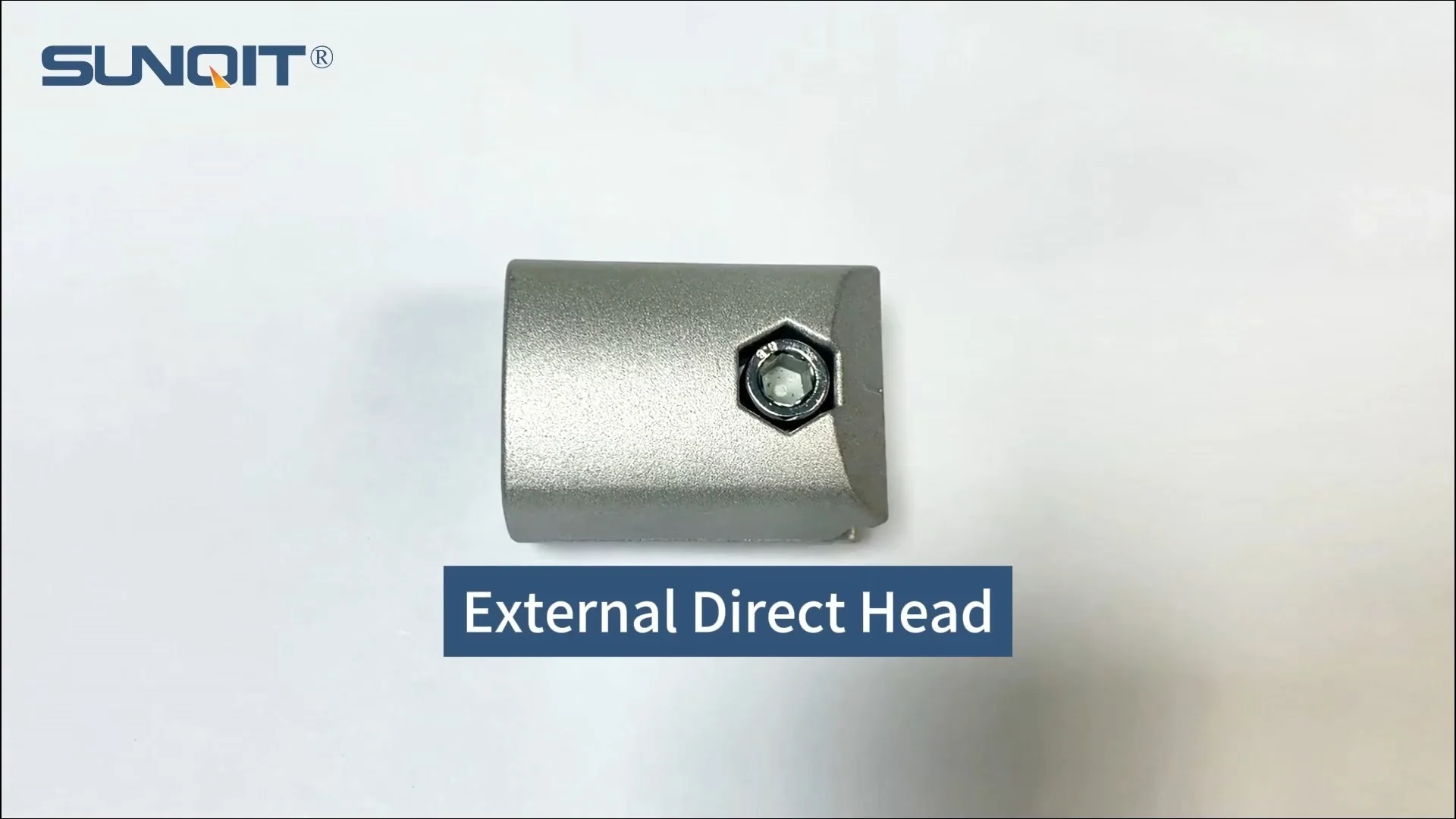
External Straight Aluminum Joint
Aluminum pipe joint outside connection used for two pcs 28pcs aluminum pipe connection in straight angle,it connects two pcs pipe from outside.
Lightweight Advantage: External Straight Aluminum Joints for Mobile Structures
Walk into any modern workshop, factory, or warehouse today, and you'll notice a quiet revolution unfolding. The clunky, immovable steel workbenches of yesteryear are slowly giving way to sleek, agile structures that glide across floors, reconfigure in minutes, and adapt to the ever-shifting demands of production. At the heart of this transformation? A humble yet powerful component: the external straight aluminum joint. It's not just a piece of hardware—it's the unsung hero enabling businesses to build mobile, flexible systems that keep pace with the speed of modern work. Let's dive into why these unassuming joints are becoming indispensable, and how they're reshaping the way we think about workspace design.
The Problem with "Stuck" Workspaces: Why Mobility Matters More Than Ever
Think about the last time you rearranged a room at home. Maybe you shifted a bookshelf to make space for a new couch, or moved a desk to catch better light. Now imagine trying to do that with a 500-pound steel workbench bolted to the floor. That's the reality for countless small and mid-sized manufacturers still relying on traditional, rigid structures. In a world where product cycles shorten, customer demands fluctuate, and production lines need to pivot overnight, "stuck" workspaces aren't just inconvenient—they're costly.
Take Maria, for example. She runs a small electronics assembly shop with 12 employees. Last year, when a major client requested a rush order for a new gadget, her team had to rearrange three heavy steel workbenches to create a dedicated assembly line. It took four people two hours, and they still couldn't get the layout quite right. "We lost valuable production time just moving things around," she recalls. "By the end of the day, everyone was exhausted, and we barely met the deadline." Stories like Maria's are why mobility has become a cornerstone of modern workspace design. It's not about making things "easy"—it's about survival in a competitive market.
Aluminum: The Lightweight Champion Redefining Workspace Flexibility
Enter aluminum—a material that's been quietly transforming industries for decades, but has recently found its sweet spot in workspace design. Unlike steel, which is strong but dense, aluminum offers an unbeatable combination of lightness and durability. A typical aluminum pipe weighs roughly 1/3 of a steel pipe of the same size, making entire structures significantly easier to move, adjust, and reconfigure. But aluminum alone isn't the solution. The real magic happens when it's paired with smart, modular components—like the external straight aluminum joint.
Aluminum's rise in workspace design isn't just about weight, though. It's also about versatility. Aluminum extrusion profiles, for instance, come with built-in T-slots that make attaching accessories a breeze—no drilling or welding required. This modularity means you can start with a simple workbench and expand it into a full production line, or strip it down to a mobile cart, all using the same basic components. And let's not forget corrosion resistance: unlike steel, aluminum doesn't rust, making it ideal for environments where moisture or chemicals are present—think food processing, pharmaceuticals, or even coastal manufacturing facilities.
External Straight Aluminum Joints: The "Glue" That Holds Mobile Systems Together
If aluminum pipes are the bones of a mobile structure, external straight aluminum joints are the joints that let those bones move and adapt. These unassuming connectors are designed to link aluminum pipes in straight lines, but their simplicity belies their importance. Let's break down what makes them so special.
First, their design. External straight aluminum joints are typically made from high-grade aluminum alloy, precision-machined to fit snugly over the ends of aluminum pipes. They use set screws or clamping mechanisms to secure the pipes, eliminating the need for welding or adhesives. This means assembly is a one-person job—no heavy tools, no specialized skills. Just slide the joint onto the pipe, tighten the screws, and you're done. And if you need to reconfigure later? Loosen the screws, adjust, and retighten. It's that simple.
But what really sets external straight aluminum joints apart is their ability to maintain structural integrity while keeping things light. Traditional steel joints often add unnecessary bulk, but aluminum joints are engineered to be lightweight without sacrificing strength. Take the internal rotary aluminum joint, a cousin to the straight version, which allows for 360-degree rotation—perfect for creating adjustable shelves or tilting work surfaces. Even with this added functionality, the joint itself weighs just ounces, ensuring the overall structure remains easy to move.
A Closer Look: Key Features of External Straight Aluminum Joints
Let's get into the details. External straight aluminum joints come in various sizes to fit different aluminum pipe diameters—common options include 20mm, 30mm, and 40mm pipes, though custom sizes are available for specialized needs. They're often anodized, a process that adds a protective layer to the aluminum, enhancing corrosion resistance and giving them a clean, professional finish (think matte silver or black). Some joints even feature rubber gaskets or O-rings to prevent rattling, ensuring structures stay stable during use.
One of the most underrated features of these joints is their compatibility with other aluminum profile accessories. Need to add a shelf? Just slide a bracket into the T-slot of the aluminum pipe, secure it with a bolt, and you're good to go. Want to attach a caster wheel for mobility? A simple caster mounting plate connects directly to the joint, no extra hardware needed. This interoperability is what makes aluminum systems so flexible—every component plays well with the others, creating a ecosystem of parts that can be mixed and matched to solve almost any workspace challenge.
From Workbench to Trolley: Real-World Applications of External Straight Aluminum Joints
Let's move from theory to practice. How do external straight aluminum joints translate to real-world productivity? Let's look at a few common applications where these joints shine.
1. Mobile Workbenches: The Backbone of Agile Production
A mobile workbench is often the first step for businesses transitioning to leaner, more flexible operations. Built with aluminum pipes, external straight aluminum joints, and a sturdy worktop (like an aluminum honeycomb panel for lightweight durability), these workbenches can be equipped with caster wheels for easy movement. Imagine a workbench that can be rolled from the assembly line to the quality control station, then back to storage—all in minutes. For Maria's electronics shop, this would mean no more wasted time rearranging heavy furniture; instead, her team could reposition workbenches on the fly to match the day's orders.
The external straight joints here ensure the workbench stays rigid during use, even when loaded with tools and materials. And because the joints are easy to disassemble, the workbench can be broken down for storage during slow periods or transported to off-site events—like trade shows or client demos.
2. Turnover Trolleys: Moving Materials Without the Heavy Lifting
Turnover trolleys are essential for moving materials between stations, but traditional steel trolleys can be cumbersome—especially for smaller teams. An aluminum turnover trolley, built with external straight aluminum joints and lightweight aluminum pipes, changes the game. These trolleys are light enough for one person to push, even when fully loaded, reducing the risk of workplace injuries and speeding up material flow.
The key here is the joint's ability to connect vertical and horizontal pipes securely, creating a stable frame that can handle the weight of boxes, components, or tools. Add swivel caster wheels with brakes, and you've got a trolley that's easy to maneuver in tight spaces and locks securely in place when loading or unloading.
3. Material Racks: Flexible Storage That Grows With Your Business
Material storage is another area where rigidity can hinder productivity. Traditional steel racks are fixed in place, making it hard to adjust shelf heights or add new levels as inventory needs change. Aluminum material racks, held together with external straight aluminum joints, solve this problem. Using a combination of straight joints and multi-angle fixed aluminum joints, these racks can be customized with adjustable shelves, roller tracks for easy material flow, and even swivel roller balls for smooth item retrieval.
For example, a material rack B (3 row and 3 floor) configuration, built with aluminum pipes and external straight joints, can be expanded to 4 rows or reduced to 2 rows depending on seasonal demand. No need to buy a whole new rack—just add or remove pipes and joints as needed. This scalability is a game-changer for small businesses with limited storage space.
Traditional vs. Aluminum: A Side-by-Side Comparison
Still on the fence about making the switch? Let's put traditional steel structures and aluminum systems with external straight joints head-to-head.
| Feature | Traditional Steel Structures | Aluminum Systems (w/ External Straight Joints) |
|---|---|---|
| Weight (per 10ft structure) | ~80 lbs | ~25 lbs |
| Assembly Time | 2-3 hours (requires welding/drilling) | 20-30 minutes (tool-free, modular) |
| Reconfigurability | Difficult (welded joints, permanent) | Easy (loosen/tighten joints, add/remove pipes) |
| Corrosion Resistance | Low (prone to rust without coating) | High (naturally resistant, no coating needed) |
| Mobility | Poor (heavy, often bolted to floor) | Excellent (lightweight, compatible with caster wheels) |
Supporting Lean Systems: How Aluminum Joints Drive Efficiency
At the end of the day, the goal of any workspace upgrade is to support better, more efficient operations—and that's where lean systems come in. Lean manufacturing is all about eliminating waste, whether it's time wasted moving materials, space wasted on unused equipment, or effort wasted on unnecessary tasks. Aluminum systems with external straight joints align perfectly with lean principles.
For starters, their modularity reduces inventory waste. Instead of buying separate workbenches, trolleys, and racks, you can use the same aluminum pipes and joints to build all three. This not only cuts down on upfront costs but also reduces storage needs for spare parts. Their mobility reduces motion waste—workers no longer have to walk across the shop to retrieve tools or materials; instead, the materials come to them on a mobile trolley. And their reconfigurability reduces overproduction waste: you can scale up or down quickly to match demand, avoiding the need to invest in excess capacity.
Take a lean pipe supplier that switched to aluminum systems. By using external straight aluminum joints and aluminum pipes, they were able to reduce the time spent setting up new production lines by 60%, and the number of workers needed for reconfigurations by half. "We used to have two people spending a full day rearranging steel racks," says the operations manager. "Now, one person can do it in an hour. That's time we can spend on actually making products."
Choosing the Right Aluminum System: What to Look For
If you're ready to explore aluminum systems for your workspace, there are a few key factors to keep in mind. First, look for a supplier that offers a full range of components—not just pipes and joints, but also aluminum profile accessories like end caps, rubber strips, and caster wheels. This ensures compatibility and makes future expansions easier. Second, check the quality of the joints: high-grade aluminum alloy with precision machining will ensure a snug fit and long-lasting durability. Third, consider customization options: can the supplier create custom lengths of aluminum pipe or specialized joints for your unique needs?
Don't forget to think about your long-term goals, too. A system that works for a small workshop today should be scalable enough to grow with your business. Look for suppliers that offer bulk pricing (lean pipe wholesale options, for example) to keep costs down as you expand. And finally, ask for references or case studies—hearing how other businesses in your industry have benefited from aluminum systems can help you visualize the impact on your own operations.
The Future of Workspaces: Lightweight, Flexible, and Human-Centered
As workplaces continue to evolve, one thing is clear: flexibility will be key. The days of static, one-size-fits-all structures are fading, replaced by systems that adapt to people, not the other way around. External straight aluminum joints are at the forefront of this shift, enabling businesses to build spaces that are lightweight, mobile, and infinitely customizable.
For Maria, the electronics manufacturer, the switch to aluminum systems with external straight joints was transformative. "We went from a shop where everyone was complaining about heavy workbenches to a team that actually looks forward to reconfiguring for new projects," she says. "Our productivity is up, our error rate is down, and best of all, our employees are happier. They feel like we're investing in their ability to do their jobs well."
So whether you're a small startup looking to maximize a tiny space or a large manufacturer aiming to streamline production, consider the lightweight advantage of external straight aluminum joints. They're more than just connectors—they're the building blocks of a workspace that works for you, adapts with you, and grows with you. And in today's fast-paced world, that's not just an advantage—it's a necessity.