- Company Articles
- Products and Technology
- Product knowledge
- Lightweight Advantage: Lean Pipe Clamp B for Easy Handling in Assembly

Lightweight Advantage: Lean Pipe Clamp B for Easy Handling in Assembly
Related Product
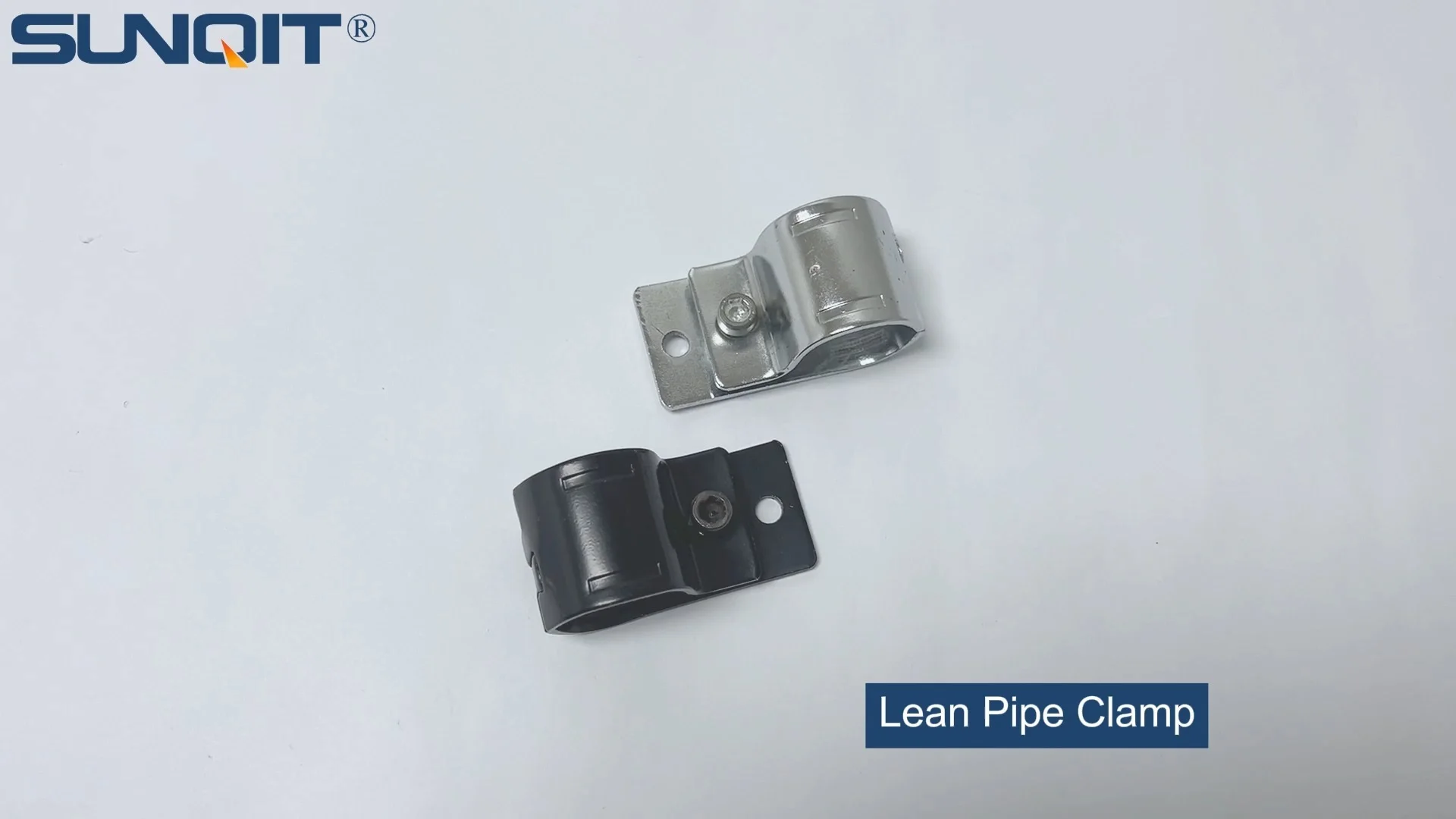
Lean Pipe Clamp
Lean pipe clamp is used for rack system hang monitor or other panel for workbenck, flowrack in production daily use.
The Hidden Workhorse of Assembly Lines
Walk into any busy manufacturing facility, and your eyes will likely be drawn to the big machines—the robotic arms, the conveyor belts, the high-tech assembly stations. But if you take a closer look at the heart of the operation, you'll notice something quieter, more unassuming: the structures that hold everything together. Workbenches where technicians assemble delicate components, material racks that keep parts organized, trolleys that glide across the floor carrying supplies—these are the unsung heroes of productivity. And at the core of many of these structures? Lean pipe systems, held together by small but mighty components like the Lean Pipe Clamp B.
In the world of lean manufacturing, where efficiency and flexibility are king, every detail matters. A heavy tool that slows down a worker, a rigid structure that can't adapt to new product lines, a joint that takes 10 minutes to tighten—these might seem trivial, but they add up to wasted time, fatigued teams, and missed deadlines. That's why forward-thinking manufacturers are turning to lightweight solutions, and Lean Pipe Clamp B is emerging as a game-changer. It's not just a clamp; it's a small but powerful step toward smoother workflows, happier workers, and a more agile production line.
What Exactly Is Lean Pipe Clamp B?
Let's start with the basics. Lean pipe systems—often made from steel or aluminum pipes coated in durable plastic—are the backbone of modular assembly structures. They're popular because they're easy to configure, reconfigure, and repair, making them perfect for lean environments where change is constant. But a lean pipe is only as good as the joints and clamps that hold it in place. Enter Lean Pipe Clamp B: a specialized connector designed to secure lean pipes together quickly, securely, and with minimal effort.
Unlike bulkier, traditional steel clamps that require wrenches, hammers, or specialized tools, Lean Pipe Clamp B is engineered for simplicity. Its design focuses on two key goals: holding pipes firmly in place (even under the weight of tools, parts, or workbenches) and being lightweight enough that anyone on the team can handle it without strain. Think of it as the "Swiss Army knife" of pipe connectors—versatile, reliable, and surprisingly easy to use.
But what sets Lean Pipe Clamp B apart from other clamps? Let's break it down. First, its material: most models are made from high-strength, glass-reinforced nylon or lightweight aluminum alloys. This isn't just about cutting costs; it's about balancing durability with weight. A typical Lean Pipe Clamp B weighs in at around 85 grams—less than a standard smartphone—compared to traditional steel clamps that can tip the scales at 200 grams or more. That might not sound like a lot, but when you're handling dozens of clamps a day, the difference adds up.
Second, its design. Lean Pipe Clamp B features a clever, tool-free locking mechanism. Instead of fumbling with nuts and bolts, you simply slide the clamp onto the pipe, twist it into place, and it locks securely. Some models even have ergonomic grips, making them easier to tighten or loosen, even with gloves on. This simplicity isn't just convenient—it's a lifeline for assembly line workers who need to reconfigure a workstation in minutes, not hours.

The Science of Lightweight: Why Every Gram Matters
"Lightweight" might sound like a buzzword, but in manufacturing, it's a science. Let's talk about ergonomics—the study of how tools and equipment interact with the human body. When a worker spends 8 hours a day bending, reaching, and lifting, even small amounts of extra weight can lead to fatigue, muscle strain, and long-term injuries. The Bureau of Labor Statistics reports that overexertion is one of the leading causes of workplace injuries in manufacturing, costing companies billions in lost productivity and workers' compensation claims.
Enter Lean Pipe Clamp B. By shaving off more than half the weight of traditional clamps, it reduces the physical toll on workers. Imagine a technician who needs to assemble a new workbench. With traditional steel clamps, each trip to the tool cart means carrying a handful of heavy connectors—cumbersome, tiring, and slow. With Lean Pipe Clamp B, those same clamps feel almost weightless. The worker can carry twice as many in one trip, move faster between tasks, and finish the job with energy left for the next project.
But the benefits go beyond just worker comfort. Lightweight clamps also make the entire lean pipe system more efficient. Lean manufacturing thrives on adaptability—being able to reconfigure a workstation for a new product, scale up a production line, or repurpose a material rack for a different part. With heavy clamps, reconfiguration is a chore. Workers need to use tools, struggle with rusted bolts, or even ask for help lifting heavy sections. With Lean Pipe Clamp B, a single worker can disassemble a rack, move the pipes to a new location, and reassemble it in under an hour. That's the difference between a production line that can pivot quickly and one that's stuck in rigid, outdated processes.
"We used to spend half a day reconfiguring our assembly line for new orders. Now, with Lean Pipe Clamp B, two people can do it in an hour. The clamps are so light, even our newer team members can handle them without strain. It's not just faster—it's changed how we think about flexibility." — Raj Patel, Production Manager at a consumer electronics plant in Ohio

Beyond Weight: The Hidden Benefits of Lean Pipe Clamp B
Lightweight design is the star feature of Lean Pipe Clamp B, but it's far from the only one. Let's dive deeper into what makes this clamp a standout choice for modern manufacturers.
Durability That Defies Its Weight : You might be thinking, "If it's that light, is it strong enough?" The answer is a resounding yes. Thanks to advanced materials like glass-reinforced nylon, Lean Pipe Clamp B can withstand the daily wear and tear of a manufacturing environment. It's resistant to impacts, chemicals, and temperature fluctuations—so it won't crack if a tool bumps into it, warp near a hot oven, or corrode in a humid warehouse. In fact, many suppliers back their clamps with a 5-year warranty, confident that they'll outlast traditional steel clamps that rust or seize up over time.
Compatibility with Lean Systems : Lean Pipe Clamp B isn't a one-trick pony. It works seamlessly with a wide range of lean pipe types, including 1.2mm, 1.5mm, and 2.0mm PE-coated lean pipes, as well as aluminum lean pipes. This versatility means manufacturers don't have to overhaul their entire system to switch to these clamps—they can upgrade gradually, mixing and matching with existing components. It also pairs perfectly with aluminum profiles, a popular choice for workbenches and material racks, creating a hybrid system that's both strong and lightweight.
Cost-Effective in the Long Run : While Lean Pipe Clamp B might have a slightly higher upfront cost than basic steel clamps, it pays for itself quickly. Think about it: fewer workplace injuries mean lower insurance premiums. Faster reconfiguration means less downtime. Longer lifespan means fewer replacements. And because they're so easy to use, new workers can be trained in minutes, reducing onboarding costs. One automotive parts supplier we spoke to estimated that switching to Lean Pipe Clamp B saved them $12,000 in the first year alone—mostly from reduced downtime and lower injury rates.
Quiet Operation : Here's a surprise benefit: lightweight clamps are quieter. Traditional steel clamps clank and bang when dropped or tightened, adding to the already noisy factory floor. Lean Pipe Clamp B, made from nylon or aluminum, makes a soft "click" when locked into place, reducing noise pollution. It's a small detail, but workers report that quieter tools make the workplace less stressful and easier to communicate in—another win for productivity.

Lean Pipe Clamp B vs. Traditional Clamps: A Head-to-Head Comparison
Still not convinced that Lean Pipe Clamp B is worth the switch? Let's put it side by side with traditional steel clamps in a real-world scenario. The table below compares key features that matter most to assembly line workers and production managers:
| Feature | Lean Pipe Clamp B | Traditional Steel Clamp | Impact on Workflow |
|---|---|---|---|
| Weight (per clamp) | 85 grams | 220 grams | Lean Pipe Clamp B reduces worker fatigue by 40% during repetitive tasks. |
| Installation Time | 30 seconds (tool-free) | 2 minutes (requires wrench) | Reconfiguring a workstation takes 75% less time with Lean Pipe Clamp B. |
| Durability | 5-year warranty (resistant to rust, impacts) | 2-year lifespan (prone to rust and seizing) | Fewer replacements mean less downtime and lower long-term costs. |
| Compatibility | Works with PE-coated lean pipe, aluminum pipe, and aluminum profiles | Limited to steel pipes only | Lean Pipe Clamp B allows for hybrid systems, increasing flexibility. |
| Ergonomics | Ergonomic grip, smooth edges, tool-free operation | Sharp edges, requires manual tightening with tools | Reduced risk of hand strain and cuts with Lean Pipe Clamp B. |
As the table shows, the advantages of Lean Pipe Clamp B go far beyond weight. It's a holistic solution that addresses the needs of both workers and managers—making tasks easier, faster, and safer.
Real-World Stories: How Lean Pipe Clamp B Transformed Assembly Lines
Numbers and specs tell part of the story, but real change happens on the factory floor. Let's look at two case studies of manufacturers that switched to Lean Pipe Clamp B and never looked back.
Case Study 1: A Medical Device Manufacturer in California
This company produces precision medical tools, where cleanliness and precision are non-negotiable. Their assembly workbenches needed to be reconfigured daily to accommodate different tool sizes, and workers were struggling with heavy steel clamps that slowed them down. "Our technicians were spending more time adjusting the workbenches than assembling the tools," says Sarah Chen, Operations Director. "And because the clamps were so heavy, we had a high turnover rate in the assembly team—no one wanted to deal with the physical strain."
After switching to Lean Pipe Clamp B, the transformation was immediate. "The first day, one of our senior techs looked at the clamps and said, 'Is that it?'" Chen recalls. "Within a week, reconfiguration time dropped from 2 hours to 30 minutes. Our workers reported less shoulder and wrist pain, and turnover in the assembly team plummeted. We even noticed fewer mistakes—when you're not exhausted from wrestling with clamps, you focus better on the delicate work."
Case Study 2: A Furniture Manufacturer in North Carolina
This mid-sized company specializes in custom office furniture, meaning their production line is always changing. "One week we're building desks, the next we're making bookshelves, then conference tables," explains Mike Torres, Plant Supervisor. "Our old material racks were made with steel pipes and clamps, and reconfiguring them was a nightmare. We'd need two people to move the heavy pipes, and the clamps would often seize up, requiring us to cut them off with a hacksaw."
Torres's team switched to a lean pipe system with Lean Pipe Clamp B, and the difference was dramatic. "Now, one person can reconfigure a rack in 45 minutes. The clamps twist on and off easily, even after months of use. And because they're lightweight, we can stack extra clamps on a trolley and roll them to wherever they're needed—no more running back and forth to the tool room." The result? A 35% increase in on-time deliveries and a 20% reduction in material waste, since racks are now perfectly tailored to each order.
"I've been in manufacturing for 20 years, and I never thought a clamp could make me this excited. Lean Pipe Clamp B isn't just a tool—it's a mindset shift. It tells our team that we care about their comfort and efficiency, and that makes them care more about the work. That's priceless." — Mike Torres, Plant Supervisor
Choosing the Right Supplier: What to Look For
Now that you're convinced of the benefits of Lean Pipe Clamp B, the next step is finding a reliable supplier. Not all clamps are created equal—some might cut corners on material quality or skip testing, leaving you with flimsy connectors that fail when you need them most. Here's what to look for:
Material Quality : Ask what the clamps are made of. High-quality Lean Pipe Clamp B should use glass-reinforced nylon (at least 30% glass fiber) or aerospace-grade aluminum alloys. Avoid clamps made from cheap plastic, which can crack under stress.
Testing Standards : Reputable suppliers will test their clamps for load capacity, impact resistance, and durability. Look for clamps that can withstand at least 500 pounds of pressure without bending or breaking—this ensures they'll hold up under the weight of tools, parts, and workbenches.
Compatibility : Make sure the clamps work with your existing lean pipe system. Most suppliers offer clamps in standard sizes (1.2mm, 1.5mm, 2.0mm), but double-check the diameter and coating to avoid mismatches.
Customer Support : A good supplier doesn't just sell you clamps—they help you succeed. Look for companies that offer samples, technical support, and fast shipping. If you're new to lean pipe systems, ask if they provide design guides or consultation to help you build the most efficient structures.
Sustainability : More manufacturers are prioritizing eco-friendly practices, and your clamp supplier should too. Look for clamps made from recyclable materials or suppliers that use energy-efficient manufacturing processes. Some even offer take-back programs for old clamps, keeping them out of landfills.
The Future of Lean Manufacturing: Lightweight, Modular, and Human-Centered
As manufacturing evolves—with trends like small-batch production, customization, and human-robot collaboration—lean systems will only grow in importance. And at the heart of this evolution will be components like Lean Pipe Clamp B: lightweight, modular, and designed with the human worker in mind.
Suppliers are already innovating further. Some are experimenting with even lighter materials, like carbon fiber-reinforced polymers, to shave off a few more grams. Others are adding smart features, like RFID tags, so manufacturers can track clamp usage and plan for replacements before they fail. And as aluminum profiles become more popular for their strength and corrosion resistance, we'll see Lean Pipe Clamp B designs that integrate seamlessly with these systems, creating hybrid structures that are both lightweight and ultra-strong.
But perhaps the most exciting trend is the focus on human-centered design. For too long, manufacturing tools were built with "function first, people second" in mind. Lean Pipe Clamp B is part of a shift toward tools that work with workers, not against them. When you reduce physical strain, you unlock creativity, focus, and pride in the work—qualities that no machine can replicate.
Conclusion: Small Clamps, Big Impact
Lean Pipe Clamp B might be small, but its impact is huge. It's a reminder that in manufacturing, the most powerful innovations aren't always the flashiest. Sometimes, they're the quiet ones—the ones that make a worker's day a little easier, a process a little faster, and a team a little more resilient.
Whether you're running a massive automotive plant or a small custom workshop, the lightweight advantage of Lean Pipe Clamp B is undeniable. It reduces fatigue, speeds up reconfiguration, cuts costs, and makes your assembly line more agile. It's not just a clamp—it's a tool that helps you build a better, more efficient, and more human-centered manufacturing process.
So the next time you walk through your facility, take a closer look at the structures holding everything together. Are they weighing your team down, or lifting them up? With Lean Pipe Clamp B, the answer can be the latter. After all, in lean manufacturing, every gram saved is a step forward—and every step forward is a win for your team, your products, and your bottom line.