- Company Articles
- Products and Technology
- Product knowledge
- Lightweight Advantage: Reducing Labor Costs with Single Side Aluminum Pipe

Lightweight Advantage: Reducing Labor Costs with Single Side Aluminum Pipe
Related Product
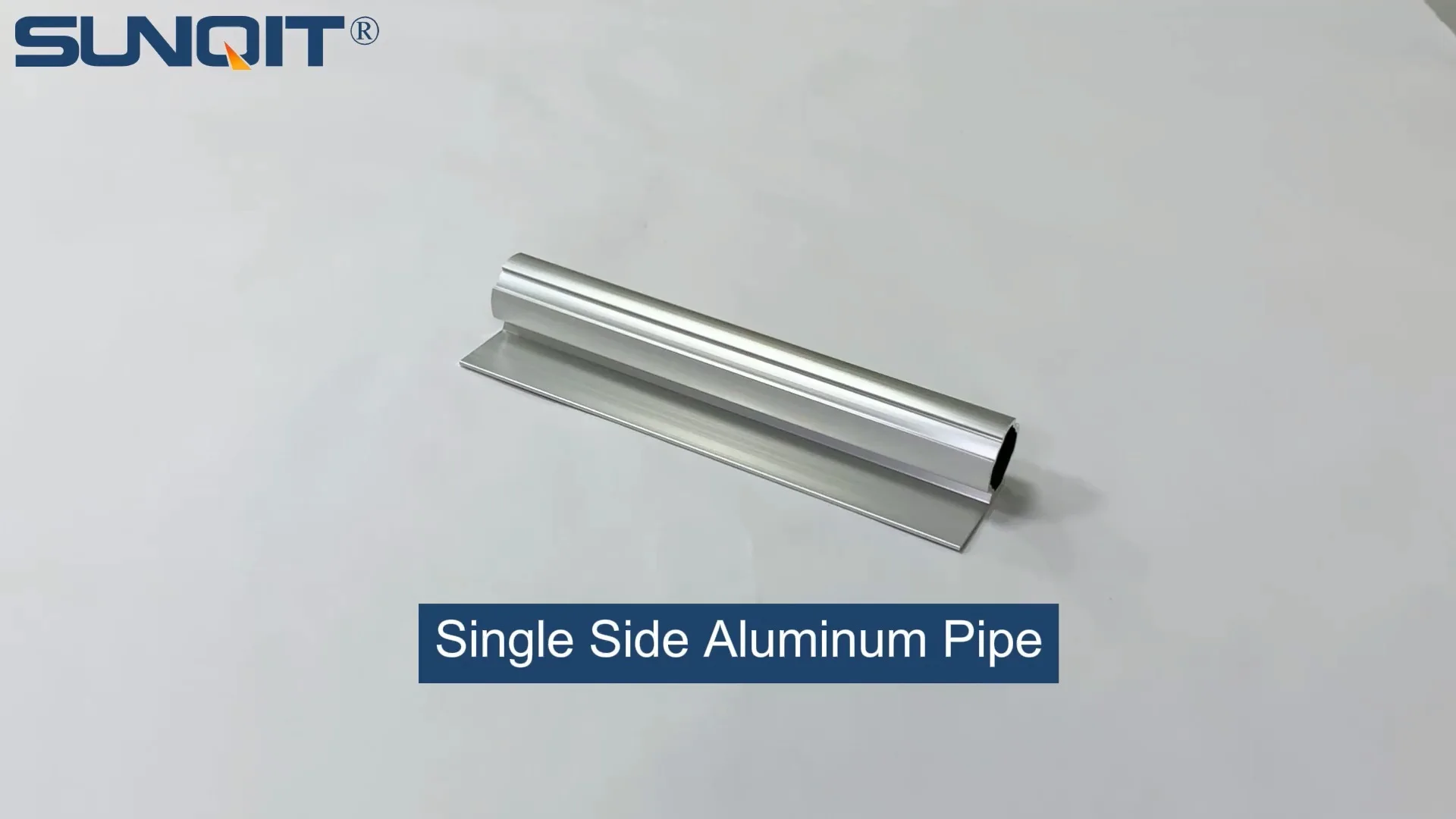
Single Side Aluminum Pipe
The single-sided plane can be installed with a back-mounted material box, and can also be used as a sidewall or partition.
The Hidden Cost of Heavy Equipment in Manufacturing
Walk into any manufacturing facility, and you'll likely see the same scene: workbenches bolted to the floor, material racks loaded with tools, and conveyor systems that feel like they've been there since the factory opened. These fixtures are the backbone of production, but they carry a hidden cost—their weight. Every time a team needs to reconfigure a workbench, move a material rack, or adjust a conveyor, heavy equipment translates to slower processes, more workers needed, and a higher risk of fatigue or injury. Over time, these small inefficiencies add up to significant labor costs that eat into your bottom line.
For decades, manufacturers relied on steel pipes and heavy-duty materials for lean systems, assuming "sturdy" meant "reliable." But in today's fast-paced production environments—where lines switch between products weekly, if not daily—sturdiness alone isn't enough. What if the solution to cutting labor costs wasn't about working harder, but working smarter? Enter single side aluminum pipe: a lightweight, durable alternative that's quietly revolutionizing how factories operate.
The Lightweight Revolution: What Makes Single Side Aluminum Pipe Different?
At first glance, aluminum might seem like a "softer" choice compared to steel. But modern aluminum lean pipe—especially single side variants—blends strength with a game-changing feature: weight. Aluminum is roughly 1/3 the weight of steel, but when engineered with reinforced walls and precision joints, it matches (and often exceeds) the load capacity of traditional lean pipes for most manufacturing tasks.
So, what's the "single side" advantage? Unlike standard aluminum pipes, which are uniform in design, single side aluminum pipe features a specialized groove or channel along one edge. This design simplifies assembly by allowing accessories—like brackets, connectors, or guide rails—to snap or slide into place without complex tools. It's a small detail, but it turns hours of assembly time into minutes, and that's where the labor savings start to pile up.
Let's break down the material difference with a quick comparison:
| Material | Weight (per meter, 20mm diameter) | Assembly Time (per 10ft structure) | Worker Fatigue Risk (1-10 scale) | Reconfiguration Ease |
|---|---|---|---|---|
| Steel Lean Pipe | 2.8kg | 2 workers, 45 minutes | 8 (high risk of strain) | Requires tools; often permanent |
| Traditional Aluminum Pipe | 0.9kg | 2 workers, 30 minutes | 5 (moderate risk) | Tools needed; some reconfigurability |
| Single Side Aluminum Pipe | 0.8kg | 1 worker, 15 minutes | 2 (low risk) | Tool-free; fully reconfigurable |
The numbers speak for themselves. A single worker can assemble a single side aluminum pipe structure in a quarter of the time it takes two workers with steel. And when it's time to reconfigure—say, shifting a workbench from a 2-person station to a solo setup—no need for a second pair of hands or a wrench. The lightweight design and single side groove let workers adjust on the fly, turning downtime into productive time.

Beyond Weight: How Aluminum Lean Pipe Transforms Workflows
Lightweight alone isn't enough to justify a switch. To truly reduce labor costs, a material needs to make *every* part of the workflow smoother. Aluminum lean pipe—paired with the right accessories—does exactly that. Let's walk through a typical day in a factory that's made the switch, and see where the savings hide.
Case Study: A Day in the Life with Aluminum Workbenches
Consider a mid-sized electronics manufacturer that recently switched from steel workbenches to single side aluminum pipe workbenches (specifically, the "Workbench E – Single Deck Without Caster" model). Here's how their day changed:
- Morning Setup (7:00 AM): Previously, two workers spent 20 minutes adjusting each steel workbench to the day's production specs (height, tool placement). With aluminum workbenches, one worker adjusts three benches in 15 minutes total—thanks to lightweight design and quick-connect joints.
- Material Restocking (10:30 AM): Material Rack B (3 rows, 3 floors) used to require two people to roll into place. Now, one worker moves the aluminum version alone, saving 10 minutes per restock.
- Line Reconfiguration (2:00 PM): A rush order requires shifting three workbenches to a new layout. Steel benches took 45 minutes and a team of four. Aluminum benches? One worker, 20 minutes, using nothing but a rubber mallet to pop joints loose.
Over a week, this factory saved 6.5 hours of labor—time that went straight back into production. Multiply that by an average hourly wage of $25, and that's $162.50 in weekly savings per workbench line. Scale that to a factory with 10 lines, and you're looking at over $8,000 in annual savings—just from setup and reconfiguration.
But the benefits go beyond time. Lighter equipment means less strain on workers' backs, shoulders, and joints. In one study by the Manufacturing Ergonomics Institute, facilities using aluminum lean systems reported a 32% drop in workplace injuries related to lifting and moving equipment. Fewer injuries mean fewer workers' compensation claims, less downtime for recovery, and a happier, more productive team.

The Role of Aluminum Profile Accessories: Small Parts, Big Impact
A pipe is only as good as the accessories that bring it to life. Single side aluminum pipe shines because it works seamlessly with a ecosystem of lightweight, durable add-ons—many of which are designed to amplify its labor-saving benefits. Let's highlight a few game-changers:
Internal Rotary Aluminum Joints
These joints let pipes rotate 360° without loosening, making it easy to adjust angles on the fly. For example, when a worker needs to tilt a tool holder 45° for better access, they simply twist the joint—no tools, no hassle. Compare that to steel joints, which often require wrenches and risk stripping threads after repeated adjustments.Aluminum Guide Rails and Roller Tracks
Accessories like "Aluminum Guide Rail A" and "Plastic Roller Track Guide Rail Yellow" turn aluminum pipes into smooth-flowing material channels. Unlike steel roller tracks, which are heavy and prone to rust, aluminum versions glide with minimal effort. Workers pushing parts along a 10ft aluminum roller track report 50% less physical effort compared to steel—meaning less fatigue and more consistent speed throughout the shift.Caster Wheels and Casters Accessories
Even the best lightweight pipe needs mobility, and aluminum-compatible casters (like the "Flat Adjustable Swivel Castor Wheel") are designed to be light but tough. A steel caster might weigh 3 lbs; an aluminum caster? Just 1.2 lbs. Multiply that by four casters per trolley, and you're shaving 7.2 lbs off the total weight—enough to let one worker move a loaded trolley instead of two.Swivel Roller Balls
Ever tried sliding a heavy box across a steel table? It's a workout. Swivel roller balls (1 inch, 0.5 inch, and stainless steel variants) turn any aluminum workbench into a friction-free surface. Pushing a 20lb part across a bench with roller balls takes 80% less force than pushing it across a steel surface—saving workers' energy for tasks that matter. Together, these accessories turn single side aluminum pipe from a "lightweight alternative" into a full lean system. They're the reason a simple pipe can become a workbench, a material rack, a conveyor, or a turnover trolley—all with minimal tools and maximum flexibility.
Calculating the ROI: Labor Cost Savings in Action
Let's get concrete about the numbers. Suppose you're considering upgrading a single production line from steel lean pipe to single side aluminum pipe. Here's how the math breaks down over three years (the average lifespan of a lean system):
Even if the upfront cost of aluminum is slightly higher (which it often isn't—thanks to lower material and shipping costs), the labor savings alone make it a no-brainer. And that's before factoring in intangibles like faster time-to-market for new products (thanks to quick reconfigurations) or higher employee retention (happier workers stay longer, reducing hiring/training costs).
| Cost Category | Steel Lean System | Single Side Aluminum Lean System | 3-Year Savings |
|---|---|---|---|
| Initial Setup Labor | $300 (4 workers x 5 hours x $15/hr) | $75 (1 worker x 5 hours x $15/hr) | $225 |
| Weekly Reconfiguration Labor | $125 (2 workers x 2.5 hours x $25/hr) | $31.25 (1 worker x 0.5 hours x $25/hr) | $14,887.50 (52 weeks x 3 years x $93.75/week) |
| Worker Injury Costs (estimated) | $2,500 (1 claim every 2 years) | $800 (1 claim every 5 years) | $1,700 |
| Maintenance Labor | $600 (rust removal, joint tightening yearly) | $150 (aluminum resists rust; joints self-tighten) | $450 |
| Total 3-Year Savings | - | - | $17,262.50 |
Real-World Applications: From Workbenches to Lean Systems
Single side aluminum pipe isn't just for workbenches. Its versatility makes it the backbone of entire lean systems. Here are a few more ways manufacturers are using it to cut labor costs:
Flow Racks and Conveyors
Traditional steel flow racks are heavy and fixed, but aluminum flow racks (like Material Rack B) with plastic roller track guide rails (yellow or grey) let materials glide smoothly from storage to assembly. Workers no longer bend or stretch to reach parts—they simply slide them along the lightweight track, saving 5-7 seconds per part. Over a shift with 500 parts, that's 41-58 minutes saved.Turnover Trolleys
Aluminum turnover trolleys, paired with caster wheels and swivel roller balls, are light enough for one worker to push loaded with 200 lbs of parts. Steel trolleys often need two workers, doubling the labor for material transport.ESD Workstations
For electronics manufacturing, ESD workstations (static-safe workbenches) are non-negotiable. Traditional steel ESD workstations are bulky, but aluminum versions (like the ESD Workstation with aluminum guide rails) combine lightweight design with static-dissipative properties. Workers adjust them quickly, and the aluminum frame ensures static charges dissipate safely—no extra labor needed for grounding checks.Choosing the Right Supplier: Quality Matters
Not all aluminum lean pipe is created equal. To maximize labor savings, look for a supplier that offers:
- Precision Engineering: Joints should fit snugly but release easily—no wobbly structures or stuck connectors.
- Tested Load Capacity: Ensure the pipe and accessories are rated for your typical loads (most aluminum systems handle 200-300 lbs per linear foot, which is more than enough for electronics, automotive, or consumer goods).
- Full Accessory Lines: A supplier with a wide range of accessories (like internal rotary joints, roller track placon mounts, or aluminum profile end caps) means you won't need to mix and match brands—saving time on compatibility checks.
- Fast Shipping: Downtime during transition kills savings. Look for suppliers with local warehouses to minimize lead times.
Conclusion: Lightweight = Heavy Savings
In manufacturing, every second and every dollar counts. Single side aluminum pipe isn't just a "lighter" alternative to steel—it's a strategic tool for cutting labor costs, boosting productivity, and creating a safer workplace. From faster assembly and reconfiguration to fewer injuries and happier workers, the benefits stack up quickly.
So, the next time you look at your production line, ask: Is this equipment working *for* my team, or *against* them? If the answer is the latter, it might be time to go lightweight. With single side aluminum pipe and the right accessories, you're not just building structures—you're building a leaner, more profitable future.