- Company Articles
- Products and Technology
- Product knowledge
- Lightweight Lean Pipe Clamps: Advantages for Mobile Workstations

Lightweight Lean Pipe Clamps: Advantages for Mobile Workstations
Related Product
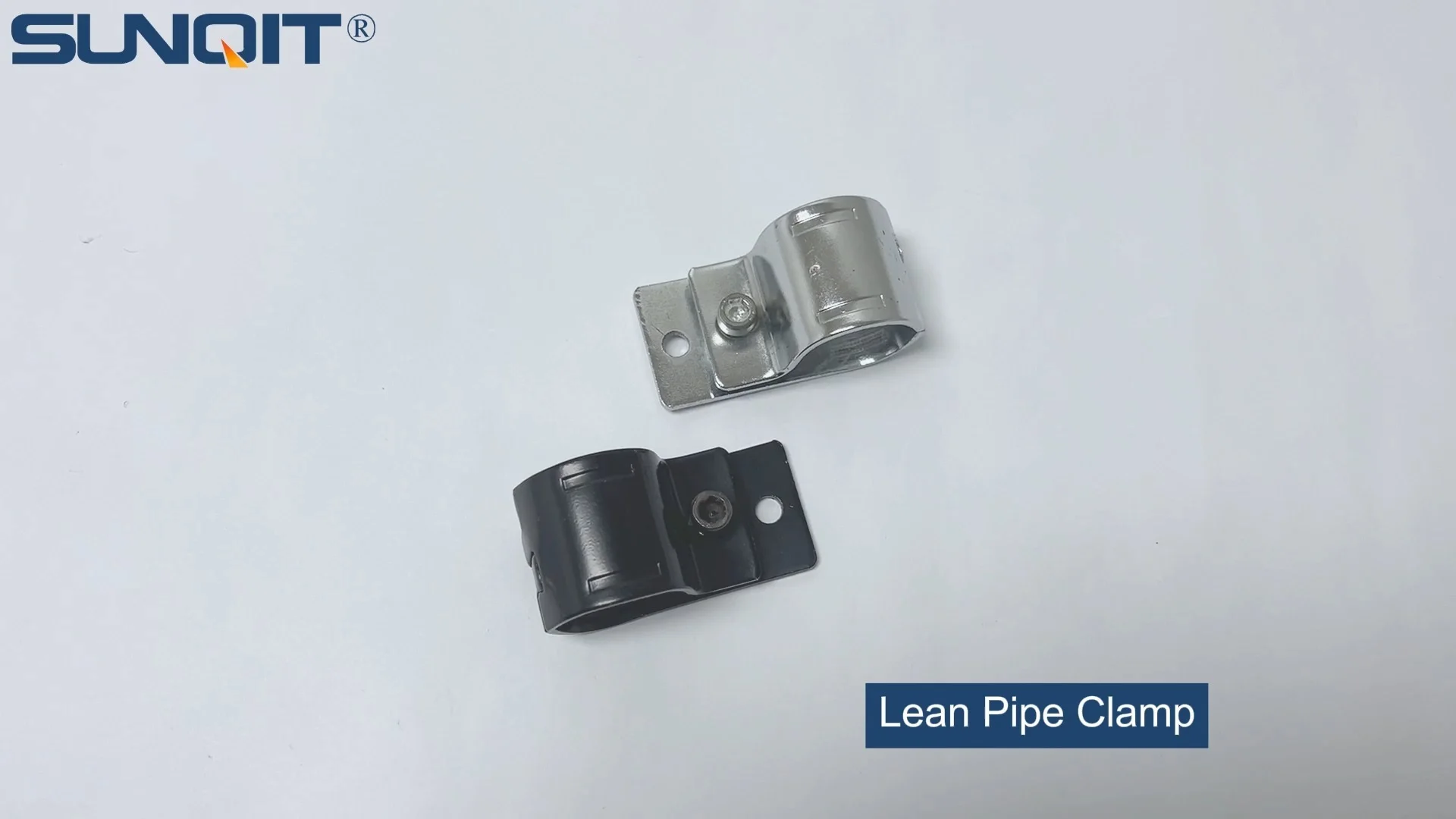
Lean Pipe Clamp
Lean pipe clamp is used for rack system hang monitor or other panel for workbenck, flowrack in production daily use.
Walk into any busy manufacturing plant or warehouse, and you'll likely spot the same challenge repeated across the floor: workstations that feel stuck in time. Heavy metal benches bolted to the ground, carts that require two people to push, and setups so rigid they can't adapt when a new product line launches or a rush order hits. For years, this rigidity was seen as the cost of "sturdiness"—but what if sturdiness didn't have to mean immobility? What if your workstation could be both strong enough to hold tools and materials, and light enough to glide across the floor with a single push? That's where lightweight lean pipe clamps come in, quietly revolutionizing how teams build, move, and use their workspaces.
At first glance, a lean pipe clamp might seem like a small component—just a connector that holds pieces of pipe together. But in reality, it's the unsung hero of flexible work design. These clamps, paired with lean pipe systems, turn basic aluminum or steel pipes into everything from workbenches and material racks to mobile trolleys and assembly lines. And while "lightweight" is right there in the name, their impact goes far beyond just being easy to lift. They're about giving teams control—control to rearrange a workstation in 10 minutes instead of 10 hours, control to move a setup from one corner of the factory to another without calling in maintenance, and control to adapt to changing needs without breaking the bank. Let's dive into what makes these clamps so game-changing, and why they're becoming a must-have for anyone serious about building mobile, efficient workstations.
What Are Lightweight Lean Pipe Clamps, Anyway?
Before we jump into their advantages, let's get clear on what lightweight lean pipe clamps actually are. Think of them as the "building blocks" of a lean workstation system. They're small, often made of durable plastic, aluminum, or coated steel, and designed to connect lengths of lean pipe (hollow tubes, usually aluminum or steel) into stable, customizable structures. Unlike traditional welding or bolting, which requires tools, expertise, and permanence, these clamps twist, lock, or snap into place—no special skills needed. You could hand a set of clamps and pipes to a new hire, and they'd be building a basic workbench within an hour.
What makes them "lightweight"? It starts with the materials. Many modern clamps use high-strength plastic or aluminum alloys instead of heavy steel, cutting down on weight without sacrificing durability. Pair that with lean pipe—often aluminum, which is lighter than steel but still strong—and you've got a system that's easy to handle. A 6-foot length of aluminum lean pipe, for example, might weigh just 5-7 pounds, compared to 15+ pounds for a steel equivalent. When you multiply that by the number of pipes in a workstation, the weight savings add up fast. Suddenly, a workbench that once required two people to move can be repositioned by one person with minimal effort.
But lightweight doesn't mean flimsy. These clamps are engineered to hold up under daily use. Many can support hundreds of pounds of weight—enough for power tools, boxes of parts, or even small machinery. They're also designed to withstand the wear and tear of factory life: scuffs from carts, spills, and the occasional bump from a forklift. Some are even ESD-safe (electrostatic discharge), making them ideal for electronics assembly where static could damage sensitive components. In short, they're built to work as hard as your team does, without weighing them down.
5 Key Advantages for Mobile Workstations
So, why should you care about lightweight lean pipe clamps? Let's break down their biggest benefits—ones that go beyond just "being light" and directly impact how your team works, moves, and succeeds.
1. Unmatched Flexibility: Build, Rebuild, Repeat
The days of "set it and forget it" workstations are over. Today's manufacturing and warehouse environments change fast: a new product line might require taller shelves, a seasonal rush could need more assembly stations, or a team might want to rearrange their space for better workflow. Traditional workstations, with their welded frames or bolted legs, can't keep up. You'd either have to buy a whole new setup or spend hours (and money) on modifications. With lightweight lean pipe clamps, though, reconfiguration is as easy as twisting a clamp loose, moving a pipe, and locking it back in place.
Take a simple example: a workbench used for assembling small parts. In the morning, it's set up with a flat surface and a small shelf for tools. By afternoon, the team needs to add a roller track to feed parts from a cart directly onto the bench. With lean pipe clamps, they don't need to order a new bench—they just grab a length of roller track, attach it to the existing frame with a few clamps, and they're done. Later in the week, if the roller track isn't needed anymore? They can remove it and reuse those clamps and pipes to build a mobile cart. It's like having a workstation that can "morph" to fit the task at hand, without wasting resources on single-use equipment.
2. Mobility Without Compromise: Glide, Don't Grunt
Here's a scenario we've all seen: A team needs to move a workstation across the floor to be closer to a new machine. Two people strain to push it, wheels squeaking, only to have it get stuck on a slight unevenness in the concrete. Frustration mounts, time is wasted, and maybe someone even tweaks their back. With lightweight lean pipe clamps, this story gets a rewrite—because when your workstation is light, adding mobility becomes trivial. Pair the frame with a set of quality caster wheels (another key component of lean systems), and suddenly that workstation isn't just a bench—it's a mobile command center.
Caster wheels, when attached to a lightweight lean pipe frame, turn (bènzhòng) setups into smooth-moving assets. Need to move the workstation to the other side of the factory? One person can tilt it back, roll it over, and lock the casters in place—done. Working on a large assembly that requires the workstation to follow the product down the line? No problem—just unlock the casters and glide alongside. Even in tight spaces, the light weight makes maneuvering easy; you won't be left struggling to pivot or stop without damaging walls or equipment. For teams that value agility, this isn't just a convenience—it's a productivity booster. Time spent wrestling with heavy furniture is time taken away from actual work, and lightweight clamps eliminate that waste entirely.
3. Durability That Lasts (Without the Heaviness)
Skeptics might wonder: If they're so light, can they really hold up? The answer is a resounding yes. Lightweight lean pipe clamps are built with modern materials that prioritize strength-to-weight ratio. Take aluminum clamps, for example: aluminum is naturally resistant to rust and corrosion, making it ideal for humid or messy environments (think food processing or automotive shops where spills happen). Many plastic clamps use reinforced nylon or polypropylene, which can handle impacts and heavy loads without cracking. Even coated steel clamps, while slightly heavier, are designed with hollow cores or thinner walls to reduce weight while maintaining rigidity.
What does this mean in practice? A workstation built with these clamps can last for years, even with daily use. The pipes themselves are often anodized or coated to prevent scratches and rust, and the clamps are designed to withstand repeated assembly and disassembly (no stripped threads or broken locks after a few reconfigurations). Compare that to cheap, flimsy workbenches that start wobbling after a month or two, or heavy wooden setups that warp with moisture. Lightweight lean pipe clamps don't just save you effort upfront—they save you money in the long run by reducing the need to replace worn-out equipment.
4. Cost-Effective: Spend Once, Adapt Forever
Let's talk numbers. Traditional workstations—whether custom-welded metal benches or prefab wooden setups—aren't cheap. A basic fixed workbench can cost $500 or more, and if you need to modify it later (add a shelf, change the height), you're looking at hiring a welder or buying a whole new unit. Lightweight lean pipe clamps flip this model on its head. The initial investment is often lower (a set of clamps and pipes for a simple workbench might cost $200-$300), and because the system is modular, you never have to "start over." Need a taller shelf? Just add a longer pipe. Want to turn a static bench into a mobile cart? Swap out the fixed feet for caster wheels. The clamps and pipes are reusable, so when your needs change, you don't throw away the old setup—you repurpose it.
This reusability is a game-changer for small businesses or teams on tight budgets. A startup manufacturing company, for example, might start with a few basic workbenches. As they grow, instead of buying new ones, they can take apart old setups and rebuild them into material racks or assembly lines. Even larger companies benefit: when a product line is retired, the lean pipe components can be moved to another department instead of collecting dust in a corner. Over time, this "build once, reuse often" approach cuts down on waste and keeps capital expenses in check—proving that lightweight doesn't have to mean "cheap," but rather "smartly invested."
5. Ergonomics: Workstations That Work With Your Team
Finally, let's not overlook the human element. Heavy, immobile workstations don't just hurt productivity—they can hurt people. A bench that's too low forces workers to hunch over, leading to back strain; one that's too high causes shoulder fatigue. A cart that's hard to push can lead to strained muscles or even injuries. Lightweight lean pipe clamps solve these issues by making ergonomics easy to achieve. Since the clamps allow for quick adjustments, you can tweak the height of a workbench, the angle of a shelf, or the position of a tool rack to fit the person using it—not the other way around.
Imagine a team where each member can adjust their workstation to their height in 5 minutes. Or a mobile cart that's light enough for anyone to push, regardless of size or strength. These small changes add up to happier, healthier workers—and happier workers are more productive. Studies have shown that ergonomic workspaces reduce absenteeism and errors, while boosting morale. With lightweight lean pipe clamps, you're not just building workstations—you're building environments where people can do their best work without physical stress. And that might be the biggest advantage of all.

Real-World Impact: How One Factory Transformed Its Floor
To put this all into perspective, let's look at a real example: a mid-sized electronics assembly plant in the Midwest that recently switched to lightweight lean pipe clamps for their mobile workstations. Before the switch, their setup was typical of many factories: heavy wooden workbenches bolted to the floor, each dedicated to a single product. When they landed a contract for a new line of small appliances, they realized they needed 10 new workstations—and fast. The old approach would have meant ordering custom benches, waiting 6-8 weeks for delivery, and paying $5,000+ for the set. Instead, they invested in lean pipe, lightweight clamps, and caster wheels.
The result? Their team built 12 workstations in a single day—using just a few basic tools. Each workstation was on casters, so they could roll them into place and lock them down. When the product design changed a month later (requiring taller shelves to hold larger components), they didn't need new benches; they just loosened the clamps, added longer pipes, and tightened them back up. Best of all, when the contract ended, they disassembled the workstations and reused the pipes and clamps to build mobile material racks for their main assembly line. The total cost? Under $2,000—less than half the price of traditional benches—and they had zero downtime waiting for delivery.
This isn't an isolated case. Warehouses using roller track systems (paired with lean pipe clamps) report faster material flow, as lightweight carts glide along tracks without getting stuck. Auto repair shops love them for mobile tool stations that can be rolled right to the vehicle, reducing trips back and forth to the tool bench. Even small businesses, like local bike shops, use them to build adjustable workbenches that can handle everything from tiny gear repairs to full bike assemblies. The common thread? These clamps turn "fixed" into "flexible," and "heavy" into "handy"—and that flexibility is what helps teams stay competitive in a fast-paced world.

How Do They Stack Up? A Quick Comparison
Still not sure if lightweight lean pipe clamps are right for you? Let's compare them side-by-side with traditional workstation setups. The table below breaks down key factors like weight, assembly time, mobility, and cost—so you can see the difference for yourself:
| Feature | Traditional Workstations (Wood/Heavy Metal) | Lightweight Lean Pipe Clamp Systems |
|---|---|---|
| Weight (per workstation) | 150-300 lbs (hard to move alone) | 40-80 lbs (easily moved by one person) |
| Assembly Time | 2-4 hours (requires tools/welding) | 30-60 minutes (no special tools needed) |
| Reconfigurability | Hard (often requires rebuilding from scratch) | Easy (adjust clamps in minutes) |
| Mobility | Low (bolted down or requires 2+ people to move) | High (casters add smooth, easy movement) |
| Cost (initial + 5-year upkeep) | Higher ($500+ per unit, plus replacement costs) | Lower ($200-300 per unit, reusable components) |
| Ergonomic Adjustability | Limited (fixed height/angle) | High (easily adjusted for each user) |
As the table shows, lightweight lean pipe clamps outperform traditional setups in nearly every category that matters for mobile workstations. They're lighter, faster to build, easier to adapt, and gentler on both your budget and your team. And while traditional workstations might still have a place in some ultra-heavy-duty applications (like holding industrial machinery), for most day-to-day tasks—assembly, packing, material handling—lean pipe clamps are the clear choice.

Wrapping Up: Lightweight Clamps, Heavyweight Results
At the end of the day, lightweight lean pipe clamps are more than just a tool—they're a mindset shift. They represent a move away from the "one-size-fits-all" rigidity of the past and toward a future where workstations adapt to people, not the other way around. They're about giving teams the power to build, move, and change their space without asking for permission or waiting for help. And in a world where agility and efficiency are everything, that power is invaluable.
Whether you're running a small workshop or a large manufacturing plant, the advantages are clear: flexibility to reconfigure on the fly, mobility to move work where it's needed, durability to stand the test of time, cost savings that add up, and ergonomics that keep your team healthy and happy. So the next time you look at your current workstations and think, "There has to be a better way," remember: there is. It's called lightweight lean pipe clamps—and they're ready to transform how you work.