- Company Articles
- Products and Technology
- Solution
- Lightweight Swivel Stem Caster Wheel with Brake: Portable Workstation Solutions

Lightweight Swivel Stem Caster Wheel with Brake: Portable Workstation Solutions
Related Product
Swivel Stem Caster Wheel with Brake
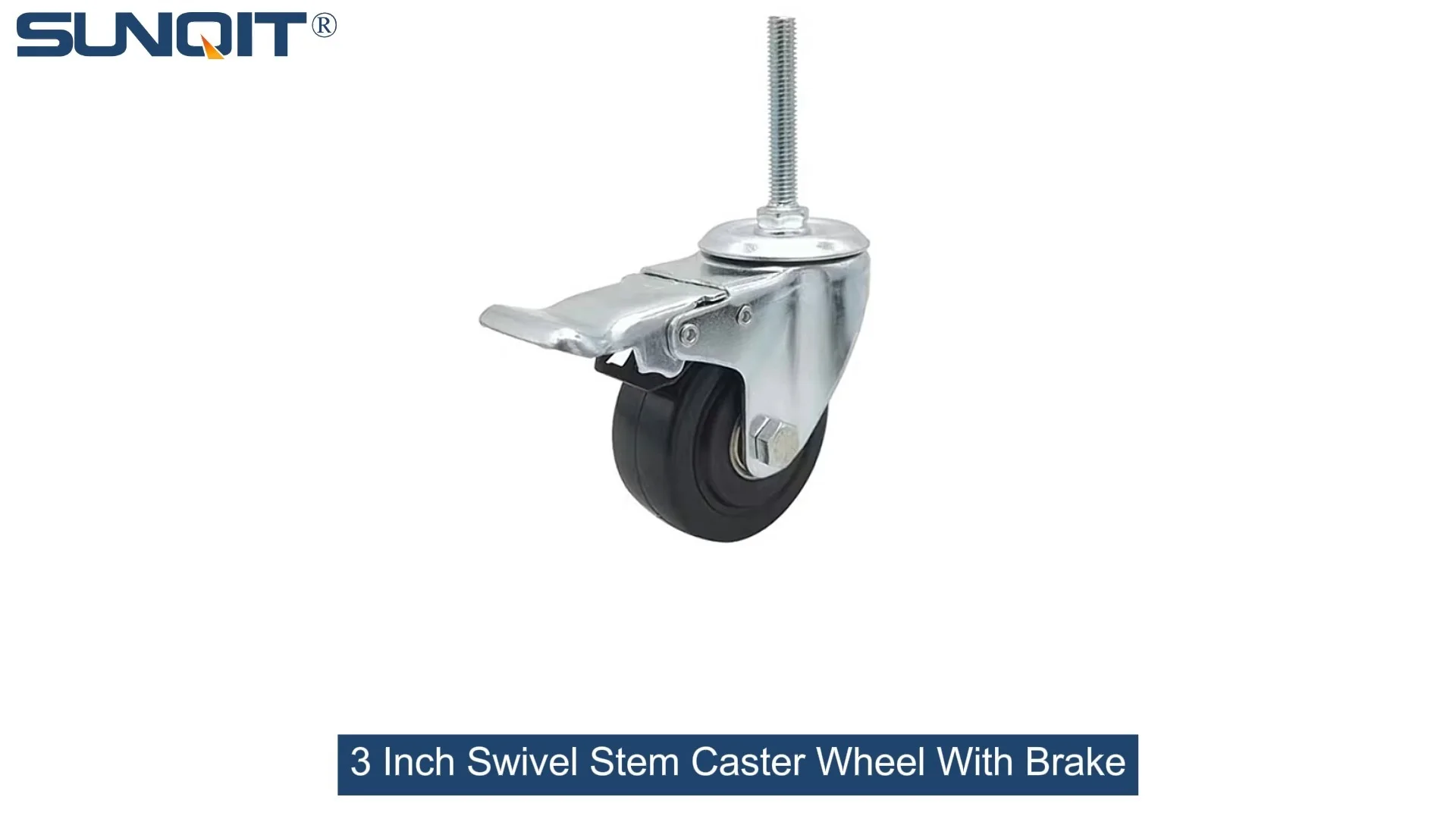
360 Degree Swivel Stem Caster with brake. Threaded-post mount design, castors diameter 3 inch.Each swivel caster wheels loading 70KGS. Heavy enough and widely suit for carts, chairs, cabinet, flow rack, workbench, turnover rolley.
Walk into any modern workshop, manufacturing floor, or even a bustling tech startup's assembly area, and you'll notice a common thread: workspaces that breathe. They adapt. A team might rearrange their setup in the morning for a small-batch project, shift to a different layout by afternoon to accommodate a larger order, and then fold everything into a compact corner by evening to make room for a training session. This flexibility isn't magic—it's the result of intentional design, and at the heart of it all? Often, a humble but mighty component: the lightweight swivel stem caster wheel with brake.
In a world where "lean" isn't just a buzzword but a survival strategy, and where every square foot of space and minute of labor counts, portable workstations have become non-negotiable. They're the unsung heroes of efficiency, turning static, rigid environments into dynamic ecosystems that grow with your business. And what makes these workstations truly portable? It's not just the materials they're built from—though aluminum profile and durable alloys play a key role—but the mobility solutions that let them glide, pivot, and lock into place with ease. Today, we're diving deep into how the lightweight swivel stem caster wheel with brake transforms ordinary workbenches, flow racks, and lean systems into tools that don't just support your workflow—they elevate it.
In a world where "lean" isn't just a buzzword but a survival strategy, and where every square foot of space and minute of labor counts, portable workstations have become non-negotiable. They're the unsung heroes of efficiency, turning static, rigid environments into dynamic ecosystems that grow with your business. And what makes these workstations truly portable? It's not just the materials they're built from—though aluminum profile and durable alloys play a key role—but the mobility solutions that let them glide, pivot, and lock into place with ease. Today, we're diving deep into how the lightweight swivel stem caster wheel with brake transforms ordinary workbenches, flow racks, and lean systems into tools that don't just support your workflow—they elevate it.
Why Portable Workstations Matter: More Than Just "Moving Stuff Around"
Let's start with the basics: Why does portability in workstations even matter? For decades, workspaces were designed to be permanent. A workbench was bolted to the floor; a flow rack was anchored to a wall. The idea was stability, but stability often came at the cost of adaptability. If your product line changed, or a new process was introduced, you'd either make do with the existing setup (and suffer inefficiencies) or invest in expensive renovations.
Fast forward to today, and the pace of business has accelerated. A small electronics manufacturer might shift from assembling smartwatches to fitness trackers in a matter of weeks. A warehouse might need to reallocate space for seasonal inventory at a moment's notice. A research lab could pivot from testing one prototype to another, requiring entirely different tool arrangements. In this context, a workstation that can't move is a bottleneck. It's a constraint on creativity, a drain on productivity, and a barrier to growth.
Portable workstations solve this by putting control back in your hands. They let you:
- Optimize space : Rearrange on the fly to accommodate new equipment, team size, or project demands. No more wasted square footage because a heavy workbench blocks a better layout.
- Reduce downtime : When a process changes, you don't need days to rebuild—just minutes to reposition. Think of a team that can shift their assembly line from a linear setup to a U-shape (a classic lean system move) in under an hour to cut down on walking time.
- Minimize physical strain : Workers no longer need to carry heavy materials across the floor; instead, the flow rack or turnover trolley comes to them. This isn't just about comfort—it's about reducing fatigue, lowering injury risks, and keeping your team energized.
- Scale without overspending : Instead of buying multiple fixed workstations for different tasks, one portable setup can do the job. A single workbench with caster wheels might handle assembly in the morning, quality control in the afternoon, and packing in the evening.
But here's the catch: Not all mobility solutions are created equal. A cheap caster wheel might work for a lightweight cart, but when you're talking about a workbench loaded with tools, or a flow rack stacked with materials, you need something reliable. Something that's strong enough to carry the load, nimble enough to navigate tight spaces, and secure enough to stay put when you need it to. That's where the lightweight swivel stem caster wheel with brake enters the picture.
Fast forward to today, and the pace of business has accelerated. A small electronics manufacturer might shift from assembling smartwatches to fitness trackers in a matter of weeks. A warehouse might need to reallocate space for seasonal inventory at a moment's notice. A research lab could pivot from testing one prototype to another, requiring entirely different tool arrangements. In this context, a workstation that can't move is a bottleneck. It's a constraint on creativity, a drain on productivity, and a barrier to growth.
Portable workstations solve this by putting control back in your hands. They let you:
- Optimize space : Rearrange on the fly to accommodate new equipment, team size, or project demands. No more wasted square footage because a heavy workbench blocks a better layout.
- Reduce downtime : When a process changes, you don't need days to rebuild—just minutes to reposition. Think of a team that can shift their assembly line from a linear setup to a U-shape (a classic lean system move) in under an hour to cut down on walking time.
- Minimize physical strain : Workers no longer need to carry heavy materials across the floor; instead, the flow rack or turnover trolley comes to them. This isn't just about comfort—it's about reducing fatigue, lowering injury risks, and keeping your team energized.
- Scale without overspending : Instead of buying multiple fixed workstations for different tasks, one portable setup can do the job. A single workbench with caster wheels might handle assembly in the morning, quality control in the afternoon, and packing in the evening.
But here's the catch: Not all mobility solutions are created equal. A cheap caster wheel might work for a lightweight cart, but when you're talking about a workbench loaded with tools, or a flow rack stacked with materials, you need something reliable. Something that's strong enough to carry the load, nimble enough to navigate tight spaces, and secure enough to stay put when you need it to. That's where the lightweight swivel stem caster wheel with brake enters the picture.
The Star of the Show: What Makes the Lightweight Swivel Stem Caster Wheel with Brake Special?
Let's break down the name first—because every part matters. "Lightweight" doesn't mean flimsy; it means engineered to minimize unnecessary bulk, so the caster itself doesn't add excessive weight to your workstation. "Swivel stem" refers to the design: the stem (the part that attaches to the workstation) allows the wheel to rotate 360 degrees, making it easy to maneuver around corners or tight spaces. "With brake" is the kicker—it's not just about moving; it's about stopping precisely when and where you need to.
Let's dive into the features that set this caster wheel apart:
1. Weight Capacity Without the Weight Penalty These casters are typically made from high-grade polymers, reinforced with steel or aluminum cores, striking a balance between strength and heft. A standard 5-inch lightweight swivel stem caster might support up to 300 pounds per wheel—meaning a four-caster workbench could handle 1,200 pounds of tools, materials, and equipment, all while remaining easy to push. Compare that to older, bulkier cast iron casters, which might add 10-15 pounds per wheel to the workstation itself. Over time, that extra weight adds up, making the workstation harder to move and increasing wear on floors.
2. 360-Degree Swivel for Effortless Maneuvering The swivel mechanism is engineered with precision bearings, reducing friction so even a fully loaded workstation can be turned with minimal effort. Imagine pushing a workbench across a warehouse floor: with fixed casters, you'd need to pivot the entire structure to change direction, which is both tiring and risky (one wrong move, and you could scratch the floor or tip the load). With swivel casters, the wheels rotate independently, letting you glide around obstacles or pivot in place. This is a game-changer in tight spaces—like a workshop where every inch counts, or a lab with equipment scattered throughout.
3. Brake Mechanisms That Inspire Confidence A caster without a reliable brake is a liability. The best lightweight swivel stem casters come with two types of brakes: total lock (which locks both the wheel and the swivel motion) and wheel lock (which only stops the wheel from rolling). Total lock is ideal for workbenches where stability is critical—you don't want the workstation shifting an inch while someone is using a power tool. Wheel lock is better for flow racks or turnover trolleys that need to stay in place temporarily but might need to swivel slightly to load/unload materials. The brake pedals are designed to be easy to engage with a foot—no bending down, no fumbling with levers—so workers can lock or unlock the casters in seconds.
4. Floor-Friendly Wheels Scratched floors, dents, or marks from metal wheels are a thing of the past. These casters often feature polyurethane or rubber treads, which absorb shock (reducing noise, too!) and grip without damaging surfaces. Whether your floor is concrete, hardwood, or epoxy, the wheels roll smoothly and leave no trace—important for maintaining a professional, well-kept workspace.
5. Easy Installation and Compatibility Most lightweight swivel stem casters are designed to fit standard mounting plates or stem sizes, making them compatible with a wide range of workstations, from aluminum profile workbenches to steel-frame flow racks. Many even come with caster accessories like mounting brackets or adapters, so you can upgrade existing equipment without replacing the entire workstation. This compatibility is key for businesses looking to retrofit their current setup rather than start from scratch.
Let's dive into the features that set this caster wheel apart:
1. Weight Capacity Without the Weight Penalty These casters are typically made from high-grade polymers, reinforced with steel or aluminum cores, striking a balance between strength and heft. A standard 5-inch lightweight swivel stem caster might support up to 300 pounds per wheel—meaning a four-caster workbench could handle 1,200 pounds of tools, materials, and equipment, all while remaining easy to push. Compare that to older, bulkier cast iron casters, which might add 10-15 pounds per wheel to the workstation itself. Over time, that extra weight adds up, making the workstation harder to move and increasing wear on floors.
2. 360-Degree Swivel for Effortless Maneuvering The swivel mechanism is engineered with precision bearings, reducing friction so even a fully loaded workstation can be turned with minimal effort. Imagine pushing a workbench across a warehouse floor: with fixed casters, you'd need to pivot the entire structure to change direction, which is both tiring and risky (one wrong move, and you could scratch the floor or tip the load). With swivel casters, the wheels rotate independently, letting you glide around obstacles or pivot in place. This is a game-changer in tight spaces—like a workshop where every inch counts, or a lab with equipment scattered throughout.
3. Brake Mechanisms That Inspire Confidence A caster without a reliable brake is a liability. The best lightweight swivel stem casters come with two types of brakes: total lock (which locks both the wheel and the swivel motion) and wheel lock (which only stops the wheel from rolling). Total lock is ideal for workbenches where stability is critical—you don't want the workstation shifting an inch while someone is using a power tool. Wheel lock is better for flow racks or turnover trolleys that need to stay in place temporarily but might need to swivel slightly to load/unload materials. The brake pedals are designed to be easy to engage with a foot—no bending down, no fumbling with levers—so workers can lock or unlock the casters in seconds.
4. Floor-Friendly Wheels Scratched floors, dents, or marks from metal wheels are a thing of the past. These casters often feature polyurethane or rubber treads, which absorb shock (reducing noise, too!) and grip without damaging surfaces. Whether your floor is concrete, hardwood, or epoxy, the wheels roll smoothly and leave no trace—important for maintaining a professional, well-kept workspace.
5. Easy Installation and Compatibility Most lightweight swivel stem casters are designed to fit standard mounting plates or stem sizes, making them compatible with a wide range of workstations, from aluminum profile workbenches to steel-frame flow racks. Many even come with caster accessories like mounting brackets or adapters, so you can upgrade existing equipment without replacing the entire workstation. This compatibility is key for businesses looking to retrofit their current setup rather than start from scratch.
| Feature | Benefit | Example Use Case |
|---|---|---|
| 360° Swivel with Precision Bearings | Reduces pushing force by up to 40% compared to fixed casters | Moving a loaded workbench through a 90° warehouse aisle |
| Total Lock Brake System | Prevents both rolling and swiveling, ensuring stability during use | A technician using a drill press on a mobile workbench |
| Polyurethane Tread | Absorbs vibration, reduces noise, and protects floors | Flow racks moving through an office-adjacent production area |
| Lightweight Aluminum/Steel Core | Supports heavy loads without adding excess weight | A 500-pound material rack that one person can reposition |

From Workbench to Flow Rack: How These Casters Transform Key Workspace Tools
Now, let's put this into context. How do these casters actually integrate with the workstations you use every day? Let's take a look at three common setups: workbenches, flow racks, and lean systems.
Workbenches: Your Mobile Command Center A workbench is the heart of any workspace—it's where assembly happens, tools are stored, and problems are solved. But a fixed workbench ties you to one spot. Add lightweight swivel stem casters with brakes, and suddenly it's a mobile command center. Imagine a mechanic who can roll their workbench right up to a vehicle instead of carrying parts back and forth. Or a tech assembler who can shift their bench from a standing desk setup to a seated one in seconds, depending on the task.
Many modern workbenches are built with aluminum profile frames, which are lightweight yet rigid—perfect for pairing with these casters. Aluminum profile's modular design also means you can add shelves, tool hooks, or bins to the bench without worrying about overloading the casters. And when the workday ends? Lock the brakes, and the bench stays put—no wobbling, no sliding, just stability.
Flow Racks: Keeping Materials Moving (Literally) Flow racks are designed to keep materials organized and accessible, using gravity to feed items from the back to the front. But traditional flow racks are stationary, so if your assembly line shifts, the rack stays put, creating gaps in the workflow. Attach lightweight swivel stem casters, and the flow rack becomes a mobile inventory hub. Need to stock parts closer to the assembly line during a rush? Roll the rack over. Switching to a new product line that requires different materials? Reposition the rack in minutes.
The swivel feature is especially useful here—flow racks are often long, and navigating them through doorways or around corners can be tricky with fixed casters. With 360° swivel, a single worker can maneuver a 10-foot flow rack with ease. And the brake ensures the rack stays aligned with the assembly line, so materials feed smoothly without interruption.
Lean Systems: Efficiency in Motion Lean system principles are all about eliminating waste—whether it's time, space, or effort. Portable workstations with swivel casters are a lean dream come true. For example, in a lean manufacturing setup, the goal is to create a "U-shaped" workflow, where workers can access tools and materials without walking long distances. With mobile workbenches and flow racks, you can adjust the U-shape on the fly to optimize for different batch sizes or team sizes.
Even better, these casters support the "5S" methodology (Sort, Set in Order, Shine, Standardize, Sustain) by making it easy to "Set in Order" and rearrange as needed. No more "that's where the rack has always been" inertia—your workspace can evolve with your processes, keeping waste to a minimum.
Workbenches: Your Mobile Command Center A workbench is the heart of any workspace—it's where assembly happens, tools are stored, and problems are solved. But a fixed workbench ties you to one spot. Add lightweight swivel stem casters with brakes, and suddenly it's a mobile command center. Imagine a mechanic who can roll their workbench right up to a vehicle instead of carrying parts back and forth. Or a tech assembler who can shift their bench from a standing desk setup to a seated one in seconds, depending on the task.
Many modern workbenches are built with aluminum profile frames, which are lightweight yet rigid—perfect for pairing with these casters. Aluminum profile's modular design also means you can add shelves, tool hooks, or bins to the bench without worrying about overloading the casters. And when the workday ends? Lock the brakes, and the bench stays put—no wobbling, no sliding, just stability.
Flow Racks: Keeping Materials Moving (Literally) Flow racks are designed to keep materials organized and accessible, using gravity to feed items from the back to the front. But traditional flow racks are stationary, so if your assembly line shifts, the rack stays put, creating gaps in the workflow. Attach lightweight swivel stem casters, and the flow rack becomes a mobile inventory hub. Need to stock parts closer to the assembly line during a rush? Roll the rack over. Switching to a new product line that requires different materials? Reposition the rack in minutes.
The swivel feature is especially useful here—flow racks are often long, and navigating them through doorways or around corners can be tricky with fixed casters. With 360° swivel, a single worker can maneuver a 10-foot flow rack with ease. And the brake ensures the rack stays aligned with the assembly line, so materials feed smoothly without interruption.
Lean Systems: Efficiency in Motion Lean system principles are all about eliminating waste—whether it's time, space, or effort. Portable workstations with swivel casters are a lean dream come true. For example, in a lean manufacturing setup, the goal is to create a "U-shaped" workflow, where workers can access tools and materials without walking long distances. With mobile workbenches and flow racks, you can adjust the U-shape on the fly to optimize for different batch sizes or team sizes.
Even better, these casters support the "5S" methodology (Sort, Set in Order, Shine, Standardize, Sustain) by making it easy to "Set in Order" and rearrange as needed. No more "that's where the rack has always been" inertia—your workspace can evolve with your processes, keeping waste to a minimum.
Real-World Impact: How a Small Electronics Manufacturer Saved 15 Hours a Week with Mobile Workstations
Let's take a concrete example. A small electronics company in Texas, let's call them "TechFlow," specializes in custom circuit board assembly. They had five fixed workbenches, each bolted to the floor, and three stationary flow racks along the walls. Their biggest pain point? Switching between small-batch orders (50-100 units) and large orders (500+ units). For small batches, the fixed setup meant workers were spread out, walking 20-30 feet between workbenches and racks. For large batches, they needed to consolidate space but couldn't rearrange the benches.
TechFlow decided to upgrade: they replaced their fixed workbenches with aluminum profile workbenches fitted with lightweight swivel stem casters with brakes, and added casters to their flow racks. The results were immediate:
- Small batches : They rearranged the workbenches into a tight circle, with flow racks positioned in the center. Workers now passed parts hand-to-hand, cutting walking time by 80%.
- Large batches : They aligned the workbenches in a straight line, with flow racks feeding materials directly to each station. This reduced bottlenecks by 40%, as materials were always within arm's reach.
- Training/new hires : They could set up a "training zone" by rolling two workbenches together, letting new workers shadow experienced team members without disrupting the main line.
All told, TechFlow estimates they saved 15 hours a week in labor time alone—not to mention reducing material handling errors by 25% because parts were more accessible. The investment in casters and aluminum profile workbenches paid for itself in under three months.
TechFlow decided to upgrade: they replaced their fixed workbenches with aluminum profile workbenches fitted with lightweight swivel stem casters with brakes, and added casters to their flow racks. The results were immediate:
- Small batches : They rearranged the workbenches into a tight circle, with flow racks positioned in the center. Workers now passed parts hand-to-hand, cutting walking time by 80%.
- Large batches : They aligned the workbenches in a straight line, with flow racks feeding materials directly to each station. This reduced bottlenecks by 40%, as materials were always within arm's reach.
- Training/new hires : They could set up a "training zone" by rolling two workbenches together, letting new workers shadow experienced team members without disrupting the main line.
All told, TechFlow estimates they saved 15 hours a week in labor time alone—not to mention reducing material handling errors by 25% because parts were more accessible. The investment in casters and aluminum profile workbenches paid for itself in under three months.

Beyond the Caster: How Aluminum Profile and Lean System Principles Amplify Mobility
The lightweight swivel stem caster wheel with brake is a star, but it doesn't shine alone. Two other components play critical roles in making portable workstations successful: aluminum profile and lean system thinking.
Aluminum Profile: The Lightweight, Strong Foundation Aluminum profile—extruded aluminum beams with T-slots for easy attachment of accessories—has revolutionized workstation design. It's lightweight (about 1/3 the weight of steel), which pairs perfectly with lightweight casters, ensuring the total workstation remains easy to move. It's also incredibly strong: a 40x40mm aluminum profile can support hundreds of pounds, making it ideal for workbenches, shelves, or flow rack frames.
The T-slot design is another win. It lets you add or remove accessories—like tool holders, bins, or monitor mounts—without drilling or welding. So, if your workstation needs to evolve (e.g., adding a shelf for new tools), you can do it in minutes, and the casters will still handle the load. Aluminum profile is also corrosion-resistant, so it holds up in harsh environments, from humid warehouses to cleanrooms.
Lean System Thinking: Mobility as a Tool for Waste Reduction Lean system principles teach us to question every process: "Does this add value?" "Is there a way to do it with less effort?" Portable workstations with swivel casters answer these questions with a resounding "yes." For example:
- Transportation waste : Moving materials from storage to the workstation is a classic waste. With mobile flow racks, materials come to the worker, eliminating unnecessary transport.
- Waiting waste : If a worker is waiting for a tool or material, that's waste. Mobile workbenches let teams cluster around a single task, reducing wait times.
- Space waste : A stationary workstation takes up space 24/7, even when it's not in use. Mobile workstations can be nested or rolled into storage when idle, freeing up floor space for other tasks.
In short, lean systems give purpose to mobility, and casters give lean systems the flexibility to thrive. It's a symbiotic relationship that turns "moving workstations" into "optimizing every aspect of the workflow."
Aluminum Profile: The Lightweight, Strong Foundation Aluminum profile—extruded aluminum beams with T-slots for easy attachment of accessories—has revolutionized workstation design. It's lightweight (about 1/3 the weight of steel), which pairs perfectly with lightweight casters, ensuring the total workstation remains easy to move. It's also incredibly strong: a 40x40mm aluminum profile can support hundreds of pounds, making it ideal for workbenches, shelves, or flow rack frames.
The T-slot design is another win. It lets you add or remove accessories—like tool holders, bins, or monitor mounts—without drilling or welding. So, if your workstation needs to evolve (e.g., adding a shelf for new tools), you can do it in minutes, and the casters will still handle the load. Aluminum profile is also corrosion-resistant, so it holds up in harsh environments, from humid warehouses to cleanrooms.
Lean System Thinking: Mobility as a Tool for Waste Reduction Lean system principles teach us to question every process: "Does this add value?" "Is there a way to do it with less effort?" Portable workstations with swivel casters answer these questions with a resounding "yes." For example:
- Transportation waste : Moving materials from storage to the workstation is a classic waste. With mobile flow racks, materials come to the worker, eliminating unnecessary transport.
- Waiting waste : If a worker is waiting for a tool or material, that's waste. Mobile workbenches let teams cluster around a single task, reducing wait times.
- Space waste : A stationary workstation takes up space 24/7, even when it's not in use. Mobile workstations can be nested or rolled into storage when idle, freeing up floor space for other tasks.
In short, lean systems give purpose to mobility, and casters give lean systems the flexibility to thrive. It's a symbiotic relationship that turns "moving workstations" into "optimizing every aspect of the workflow."

Choosing the Right Caster: What to Look for When Upgrading
Not all lightweight swivel stem casters are created equal, so it's important to choose the right one for your needs. Here are the key factors to consider:
1. Load Capacity Start by calculating the total weight of your workstation, including tools, materials, and any workers who might stand on it. Divide that by the number of casters (usually 4-6) to get the required capacity per caster. Always round up—overloading a caster leads to premature wear, brake failure, or even accidents.
2. Wheel Size and Tread Larger wheels (5-6 inches) roll more easily over uneven floors, while smaller wheels (3-4 inches) are better for tight spaces. Tread material matters too: polyurethane is ideal for indoor use (quiet, floor-friendly), while rubber is better for outdoor or rough surfaces. For ESD (electrostatic discharge) environments (like electronics manufacturing), look for ESD-rated treads to prevent static buildup.
3. Brake Type Do you need a wheel lock only, or total lock (wheel + swivel)? For workbenches where stability during use is critical, total lock is a must. For flow racks that need to swivel slightly while loading/unloading, wheel lock might be sufficient.
4. Mounting Type Stem casters are great for lightweight to medium workstations, while plate-mounted casters (bolted to a metal plate) are better for heavier loads. Check your workstation's frame to see what mounting options are available—most aluminum profile workbenches have pre-drilled holes for plate mounts.
5. Environmental Factors Will the casters be used in wet areas? Look for corrosion-resistant materials like stainless steel stems. In cleanrooms, choose casters with smooth, easy-to-clean surfaces (no crevices for dust to hide). For high-temperature environments, opt for heat-resistant treads.
6. Caster Accessories Don't overlook the extras! Brake extensions (to make the brake pedal easier to reach), floor protectors, or replacement bearings can extend the life of your casters and improve usability. A good supplier will offer a range of accessories to customize your setup.
1. Load Capacity Start by calculating the total weight of your workstation, including tools, materials, and any workers who might stand on it. Divide that by the number of casters (usually 4-6) to get the required capacity per caster. Always round up—overloading a caster leads to premature wear, brake failure, or even accidents.
2. Wheel Size and Tread Larger wheels (5-6 inches) roll more easily over uneven floors, while smaller wheels (3-4 inches) are better for tight spaces. Tread material matters too: polyurethane is ideal for indoor use (quiet, floor-friendly), while rubber is better for outdoor or rough surfaces. For ESD (electrostatic discharge) environments (like electronics manufacturing), look for ESD-rated treads to prevent static buildup.
3. Brake Type Do you need a wheel lock only, or total lock (wheel + swivel)? For workbenches where stability during use is critical, total lock is a must. For flow racks that need to swivel slightly while loading/unloading, wheel lock might be sufficient.
4. Mounting Type Stem casters are great for lightweight to medium workstations, while plate-mounted casters (bolted to a metal plate) are better for heavier loads. Check your workstation's frame to see what mounting options are available—most aluminum profile workbenches have pre-drilled holes for plate mounts.
5. Environmental Factors Will the casters be used in wet areas? Look for corrosion-resistant materials like stainless steel stems. In cleanrooms, choose casters with smooth, easy-to-clean surfaces (no crevices for dust to hide). For high-temperature environments, opt for heat-resistant treads.
6. Caster Accessories Don't overlook the extras! Brake extensions (to make the brake pedal easier to reach), floor protectors, or replacement bearings can extend the life of your casters and improve usability. A good supplier will offer a range of accessories to customize your setup.
Final Thoughts: Mobility as a Catalyst for Growth
The lightweight swivel stem caster wheel with brake might seem like a small component, but it's a catalyst for change. It turns static workspaces into dynamic, adaptable environments that can keep up with the demands of modern business. When paired with aluminum profile workbenches, mobile flow racks, and lean system principles, it becomes more than a mobility solution—it's a tool for innovation, efficiency, and growth.
Think about your own workspace: Are there areas where mobility could eliminate waste? Could a mobile workbench reduce the time your team spends walking? Would a rolling flow rack make materials more accessible during peak hours? The answers might surprise you. And the best part? You don't need to overhaul everything at once. Start small—upgrade one workbench or flow rack with lightweight swivel stem casters—and watch how quickly the benefits multiply.
In the end, it's not just about moving workstations. It's about moving forward—faster, smarter, and with the confidence that your workspace can grow with you. The lightweight swivel stem caster wheel with brake isn't just a wheel; it's a step toward a more agile, efficient, and human-centered way of working. And in today's world, that's not just an advantage—it's essential.
Think about your own workspace: Are there areas where mobility could eliminate waste? Could a mobile workbench reduce the time your team spends walking? Would a rolling flow rack make materials more accessible during peak hours? The answers might surprise you. And the best part? You don't need to overhaul everything at once. Start small—upgrade one workbench or flow rack with lightweight swivel stem casters—and watch how quickly the benefits multiply.
In the end, it's not just about moving workstations. It's about moving forward—faster, smarter, and with the confidence that your workspace can grow with you. The lightweight swivel stem caster wheel with brake isn't just a wheel; it's a step toward a more agile, efficient, and human-centered way of working. And in today's world, that's not just an advantage—it's essential.