- Company Articles
- Products and Technology
- Product knowledge
- Lightweight Three Way Lean Pipe Joint: Aluminum Alloy Benefits

Lightweight Three Way Lean Pipe Joint: Aluminum Alloy Benefits
Related Product
Three Way Lean Pipe Joint
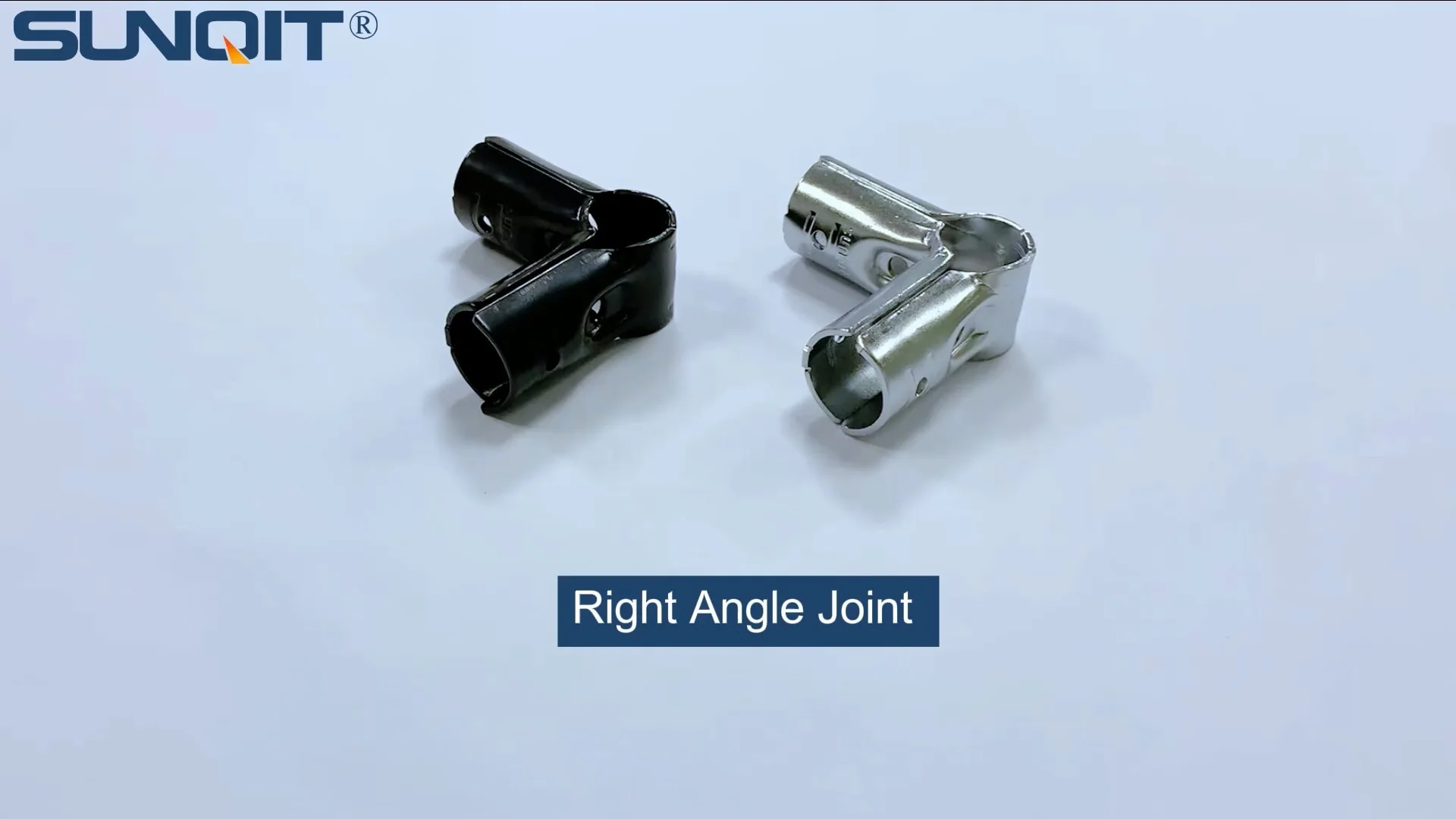
Three way lean pipe joint for 3 pcs 28MM lean pipe connection in straight angle, which used widely in workbench, flow rack, hand trolley frame connection.
How a small component transforms flexibility and efficiency in modern manufacturing
Walk into any thriving manufacturing facility today, and you'll notice a quiet revolution happening on the factory floor. Gone are the days of rigid, one-size-fits-all production lines bolted into concrete. Instead, teams are adapting, reconfiguring, and optimizing workflows on the fly—all thanks to lean manufacturing systems. At the heart of this adaptability lies a humble yet powerful tool: the lightweight three way lean pipe joint. And when paired with aluminum alloy, this unassuming component becomes a game-changer for factories aiming to balance speed, durability, and cost.
If you've ever watched a team rearrange a workbench to accommodate a new product line, or reconfigure a flow rack to speed up material handling, you've seen the impact of well-designed lean pipe systems. But what makes the three way lean pipe joint so essential? And why is aluminum alloy quickly becoming the material of choice for forward-thinking manufacturers? Let's dive in.
What Is a Lightweight Three Way Lean Pipe Joint?
First, let's break down the basics. A lean pipe joint is the "connector" that holds lean pipe systems together. Think of it as the Lego brick of manufacturing: simple, versatile, and infinitely combinable. A three way joint, as the name suggests, allows three pipes to intersect at a single point—creating stable, multi-directional structures like workbenches, flow racks, or turnover trolleys. But not all joints are created equal. The "lightweight" label here is key, and that's where aluminum alloy steps in.
Traditional lean pipe joints were often made of steel, which offered strength but came with a downside: weight. Steel joints added bulk to structures, making them harder to move, reconfigure, and install. Enter aluminum alloy. By swapping steel for aluminum, manufacturers have unlocked a new level of agility. These joints are up to 40% lighter than their steel counterparts, yet they don't skimp on strength—a critical balance for teams that need to adjust layouts without sacrificing stability.
Fun fact: The average factory reconfigures its lean systems 3-4 times per year to adapt to new products, seasonal demand, or process improvements. Lightweight joints cut reconfiguration time by up to 50%, according to industry studies.
Why Aluminum Alloy? The Benefits That Matter
At first glance, aluminum might seem like a "softer" choice than steel. But in the context of lean manufacturing, its unique properties make it a standout. Let's break down the benefits that make aluminum alloy three way lean pipe joints a must-have for modern facilities.
1. Lightweight = Less Fatigue, More Speed
Imagine a team of workers tasked with moving a steel-jointed workbench across the factory floor. The steel joints add extra pounds, making the structure cumbersome to lift, tilt, or wheel into place. Now picture the same scenario with aluminum joints: suddenly, the workbench is light enough for two people to maneuver easily, even with tools and materials on top. That's not just about convenience—it's about reducing worker fatigue and cutting downtime.
In high-paced environments, every minute counts. When a new order comes in and the assembly line needs a quick tweak, lightweight joints mean teams can adjust flow racks or reposition workbenches in hours instead of days. This speed translates directly to faster time-to-market for new products and better responsiveness to customer demands.
2. Corrosion Resistance: Built to Last in Tough Environments
Factories are messy places. Oils, coolants, humidity, and even occasional spills are part of daily life. Steel joints, if not properly coated, can rust over time—weakening connections and compromising safety. Aluminum alloy, on the other hand, forms a natural oxide layer that resists corrosion. This means aluminum three way lean pipe joints hold up better in damp environments, food processing facilities, or workshops where chemicals are present.
I once visited a automotive parts plant that had switched to aluminum lean pipe systems after years of replacing rusted steel joints. Their maintenance manager told me, "We used to spend $5,000 a year just on replacing corroded joints. Now, with aluminum, we haven't replaced a single joint in two years. It's a no-brainer."
3. Strength-to-Weight Ratio: Don't Let the Lightweight Label Fool You
Here's the kicker: aluminum alloy is lightweight, but it's not weak. Thanks to modern engineering, aluminum lean pipe joints offer a strength-to-weight ratio that outperforms steel in many applications. For example, a 20mm aluminum joint can support the same load as a 25mm steel joint—while weighing 30% less. This is crucial for structures like flow racks, which need to hold heavy materials (think automotive parts or electronic components) without sagging or bending.
Aluminum's inherent flexibility also plays a role. Unlike steel, which can crack under sudden impacts, aluminum absorbs shock better—making it ideal for environments where materials are loaded and unloaded frequently, like turnover trolley racks. This durability means fewer replacements, lower maintenance costs, and a longer lifespan for your lean systems.
4. Eco-Friendly and Cost-Effective (Yes, Both!)
Sustainability isn't just a buzzword anymore—it's a business imperative. Aluminum is 100% recyclable, and recycling it uses just 5% of the energy needed to produce new aluminum. For factories aiming to reduce their carbon footprint, switching to aluminum joints is a small change with a big impact. Plus, aluminum's longevity means less waste over time—no more tossing out rusted steel joints every few years.
And let's talk cost. While aluminum joints may have a slightly higher upfront price than steel, their lower maintenance, faster installation, and longer lifespan make them more cost-effective in the long run. One study by the Lean Manufacturing Association found that facilities using aluminum lean pipe systems saw a 22% reduction in total ownership costs over five years compared to steel systems.

How It Works: Aluminum Lean Pipe and Accessories in Action
A three way lean pipe joint is only as good as the system it supports. Aluminum joints shine brightest when paired with aluminum lean pipe and compatible accessories—creating a seamless, modular ecosystem. Let's walk through how these components work together to build real-world solutions.
Start with the basics: aluminum lean pipe. These pipes are lightweight, corrosion-resistant, and come in standard lengths that are easy to cut or extend. The three way joint connects them at 90-degree or 135-degree angles, depending on the design. Add aluminum profile accessories like end caps, clamps, or caster wheels, and suddenly you've got a workbench that can be wheeled to any corner of the factory, or a flow rack with adjustable shelves to fit different-sized bins.
Take a typical workbench setup. Using aluminum three way joints, you can attach a flat surface (like an aluminum honeycomb panel) to vertical pipes, add a shelf below for tools, and mount a small flow rack on the side for materials. If tomorrow's order requires a taller workbench, simply swap out the vertical pipes for longer ones—no welding, no drilling, no hassle. That's the beauty of modularity.
Or consider a flow rack in a warehouse. By combining aluminum three way joints with roller track (another key accessory), you can create gravity-fed lanes that move materials from receiving to assembly with minimal effort. If product sizes change, adjust the lane width by repositioning the joints—done in minutes, not days.

Real-World Applications: Where Aluminum Joints Make a Difference
Still not convinced? Let's look at two common scenarios where aluminum three way lean pipe joints have transformed operations for manufacturers.
Case 1: The Busy Electronics Assembly Line
A mid-sized electronics manufacturer was struggling with frequent product changes. Their old steel workbenches were heavy and hard to reconfigure, so switching from assembling smartphones to tablets took 8 hours—wasting valuable production time. They swapped steel joints for aluminum three way joints, paired with aluminum lean pipe and lightweight workbench tops. The result? Reconfiguration time dropped to 2 hours, and workers reported less fatigue when moving tools and materials. Within six months, they'd recouped the investment through faster changeovers and fewer missed deadlines.
Case 2: The Food Packaging Facility
A food packaging plant needed flow racks that could withstand daily washdowns (to meet hygiene standards) but were light enough to move for deep cleaning. Steel racks rusted quickly, even with coatings, and were too heavy to reposition. They switched to aluminum three way joints, aluminum lean pipe, and stainless steel roller balls. The aluminum resisted corrosion from water and cleaning chemicals, and the lighter racks could be moved by two workers instead of four. Plus, the stainless steel roller balls ensured smooth material flow, cutting down on jams and delays.

Aluminum vs. Steel: A Practical Comparison
Still weighing your options? Let's put aluminum and steel three way lean pipe joints head-to-head in the areas that matter most to your team:
| Feature | Aluminum Alloy Joint | Traditional Steel Joint |
|---|---|---|
| Weight | 30-40% lighter | Heavier; adds bulk to structures |
| Corrosion Resistance | Excellent; resists rust and chemicals | Prone to rust without coatings |
| Installation/Reconfiguration | Tool-free; quick to assemble/disassemble | May require tools; slower to adjust |
| Strength-to-Weight Ratio | Higher; supports more weight per pound | Lower; heavier for the same load capacity |
| Long-Term Cost | Lower (less maintenance, longer lifespan) | Higher (frequent replacements, coatings) |
| Sustainability | 100% recyclable; low energy to recycle | Recyclable but higher energy use |
The Future of Lean Manufacturing: Lightweight, Adaptable, and Green
As manufacturing continues to evolve—with smaller batch sizes, faster product cycles, and a focus on sustainability—lean systems will only grow more critical. Aluminum three way lean pipe joints are at the forefront of this evolution, offering the flexibility to adapt, the durability to last, and the eco-friendliness to align with modern values.
Whether you're setting up a new facility or upgrading an existing one, the choice is clear: lightweight aluminum joints aren't just a "nice-to-have"—they're a strategic investment in your team's productivity, your operation's agility, and your bottom line. After all, in lean manufacturing, it's the small components that often make the biggest difference.
So the next time you walk through your factory, take a closer look at those joints holding your workbenches and flow racks together. If they're still steel, maybe it's time to ask: Could aluminum help your team work smarter, not harder?