- Company Articles
- Products and Technology
- Product knowledge
- Lightweight Yet Strong: Key Properties of Aluminum Honeycomb Panels Explained

Lightweight Yet Strong: Key Properties of Aluminum Honeycomb Panels Explained
Related Product
Aluminum Honeycomb Panel
Aluminum honeycomb panel used as table top, side wall, it is connected one pcs by one pcs from the side slot to make a full pieces.This panel width 105mm, 55mm, 35mm are optional for slection.
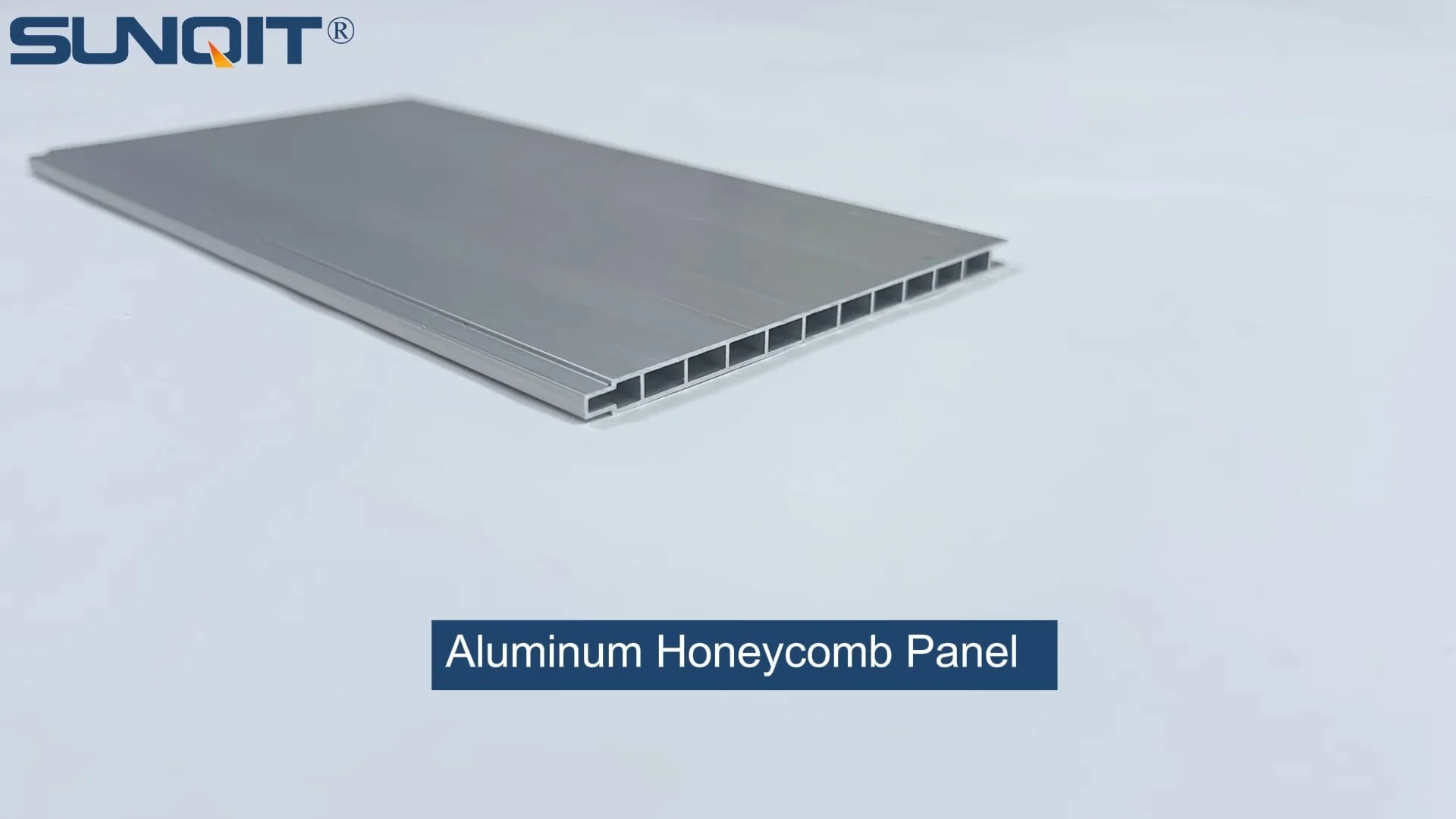
In the world of materials engineering, few innovations have struck the balance between strength and lightness as effectively as aluminum honeycomb panels. These versatile structures, which borrow their design from nature's most efficient architect—the honeybee—have quietly revolutionized industries from aerospace to manufacturing. Whether you're walking through a modern airport, driving a fuel-efficient car, or working at a sleek production workstation, there's a good chance aluminum honeycomb panels are hard at work behind the scenes. But what makes them so special? Let's dive into their composition, key properties, and why they've become a go-to choice for engineers and designers aiming to build smarter, not heavier.
What Are Aluminum Honeycomb Panels, Anyway?
At first glance, an aluminum honeycomb panel might look like any other flat sheet, but its magic lies in its internal structure. Imagine a sandwich—two thin, rigid face sheets (usually made of aluminum extrusion profile) glued to a central core. But instead of jelly or meat, that core is a honeycomb lattice made of aluminum, with thousands of tiny, hexagonal cells packed tightly together. This design isn't just for show: the hexagon is nature's most efficient shape for distributing weight and resisting compression, which is why beehives use it to store honey without collapsing under their own weight.
The face sheets, often crafted from high-grade aluminum profile, provide surface strength and rigidity, while the honeycomb core acts as a lightweight "spacer" that prevents the sheets from bending or buckling. Together, they create a material that's surprisingly tough despite being up to 80% lighter than a solid aluminum sheet of the same size. It's like building a bridge with steel beams but filling the gaps with air—strength where you need it, lightness everywhere else.
Key Properties That Make Aluminum Honeycomb Panels Stand Out
1. Lightweight: Less Weight, More Possibilities
Let's start with the obvious: aluminum honeycomb panels are light . A typical panel weighs between 8–15 kg per square meter, compared to 20–50 kg for a solid aluminum sheet of the same thickness. This might not sound like a big deal until you scale it up. For example, a commercial airplane using honeycomb panels in its interior can reduce overall weight by hundreds of kilograms, cutting fuel consumption by 5–10%—a massive saving for airlines. In manufacturing, lighter workbenches (a staple of lean system setups) mean easier reconfiguration of production lines, reducing downtime and labor costs when rearranging workflows.
But it's not just about weight reduction. Lighter materials also open doors for applications where heavy structures were once unavoidable. Think of a retail display stand that needs to be moved daily or a hospital cart that nurses push around for hours—aluminum honeycomb panels make these tools easier to handle without sacrificing durability.
2. Strength: Tiny Hexagons, Big Resistance
Don't let their lightness fool you—aluminum honeycomb panels are surprisingly strong. The honeycomb core acts like a miniature truss system, distributing pressure evenly across the panel. When you press down on the surface, the hexagons compress slightly but push back with remarkable force, making the panel resistant to bending, denting, and even impact. In tests, a 10mm-thick aluminum honeycomb panel can support up to 500 kg of weight per square meter without permanent deformation—enough to hold a small car, if needed.
This strength is directional, too. The panels are strongest in compression (when squeezed) and shear (when layers slide against each other), which is perfect for applications like flooring, wall cladding, or workbench tops. A manufacturing plant using honeycomb-topped workbenches (paired with sturdy aluminum profile frames) can trust that the surface won't warp or crack, even under the daily grind of tools, parts, and assembly work.
3. Durability: Built to Last (Even in Tough Environments)
Aluminum is already known for its corrosion resistance, thanks to a natural oxide layer that forms on its surface. When you combine that with the honeycomb structure, you get a material that can stand up to moisture, chemicals, and temperature extremes. Unlike wood, which warps in humidity, or fiberglass, which can crack under UV exposure, aluminum honeycomb panels maintain their shape and strength in everything from coastal salt air to industrial factories with harsh cleaning agents.
This durability translates to longer lifespans. A honeycomb panel used in a warehouse racking system, for example, might last 15–20 years with minimal maintenance, outperforming plywood or particleboard alternatives that need replacement every 5–7 years. For businesses focused on sustainability (a key pillar of modern lean system thinking), this longevity means less waste and lower long-term costs.
4. Thermal and Acoustic Insulation: More Than Just a Pretty Face
The air pockets trapped in the honeycomb core do more than reduce weight—they act as insulators. Aluminum honeycomb panels have excellent thermal resistance, making them ideal for buildings where temperature control is critical. A restaurant using honeycomb panels for kitchen walls, for instance, can keep heat from ovens contained, lowering cooling costs in the dining area. Similarly, in refrigerated trucks, these panels help maintain cold temperatures with less energy, reducing carbon footprints.
Acoustically, the honeycomb structure dampens sound by absorbing vibrations. This is why you'll find them in recording studios, conference rooms, and even subway stations—places where noise reduction matters. In a manufacturing setting, a honeycomb workbench top can muffle the clatter of tools, creating a quieter, more pleasant workspace for employees.

How Are Aluminum Honeycomb Panels Made? A Peek Behind the Scenes
Creating an aluminum honeycomb panel is a blend of precision engineering and careful craftsmanship. It starts with the core: thin strips of aluminum are cut, scored, and glued together in a way that, when expanded, forms the hexagonal honeycomb shape. This "expanded core" is then bonded to two face sheets—typically made of aluminum extrusion profile, chosen for its smooth finish and consistent thickness. The bonding process uses high-strength adhesives (often epoxy or phenolic resins) applied under heat and pressure, ensuring the core and face sheets fuse into a single, rigid structure.
For specialized applications, manufacturers might tweak the design: thicker face sheets for extra strength, a denser honeycomb core for better insulation, or even adding aluminum profile accessories like edge trims or mounting brackets for easy installation. The result is a panel that's customizable to almost any need—from a lightweight signboard to a heavy-duty aircraft floor panel.

Real-World Applications: Where Aluminum Honeycomb Panels Shine
The versatility of aluminum honeycomb panels means they're used in more places than you might think. Let's explore a few key industries:
Aerospace and Automotive: Lightness Takes Flight (and the Road)
Airlines and carmakers are obsessed with weight, and for good reason: every kilogram saved translates to fuel savings. Aluminum honeycomb panels are used in aircraft interiors (overhead bins, galleys, cabin walls) and even in some exterior parts like wing flaps. In cars, they're found in door panels, trunk floors, and battery enclosures for electric vehicles, where reducing weight extends range.
Construction and Architecture: Building Smarter, Greener Structures
Modern buildings rely on aluminum honeycomb panels for cladding, ceilings, and partitions. Their lightweight nature reduces the load on a building's foundation, allowing for taller, more ambitious designs. Architects also love them for their aesthetic flexibility—they can be painted, anodized, or even covered in wood veneer to match any style. Plus, their insulation properties help buildings meet strict energy-efficiency standards.
Manufacturing and Lean Systems: Efficiency in Every Panel
In factories and warehouses, where efficiency is king, aluminum honeycomb panels have become a cornerstone of lean system setups. Lean manufacturing focuses on minimizing waste—whether it's time, labor, or materials—and honeycomb panels deliver on all fronts. For example, a workbench made with a honeycomb top and aluminum profile frame is light enough for two workers to move, allowing quick reconfiguration of assembly lines when production needs change. Material racks built with honeycomb shelves are strong enough to hold heavy parts but light enough to roll on casters, reducing the time spent fetching supplies.
Even better, their durability means these workbenches and racks last for years, aligning with the lean principle of "long-term thinking." A food processing plant in Ohio, for instance, replaced its wooden workbenches with honeycomb-panel versions and reported a 30% reduction in setup time for new production runs—all while cutting down on wood waste from frequent replacements.
Aluminum Honeycomb Panels vs. the Competition: How Do They Compare?
| Material | Weight (kg/m²) | Compressive Strength (MPa) | Thermal Insulation (R-value) | Best For |
|---|---|---|---|---|
| Aluminum Honeycomb Panel | 8–15 | 25–40 | 2.0–3.5 (m²·K/W) | Aircraft interiors, lean system workbenches, building cladding |
| Solid Aluminum Sheet | 20–50 | 40–60 | 0.3–0.5 (m²·K/W) | Heavy machinery parts, high-load structural components |
| Plywood | 12–20 | 5–10 | 1.0–1.5 (m²·K/W) | Furniture, temporary structures, low-cost shelving |
| Fiberglass Panel | 15–25 | 15–25 | 1.5–2.5 (m²·K/W) | Boat hulls, chemical-resistant surfaces |
*Data based on typical industry standards; values may vary by panel thickness and manufacturer.
The Future of Aluminum Honeycomb Panels: Innovations on the Horizon
As technology advances, aluminum honeycomb panels are only getting better. Researchers are experimenting with new core materials, like carbon fiber-reinforced aluminum, to boost strength even further. Others are developing "smart" panels embedded with sensors that monitor stress, temperature, or damage—useful for critical applications like bridges or wind turbine blades. In manufacturing, 3D printing may soon allow for custom honeycomb patterns tailored to specific loads, making panels even more efficient.
Sustainability is also driving innovation. Many manufacturers now use recycled aluminum for both the core and face sheets, reducing the carbon footprint of production. Some are even exploring bio-based adhesives to replace synthetic resins, aligning with the global push for greener materials. For businesses invested in lean system practices, these advancements mean even more opportunities to reduce waste and improve efficiency—proving that aluminum honeycomb panels aren't just a trend, but a long-term solution for a smarter, more sustainable future.
Final Thoughts: Why Aluminum Honeycomb Panels Matter
Aluminum honeycomb panels are a testament to human ingenuity—taking a simple idea from nature and turning it into a material that solves some of the biggest challenges in engineering, construction, and manufacturing. They're lightweight without being flimsy, strong without being heavy, and durable without harming the planet. Whether you're redesigning a factory floor with lean system principles in mind, building the next generation of electric cars, or creating a skyscraper that touches the clouds, these panels offer a balance of performance and practicality that's hard to beat. In a world that demands more with less, aluminum honeycomb panels aren't just a material—they're a tool for progress.