- Company Articles
- Products and Technology
- Product knowledge
- Lightweight Yet Strong: T Slot Aluminum Pipe with Board Holder for Mobile Carts

Lightweight Yet Strong: T Slot Aluminum Pipe with Board Holder for Mobile Carts
Related Product
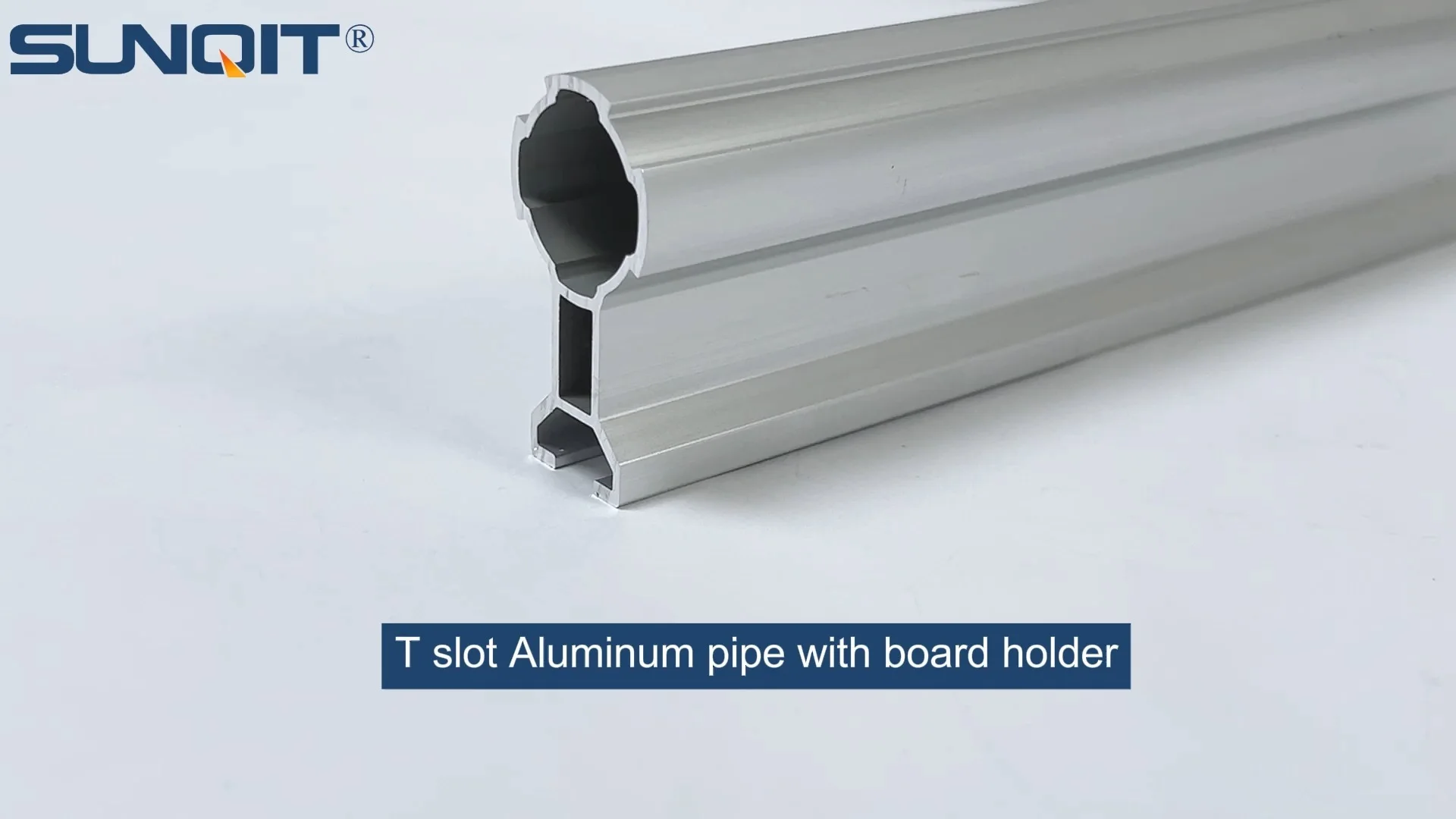
T Slot Aluminum Pipe with Board Holder
T slot Aluminum pipe with board holder,the pipe one side connected by a joint, the other side with a slot which can hold a tray or a aluminum pannel
Picture this: It's Monday morning on the factory floor, and Maria, the production supervisor, is juggling a dozen tasks. The morning rush has hit, and the old steel cart she's been using to move components between assembly stations is acting up again. It's heavy—so heavy that even two workers strain to push it over the concrete floor. Worse, the wooden shelf bolted to its frame is starting to warp, and the wheels? They squeak like a chorus of unhappy mice. "We need something better," she mutters, eyeing the cart's rusted corners. "Something that moves easily, holds what we need, and doesn't fall apart in six months." If you've ever felt that frustration—whether in a workshop, warehouse, or lab—you're not alone. Mobile carts are the unsung heroes of efficiency, but only if they're built right. Today, we're diving into a solution that's changing the game: T slot aluminum pipe with board holders. Lightweight yet surprisingly strong, modular yet easy to customize, this combination is redefining what mobile carts can do. Let's unpack why it might just be the upgrade your workflow needs.
What Even Is T Slot Aluminum Pipe, Anyway?
First things first: Let's demystify the star of the show. T slot aluminum pipe—also called T-slot aluminum extrusion profile—is exactly what it sounds like: aluminum that's been shaped (extruded) into long, hollow tubes with a T-shaped groove running along their length. Think of it as a building block with built-in "tracks" that let you attach, adjust, and reconfigure parts without welding, drilling, or fancy tools. It's like the grown-up version of those plastic construction sets you played with as a kid, but sturdier, more precise, and designed for real-world work.
But why aluminum? Why not steel, or plastic? Aluminum hits that sweet spot between strength and weight. It's about a third the weight of steel, so carts built with it are easy to push—even when loaded. Yet, thanks to modern alloys (like the 6063-T5 grade commonly used in extrusions), it's tough enough to handle daily bumps, drops, and heavy loads. And unlike steel, it doesn't rust. Spill a little oil on it? Wipe it off. Leave it in a humid warehouse? No red flakes to worry about. That corrosion resistance alone makes it a favorite in environments where durability matters.
The T-slot design is where the magic happens. Those grooves aren't just for show—they're engineered to accept bolts, nuts, brackets, and accessories with a simple twist. Want to add a shelf? Slide a bracket into the slot, tighten a screw, and done. Need to move that shelf up six inches next week? Loosen the screw, adjust, and retighten. No drilling new holes, no patching old ones. It's modularity at its finest, and it's why T slot aluminum has become a cornerstone of lean system setups—where adaptability is key to cutting waste and boosting productivity.
The Board Holder: Small Accessory, Big Impact
Now, let's talk about the unsung partner in this duo: the board holder. If the T slot aluminum pipe is the skeleton of your mobile cart, the board holder is the hand that holds your tools, parts, or documents exactly where you need them. But not all board holders are created equal. The ones designed for T slot aluminum are built to slide right into those T-slots, creating a secure, adjustable platform that can carry everything from a stack of work orders to a bin of small components—or even a laptop for on-the-go data entry.
Imagine Maria's old cart again. That warped wooden shelf? It was bolted directly to the steel frame, so if she needed to move it, she'd have to unbolt, drill new holes, and hope the wood didn't split. With a T slot aluminum board holder, it's a different story. These holders are typically made of lightweight aluminum or high-strength plastic, with built-in tabs that lock into the T-slots. Want to angle the board for easier reading? Some holders pivot. Need to add a second board for more storage? Just slide another holder into an empty slot. It's customization without the hassle, and it turns a basic cart into a tool that adapts to your workflow—not the other way around.
But the real beauty? The board holder isn't limited to flat surfaces. Thanks to the versatility of aluminum profile accessories, you can pair it with side brackets to create vertical dividers, or add hooks for hanging tools. One day, your cart might be a parts transporter with a flat board holding bins of screws and washers. The next, you can swap that board for a tilted one to hold a tablet displaying assembly instructions. It's like having a Swiss Army knife on wheels, and it's all possible because the T-slot system plays well with so many (accessories).

Lightweight Doesn't Mean Flimsy: The Strength of Aluminum
Let's address the elephant in the room: "Aluminum? Isn't that soft? Won't it bend if I put too much weight on it?" It's a fair question—after all, we've all seen aluminum cans crumple under pressure. But T slot aluminum pipe is a far cry from a soda can. The extrusion process compresses the aluminum, making it dense and strong, while the hollow design (think of an I-beam) distributes weight evenly. Most T-slot aluminum profiles are rated to hold hundreds of pounds per linear foot, depending on their size and thickness.
Take a common size: 20×20mm T-slot aluminum (about ¾ inch square). Even this small profile can support around 200-300 pounds when properly braced. Step up to 40×40mm (1.5 inches square), and you're looking at 500+ pounds of load capacity—more than enough for a cart loaded with tools, parts, or even small machinery. Compare that to a plastic cart, which might sag under 100 pounds, or a steel cart that can hold the weight but requires a forklift to move when full. T slot aluminum gives you the best of both worlds: strength without the strain.
Maria's team, for example, needed a cart that could carry 300 pounds of electronic components without wobbling. With a 40×40mm T-slot frame and a reinforced aluminum board holder, their new cart handles that load easily— and one person can push it across the factory floor without breaking a sweat. "It's like night and day," she told me later. "We used to assign two people to move the old steel cart. Now, anyone can do it, even on our busiest days."

Building Your Cart: It's All in the Accessories
A T slot aluminum pipe frame and board holder are great, but they're just the starting point. To turn that frame into a fully functional mobile cart, you need the right accessories—and T-slot systems have no shortage of options. Let's break down the must-haves:
Caster Wheels: The Foundation of Mobility
You can't have a mobile cart without wheels, and not all caster wheels are created equal. For T-slot carts, look for casters designed to attach directly to aluminum profiles—usually with plates that slide into the T-slots or bolt onto the frame. Key features to consider: load capacity (match it to your cart's max weight), wheel material (rubber for smooth floors, polyurethane for rough concrete), and brakes (essential if you need the cart to stay put during loading/unloading). Maria's team went with 5-inch polyurethane caster wheels with dual locks—one to lock the wheel, another to lock the swivel—so the cart stays stable even on uneven floors.
Joints and Connectors: Keeping It All Together
T-slot aluminum is modular, but you need joints to connect the pipes into a frame. These come in all shapes: 90-degree angles for corners, T-joints for branching off, and even swivel joints for adjustable components. Most are made of aluminum or steel, with set screws that tighten into the T-slots to create a rock-solid connection. The best part? No welding required. You can assemble a basic cart frame in under an hour with just a hex key.
Aluminum Profile Accessories: The Extras That Make a Difference
Beyond the basics, aluminum profile accessories let you tailor your cart to your exact needs. Need to protect the ends of the pipes from sharp edges? Add end caps. Want to route cables for a mobile workstation? Use cable carriers that clip into the T-slots. Need to hold small parts? Attach bins with bracket clips. These little extras turn a generic cart into a tool that works for you, not against you.
Where Does This Cart Shine? Real-World Applications
You might be thinking, "This sounds great, but does it work for my industry?" The short answer: Probably. T slot aluminum carts with board holders are surprisingly versatile, popping up in everything from auto shops to research labs. Let's look at a few scenarios where they're making a big impact:
Assembly Lines: Keeping Tools Within Reach
In manufacturing, time is money. Assembly line workers need tools and parts right at their fingertips, and a mobile cart with a tilted board holder can hold everything from screwdrivers to instruction manuals at eye level. No more bending over to grab a wrench or squinting at a manual on the floor. Plus, when the line reconfigures (as it often does in lean manufacturing), the cart can be disassembled and rebuilt in minutes to match the new layout.
Warehouses: Picking Orders Faster
Warehouse pickers spend hours pushing carts loaded with boxes. A lightweight T-slot cart reduces fatigue, while a customizable board holder can be divided into sections for different orders or SKUs. Some warehouses even add barcode scanners or tablets to the board holder, letting pickers update inventory in real time without stopping.
Laboratories: Safe, Clean, and Sterile
Labs have unique needs: carts must be easy to clean, resistant to chemicals, and stable enough for delicate equipment. T-slot aluminum is non-porous (no cracks for germs to hide), corrosion-resistant (so acids or solvents won't damage it), and the smooth surfaces wipe down easily. A board holder with raised edges can keep test tubes or samples from sliding off, even when moving over uneven floors.
T Slot Aluminum vs. Steel vs. Plastic: How Does It Compare?
Still on the fence? Let's put T slot aluminum head-to-head with the other common cart materials: steel and plastic. The table below breaks down the key factors:
| Feature | T Slot Aluminum | Steel | Plastic |
|---|---|---|---|
| Weight (per linear foot) | 2-5 lbs (lightweight, easy to push) | 8-15 lbs (heavy, requires more effort to move) | 1-3 lbs (lightest, but less stable) |
| Strength (max load capacity) | 300-800 lbs (depends on profile size) | 500-1000+ lbs (strongest, but overkill for most needs) | 50-200 lbs (weakest, prone to bending) |
| Customization | High (T-slots allow easy accessory attachment) | Low (requires welding/drilling to modify) | Medium (some modular options, but limited) |
| Corrosion Resistance | High (no rust, resistant to chemicals) | Low (rusts without paint/coating) | High (but prone to UV damage over time) |
| Cost (initial + long-term) | Medium initial cost, low long-term (no maintenance, lasts decades) | Low initial cost, high long-term (repainting, replacing rusted parts) | Low initial cost, high long-term (replaces every 1-3 years) |
As you can see, T slot aluminum strikes a balance that's hard to beat. It's not the cheapest upfront, but it pays for itself in reduced labor (easier to move), less maintenance (no rust or replacement parts), and adaptability (no need to buy a new cart when your needs change).
Tips for Building Your Own T Slot Aluminum Cart
Ready to build your own? Here's a step-by-step guide to get you started:
- Define your needs: What will the cart carry? How much weight? Do you need shelves, bins, or a board holder? Will it be used indoors or outdoors? Answering these questions will help you choose the right profile size, caster wheels, and accessories.
- Sketch your design: You don't need to be an engineer—even a rough sketch will help. Measure the space where the cart will be used to ensure it fits through doorways or aisles.
- Choose your profile size: Start with 20×20mm for light loads (up to 200 lbs), 30×30mm for medium loads (200-400 lbs), or 40×40mm for heavy loads (400+ lbs). Thicker walls (1.5mm vs. 1.0mm) add strength but slightly more weight.
- Pick your accessories: Don't skimp on caster wheels—invest in quality ones with brakes. For the board holder, choose a material that matches your needs (aluminum for durability, plastic for lightweight).
- Assemble and test: Start with the frame, attach the casters, then add the board holder and any extras. Test the cart with a load to ensure it rolls smoothly and doesn't wobble.
Pro tip: If you're new to T-slot systems, start small. Build a simple cart first, then add accessories as you go. Most suppliers offer sample kits with basic profiles, joints, and tools to help you get the hang of it.
Maintaining Your Cart: It's Easier Than You Think
One of the best things about T slot aluminum carts is how little maintenance they need. Here's how to keep yours in top shape:
- Clean the T-slots: Dust and debris can build up in the slots, making it hard to attach accessories. Wipe them out with a dry cloth or brush every few weeks.
- Lubricate the casters: A drop of oil on the caster axles every month will keep them rolling smoothly and prevent squeaking.
- Tighten joints: Over time, set screws in joints can loosen. Check them quarterly and tighten with a hex key if needed.
- Wipe down the board holder: If you're using it for food, chemicals, or lab samples, clean it with soap and water or a mild disinfectant to prevent contamination.
With minimal care, a T slot aluminum cart can last 10+ years—far longer than plastic or even steel carts that rust or warp over time.
Final Thoughts: Why T Slot Aluminum is Worth the Investment
At the end of the day, a mobile cart is more than just a wheeled shelf—it's a tool that shapes how efficiently your team works. A heavy, flimsy, or hard-to-customize cart slows you down, creates frustration, and even increases the risk of injury. T slot aluminum pipe with a board holder changes that. It's lightweight enough to move with ease, strong enough to handle the load, and modular enough to grow with your needs. Whether you're in manufacturing, warehousing, or research, it's a solution that adapts to you —not the other way around.
Maria's team has had their T-slot cart for six months now, and she still talks about the difference it made. "We've already reconfigured it twice—once to add a second board holder, once to make it taller for a new project," she said. "And it still looks brand new. No rust, no squeaks, no complaints. Best of all? We're getting more done with less effort. Isn't that the point?"
So, if you're tired of fighting with your current cart, or if you're building a new workspace from scratch, give T slot aluminum a look. It might just be the upgrade that turns "we need something better" into "why didn't we do this sooner?"