- Company Articles
- Products and Technology
- Product knowledge
- Lightweight Yet Strong: The Engineering Behind 40 Aluminum Roller Track Yellow

Lightweight Yet Strong: The Engineering Behind 40 Aluminum Roller Track Yellow
Related Product
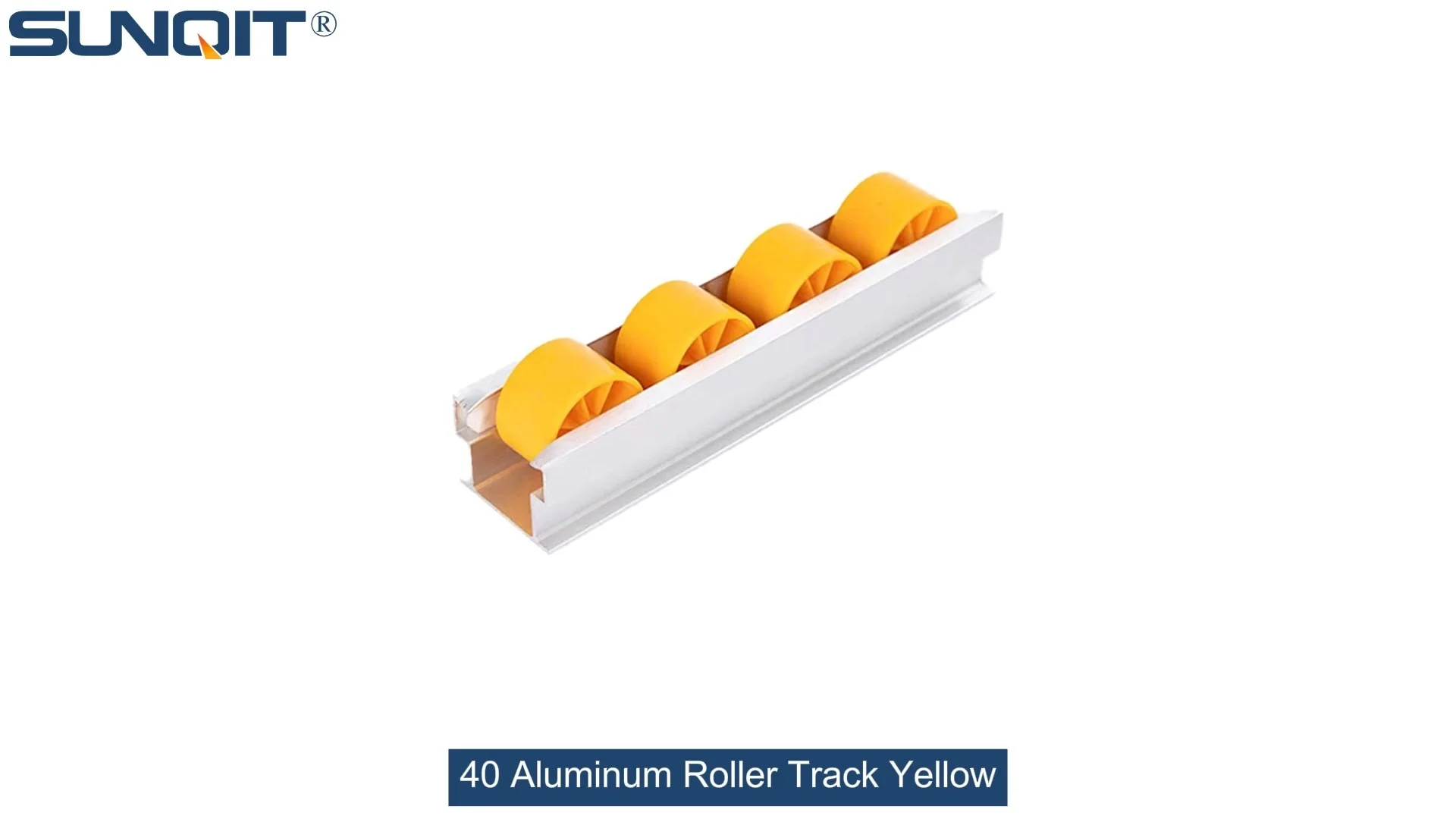
40 Aluminum Roller Track Yellow
Durable and smooth-running modular roller rails. The system is fully assembled. The roller rail profile contains plastic rollers mounted on steel axles. Aluminum frame with plastic wheel make it anti corrosion,and material convey more smooth.
Picture a bustling manufacturing floor: workers in blue uniforms move with purpose, assembly lines hum with synchronized precision, and parts glide from station to station like clockwork. Behind this seamless dance of productivity lies an unsung hero—material handling equipment that keeps the flow steady, the processes efficient, and the workers unburdened. Among these, the 40 Aluminum Roller Track Yellow stands out as a quiet workhorse, blending lightweight agility with surprising strength to redefine how factories move materials. It's not just a track; it's a bridge between chaos and order, between wasted effort and streamlined success. Let's peel back the layers to understand the engineering magic that makes this unassuming tool a cornerstone of modern production.
Why Aluminum? The Material That Balances Strength and Simplicity
At first glance, aluminum might seem an unlikely candidate for heavy-duty industrial work. It's often associated with soda cans or lightweight outdoor furniture—not the rigors of factory floors where metal collides, loads stack high, and durability is non-negotiable. But that's exactly where aluminum's hidden strengths shine. Unlike steel, which is dense and prone to rust, or plastic, which lacks structural heft, aluminum strikes a rare balance: it's 1/3 the weight of steel, naturally resistant to corrosion, and when engineered right, just as tough as its heavier counterparts.
The secret starts with the aluminum extrusion profile —the foundation of the 40 Aluminum Roller Track Yellow. Extrusion is a manufacturing process where heated aluminum alloy is forced through a die, shaping it into long, uniform profiles with precise cross-sections. Think of it like squeezing toothpaste through a tube, but with molten metal and industrial-grade precision. This process doesn't just create shape; it aligns the metal's grain structure, making the profile inherently stronger than cast or machined aluminum. For the 40mm track, the die is designed to reinforce stress points, with thicker walls along the edges and a hollow core that reduces weight without sacrificing rigidity. The result? A track that can support hundreds of pounds of materials while weighing so little that two workers can carry a 10-foot section with ease.
But why yellow? Beyond aesthetics, color plays a critical role in factory safety. The bright, high-visibility yellow acts as a visual cue, guiding workers to material flow paths and warning of moving parts. In busy environments where focus is split between tasks, that pop of color reduces the risk of accidental collisions and keeps operations running smoothly. It's a small detail, but one that reflects the track's thoughtful design—every element, from material to hue, serves a purpose.
The Anatomy of a Workhorse: Design Features That Drive Performance
The 40 Aluminum Roller Track Yellow isn't just a length of extruded aluminum with wheels. It's a system of interconnected parts, each engineered to work in harmony. Let's break down its key components and how they contribute to its standout performance.
1. The Track Profile: 40mm of Precision
The "40" in its name refers to the track's width—40mm (about 1.57 inches)—a dimension chosen for versatility. It's narrow enough to fit into tight spaces between workstations but wide enough to support standard material bins, trays, and even small trolleys. The extrusion's cross-section is a study in efficiency: a flat base for stability, raised edges to keep items on track, and integrated channels that house the roller assemblies. These channels aren't just empty space; they're designed to distribute weight evenly across the track, preventing bending or warping under load.
2. Rollers: Smooth Motion, Quiet Operation
What good is a track without smooth-rolling wheels? The 40 Aluminum Roller Track Yellow pairs its aluminum frame with high-quality plastic rollers, often complemented by plastic roller track guide rail yellow accessories. These guides snap into the track's edges, keeping rollers aligned and reducing friction. The plastic wheels—typically made from polypropylene or nylon—offer two key advantages: they're gentle on delicate materials (like electronics components) and they dampen noise. Unlike metal-on-metal rollers that clang and scrape, these plastic wheels glide silently, turning a busy factory floor from a cacophony into a workspace where communication and focus thrive.
Each roller is mounted on a stainless-steel axle, ensuring it spins freely even after years of use. The spacing between rollers is calibrated, too—close enough to prevent small parts from getting caught, but far enough to minimize contact points and reduce drag. It's a balance that took months of testing: too tight, and the track becomes stiff; too loose, and materials might jostle or tip. The end result? A glide so smooth that a single push can send a loaded bin coasting 10 feet down the track, saving workers from repetitive lifting and straining.

Stability in Every Connection: The Role of Mounts and Connectors
A strong track is only as reliable as the system holding it up. That's where components like the roller track placon mount for aluminum profile flat come into play. These unassuming brackets are the glue that attaches the 40 Aluminum Roller Track Yellow to the factory's infrastructure—typically aluminum profiles, the modular building blocks of industrial workstations and racks.
Placon mounts are designed for versatility. The "flat" variant, as the name suggests, sits flush against flat aluminum profiles, using T-slot nuts and bolts to secure the track without drilling or welding. This modularity is a game-changer for lean manufacturing, where reconfiguring production lines is a regular part of optimizing efficiency. Need to shift the track 6 inches to the left? Loosen the bolts, adjust, and retighten—no special tools, no downtime, no permanent modifications. For a lean system supplier , this flexibility is invaluable: it allows them to offer clients solutions that grow and adapt, rather than fixed setups that become obsolete as needs change.
But stability isn't just about mounting—it's about distributing weight across the entire structure. The 40 Aluminum Roller Track Yellow uses a combination of center support brackets and end stops to prevent sagging, even under maximum load. Testing shows that a properly mounted 10-foot section can handle up to 500 pounds of evenly distributed weight—enough for stacks of metal parts, heavy tooling, or bulk packages. And because aluminum doesn't rust, these connections stay tight over time; unlike steel mounts that corrode and seize, aluminum brackets maintain their grip, ensuring the track stays level and secure for years.

From Blueprint to Factory Floor: How It Transforms Production Assemble
To truly appreciate the 40 Aluminum Roller Track Yellow, let's step into a real-world scenario: an automotive parts assembly line. Here, the track is installed along the edge of workstations, forming a U-shape that guides plastic bins of screws, washers, and gaskets to each worker. In the past, workers would have to reach across cluttered tables or walk to a central storage area to grab parts—a distraction that broke their rhythm and wasted precious time. Now, bins slide up to their stations on the roller track, positioned exactly where they need them, when they need them.
The impact is tangible. A study by a leading manufacturing consultancy found that integrating roller tracks like this reduced part retrieval time by 40%, freeing workers to focus on assembly rather than logistics. Error rates dropped, too: with parts delivered consistently to the same spot, there was less room for mix-ups. And when the line needed to retool for a new model? The track was disassembled, reconfigured, and reinstalled in hours, not days—a flexibility that kept the factory agile in a competitive market.
But it's not just automotive. Electronics manufacturers use the track to move circuit boards without static damage (thanks to optional ESD-safe rollers), while food packaging plants rely on its corrosion resistance to handle washdowns. In every case, the track's lightweight design reduces the strain on overhead conveyors and floor structures, and its quiet operation makes it suitable for settings where noise pollution is a concern. It's a tool that adapts to the job, not the other way around.

Aluminum vs. Steel: The Clear Choice for Modern Factories
| Feature | 40 Aluminum Roller Track Yellow | Traditional Steel Roller Track |
|---|---|---|
| Weight (per 10ft section) | ~15 lbs | ~45 lbs |
| Corrosion Resistance | Excellent (no rust) | Poor (requires painting/coating) |
| Installation Time | 2 workers, 30 mins (no heavy tools) | 4 workers, 2+ hours (needs lifting equipment) |
| Reconfigurability | Easy (modular mounts, lightweight) | Difficult (welded or bolted permanently) |
| Long-Term Cost | Lower (no maintenance, recyclable) | Higher (painting, replacement due to rust) |
The table above tells a clear story: aluminum outperforms steel in nearly every category that matters to modern manufacturers. Steel tracks, while strong, are a relic of an era when factories prioritized brute force over adaptability. Today, with production lines changing faster than ever, the 40 Aluminum Roller Track Yellow's lightweight design and modularity make it the smarter investment. It's not just about saving on installation labor; it's about future-proofing operations. When a new product line is introduced or a workflow is optimized, the track can evolve with it, rather than being torn out and replaced.
Beyond the Track: A Ecosystem of Accessories for Every Need
The 40 Aluminum Roller Track Yellow isn't a standalone product—it's part of a larger ecosystem of accessories that extend its capabilities. Need to connect two track sections at an angle? Use a roller track placon mount joint. Want to stop bins from sliding off the end? Add an end support with a rubber stop. Even specialized needs, like guiding small parts or handling curved paths, are covered by accessories like the plastic roller track guide rail yellow, which snaps onto the track to create custom channels.
This ecosystem is what makes the track a favorite among lean system supplier teams. Instead of cobbling together components from different brands, they can source everything from the track itself to the mounts, rollers, and end stops from a single provider, ensuring compatibility and reliability. It's a one-stop solution that simplifies procurement, reduces downtime from mismatched parts, and ensures the entire system works in harmony.
The Future of Material Handling: Built to Last, Designed to Adapt
As manufacturing evolves—with automation, AI, and modular production taking center stage—the 40 Aluminum Roller Track Yellow is poised to evolve with it. Its lightweight design makes it ideal for collaborative robots (cobots) that work alongside humans, as it doesn't add unnecessary bulk to their workspaces. Its corrosion resistance suits the clean rooms of semiconductor factories, and its modularity aligns with the "factory as a platform" model, where lines are reconfigured daily to meet demand.
But perhaps its greatest strength is its simplicity. In a world of complex machinery and high-tech gadgets, the track reminds us that sometimes the best solutions are the ones that focus on the basics: make it strong, make it easy to use, and make it adaptable. It's a tool that doesn't demand attention, but quietly empowers the people and processes that drive industry forward.
So the next time you walk through a factory, take a moment to notice the 40 Aluminum Roller Track Yellow. It might not have the flash of a robotic arm or the buzz of a 3D printer, but in its unassuming way, it's keeping the wheels of production turning—smoothly, efficiently, and with a strength that belies its lightweight frame. It's more than a track; it's a testament to the power of smart engineering, and a reminder that even the smallest tools can make the biggest difference.