- Company Articles
- Products and Technology
- Product knowledge
- Load-Bearing Capacity: Testing Aluminum Honeycomb Panels for Heavy-Duty Manufacturing

Load-Bearing Capacity: Testing Aluminum Honeycomb Panels for Heavy-Duty Manufacturing
Related Product
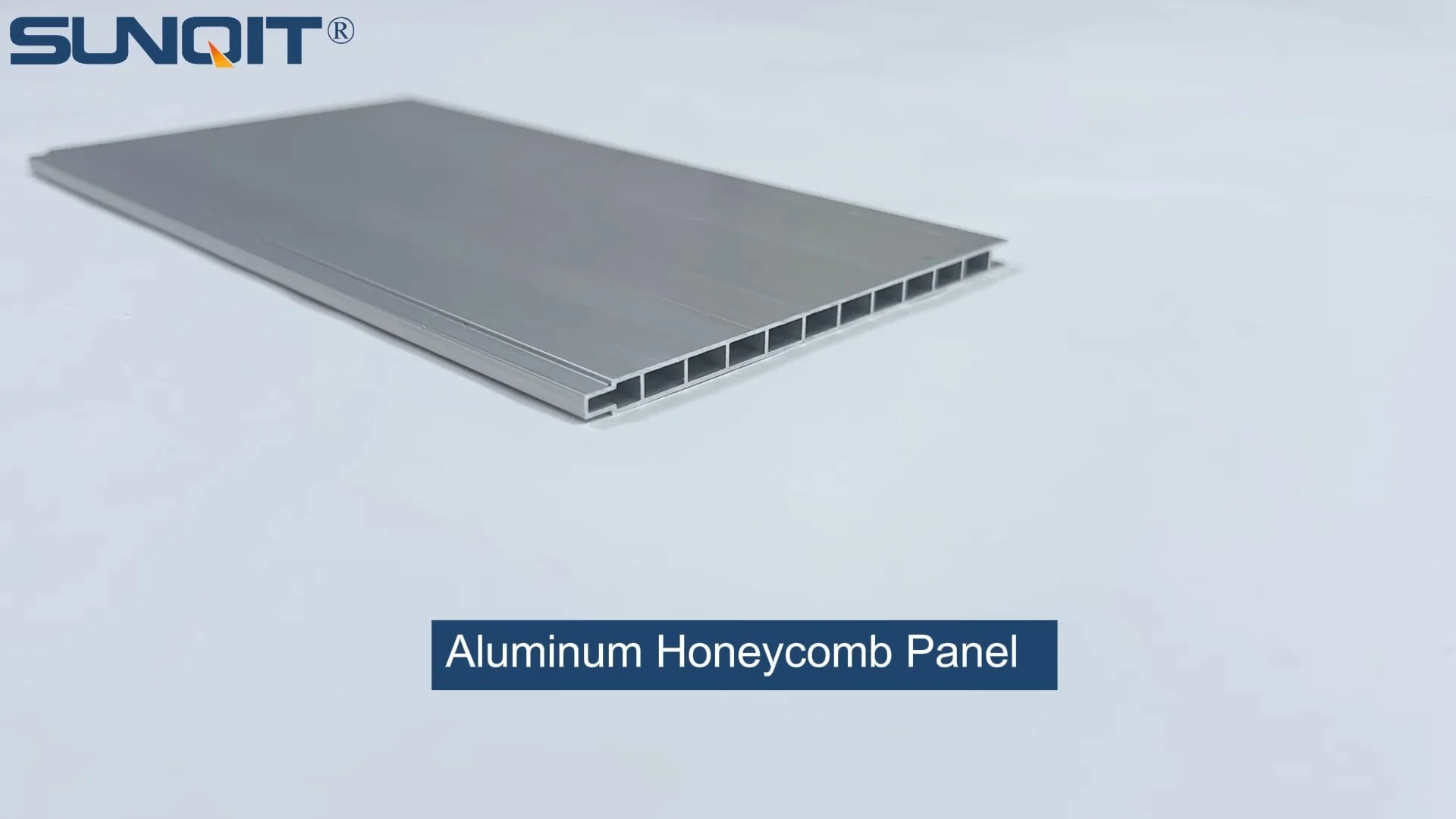
Aluminum Honeycomb Panel
Aluminum honeycomb panel used as table top, side wall, it is connected one pcs by one pcs from the side slot to make a full pieces.This panel width 105mm, 55mm, 35mm are optional for slection.
Walk into any modern manufacturing facility, and you'll quickly realize that the backbone of efficient production lies not just in high-tech machinery, but in the often-overlooked elements that keep operations running smoothly: workbenches that withstand daily pounding, conveyor systems that glide under heavy loads, and material racks that hold inventory without faltering. For decades, manufacturers relied on solid steel, thick plywood, or heavy aluminum to build these critical structures. But in an era where efficiency, weight reduction, and durability are paramount, a new player has emerged as a game-changer: the aluminum honeycomb panel. Lightweight yet surprisingly strong, this material is redefining what's possible in heavy-duty manufacturing. In this article, we'll dive deep into how aluminum honeycomb panels are tested for load-bearing capacity, why they're becoming a staple in lean systems, and how they stack up against traditional materials in real-world applications.
What Are Aluminum Honeycomb Panels, Anyway?
Before we get into load-bearing tests, let's take a moment to understand what makes aluminum honeycomb panels unique. Picture a sandwich— but instead of bread and filling, imagine two thin, rigid sheets of aluminum (called face sheets) with a hexagonal grid structure (the honeycomb core) sandwiched between them. This core, typically made from thin aluminum foil, is what gives the panel its remarkable strength-to-weight ratio. The hexagons distribute weight evenly across the panel, much like how a beehive's structure supports the weight of honey and bees without collapsing.
The magic lies in the combination of materials and design. The face sheets handle tensile and compressive forces, while the honeycomb core resists shear stress— that sideways force that might try to bend or twist the panel. Manufacturers bond the core to the face sheets using high-strength adhesives, like epoxy resins, ensuring the entire structure acts as a single, unified piece. The result? A panel that's up to 70% lighter than solid aluminum of the same thickness but just as strong, if not stronger, in many load scenarios.
But aluminum honeycomb panels aren't one-size-fits-all. They come in various configurations: different face sheet thicknesses (from 0.3mm to 2mm), core cell sizes (ranging from 3mm to 20mm), and overall panel thicknesses (5mm to 100mm+). This versatility means they can be tailored to specific needs, whether you're building a lightweight workbench for electronics assembly or a heavy-duty conveyor bed for automotive parts.
Key Factors That Determine Load-Bearing Capacity
Load-bearing capacity isn't just a number on a spec sheet— it's the result of several interrelated factors. Let's break down the most critical ones that manufacturers and engineers consider when testing these panels for heavy-duty use.
1. The Honeycomb Core: Size, Shape, and Thickness
The core is the heart of the panel, and its design has a huge impact on load-bearing. Hexagonal cells are the most common because they distribute stress uniformly, but you might also see square or rectangular cores in specialized applications. Smaller cell sizes (like 3mm or 5mm) generally offer higher rigidity and better load distribution for lighter, more frequent loads— think electronics components on a conveyor. Larger cells (10mm to 20mm) are better for heavier, static loads, such as machinery parts sitting on a workbench. The thickness of the core walls (measured in microns, often 20-50μm) also matters: thicker walls mean more strength, but they add weight, so there's a balance to strike.
2. Face Sheet Quality and Thickness
The face sheets are the panel's outer layer, and they take the brunt of direct loads. Thicker face sheets (1mm+) are better for heavy static loads, like a 50kg toolbox sitting on a workbench. Thinner sheets (0.3mm-0.8mm) work well for dynamic loads, such as parts sliding along a conveyor, where flexibility and impact resistance are key. The type of aluminum alloy used in the face sheets also plays a role: 3000-series alloys (like 3003) are corrosion-resistant and ideal for humid environments, while 5000-series alloys (like 5052) offer higher strength for industrial settings.
3. Bonding Strength: The Glue That Holds It All Together
Even the best core and face sheets are useless if they're not bonded properly. A weak bond can cause the face sheet to delaminate (peel away from the core) under load, drastically reducing the panel's capacity. Manufacturers test bonding strength using peel tests, where they measure the force required to separate the face sheet from the core. For heavy-duty applications, a bond strength of at least 1.5 N/mm is typically required— that's strong enough to resist the pull of a 1.5kg weight hanging from a 1mm-wide strip of the panel.
4. Overall Panel Thickness
Thicker panels generally handle more load, but it's not a linear relationship. A 20mm panel might not be twice as strong as a 10mm panel— it depends on how the core and face sheets are proportioned. For example, a 10mm panel with a 0.8mm face sheet and 8mm core might outperform a 15mm panel with a 0.3mm face sheet and 14.4mm core in certain load tests. Engineers use computer simulations (like finite element analysis) to optimize thickness for specific load scenarios, ensuring no unnecessary weight is added.

Testing Aluminum Honeycomb Panels: From Lab to Factory Floor
So how do manufacturers prove that an aluminum honeycomb panel can handle the demands of a busy factory? It starts in the lab with rigorous testing, but the real proof is in real-world use. Let's walk through the key tests that separate a reliable panel from a flimsy one.
Static Load Testing: How Much Weight Can It Hold… Indefinitely?
Static load testing is the most straightforward: apply a constant weight to the panel and see how much it deflects (bends) over time. For manufacturing applications, this test simulates scenarios like a stack of metal parts sitting on a workbench or inventory stored on a material rack for weeks. The test setup is simple: the panel is supported at its edges (mimicking how it would be mounted in a workbench or conveyor), and a distributed load (like sandbags or hydraulic rams) is applied to the center. Engineers measure deflection using dial gauges and check for permanent deformation after removing the load.
Let's take an example: a 12mm aluminum honeycomb panel with 0.5mm face sheets and a 10mm core (cell size 10mm). In a static load test, it might be rated to support 500kg per square meter (kg/m²) with a deflection of less than 2mm over 24 hours. That means a 1m x 1m section of this panel could hold 500kg— roughly the weight of four average-sized refrigerators— without bending more than 2mm or suffering permanent damage. For context, a solid aluminum panel of the same thickness might handle 600kg/m² but weigh three times as much, making it harder to install and more expensive to ship.
Dynamic Load Testing: When Loads Move and Shift
In manufacturing, loads aren't always static. Conveyor systems move parts around the factory, workers slide heavy tools across workbenches, and material carts roll over floor panels. Dynamic load testing simulates these repeated or moving loads to ensure the panel can withstand fatigue over time. One common test is the cyclic load test: apply a load, remove it, and repeat— sometimes tens of thousands of times— to see if the panel weakens or fails.
For conveyor systems, dynamic load tests might involve rolling weighted carts (up to 200kg) back and forth across the panel for 100,000 cycles. If the panel's deflection increases by more than 10% over the cycles, it might not be suitable for long-term use. A high-quality aluminum honeycomb panel, though, will maintain its deflection rate, showing minimal fatigue. This is critical for lean systems, where downtime due to equipment failure can disrupt the entire production line.
Edge Load Testing: The Weak Spot Many Overlook
Here's a common oversight: most load tests focus on the center of the panel, but in real life, loads often sit on the edges. Think about a worker placing a heavy tool on the corner of a workbench or a pallet resting on the edge of a conveyor bed. Edge load testing applies force directly to the panel's edge to ensure it doesn't crack or delaminate. A panel that handles 500kg/m² in static center load might only handle 150kg when that load is concentrated on a 10cm edge section— which is why edge support (like aluminum profiles) is often used in installations to distribute edge loads.
Impact Resistance: When Accidents Happen
Dropped tools, forklift bumps, or parts falling from shelves— these are daily risks in manufacturing. Impact resistance testing measures how well the panel absorbs sudden shocks without breaking. The test involves dropping a weighted object (like a steel ball or hammer) from a specified height onto the panel and inspecting for cracks, delamination, or deformation. For example, a panel might be tested by dropping a 5kg weight from 1m onto its surface; a passing result means no visible damage and minimal deflection.
| Panel Thickness | Core Cell Size | Face Sheet Thickness | Static Load Capacity (kg/m²) | Dynamic Load Capacity (kg/m²) | Typical Application |
|---|---|---|---|---|---|
| 5mm | 5mm | 0.3mm | 200 | 150 | Light electronics workbenches |
| 10mm | 10mm | 0.5mm | 400 | 300 | Medium-duty conveyor beds |
| 15mm | 15mm | 0.8mm | 600 | 450 | Heavy parts assembly workbenches |
| 20mm | 20mm | 1.0mm | 800 | 600 | Material racks, pallet conveyors |
| 30mm | 15mm | 1.2mm | 1000+ | 750+ | Industrial machinery bases |

Real-World Applications in Manufacturing
Lab tests are important, but nothing beats seeing a material perform in a real factory. Let's look at two case studies where aluminum honeycomb panels transformed manufacturing operations— one involving workbenches and another focusing on conveyor systems.
Case Study 1: Automotive Parts Manufacturer Cuts Workbench Weight by 40%
A mid-sized automotive parts manufacturer was struggling with old steel workbenches. Each bench weighed over 200kg, making them nearly impossible to reconfigure when production lines changed. Workers also complained of fatigue from moving tools across the heavy, rigid surfaces. The company needed a solution that could handle the weight of engine components (up to 150kg per bench) but was light enough to rearrange without forklifts.
They turned to aluminum honeycomb panels. Engineers specified 15mm panels with 0.8mm face sheets and 13.4mm core (cell size 15mm), mounted on aluminum profiles for edge support. The new workbenches weighed just 120kg— 40% lighter than the steel versions— and could still support 150kg with minimal deflection. Workers reported easier tool movement (thanks to the smoother aluminum surface), and the lean system team loved that benches could be moved by two people instead of a forklift, reducing changeover time by 30%. After six months of use, there were zero reports of panel failure or delamination, even with daily heavy use.
Case Study 2: Electronics Plant Boosts Conveyor Efficiency with Lighter Panels
An electronics manufacturer was using plywood conveyor beds to move circuit board assemblies. Over time, the plywood warped from humidity, causing jams and damaged parts. They needed a moisture-resistant material that could handle dynamic loads (50kg parts moving at 1m/s) and was easy to clean (to meet strict electronics cleanliness standards).
Aluminum honeycomb panels checked all the boxes. They installed 10mm panels with 0.5mm face sheets and 9mm core (cell size 10mm) as conveyor beds. The panels were impervious to moisture, so warping was eliminated. The lighter weight also reduced strain on conveyor motors, cutting energy use by 15%. Plus, the smooth aluminum surface meant parts slid more evenly, reducing jams by 45%. The maintenance team reported spending less time cleaning (aluminum wipes down easily) and more time on preventive maintenance— a win for lean system efficiency.
Aluminum Honeycomb vs. Traditional Materials: The Verdict
To truly appreciate aluminum honeycomb panels, let's compare them to the materials they're replacing: solid aluminum, steel, and plywood. We'll focus on three key metrics: load-bearing capacity per unit weight, durability, and cost-effectiveness over time.
Solid Aluminum: Solid aluminum is strong and corrosion-resistant, but it's heavy. A 10mm solid aluminum panel weighs about 27kg/m², while a 10mm aluminum honeycomb panel weighs just 8kg/m²— 70% lighter. In static load tests, the honeycomb panel might support 400kg/m², while the solid panel supports 500kg/m²— a small strength difference for a huge weight savings. For applications where weight matters (like movable workbenches or conveyor systems), honeycomb is the clear winner.
Steel: Steel is the heavyweight champion of load capacity— a thin steel sheet can outperform aluminum honeycomb in raw strength. But it's prone to rust, heavy (a 10mm steel panel weighs ~78kg/m²), and difficult to modify. For manufacturers in humid environments or those needing flexible setups, steel's downsides often outweigh its strength benefits. Honeycomb panels offer enough strength for most manufacturing loads with none of the rust or weight issues.
Plywood: Plywood is cheap upfront but fails quickly in harsh environments. It warps, rots, and delaminates when exposed to moisture or heavy dynamic loads. A honeycomb panel costs more initially (2-3x the price of plywood), but lasts 5-10x longer, making it more cost-effective over time. Plus, plywood can't match honeycomb's load capacity per unit weight— a 20mm plywood sheet might weigh 15kg/m² and support 200kg/m², while a 20mm honeycomb panel weighs 12kg/m² and supports 800kg/m².
Choosing the Right Panel for Your Needs
Ready to switch to aluminum honeycomb panels? Here's how to ensure you pick the right one:
1. Define Your Load Requirements: Start by asking: What's the maximum static load (kg) the panel will need to support? What about dynamic loads (moving parts, repeated use)? Are there edge loads or impacts to consider? Share these details with your supplier— a reputable aluminum profile supplier will help you select the right thickness, core, and face sheets.
2. Consider the Environment: Will the panel be exposed to moisture (like in food processing), chemicals (automotive painting), or extreme temperatures (foundries)? Choose face sheet alloys and adhesives rated for those conditions. For example, marine-grade aluminum (5052 alloy) resists saltwater corrosion.
3. Think About Installation: How will the panel be mounted? If it's part of a modular lean system, ensure it's compatible with your existing aluminum profiles and connectors. Some panels come pre-drilled for easy mounting, saving installation time.
4. Don't Skimp on Quality: Cheaper panels might use low-grade adhesives or thin core walls, leading to early failure. Look for suppliers who provide test certificates (like static load and bonding strength reports) and offer warranties of at least 5 years.
The Future of Aluminum Honeycomb Panels in Manufacturing
As manufacturing continues to trend toward leaner, more flexible operations, aluminum honeycomb panels are poised to play an even bigger role. Innovations on the horizon include:
Advanced Bonding Techniques: Nanotechnology-based adhesives could improve bonding strength by 30%, allowing thinner face sheets and lighter panels without sacrificing load capacity.
Integrated Smart Sensors: Embedding strain sensors in the honeycomb core to monitor load in real time, alerting maintenance teams to potential failures before they happen.
Recycled Core Materials: Using recycled aluminum foil for the honeycomb core to reduce environmental impact, without compromising strength.
These advancements will make aluminum honeycomb panels even more attractive for manufacturers looking to balance strength, weight, and sustainability.
Conclusion: Strong, Light, and Ready to Transform Your Factory
Aluminum honeycomb panels aren't just a niche material— they're a practical, proven solution for modern manufacturing's load-bearing challenges. From workbenches that flex with your lean system to conveyor beds that stand up to daily punishment, these panels offer the perfect blend of strength and lightness. By understanding how they're tested, what factors influence their performance, and how they stack up against traditional materials, you can make informed decisions that boost efficiency, reduce costs, and future-proof your operations.
So the next time you walk through your factory, take a look at those workbenches and conveyors. Could they be lighter, stronger, or more flexible? If the answer is yes, it might be time to give aluminum honeycomb panels a closer look. The future of heavy-duty manufacturing is here— and it's lighter than you think.