- Company Articles
- Products and Technology
- Product knowledge
- Load Capacity Basics: End Support for Roller Track Placon Mount with Wheel Selection

Load Capacity Basics: End Support for Roller Track Placon Mount with Wheel Selection
Related Product
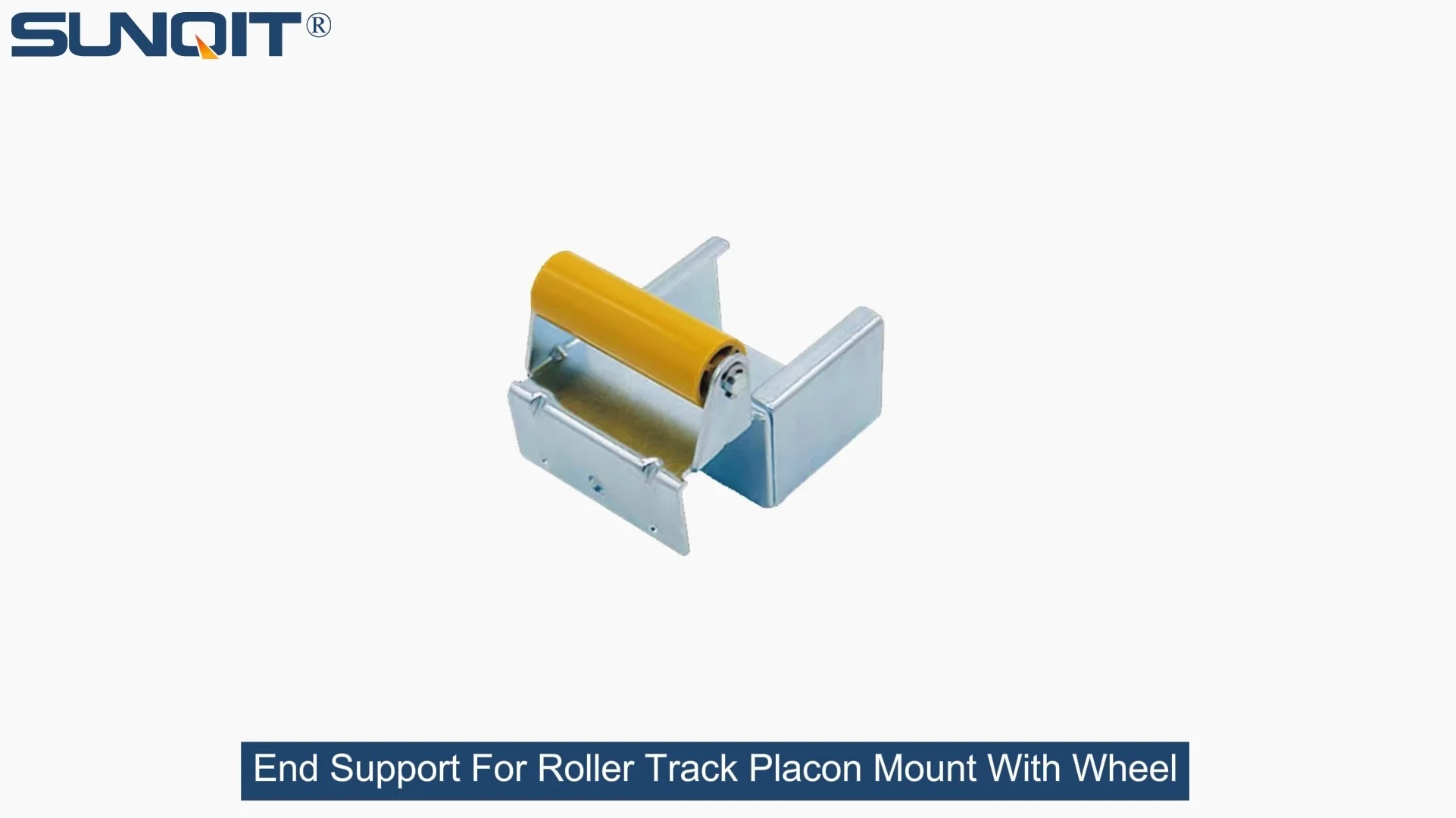
End Support for Roller Track Placon Mount with Wheel
End support for roller track placon mount with wheel,the special design with end wheel,make it with more flexible function for roller track and pipe connection and give more option for selection for building flow rack system.
How the Right Components Keep Your Production Line Rolling Smoothly
Walk into any modern manufacturing facility—whether it's a bustling 3C assembly plant churning out smartphones or a precision medical device workshop—and you'll notice a silent hero hard at work: roller tracks. These unassuming systems of wheels and rails are the backbone of material flow, moving parts from station to station, reducing manual labor, and keeping production timelines on track. But here's the thing: their efficiency doesn't just depend on the rollers themselves. It hinges on two critical components that often go unnoticed until something goes wrong: the end support for roller track placon mounts and the wheels that carry the load.
Imagine a scenario in a car parts factory: a loaded bin of engine components, weighing close to 300 kg, glides along a roller track toward the assembly line. As it reaches the end of the track, the end support absorbs the impact, and the wheels distribute the weight evenly—no jolts, no delays, no risk of damage. Now, picture the same scenario with a subpar end support or mismatched wheels: the bin wobbles, the track bends, and suddenly, you're looking at a halted line, damaged parts, and frustrated workers. That's why understanding load capacity basics for these components isn't just technical knowledge—it's the key to keeping your operation running like a well-oiled machine.
Why Load Capacity Matters More Than You Think
Load capacity isn't just a number on a spec sheet. It's a promise that your roller track system can handle real-world demands day in and day out. In lean manufacturing—where every second and every resource counts—underestimating load requirements can lead to more than just equipment failure. It can disrupt the entire value stream, increase waste (in the form of downtime, repairs, and replacement parts), and even compromise worker safety.
"We once worked with a consumer electronics client who skimped on end supports to cut costs," recalls a senior engineer at a leading lean system supplier. "Their roller tracks handled small circuit boards just fine, but when they scaled up to larger display panels, the end supports began to bend. Within a week, two tracks collapsed, and they lost three days of production. The cost of those 'cheap' supports? Far higher than investing in the right ones from the start."
Load capacity isn't static, either. It changes based on how the weight is distributed (a load vs. a evenly spread load), the speed of movement (faster movement increases dynamic stress), and environmental factors (humidity, temperature, and even floor unevenness). That's why the best roller track systems are designed with flexibility in mind—something we'll circle back to when we talk about lean principles later.
End Support for Roller Track Placon Mount: The Unsung Stabilizer
Let's zoom in on the end support for roller track placon mounts. If roller tracks are the spine of material flow, these supports are the vertebrae—providing structural integrity and preventing the track from sagging, twisting, or separating under load. But not all end supports are created equal. Their design, material, and installation directly impact how much weight they can handle and how long they'll last.
What is a Placon Mount, Anyway?
Placon mounts are specialized brackets that attach roller tracks to frames—often made from aluminum profiles or lean pipes. They're designed to be adjustable, making it easy to reconfigure tracks as production needs change (hello, lean manufacturing!). The end support, as the name suggests, is the bracket at the end of the track, responsible for anchoring it securely and absorbing the forces when loads start or stop moving.
Material choice is critical here. Aluminum end supports are lightweight and corrosion-resistant, making them ideal for clean environments like medical device assembly. Steel supports, on the other hand, offer higher tensile strength for heavy-duty applications, such as automotive part manufacturing. Then there's the design: some supports have built-in stops to prevent loads from sliding off, while others (like the "end support for roller track placon mount with wheel") include small wheels to reduce friction when tracks need to be repositioned—a game-changer for facilities that frequently adjust their layouts.
"We had a medical client who needed to sanitize their roller tracks daily," says a product designer specializing in custom lean solutions. "Stainless steel end supports with smooth, non-porous surfaces were a must. But they also needed to move the tracks between cleanrooms, so we added wheels to the end supports. Now, their team can reconfigure the line in 15 minutes instead of 2 hours—all while keeping load capacity intact."

Wheel Selection: It's All About the Grip, the Roll, and the Weight
If end supports are the stabilizers, the wheels are the workhorses. They determine how smoothly loads move, how much friction is generated, and—you guessed it—how much weight the system can handle. Choosing the right wheels isn't just about picking something that looks tough; it's about matching the wheel to the load, the floor, and the environment.
| Wheel Type | Typical Load Capacity (per wheel) | Best For | Considerations |
|---|---|---|---|
| Polyurethane (PU) Wheels | 100–250 kg | Smooth floors, light to medium loads, noise reduction | Not ideal for rough surfaces; can wear faster under heavy loads |
| Nylon Wheels | 200–400 kg | Heavy loads, high temperatures, chemical resistance | Harder ride; may mark soft floors |
| Steel Wheels | 400–800 kg+ | Extremely heavy loads, industrial environments | Loud; require smooth, hard floors to avoid damage |
| Rubber Wheels | 80–150 kg | Delicate loads, uneven floors, non-slip grip | Lower load capacity; prone to wear in oily environments |
Let's break this down with an example. In a 3C assembly plant, where small, delicate components (like circuit boards) are moved frequently, polyurethane wheels make sense—they're quiet, gentle on parts, and work well on the smooth concrete or epoxy floors common in these facilities. But in a warehouse handling metal parts for machinery, steel wheels would be the better choice, thanks to their high load capacity and durability.
Wheel diameter also plays a role. Larger wheels (e.g., 2-inch diameter) roll more easily over small obstacles and distribute weight better, while smaller wheels (e.g., 0.5-inch) are ideal for tight spaces. And don't forget about bearings! Ball bearings are great for light loads and smooth movement, while roller bearings handle heavier weights but may require more maintenance.

Real-World Applications: How Lean Systems Solve Unique Challenges
Every industry has its own load capacity challenges—and the best solutions are tailored to those needs. Let's look at two scenarios where the right end support and wheel selection made all the difference, thanks to a focus on lean principles like "sustainable improvement" and "reusable design."
Case 1: 3C Assembly – Balancing Precision and Speed
A major smartphone manufacturer was struggling with their final assembly line. They needed to move partially assembled phones (each in a protective tray, total load ~120 kg per bin) along a roller track that had to navigate tight turns to save floor space. The original end supports were made of thin aluminum, and the wheels were small rubber ones—great for light loads but not for the daily wear of 12-hour shifts.
The solution? Upgrading to reinforced aluminum end supports with internal rotary joints (to handle the track's curves) and switching to medium-duty polyurethane wheels with ball bearings. The new supports increased load capacity by 50%, while the wheels reduced friction, allowing bins to glide through turns without jamming. Best of all, the modular design meant the client could reuse the supports and wheels when they reconfigured the line six months later—a perfect example of lean's "reusable" philosophy in action.
Case 2: Medical Device Manufacturing – Cleanliness and Compliance
A medical equipment producer needed roller tracks in their cleanroom to move sterilized surgical tool kits (load ~80 kg per bin). The catch? Everything had to be easy to sanitize, corrosion-resistant, and compliant with strict FDA guidelines. Standard steel supports and rubber wheels wouldn't cut it—they were hard to clean and prone to harboring bacteria.
The fix involved stainless steel end supports with smooth, weld-free surfaces and nylon wheels (which resist chemicals and high temperatures). The supports were designed with minimal crevices to prevent dirt buildup, and the wheels were color-coded to avoid cross-contamination between zones. Not only did this meet compliance standards, but it also reduced cleaning time by 30%—proving that load capacity and hygiene can go hand in hand.

Putting It All Together: A Lean Approach to Selection
At the end of the day, choosing the right end support and wheels isn't just about picking components off a shelf. It's about taking a lean approach—understanding your current needs, anticipating future changes, and selecting parts that can adapt as your operation evolves. Here are three steps to guide you:
1. Start with the numbers (but don't stop there). Calculate your maximum load per bin, then add a 20% safety margin (because real-world loads are rarely "perfect"). Use this to narrow down end support materials (aluminum for light to medium, steel for heavy) and wheel types (nylon or steel for heavy loads, PU for precision).
2. Think about your environment. Is your floor smooth or rough? Do you need corrosion resistance (like in food processing) or ESD protection (like in electronics manufacturing)? These factors will rule out certain materials—for example, stainless steel is a must in wet environments, while ESD-safe wheels prevent static damage to sensitive parts.
3. Design for flexibility. Lean manufacturing isn't static, and your roller track system shouldn't be either. Choose modular end supports (like those with adjustable height or swivel joints) and wheels that can be swapped out as needs change. This way, when you upgrade your production line or shift to new products, you won't have to replace the entire system—just the components that need updating.
Final Thoughts: Your Track to Better Production Flow
Roller tracks might seem simple, but their performance depends on the details—the end supports that anchor them, the wheels that carry the load, and the careful planning that goes into matching components to needs. In a world where manufacturing efficiency is everything, these details are the difference between a system that merely works and one that works for you —reducing waste, boosting productivity, and growing with your business.
So the next time you walk through your facility, take a closer look at those roller tracks. Notice the end supports holding steady, the wheels turning smoothly, and remember: behind every efficient production line is a set of components designed with load capacity in mind. And when you're ready to upgrade or build a new system, look for partners who understand not just the specs, but the stories—like the 3C plant that cut downtime by 40% or the medical facility that simplified compliance. Because in the end, it's not just about parts. It's about keeping your operation rolling—today, tomorrow, and for years to come.