- Company Articles
- Products and Technology
- Product knowledge
- Load Capacity Chart: Choosing the Right Flat Swivel Castor Wheel with Brake for Your Equipment

Load Capacity Chart: Choosing the Right Flat Swivel Castor Wheel with Brake for Your Equipment
Related Product
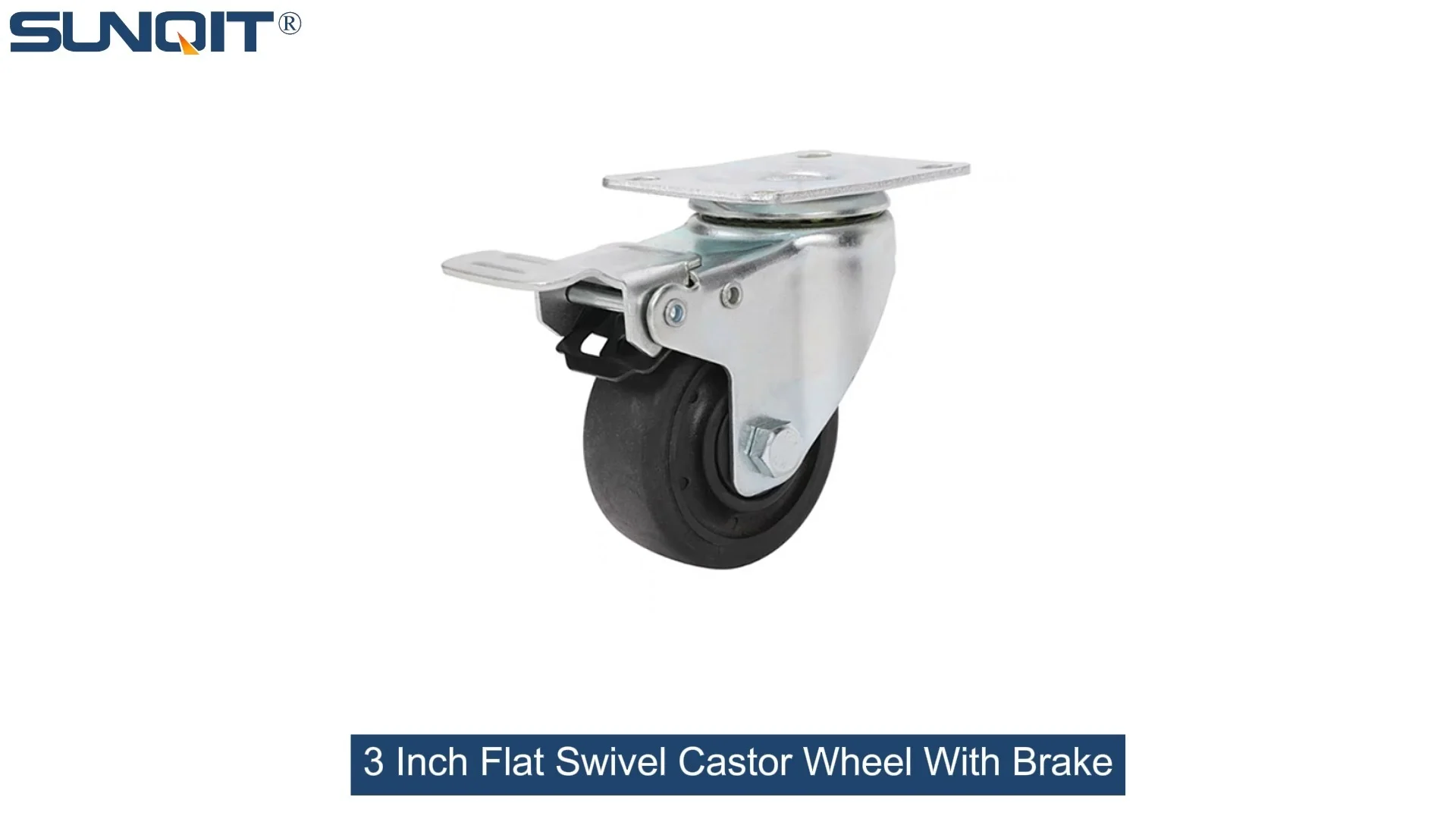
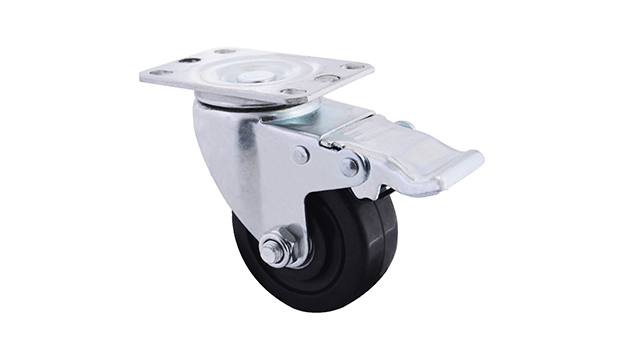
Flat Swivel Castor Wheel With Brake
Chair Casters Ball Bearing Wheels Rubber Base with brake design. Resistant to abrasion, impact and corrosion. Heavy payload can hold 70Kgs per pcs,which can make it works at a stable and smooth status.
If you've ever struggled to move a heavy workbench across a workshop floor, or watched a poorly chosen caster wheel buckle under the weight of tools, you know: castors are the unsung heroes of any workspace. They turn static equipment into flexible, mobile assets—saving your back, streamlining workflows, and keeping operations running smoothly. But not all castors are created equal. When it comes to heavy loads, frequent movement, or precision positioning, the flat swivel castor wheel with brake stands out as a workhorse. Yet, choosing the right one isn't as simple as grabbing the first pair off the shelf. The key? Understanding load capacity—and how to use a load capacity chart to match your needs.
In this guide, we'll walk you through everything you need to know: from the basics of how these castors work to decoding load capacity charts, avoiding common mistakes, and even real-world examples of how the right choice transforms workplaces. Whether you're outfitting a lean pipe workbench in a small factory or upgrading workbenches in a busy warehouse, by the end, you'll feel confident picking castors that keep your equipment moving safely for years to come.
What is a Flat Swivel Castor Wheel with Brake? Breaking Down the Basics
Before we dive into load capacity, let's make sure we're all on the same page: what exactly is a flat swivel castor wheel with brake? At first glance, it might look like a simple wheel on a plate—but there's more engineering here than meets the eye. Let's break down its core components:
The Wheel: The Foundation of Movement
The wheel is the part that touches the ground, and its material and size directly impact performance. Common materials include rubber (great for smooth floors and noise reduction), polyurethane (durable and versatile for mixed surfaces), nylon (ideal for heavy loads and high temperatures), and steel (tough for rough terrain like concrete or gravel). Size matters too: smaller wheels (2-3 inches) are better for tight spaces, while larger wheels (4-5 inches) roll more easily over cracks or debris.
The Swivel Mechanism: Turning on a Dime
Unlike fixed castors (which only roll forward/backward), swivel castors have a rotating joint that lets the wheel turn 360 degrees. This is what makes equipment maneuverable—think of a shopping cart's front wheels. The swivel mechanism includes bearings (to reduce friction) and a raceway (the track the bearings roll in). A well-made swivel mechanism feels smooth to turn, even under heavy loads, without wobbling or sticking.
The Brake: Safety When You Need It
The brake is what turns a mobile castor into a stationary one. Most flat swivel castors with brakes use a foot-operated lever: step on it to lock the wheel in place, step again to release. Some models have dual brakes (locking both the wheel and swivel mechanism) for extra stability, which is crucial on uneven floors or slopes. A reliable brake isn't just about stopping—it's about preventing accidental movement when you're working, assembling, or loading/unloading equipment.
The Mounting Plate: Connecting to Your Equipment
Finally, the mounting plate is the metal base that attaches the castor to your equipment (like a workbench leg or trolley frame). It comes in different sizes (e.g., 4x4 inches, 5x5 inches) and hole patterns, so compatibility with your equipment's mounting points is key. A flimsy mounting plate can bend or crack under stress, even if the wheel itself is strong—so don't overlook this part!
Pro Tip:
When shopping, check if the castor includes
caster accessories
like mounting screws or washers. Many suppliers sell these separately, and using the wrong hardware can weaken the connection between the castor and your equipment.
Load Capacity 101: Why It's the Most Critical Number on the Chart
If there's one term you need to memorize when buying castors, it's load capacity . Simply put, this is the maximum weight a single castor can safely support under normal conditions. But here's the catch: it's not just about the total weight of your equipment. How that weight is distributed, how many castors you're using, and even the environment you're working in can all affect whether a castor lives up to its rating.
What Load Capacity Really Means (It's Not Just "How Much It Can Hold")
Let's say a castor is rated for 500 lbs. Does that mean you can stack 500 lbs directly on top of it? Not exactly. Load capacity assumes the weight is evenly distributed across all castors on the equipment. For example, a workbench with four castors, each rated for 500 lbs, can technically support 2,000 lbs total (4 x 500 lbs). But if the workbench is loaded unevenly—say, all the tools are piled on one side—that one castor might suddenly bear 600 lbs or more, exceeding its capacity and risking failure.
Manufacturers test load capacity under controlled conditions: flat, smooth floors, steady movement, and even weight distribution. In real life, factors like rough terrain, sudden stops, or frequent swiveling can reduce that effective capacity. That's why experts recommend adding a 20-30% safety margin to your calculated needs. If you think you need a 300 lbs capacity, aim for 360-390 lbs to be safe.
Key Factors That Affect Load Capacity
To truly understand how much weight your castors can handle, you need to consider:
- Number of Castors: More castors mean more weight distribution. A 1,000 lbs load on 4 castors = 250 lbs per castor; on 6 castors = ~167 lbs per castor. Always count how many castors your equipment will use before checking ratings.
- Weight Distribution: As mentioned, uneven loads (e.g., a tool chest on one end of a workbench) put extra stress on individual castors. If your equipment often holds off-center loads, size up your castors.
- Floor Conditions: Rough, uneven, or debris-covered floors force castors to work harder. A castor rated for 400 lbs on smooth concrete might only handle 300 lbs on a gravel driveway.
- Movement Frequency: Castors that are moved daily (or hourly) experience more wear than those rarely adjusted. Over time, this can reduce load capacity as bearings wear down or wheels develop flat spots.
- Brake Usage: Braking suddenly with a heavy load can create "shock load"—a brief spike in weight that exceeds the static capacity. High-quality brakes (and avoiding sudden stops) help mitigate this.
Decoding the Load Capacity Chart: Your Roadmap to the Right Castor
A load capacity chart is like a castor's "resumé"—it tells you exactly what it's capable of, based on wheel size, material, and design. But if you've never read one before, the numbers and terms can feel overwhelming. Let's break it down step by step.
Anatomy of a Load Capacity Chart
Most manufacturers provide charts that list key specs for each castor model. Here's what to look for:
- Wheel Diameter: Usually in inches (e.g., 2", 3", 4"). Larger wheels generally handle more weight and roll more easily over obstacles.
- Wheel Material: Rubber, polyurethane, nylon, steel, etc. Each has trade-offs in grip, durability, and load capacity.
- Load Capacity (per Castor): The maximum weight the castor can support under ideal conditions (in pounds or kilograms).
- Max Temperature Range: Some materials (like rubber) degrade in extreme heat, while others (like steel) handle high temps well.
- Suitable Floor Types: Indicates if the wheel works best on concrete, hardwood, carpet, or rough terrain.
Sample Load Capacity Chart: Flat Swivel Castor Wheels with Brake
| Wheel Diameter (in) | Wheel Material | Load Capacity per Castor (lbs) | Max Temperature Range (°F) | Suitable Floor Types |
|---|---|---|---|---|
| 2" | Rubber | 150 | -20 to 180 | Smooth concrete, hardwood, tile |
| 3" | Polyurethane | 300 | -40 to 200 | Concrete, carpet, asphalt (light debris) |
| 4" | Nylon | 500 | -30 to 250 | Rough concrete, industrial floors, gravel (small stones) |
| 5" | Steel | 800 | -10 to 300 | Asphalt, gravel, outdoor/construction sites |
| 4" | Polyurethane (Heavy-Duty) | 600 | -40 to 220 | All indoor floors, light outdoor use |
Let's use this chart to solve a real problem. Suppose you're building a lean pipe workbench for a electronics assembly line. The workbench itself weighs 200 lbs, and you'll add 300 lbs of tools, components, and a small conveyor (total: 500 lbs). The workbench has 4 castor mounts. Here's how to use the chart:
- Calculate per-castor load: 500 lbs total ÷ 4 castors = 125 lbs per castor. Add a 20% safety margin: 125 x 1.2 = 150 lbs. So you need castors rated for at least 150 lbs each.
- Consider the environment: The assembly line has smooth concrete floors, and the workbench is moved 2-3 times per shift (moderate use). No extreme temperatures.
- Check the chart: The 2" rubber castor is rated for 150 lbs—exactly your minimum. But wait: rubber wheels can leave marks on concrete, and the workbench might need to roll over small cords. The 3" polyurethane castor (300 lbs) is overkill, but offers better durability and smoother rolling. Since the workbench will be moved frequently, the extra capacity and wheel size are worth it.
See? The chart isn't just numbers—it's a tool to balance safety, performance, and practicality.

Step-by-Step: How to Choose the Right Flat Swivel Castor with Brake
Now that you understand load capacity and charts, let's walk through a step-by-step process to choose your castors. We'll use a scenario to make it concrete: Maria runs a small machine shop and needs to add castors to a heavy-duty workbench. The workbench is 6 feet long, weighs 400 lbs empty, and will hold up to 600 lbs of tools and parts (total max load: 1,000 lbs). She wants it to move smoothly across concrete floors and stay locked in place during use.
Step 1: Calculate Your Total Load (and Add a Safety Margin)
Start with the maximum weight your equipment will carry—including the equipment itself. For Maria: 400 lbs (workbench) + 600 lbs (tools/parts) = 1,000 lbs total. Always round up if your load varies (e.g., if some days she only has 300 lbs of tools, but others 600, use the 600 lbs number).
Add a 20-30% safety margin: 1,000 lbs x 1.2 = 1,200 lbs. This accounts for uneven loading, sudden movements, or wear over time.
Step 2: Count the Number of Castors
Maria's workbench has 4 legs, so she'll use 4 castors. Divide the total safe load by the number of castors: 1,200 lbs ÷ 4 = 300 lbs per castor. Now she knows she needs castors rated for at least 300 lbs each.
Note: If your equipment uses 3 castors (rare, but possible for triangular bases), divide by 3—but remember, 3-point systems are less stable, so consider a higher safety margin (30-40%).
Step 3: Assess Your Environment
Where will the castors be used? Key questions:
- Floor type: Smooth concrete (Maria's shop), hardwood, carpet, or outdoor gravel?
- Obstacles: Cracks, cords, thresholds, or debris?
- Temperature: Extreme heat (near ovens) or cold (freezers)?
- Movement frequency: Moved daily, weekly, or rarely?
Maria's shop has smooth concrete, minimal obstacles, and moderate movement (3-4 times per day). No extreme temps, so she can focus on durability and smooth rolling.
Step 4: Choose Wheel Material and Size
Using the load capacity chart, Maria looks for castors rated 300+ lbs. The 3" polyurethane castor (300 lbs) fits, but she notices the 4" polyurethane (500 lbs) is only slightly more expensive and has a larger wheel—better for rolling over small debris. Polyurethane is also non-marking, so it won't scuff the shop's concrete floors. She picks 4" polyurethane wheels.
Step 5: select Brake Type
Flat swivel castors with brakes typically offer two brake types:
- Wheel Brake: Locks the wheel from rotating (prevents rolling). Good for flat floors with light movement.
- Dual Brake: Locks both the wheel and swivel mechanism (prevents rolling and turning). Better for slopes, uneven floors, or when precision positioning is key.
Maria's shop floor is flat, but she wants the workbench to stay perfectly still during assembly. She chooses dual brakes for extra stability.
Step 6: Check Mounting Compatibility
Maria measures the mounting points on her workbench legs: 4x4 inch metal plates with pre-drilled holes 3 inches apart. She checks the castor's mounting plate specs and confirms it matches (4x4 inch plate, holes 3 inches apart). She also buys caster accessories —stainless steel bolts and washers—to secure the castors, avoiding cheap hardware that might rust or bend.
Step 7: Consider Extras (Caster Accessories)
Depending on your needs, accessories can extend castor life or improve performance:
- Floor protectors: Rubber or felt pads for hardwood floors.
- Swivel locks: Keep castors facing forward for straight-line movement (useful for long distances).
- Dust covers: Protect swivel mechanisms from debris in dirty environments.
Maria skips extras since her concrete floor is durable, but if she worked on hardwood, floor protectors would be a must.

Common Mistakes to Avoid: Don't Let These Errors Cost You
Even with a load capacity chart in hand, it's easy to slip up. Here are the most common mistakes—and how to steer clear:
Mistake #1: Underestimating the Load
"It's just a few tools—how heavy can it be?" This is how castors fail. Always weigh your equipment and its typical load (or use the manufacturer's max load rating for tools). A 50 lbs miscalculation today could lead to a broken castor (or worse, an injury) tomorrow.
Mistake #2: Ignoring the Environment
A castor that works great in a climate-controlled office will struggle in a humid warehouse or a freezing garage. Nylon wheels, for example, become brittle in cold temps, while rubber wheels degrade in oil or chemical-heavy environments. Always match the wheel material to your workspace.
Mistake #3: Skimping on Brakes
"I don't need brakes—I'll just wedge a block under the wheel." Brakes aren't optional for safety. A sudden jolt (like someone bumping the workbench) can send equipment rolling, risking damage or injury. Invest in quality brakes, and test them regularly to ensure they engage fully.
Mistake #4: Mixing Castor Types
Using a mix of swivel and fixed castors? That's fine (fixed castors on one end can improve straight-line stability). But mixing different load capacities? Never. If three castors are rated for 300 lbs and one for 200 lbs, the weak link will fail first—taking the whole load with it.
Mistake #5: Forgetting About Maintenance
Castors aren't "set it and forget it." Without regular cleaning and lubrication, swivel mechanisms seize, wheels wear unevenly, and brakes lose grip. Even the best castor will underperform if neglected.
Real-World Applications: How the Right Castor Transforms Workflows
To see why all this matters, let's look at two businesses that upgraded their castors—and the impact it had.
Case Study 1: The Lean Pipe Workbench Upgrade
A small automotive parts manufacturer was using basic fixed castors on their lean pipe workbenches. The workbenches, loaded with 800 lbs of tools and parts, were hard to move, and employees often strained their backs repositioning them. Worse, the castors frequently got stuck on the shop's slightly uneven concrete, leading to delays.
After assessing their needs (800 lbs total, 4 castors = 200 lbs per castor + 20% margin = 240 lbs), they switched to 4" polyurethane flat swivel castors with dual brakes (rated for 300 lbs each). The result? Workbenches now glide across the floor with minimal effort, and the dual brakes keep them locked during assembly. Employees report less fatigue, and repositioning time dropped from 15 minutes to 2—freeing up hours weekly for more productive tasks.
Case Study 2: Warehouse Workbench Safety
A large distribution center had workbenches near loading docks, used for sorting packages. The original castors had no brakes, and on windy days, the benches would slowly roll toward the dock edge—a serious safety hazard. The castors were also small (2" rubber), making them prone to getting caught on cracks in the concrete.
They upgraded to 5" steel flat swivel castors with heavy-duty brakes (rated for 600 lbs each, even though the benches only weighed 400 lbs total). The larger wheels rolled over cracks easily, and the brakes held firm even in windy conditions. Incidents of benches moving dropped to zero, and workers felt more confident using the space.
Maintenance Tips: Keep Your Castors Rolling Strong
Even the best castors need care. Follow these tips to extend their life:
- Clean Regularly: Wipe wheels and swivel mechanisms with a damp cloth to remove dirt, hair, or debris that can jam movement. For industrial settings, use compressed air to blow out hard-to-reach areas.
- Lubricate Swivel Joints: Every 3-6 months (or more often in dirty environments), apply a silicone-based lubricant to the swivel raceway. Avoid oil-based lubes, which attract dust.
- Check Brakes Weekly: Test brakes to ensure they engage fully and release smoothly. Tighten loose levers or replace worn brake pads promptly.
- Inspect Wheels: Look for flat spots, cracks, or embedded debris. replace wheels at the first sign of damage—worn wheels stress the entire castor and make movement harder.
- Tighten Mounting Hardware: Loose bolts can cause wobbling or damage the mounting plate. Check screws/bolts monthly and tighten as needed.
Conclusion: Invest in the Right Castor—Your Equipment (and Back) Will Thank You
Choosing a flat swivel castor wheel with brake might seem like a small decision, but it's one that ripples through your entire operation: safer workspaces, happier employees, smoother workflows, and equipment that lasts longer. By taking the time to understand load capacity, decode charts, and avoid common mistakes, you're not just buying castors—you're investing in the efficiency and safety of your business.
Remember: the best castor is the one that fits your needs. Whether you're outfitting a lean pipe workbench in a garage or upgrading a fleet of workbenches in a factory, start with the numbers (load, castor count, environment), use the chart to narrow options, and don't skimp on quality. Your future self—pushing a fully-loaded, smoothly rolling workbench with ease—will be glad you did.