- Company Articles
- Products and Technology
- Product knowledge
- Load Capacity Guide: Choosing Flat Rigid Castor Wheels for Material Rack B

Load Capacity Guide: Choosing Flat Rigid Castor Wheels for Material Rack B
Related Product
Flat Rigid Castor Wheel
Chair Casters Ball Bearing Wheels Rubber Base. Resistant to abrasion, impact and corrosion. Heavy payload can hold 70Kgs per pcs,which can make it works at a stable and smooth status.
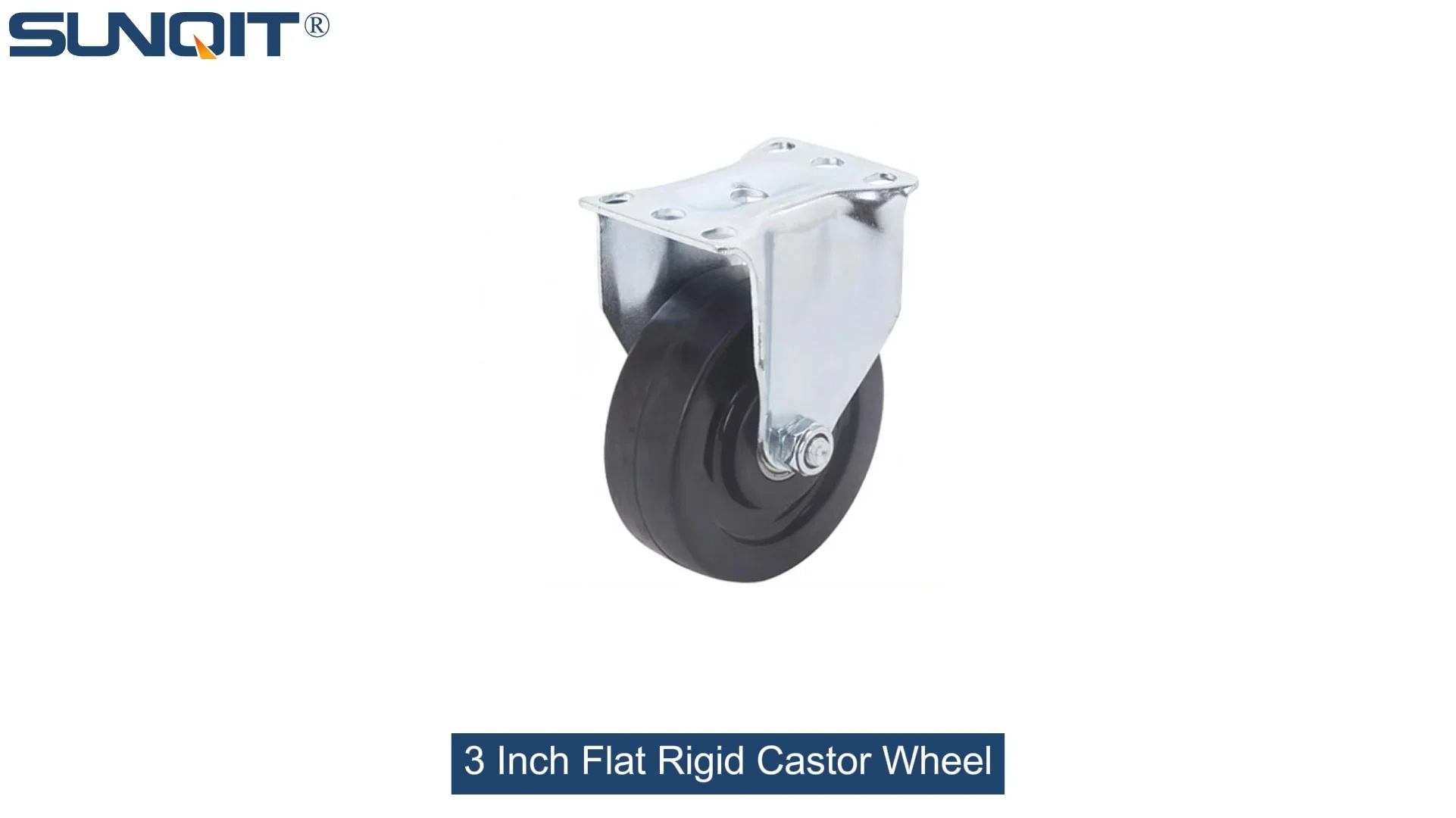
Walk into any busy warehouse, manufacturing plant, or distribution center, and you'll notice a quiet hero working behind the scenes: the material rack. These sturdy structures keep inventory organized, accessible, and safe—but they're only as reliable as the components that support them. Today, we're zooming in on a critical yet often overlooked part of this equation: flat rigid castor wheels for Material Rack B (3 row and 3 floor) . Whether you're setting up a new production line or upgrading existing equipment, choosing the right castor wheels isn't just about checking a box on a parts list. It's about ensuring safety, efficiency, and longevity for one of your facility's hardest-working tools.
Getting to Know Your Material Rack B: More Than Just Storage
First, let's talk about the star of the show: Material Rack B. Designed with 3 rows and 3 floors, this rack is a workhorse in environments where space is precious and organization is key. Imagine stacking boxes of electronic components, automotive parts, or medical supplies—each floor holding up to dozens of items, each row keeping different SKUs separated. Over time, that adds up to significant weight. A fully loaded Material Rack B might carry hundreds, even thousands, of pounds of inventory. And every time your team needs to reposition the rack—say, to rearrange the production floor or move stock closer to an assembly line—that weight shifts, and the responsibility falls on the castor wheels to keep everything stable.
Unlike lightweight shelves or mobile carts, Material Rack B is built for heavy-duty use. Its steel or aluminum frame is rugged, but without the right castors, even the sturdiest rack can become a liability. Wobbly wheels, insufficient load capacity, or poor floor traction can lead to accidents, damaged goods, or frustrating delays. That's why understanding your rack's unique needs is the first step in choosing the perfect flat rigid castor wheels.
Why Flat Rigid Castor Wheels? Stability Meets Functionality
You might be wondering: Why "flat rigid" castors specifically? Let's break it down. "Flat" refers to the wheel's tread design—smooth and even, ideal for consistent contact with hard floors like concrete or tile. "Rigid" means the wheel doesn't swivel; it's fixed in place, which adds stability when moving heavy loads in straight lines (a common scenario for Material Rack B, which often stays in one spot but needs occasional repositioning). Unlike swivel castors, which offer maneuverability for tight spaces, flat rigid castors prioritize load-bearing strength and control. When you're moving a fully loaded 3-row, 3-floor rack, the last thing you want is unexpected movement or tipping—and rigid wheels minimize that risk.
But not all flat rigid castors are created equal. Load capacity, wheel material, and compatibility with your rack's base are just a few factors that can make or break your decision. Let's dive into the details.

Load Capacity 101: What You Need to Understand
Load capacity is the maximum weight a castor wheel can safely support under normal operating conditions. It's measured in pounds (lbs) or kilograms (kg), and it's non-negotiable: exceed this limit, and you're gambling with wheel failure, bent axles, or worse. For Material Rack B, getting this number right is critical. Let's break down how to calculate it.
Step 1: Calculate Your Rack's Total Load
Start by estimating the total weight your Material Rack B will carry. Let's say each floor holds 10 boxes, and each box weighs 50 lbs. With 3 floors, that's 10 boxes/floor x 50 lbs/box x 3 floors = 1,500 lbs of inventory. But don't stop there: add the weight of the rack itself (typically 100–300 lbs, depending on material) and any additional accessories like dividers or labels. For this example, let's assume the rack weighs 200 lbs. Total load? 1,500 + 200 = 1,700 lbs.
Now, most Material Rack B models use 4 castor wheels (one at each corner). To find the load per wheel, divide the total load by 4: 1,700 lbs ÷ 4 = 425 lbs per wheel. But here's the catch: you should always factor in a safety margin. Industry standard is to add 25–50% to the per-wheel load to account for uneven weight distribution (e.g., heavier boxes on one side) or sudden movements (like pushing the rack over a small floor imperfection). For 425 lbs per wheel, a 25% safety margin brings us to 531 lbs. That means each castor wheel needs a load capacity of at least 531 lbs.
Step 2: Understand Load Capacity Ratings
Castor manufacturers list load capacity based on ideal conditions: smooth floors, steady movement, and proper installation. Real-world conditions are rarely ideal. A cracked floor tile, a sudden stop, or even a slightly loose caster accessory (like a washer or bolt) can reduce a wheel's effective capacity. That's why it's never a good idea to cut corners. If your calculations point to 531 lbs per wheel, look for castors rated for 600 lbs or more. It's better to have extra capacity than to risk failure.

Key Factors Influencing Flat Rigid Castor Wheel Performance
Load capacity isn't the only player here. Let's explore the other factors that will determine whether your flat rigid castor wheels are a perfect match for Material Rack B.
1. Wheel Material: Grip, Durability, and Floor Protection
Flat rigid castor wheels come in a range of materials, each with its own strengths. Here's how they stack up for Material Rack B:
- Polyurethane (PU): A popular choice for indoor use, PU wheels offer excellent traction on smooth floors (like concrete or epoxy) and are gentle enough to avoid scuffing. They're resistant to oils, chemicals, and abrasion, making them ideal for warehouses with occasional spills. Load capacities typically range from 300–800 lbs per wheel.
- Nylon: If you need maximum durability, nylon is hard to beat. It's stiffer than PU, handles heavier loads (up to 1,200 lbs per wheel), and stands up to high temperatures and harsh chemicals. The downside? Nylon can be noisy on hard floors and may mark surfaces if overloaded.
- Rubber: Rubber wheels provide superior shock absorption, which is helpful if your Material Rack B carries fragile items. They're quiet and offer great grip, but they're not as resistant to oils or extreme heat as PU or nylon. Best for lighter loads (200–500 lbs per wheel) in temperature-controlled environments.
- Cast Iron: For industrial settings with extremely heavy loads (1,000+ lbs per wheel), cast iron is the go-to. It's nearly indestructible but heavy, noisy, and can damage soft floors (like vinyl or wood). Save this for outdoor use or facilities with reinforced concrete floors.
2. Wheel Diameter: The Bigger the Wheel, the Easier the Roll
Wheel diameter (measured in inches) affects how easily the castor rolls and how well it handles obstacles (like small cracks or thresholds). For Material Rack B, which is often moved manually, a larger diameter can reduce the effort required to push or pull the rack. Common sizes for rigid castors are 3–6 inches. A 4–5 inch wheel is a sweet spot for most warehouses: big enough to roll smoothly, small enough to keep the rack's center of gravity low (reducing tipping risk).
3. Bearing Type: Smooth Movement Under Load
The bearing inside the wheel determines how smoothly it spins, especially under heavy loads. For Material Rack B, two types stand out:
- Ball Bearings: Affordable and suitable for light to medium loads (up to 600 lbs per wheel). They're low-maintenance but may struggle with constant heavy use.
- Roller Bearings (or Tapered Roller Bearings): Designed for heavy loads and frequent movement, roller bearings distribute weight more evenly, reducing friction and extending wheel life. They're a bit pricier but worth the investment for a fully loaded Material Rack B.
4. Mounting Style: Compatibility with Material Rack B
Finally, ensure the castor wheels fit your rack's base. Most Material Rack B models use a top plate mount, where the castor is bolted to a flat metal plate on the rack's legs. Check the bolt pattern (e.g., "4x4 inch" or "M10 bolts") to ensure a secure fit. A loose mount can cause the wheel to wobble, even if the load capacity is correct.
Pro Tip: Don't Overlook Caster Accessories
Even the best castor wheels need a little help. Caster accessories like locking washers, axle caps, and floor protectors can extend lifespan and improve safety. For example, adding a metal axle cap prevents dirt and debris from jamming the bearing, while a rubber floor protector reduces noise and scuffing. When ordering your castors, ask about compatible accessories—they're a small investment that pays off big.

Comparing Flat Rigid Castor Wheels for Material Rack B: A Practical Table
To make your decision easier, we've compiled a comparison of popular flat rigid castor wheels Material Rack B. Remember, these are general guidelines—always check the manufacturer's specs for your specific rack model.
| Castor Model | Load Capacity (per wheel) | Wheel Material | Wheel Diameter | Best For | Floor Type | Key Benefit |
|---|---|---|---|---|---|---|
| PU Flat Rigid Castor (Model FR-PU-5) | 600 lbs | Polyurethane | 5 inches | Medium-load Material Rack B (1,500–2,000 lbs total) | Smooth concrete, epoxy, tile | Quiet, non-marking, good traction |
| Nylon Flat Rigid Castor (Model FR-NY-6) | 800 lbs | Nylon | 6 inches | Heavy-load Material Rack B (2,000–3,000 lbs total) | Industrial concrete, rough floors | Chemically resistant, high durability |
| Rubber Flat Rigid Castor (Model FR-RB-4) | 400 lbs | Natural Rubber | 4 inches | Light to medium-load Material Rack B (under 1,500 lbs total) | Vinyl, wood, polished concrete | Shock absorption, gentle on floors |
| Cast Iron Flat Rigid Castor (Model FR-CI-8) | 1,200 lbs | Cast Iron | 8 inches | Extreme heavy-load Material Rack B (3,000+ lbs total) | Outdoor, reinforced concrete | Maximum load capacity, industrial strength |
Step-by-Step Guide to Choosing Your Castor Wheels
Ready to put this knowledge into action? Follow these steps to select the perfect flat rigid castor wheels for your Material Rack B:
Step 1: Calculate Your Total Load (Again!)
We covered this earlier, but it's worth repeating. Grab your inventory list, weigh a few sample boxes, and add the rack's weight. Be honest—overestimating is better than guessing low.
Step 2: Inspect Your Floors
Walk the area where Material Rack B will live. Is the floor smooth or rough? Are there cracks, thresholds, or debris? A concrete floor with sealant can handle nylon or cast iron, while a polished epoxy floor might need PU to avoid scuffs.
Step 3: Think About Movement Frequency
How often will you move the rack? If it stays in one spot 90% of the time, a lower-maintenance option like rubber or PU works. If you're repositioning it daily, invest in roller bearings and durable nylon wheels to reduce wear.
Step 4: Check Compatibility
Measure the mounting plate on your Material Rack B's legs. Common sizes are 4x4 inches or 5x5 inches. If you're unsure, contact the rack manufacturer—they can provide the exact bolt pattern and weight limits for the base.
Step 5: Read Reviews and Ask for Samples
Don't take the manufacturer's word for it. Look for reviews from other facilities using Material Rack B. If possible, order a single sample castor and test it with a weighted load. Does it roll smoothly? Is it stable? This small step can save you from a costly mistake.
Common Mistakes to Avoid
Even with careful planning, it's easy to slip up. Here are the top mistakes to steer clear of:
- Underestimating load capacity: "It's just a few extra boxes" can lead to wheel failure. Always add that 25–50% safety margin.
- Ignoring floor conditions: A castor that works on concrete might destroy a wood floor. Match the wheel material to your environment.
- Skipping caster accessories: Locking washers or axle caps might seem trivial, but they prevent loosening and jamming over time.
- Choosing based on price alone: A $10 castor might save money upfront, but replacing it every 6 months costs more than investing in a $30 heavy-duty model.
Maintaining Your Flat Rigid Castor Wheels: Extending Lifespan
Once you've installed your new castor wheels, a little maintenance goes a long way. Here's how to keep them rolling smoothly for years:
- Inspect monthly: Check for loose bolts, worn treads, or debris in the bearings. Tighten any loose hardware and clean out dirt with a brush.
- Lubricate annually: For roller bearings, apply a few drops of machine oil to reduce friction. Avoid over-lubricating—excess oil attracts dirt.
- replace worn parts: If a wheel starts to wobble or the tread is uneven, replace it immediately. Don't wait for a complete failure.
- Train your team: Teach employees to push Material Rack B from the center, not the sides, to avoid uneven weight distribution. And never drag the rack—this puts extra strain on the wheels.
Conclusion: Invest in Safety, Invest in Efficiency
Choosing flat rigid castor wheels for Material Rack B might not be the most glamorous task, but it's one of the most important. These small components carry the weight of your inventory, your team's productivity, and your facility's safety. By taking the time to calculate load capacity, understand wheel materials, and prioritize compatibility, you're not just buying castors—you're investing in a smoother, safer, and more efficient operation.
So, the next time you walk past that Material Rack B, take a second to appreciate the flat rigid castor wheels keeping it steady. They might not get the spotlight, but they're the unsung heroes ensuring your business keeps moving forward.