Load Capacity Guide: End Support for Roller Track Placon Mount with Stop in Heavy-Duty Applications
Related Product
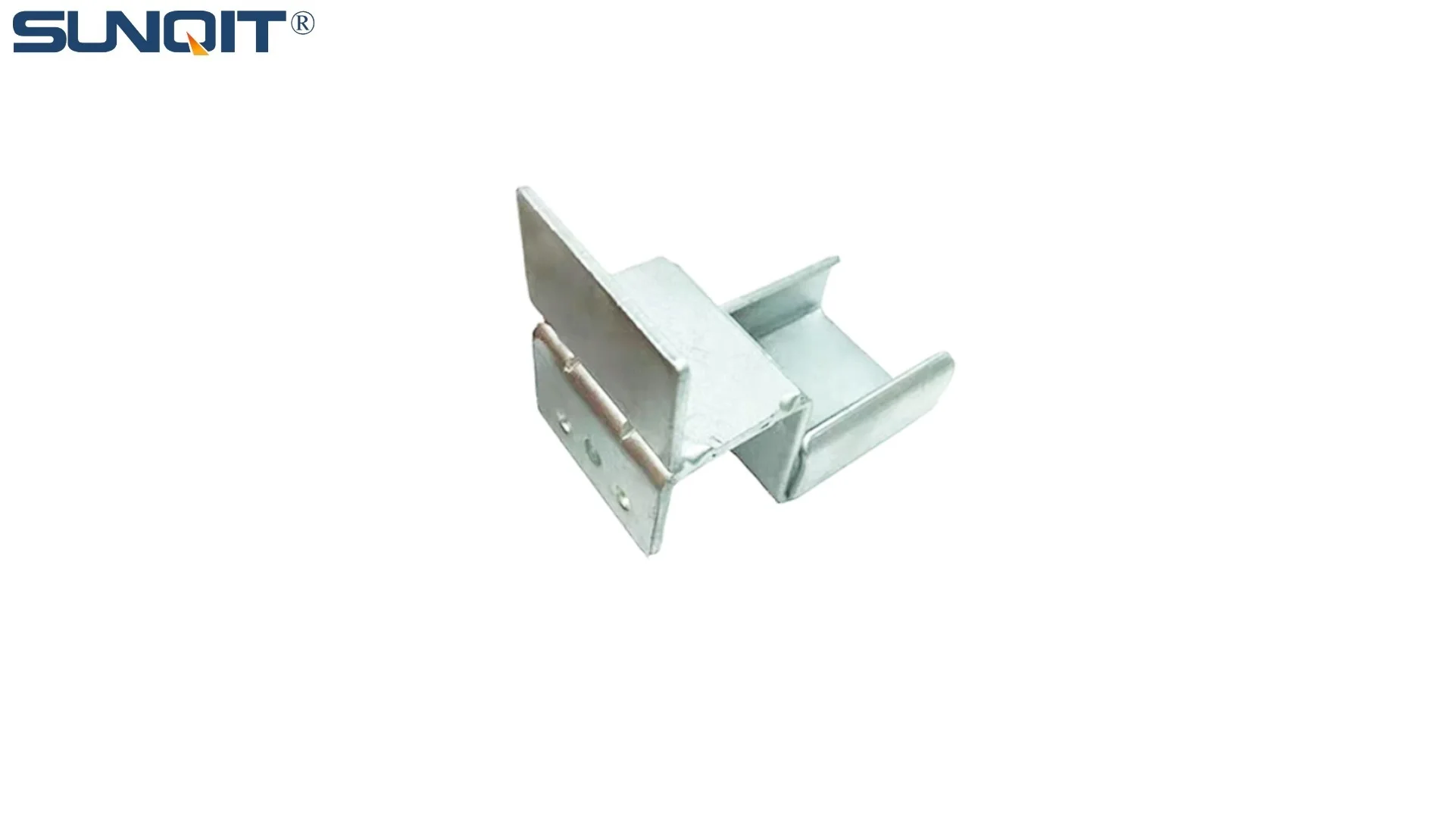
End Support for Roller Track Placon Mount with Stop
Roller track placon mount work as a connector for roller track and pipe or aluminum profile in rack syetem, it is a necessary parts in rack system which widely used in industrial plant and logistic,warehouse storage.
End Support for Roller Track Placon Mount with Stop

In the fast-paced world of manufacturing, where every second counts and safety is non-negotiable, the efficiency of material handling systems can make or break your production line. Roller track systems, the unsung heroes of workshops and warehouses, quietly keep goods moving—from raw materials to finished products. But behind their smooth operation lies a critical component that often goes unnoticed: the end support. Specifically, the End Support for Roller Track Placon Mount with Stop isn't just another part; it's the backbone that ensures your roller track stays stable, your loads stay secure, and your team stays productive.

Whether you're managing a bustling automotive assembly line, a precision-focused 3C manufacturing workshop, or a high-throughput warehouse, choosing the right end support directly impacts two key factors: how much weight your system can handle, and how reliably it does so over time. In this guide, we'll dive deep into what makes this component essential, how to determine its load capacity, and why it's more than just a "support"—it's a cornerstone of lean, safe, and efficient operations.

What Is the End Support for Roller Track Placon Mount with Stop?

Let's start with the basics. Imagine a roller track system as a highway for your materials. If the track itself is the road, the end support is the guardrail and foundation combined. Designed to anchor the roller track securely, this component prevents sagging, shifting, or collapse—especially when heavy loads are in motion. The "with Stop" feature adds an extra layer of safety: a built-in stopper that keeps materials from sliding off the end of the track, protecting both your products and your team from accidents.

At its core, this end support is engineered for versatility and durability. Crafted from high-grade materials like aluminum alloy (a staple in our aluminum profile lineup) or reinforced steel (from our stainless steel pipe series ), it balances strength with lightweight design—critical for both load-bearing capacity and ease of installation. Its placon mount design allows for flexible attachment to various structures, whether you're building a custom system with lean pipe or integrating it into an existing aluminum profile framework.

But what truly sets it apart is its compatibility with the "lean philosophy" that drives modern manufacturing. Just like our lean solution offerings, this end support is built to be reusable, adjustable, and adaptable. Need to reconfigure your production line next quarter? The end support can be easily detached, relocated, and reinstalled—no need for costly replacements, no waste, just continuous improvement.

Key Factors That Determine Load Capacity

Load capacity isn't a one-size-fits-all number. It's a dynamic metric shaped by several factors, each playing a role in how much weight your end support can reliably handle. Let's break them down:

1. Material Strength: The Foundation of Reliability

The material of your end support is the first line of defense against heavy loads. Aluminum alloy, a popular choice here, offers an impressive strength-to-weight ratio. Our aluminum profiles, for example, are extruded under precise conditions to ensure uniform density, making them resistant to bending even under constant stress. Stainless steel, on the other hand, shines in corrosive environments (like humid warehouses or medical device facilities) where rust resistance is key. For most heavy-duty applications, aluminum strikes the perfect balance—strong enough to support hundreds of kilograms, yet light enough to keep your roller track system agile.

2. Structural Design: More Than Just a "Support"

A well-designed end support isn't just a flat piece of metal—it's a carefully engineered structure. Look for features like reinforced ribs (to distribute weight evenly), a wide base (to reduce pressure on mounting points), and a robust stopper mechanism (often made from high-impact plastic or rubber) that can absorb sudden jolts when loads hit it. Our End Support for Roller Track Placon Mount with Stop, for instance, uses a triangular bracing design at the mounting point, which minimizes stress concentration and boosts overall stability.

3. Installation: Precision Matters

Even the strongest end support will fail if installed incorrectly. How tightly it's fastened to the roller track, the quality of the placon mount connectors, and alignment with the track itself all affect load capacity. A loose bolt or misaligned mount can create weak points, reducing the system's ability to handle heavy loads. That's why we always recommend using compatible accessories—like our aluminum profile accessories or placon mount connectors—to ensure a snug, secure fit.

4. Load Type: Static vs. Dynamic

Not all loads are created equal. A static load (materials sitting stationary on the track) places constant pressure on the end support, while a dynamic load (materials sliding or rolling along the track) adds momentum into the mix. Dynamic loads often exert more force—think of a heavy cart gaining speed as it rolls down a slight incline. The end support must absorb that extra (impact force), which is why our designs include shock-absorbing stoppers to mitigate sudden stress.

Load Capacity Specifications: A Practical Guide

To make it easier to choose the right end support, we've compiled load capacity data for common configurations. Below is a table comparing our most popular models, designed to work seamlessly with different roller track types (e.g., 40 Steel Roller Track, 85 Staggered Roller Track) and load scenarios:

End Support Model Compatible Roller Track Material Static Load Capacity (kg) Dynamic Load Capacity (kg) Max Track Length Supported (m)
Standard Placon Mount End Support with Stop 40 Steel Roller Track (Yellow/Black Wheel) Aluminum Alloy (6063-T5) 300 200 2.5
Heavy-Duty Placon Mount End Support with Stop 85 Steel Roller Track / 85 Staggered Roller Track Reinforced Stainless Steel (304) 500 350 4.0
Lightweight Placon Mount End Support with Stop 38 Aluminum Roller Track (Yellow/White Wheel) Aluminum Alloy (5052-H32) 150 100 1.8

Note: All values are tested under standard conditions (25°C, dry environment) with proper installation using recommended placon mount brackets and connectors. For extreme conditions (e.g., high humidity, corrosive chemicals), load capacity may be reduced by 10-15%.

When interpreting these numbers, remember: dynamic load capacity is the maximum weight the end support can handle when materials are in motion, while static load capacity applies when materials are stationary. Always prioritize dynamic capacity if your operation involves frequent material movement—better safe than sorry!

Choosing the Right End Support: A Step-by-Step Approach

Selecting the perfect end support isn't about picking the "strongest" option—it's about matching it to your specific needs. Here's how to narrow it down:

Step 1: Define Your Load Requirements

Start by asking: What's the heaviest item that will move along the roller track? Is it a 50kg electronic component (common in 3C assembly) or a 300kg automotive part? Don't forget to account for peak loads —if you occasionally transport heavier items, size up to ensure safety.

Step 2: Consider Your Roller Track Type

Not all roller tracks are the same. A 40 Steel Roller Track, designed for medium loads, pairs best with our Standard Placon Mount End Support. For larger, bulkier items (e.g., pallets in warehouses), the 85 Staggered Roller Track requires the Heavy-Duty model. Our team can help you match track and support if you're unsure!

Step 3: Evaluate Your Environment

Will the system be used in a dry workshop or a humid warehouse? Aluminum alloy works well in most indoor settings, but if corrosion is a concern (e.g., near cleaning agents in medical device manufacturing), opt for stainless steel. For ESD-sensitive environments (like electronics production), we also offer ESD-safe versions compatible with our ESD workbench systems.

Step 4: Plan for Future Adjustments

Lean manufacturing thrives on adaptability. If you anticipate reconfiguring your line or increasing load sizes down the road, choose a model with a higher load capacity buffer. Our Heavy-Duty model, for example, offers extra strength to grow with your business.

Real-World Applications: How It Performs on the Factory Floor

Numbers and specs tell part of the story, but real-world performance is what matters. Let's look at how our End Support for Roller Track Placon Mount with Stop has made a difference for clients across industries:

Case 1: Automotive Component Manufacturing

A leading automotive parts supplier was struggling with frequent track failures on their transmission assembly line. Their old end supports, made from low-grade steel, would bend under the weight of 250kg gearboxes, causing production delays. After switching to our Heavy-Duty Stainless Steel End Support, they saw zero failures in 18 months. The built-in stop also reduced incidents of gearboxes sliding off the track, cutting downtime by 30%.

Case 2: 3C Assembly Workshop

A 3C manufacturer needed a lightweight yet sturdy solution for their smartphone assembly line. They chose our Standard Aluminum End Support, paired with 40 Steel Roller Track and lean pipe workbench stations. The result? A flexible system that could be reconfigured in hours (not days) when switching between phone models, with end supports that handled 150kg component bins effortlessly—all while keeping the line lightweight enough for easy adjustments.

Case 3: Medical Device Warehousing

Stability and cleanliness are critical in medical device storage. A client in this sector opted for our Aluminum End Support with ESD protection, integrated into a stainless steel roller track system. The non-corrosive materials stood up to daily cleaning with disinfectants, and the stop feature ensured sensitive instruments (e.g., surgical tool kits) stayed in place during transport—meeting strict FDA safety standards.

Maintenance Tips: Extending Lifespan and Ensuring Safety

Even the most durable end support needs a little care to perform at its best. Here are simple maintenance steps to keep your system running smoothly:

  • Inspect Regularly: Check for loose bolts, cracks in the aluminum profile, or worn stoppers every 2-4 weeks. Tighten connections with a torque wrench (we recommend 15-20 Nm for aluminum mounts) to prevent slippage.
  • Clean and Lubricate: Wipe down the end support and stoppers with a dry cloth to remove dust and debris. For moving parts (e.g., hinges on adjustable models), apply a light machine oil quarterly to reduce friction.
  • replace Worn Stoppers: The stopper is the first line of defense against sliding loads. If you notice cracks or reduced grip, replace it immediately—our aluminum profile accessories include replacement stoppers for quick swaps.
  • Monitor Load Limits: Avoid overloading! Post the maximum load capacity near the roller track as a reminder for your team.

FAQ: Your Questions Answered

Q: Can I use this end support with non-standard roller tracks?
A: While our end supports are optimized for our roller track systems, their placon mount design allows for compatibility with most standard tracks on the market. Our technical team can also modify the mount dimensions for custom tracks—just share your track specs, and we'll help you find a solution.
Q: How do I calculate the total load capacity for a full roller track system?
A: Total capacity depends on the number of end supports and intermediate supports. As a rule of thumb, for a track longer than 2m, add intermediate supports every 1.5-2m. For example, a 5m track with 2 end supports and 2 intermediate supports would have a total capacity equal to the sum of each support's capacity (but never exceed the track's own maximum load).
Q: Is the end support compatible with your lean pipe systems?
A: Absolutely! Our end supports feature pre-drilled holes and slots that align with standard lean pipe and aluminum pipe accessories . This makes it easy to build integrated systems—e.g., a roller track feeding into a lean pipe workbench—all from one supplier.
Q: What's the lead time for custom end support orders?
A: Standard models ship within 3-5 business days. For custom designs (e.g., special materials or dimensions), lead time is 7-10 days—faster than most competitors, thanks to our in-house manufacturing facilities.

Why Choose Our End Support for Your Operation?

At the end of the day, an end support is more than a part—it's an investment in your operation's efficiency, safety, and longevity. Here's why our clients trust us:

  • Engineered for Lean Principles: Reusable, adjustable, and compatible with our full lean system lineup, making it easy to adapt to changing needs.
  • Quality Materials: Sourced from top-grade aluminum and stainless steel suppliers, with strict quality control (each unit undergoes a 24-hour load test before shipping).
  • Customization Options: From ESD-safe versions to custom mounts, we tailor solutions to your industry—whether you're in 3C, automotive, or medical.
  • Expert Support: Our team of engineers offers free consultations to help you calculate load requirements, design systems, and troubleshoot—because we don't just sell parts; we build partnerships.

In manufacturing, success lies in the details. The End Support for Roller Track Placon Mount with Stop may not be the most glamorous component, but it's a detail that ensures your line runs smoothly, your team stays safe, and your bottom line stays strong. Ready to build a more efficient, reliable material handling system? Let's start with the support your operation deserves.


Get In Touch with us

Hey there! Your message matters! It'll go straight into our CRM system. Expect a one-on-one reply from our CS within 7×24 hours. We value your feedback. Fill in the box and share your thoughts!