- Company Articles
- Products and Technology
- Product knowledge
- Load Capacity Guide: How Much Weight Can 40 Aluminum Roller Track Grey Handle?

Load Capacity Guide: How Much Weight Can 40 Aluminum Roller Track Grey Handle?
Related Product
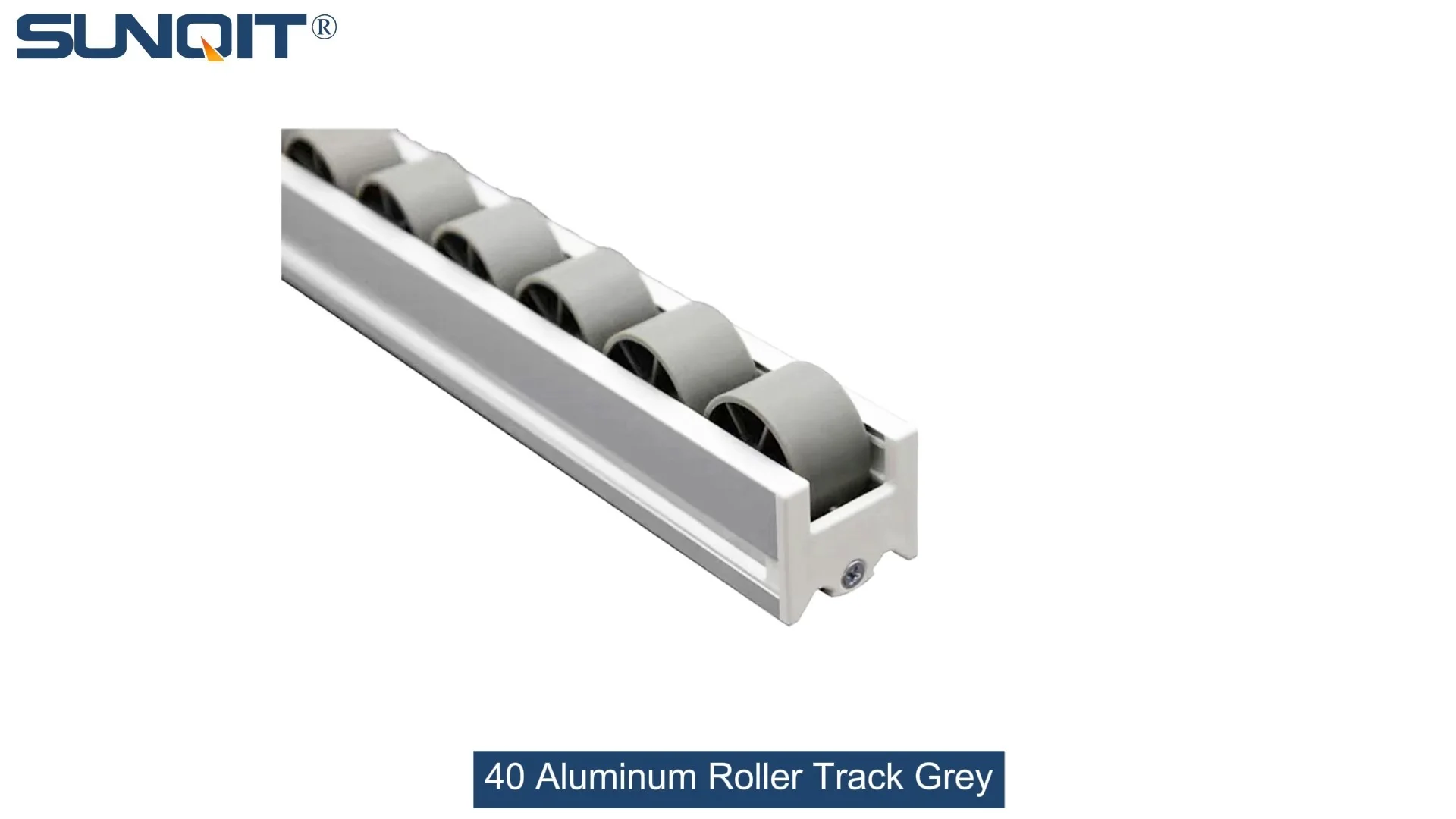
40 Aluminum Roller Track Grey
Durable and smooth-running modular roller rails. The system is fully assembled. The roller rail profile contains plastic rollers mounted on steel axles. Aluminum frame with plastic wheel make it anti corrosion,and material convey more smooth.
In the fast-paced world of manufacturing and material handling, every component of your workflow matters. From the smallest caster wheel to the largest conveyor system, each part plays a role in keeping operations running smoothly. One component that often flies under the radar but is critical to efficiency is the roller track. Specifically, the 40 Aluminum Roller Track Grey has become a go-to choice for many facilities, thanks to its durability, versatility, and sleek design. But here's the question that keeps operations managers up at night: How much weight can it actually handle?
In this guide, we're diving deep into the load capacity of the 40 Aluminum Roller Track Grey. We'll break down the factors that influence its strength, share real-world data, and help you determine if it's the right fit for your needs. Whether you're setting up a new lean system on the factory floor or optimizing an existing production line, understanding this track's limits is key to avoiding costly downtime, damaged goods, or even safety hazards. Let's get started.
What Exactly Is 40 Aluminum Roller Track Grey?
Before we talk about weight limits, let's make sure we're all on the same page about what the 40 Aluminum Roller Track Grey is. At its core, it's a type of material handling track designed to move goods—think bins, boxes, or components—from one point to another with minimal effort. The "40" in its name refers to its width (typically 40mm), making it a medium-sized option that balances space efficiency with load-bearing capability. The "aluminum" speaks to its construction material, which is lightweight yet strong, and "grey" is its standard color, a neutral tone that blends into most industrial environments.
What sets this track apart? Unlike heavier steel tracks or flimsier plastic alternatives, aluminum offers a sweet spot of durability and maneuverability. It's resistant to rust, which is a big plus in environments where moisture might be present, and its smooth surface ensures that items glide along without getting stuck. The track is often paired with roller track accessories like placon mounts, connectors, and side guides to customize its length, angle, and stability—more on those later.
You'll find this track in a variety of settings: automotive assembly lines, electronics manufacturing plants, warehouses, and even retail distribution centers. It's especially popular in production assemble areas where parts need to flow seamlessly between workstations. For example, imagine a line where workers assemble small appliances—each component, from the motor to the outer casing, might travel along a 40 Aluminum Roller Track Grey to reach the next station. Its reliability makes it a cornerstone of modern lean manufacturing, where minimizing waste (including time wasted on jams or breakdowns) is paramount.
Load Capacity 101: What Does "Capacity" Even Mean?
When we talk about "load capacity," we're referring to the maximum weight that the track can safely support without deforming, breaking, or failing. But here's the catch: load capacity isn't a one-size-fits-all number. It can vary based on how the track is installed, what it's carrying, and even the environment it's in. For example, a track might handle 500 lbs when items are evenly distributed but only 300 lbs if all the weight is concentrated in one spot. That's why understanding the nuances is so important.
Load capacity is typically measured in two ways: static load and dynamic load . Static load is the weight the track can hold when items are stationary—like if a box is left sitting on the track overnight. Dynamic load, on the other hand, is the weight it can handle when items are in motion. Since movement adds stress (think vibrations, sudden stops, or uneven distribution as items slide), dynamic capacity is usually lower than static capacity. For the 40 Aluminum Roller Track Grey, both numbers matter, but dynamic load is often more critical for day-to-day operations.

Key Factors That Influence Load Capacity
Now, let's get into the nitty-gritty: what makes the 40 Aluminum Roller Track Grey stronger or weaker? Several factors come into play, and ignoring any of them could lead to overestimating its capabilities. Let's break them down one by one.
1. Aluminum Profile Quality and Thickness
The foundation of the track's strength is the aluminum profile itself. Not all aluminum is created equal. The 40 Aluminum Roller Track Grey is typically made from 6063-T5 aluminum, a common alloy known for its excellent strength-to-weight ratio and corrosion resistance. But within that category, the thickness of the aluminum walls matters. A track with 1.5mm thick walls will handle more weight than one with 1.0mm walls—simple as that. Manufacturers often list the wall thickness in their specs, so always check that first.
Another thing to consider is the extrusion process. High-quality aluminum profiles are extruded with precision, ensuring uniform thickness and no weak spots (like air bubbles or inconsistencies in the metal). Cheaper tracks might cut corners here, leading to uneven strength that's hard to predict. When in doubt, ask your supplier about the profile's certification—reputable suppliers will have test reports confirming the alloy and wall thickness.
2. Roller Design and Spacing
The rollers are the workhorses of the track—they're what actually come into contact with the items being moved. Their design, material, and spacing have a huge impact on load capacity. Let's start with material: most rollers on the 40 Aluminum Track are either plastic (nylon or polypropylene) or steel. Plastic rollers are lighter and quieter but have lower load limits, while steel rollers are heavier but can handle more weight. The 40mm track often uses a mix—plastic for lighter loads, steel for heavier ones—so check which type your track has.
Spacing is equally important. Rollers that are too far apart (say, 12 inches apart) will cause items to sag in between, putting extra stress on the track. Rollers that are too close together (3 inches apart) add unnecessary weight and cost without a significant boost in capacity. The sweet spot? For most applications, rollers spaced 6–8 inches apart provide the best balance of support and efficiency. For example, a box that's 24 inches long will rest on 3–4 rollers at that spacing, distributing its weight evenly across the track.
3. Installation and Support
Even the strongest track will fail if it's installed poorly. Imagine hanging a heavy picture frame with a single nail versus using a stud finder and mounting bracket—the difference in stability is night and day. The same logic applies here. The 40 Aluminum Roller Track Grey needs proper support to reach its maximum load capacity. That's where roller track accessories like placon mounts come in.
Placon mounts are the brackets that attach the track to a support structure (like an aluminum profile frame or a wall). There are different types: some are designed to mount flat on a profile, others at an angle, and some are "high" mounts that raise the track off the surface. The key is to use enough mounts and space them correctly. As a general rule, support mounts should be placed every 2–3 feet along the track's length. For longer tracks (10 feet or more), adding a center support bracket can prevent sagging in the middle, which is a common cause of reduced load capacity.
Another installation factor is the angle of the track. If the track is sloped (to use gravity for movement), steeper angles mean items move faster—but they also put more stress on the rollers and track. A 5° slope might be fine for light boxes, but a 10° slope with heavy loads could cause the track to bow over time. Always follow the manufacturer's guidelines for maximum slope based on load weight.
4. Environmental Conditions
You might not think about temperature or humidity affecting load capacity, but they do. Aluminum expands and contracts with temperature changes, which can loosen mounts or cause the track to warp if it's not installed with some flexibility. In very cold environments (below 32°F), plastic rollers can become brittle and crack under heavy loads. In hot, humid environments, metal components might corrode if not properly treated, weakening their structural integrity.
Dust and debris are another enemy. If the track's rollers get clogged with dirt, items won't move smoothly, leading to jams that strain the track. Regular cleaning (a quick wipe with a dry cloth or compressed air) can go a long way in preserving both performance and load capacity.

Real-World Load Capacity Data: What the Tests Say
Enough theory—let's talk numbers. To give you a concrete idea of what the 40 Aluminum Roller Track Grey can handle, we've compiled data from manufacturer tests and industry standards. Keep in mind that these are general guidelines; your specific track might vary based on the factors we discussed (wall thickness, roller type, installation, etc.). Always confirm with your supplier for exact specs.
| Track Configuration | Roller Type | Roller Spacing | Support Mount Spacing | Static Load Capacity (lbs) | Dynamic Load Capacity (lbs) |
|---|---|---|---|---|---|
| Standard 40mm Aluminum (1.2mm walls) | Plastic (nylon) | 6 inches | 2 feet | 300 | 200 |
| Heavy-Duty 40mm Aluminum (1.5mm walls) | Steel | 6 inches | 2 feet | 600 | 450 |
| Standard 40mm Aluminum (1.2mm walls) | Steel | 8 inches | 3 feet | 450 | 350 |
| Heavy-Duty 40mm Aluminum (1.5mm walls) | Steel | 6 inches | 1.5 feet | 750 | 550 |
*Data based on industry averages and manufacturer specifications. Always verify with your supplier for your specific track model.
Let's unpack this table. The "Standard" track with 1.2mm walls and plastic rollers maxes out at 300 lbs static (when items are sitting still) and 200 lbs dynamic (when moving). That's ideal for lightweight items like small electronics components or empty bins. Step up to the Heavy-Duty track with 1.5mm walls and steel rollers, and suddenly you're looking at 600 lbs static and 450 lbs dynamic—enough for heavier boxes or metal parts.
Notice how support mount spacing affects capacity: when mounts are closer (1.5 feet apart instead of 2 feet), the track can handle more weight because there's less sag between supports. That's why installation is so critical—skimping on mounts to save time or money will cost you in reduced load capacity.

How to Choose the Right Track for Your Load
Now that you know the numbers, how do you decide if the 40 Aluminum Roller Track Grey is right for your needs? Start by calculating the weight of the items you'll be moving. Be honest—don't just guess. Weigh a few representative items (including their packaging) to get an average. Then, add a 20% buffer. Why? Because items might be heavier than expected, or you might need to move multiple items at once. For example, if your average box weighs 200 lbs, a track with a dynamic capacity of 250 lbs (200 + 20%) would be safer than one with exactly 200 lbs.
Next, consider the frequency of use. If the track will be used occasionally (a few times a day), you might get away with a lower capacity. But if it's part of a high-speed production assemble line (items moving every minute), you need a track that can handle the constant stress. In that case, opt for the Heavy-Duty configuration with steel rollers and extra supports.
Don't forget about future growth. If you think you might need to move heavier items down the line, choose a track with a higher capacity now instead of replacing it later. The 40mm track is versatile, but if you anticipate loads over 600 lbs, you might need to step up to a wider track (like 60mm) or a steel alternative.
Common Mistakes to Avoid
Even with the best intentions, it's easy to make mistakes when selecting or installing the 40 Aluminum Roller Track Grey. Here are a few pitfalls to watch out for:
- Overestimating capacity: Just because the track says it can handle 450 lbs dynamic doesn't mean you should push it to 450 lbs every time. Consistently maxing out the track will wear it down faster.
- Ignoring roller type: Assuming all rollers are the same is a mistake. Plastic rollers are great for light, quiet loads, but steel is a must for heavy or sharp-edged items that could damage plastic.
- Skipping supports: "It's just a short track—how many mounts do I need?" Answer: More than you think. Even a 3-foot track needs at least two mounts (one at each end) to prevent sagging.
- Mixing and matching accessories: Using roller track accessories from different suppliers might save money, but they might not fit properly, leading to instability. Stick to accessories designed for your specific track.
Maintenance Tips to Keep Your Track Strong
Your 40 Aluminum Roller Track Grey is an investment—with proper care, it can last for years. Here's how to keep it in top shape:
Inspect regularly: Check for loose mounts, cracked rollers, or bent aluminum. Tighten any loose screws and replace damaged parts immediately—small issues can turn into big problems fast.
Clean rollers and tracks: Wipe down rollers with a damp cloth to remove dust and debris. For stubborn grime, use a mild detergent (avoid harsh chemicals that could damage plastic rollers).
Lubricate moving parts: Steel rollers and bearings might need occasional lubrication (use a light machine oil) to keep them rolling smoothly. Plastic rollers usually don't need lubrication—oil can attract dirt.
Adjust for temperature changes: If your facility experiences extreme temperature swings, check mounts seasonally. Aluminum expands in heat, so you might need to loosen screws slightly in summer and tighten them in winter.
Final Thoughts: Is the 40 Aluminum Roller Track Grey Right for You?
The 40 Aluminum Roller Track Grey is a versatile, reliable option for most material handling needs. With dynamic load capacities ranging from 200–550 lbs (depending on configuration), it's strong enough for small to medium-sized items and flexible enough to fit into tight spaces. Its aluminum construction makes it lightweight and rust-resistant, and its compatibility with roller track accessories means you can customize it to your exact workflow.
If you're running a lean system and need a track that balances performance and cost, this is it. Just remember: load capacity isn't set in stone. It depends on your specific setup, so take the time to calculate your needs, choose the right configuration, and install it properly. With a little care, your 40 Aluminum Roller Track Grey will keep your operations moving—literally—for years to come.
So, to circle back to the original question: How much weight can it handle? The answer is… it depends. But armed with the knowledge from this guide, you'll be able to make an informed decision that keeps your facility efficient, safe, and productive. Here's to smooth sailing (and rolling) on the factory floor!