- Company Articles
- Products and Technology
- Product knowledge
- Load Capacity Guide: Selecting Aluminum Workbench C for Your Tasks

Load Capacity Guide: Selecting Aluminum Workbench C for Your Tasks
Related Product
Aluminum Workbench C
aluminum-tube-workbench-is-more-flexible-and-durable,-compared-with-traditional-pe/abs-coated-steel-tube.-it-is-easy-to-assemble,-anti-corrosion,-rust-protection,-and-recycle-use-after-disassemble.
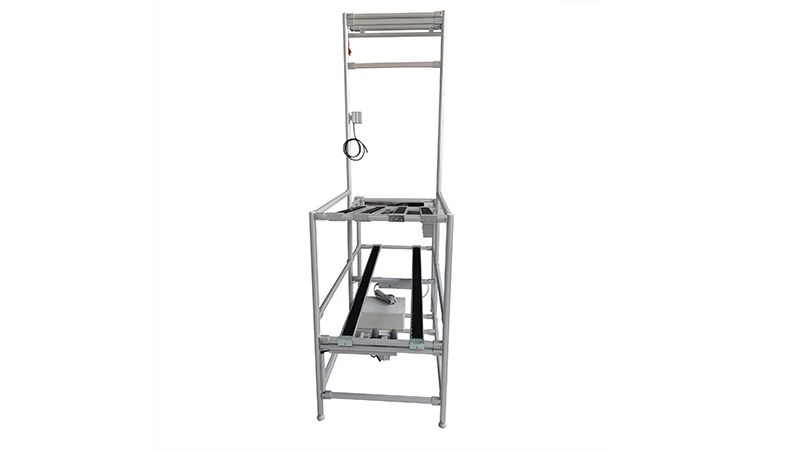
Walk into any busy workshop, manufacturing floor, or warehouse, and you'll notice a silent workhorse holding everything together: the workbench. It's where tools rest, components are assembled, and projects come to life. But what happens when that workhorse stumbles? A workbench that can't handle the weight of daily tasks—whether it's a 40kg tool chest, a stack of metal sheets, or a batch of electronic parts—becomes more than an inconvenience. It slows down workflows, risks damage to equipment, and even compromises safety. If you've ever found yourself eyeing a sagging shelf or hesitating to place a heavy load, you know the problem all too well: load capacity matters. A lot.
Enter the Aluminum Workbench C—a solution designed to tackle these exact challenges. Built with precision and durability in mind, this workbench isn't just another piece of equipment; it's a partner in productivity. But how do you know if it's the right fit for your tasks? This guide dives deep into the load capacity of Aluminum Workbench C, breaking down what makes it tick, how to calculate your needs, and why it stands out in a crowded market of workbenches. Whether you're running a small repair shop or managing a large-scale production line, by the end, you'll have the clarity to choose with confidence.
Why Load Capacity Isn't Just a Number
Before we jump into the specifics of Aluminum Workbench C, let's talk about why load capacity deserves your attention. It's easy to glance at a spec sheet, see "200kg capacity," and think, "That's more than enough." But load capacity is about more than static weight—it's about reliability, longevity, and adaptability. A workbench that's pushed beyond its limits might not collapse immediately, but over time, stress cracks in the frame, loose joints, or warped surfaces can turn a once-functional station into a liability.
Real-World Impact: Imagine a mid-sized electronics manufacturer where each workbench holds circuit boards, soldering irons, and testing equipment. If a workbench's load capacity is overestimated by just 50kg, repeated use could loosen the joints connecting its aluminum profile components. This leads to a wobbly surface, making precise soldering nearly impossible. The result? More defective products, frustrated technicians, and costly rework. Load capacity isn't just about "can it hold X kg?"—it's about "can it hold X kg, day in and day out, without skipping a beat?"
This is where Aluminum Workbench C shines. Unlike generic workbenches made from flimsy materials or one-size-fits-all designs, it's engineered with the demands of modern workplaces in mind. Let's start by unpacking what makes its load capacity reliable: the materials.
The Foundation: Aluminum Extrusion Profile and Load-Bearing Design
At the heart of Aluminum Workbench C is its construction: aluminum extrusion profile . This isn't your average aluminum tubing. Extruded aluminum profiles are created by forcing heated aluminum through a die, resulting in consistent, high-strength shapes with built-in structural integrity. For workbenches, this means a frame that resists bending and warping, even under heavy loads. But what sets Aluminum Workbench C apart is the specific grade and thickness of its aluminum extrusion profile—typically 6063-T5, a heat-treated alloy known for its balance of strength and lightweight properties. This alloy is widely used in industrial applications because it can handle both static and dynamic loads without compromising on durability.
But the profile alone isn't enough. How those profiles are connected matters just as much. Aluminum Workbench C uses precision-engineered aluminum profile accessories —think heavy-duty joints, brackets, and fasteners—to lock the frame together. Unlike cheaper workbenches that rely on plastic clips or weak welds, these accessories are designed to distribute weight evenly across the entire structure. For example, the internal rotary aluminum joints used in the frame allow for secure 90-degree connections between vertical and horizontal profiles, ensuring that weight isn't concentrated in one spot.
Let's break down the key design elements that contribute to its load capacity:
- Single Deck Structure: Aluminum Workbench C features a single, solid deck (often without casters as a standard, though casters can be added as an accessory). This design eliminates the weak points that come with multi-tiered shelves, focusing strength on a single, reinforced surface.
- Thick Gauge Profile: The main support beams use a 2.0mm wall thickness aluminum extrusion profile, thicker than the 1.5mm found in many entry-level aluminum workbenches. This extra thickness adds rigidity, especially when supporting uneven loads.
- Reinforced Corners: The corners of the frame are reinforced with gusset plates—small, triangular metal pieces that add stability where the vertical and horizontal profiles meet. This prevents the frame from "racking" (twisting) under heavy weight.
To put this in perspective: a standard wooden workbench might handle 150-200kg, but it's prone to warping with moisture and can splinter under impact. A steel workbench might hit 300kg, but it's heavy, hard to move, and susceptible to rust in humid environments. Aluminum Workbench C? It balances strength and practicality, with a standard load capacity of 300kg for static loads—enough to handle most industrial tasks without the downsides of wood or steel.

Aluminum Workbench C Load Capacity: What the Numbers Mean
So, Aluminum Workbench C is rated for 300kg. But what does "300kg capacity" actually entail? Let's clarify: this is the uniformly distributed static load (USL) rating. In plain terms, it's the maximum weight the workbench can safely hold when the load is spread evenly across the entire deck. If you place a 300kg weight in the center of the bench, it might sag slightly (though within safe limits), but if you spread that weight across the surface—say, multiple tools, boxes, or components—the bench will handle it with ease.
But what if your load isn't uniform? What if you need to clamp a 100kg vice to one corner, or stack a 150kg crate on one side? This is where dynamic load capacity comes into play. Aluminum Workbench C's design, with its reinforced corners and thick profiles, allows for some uneven loading, though it's always best to aim for balance. As a general rule, keep concentrated loads below 150kg in any single area to avoid stressing the frame.
To help visualize, let's compare Aluminum Workbench C with two common alternatives: the basic Aluminum Workbench A (entry-level, 1.5mm profile) and the heavy-duty Workbench E (double-deck, with casters). The table below breaks down their load capacities and key features:
| Workbench Model | Static Load Capacity (Uniform) | Material (Profile Thickness) | Key Features | Best For |
|---|---|---|---|---|
| Aluminum Workbench A | 150-200kg | Aluminum extrusion profile (1.5mm) | Lightweight, budget-friendly, basic accessories | Small workshops, light assembly (e.g., jewelry making, small electronics) |
| Aluminum Workbench C | 300kg | Aluminum extrusion profile (2.0mm) | Single deck, reinforced corners, heavy-duty joints | Medium to heavy industrial use (e.g., automotive repair, metalworking, warehouse packing) |
| Aluminum Workbench E | 250kg (without casters) | Aluminum extrusion profile (2.0mm) | Double deck, optional casters, modular shelves | Storage-heavy tasks (e.g., parts organization, multi-step assembly lines) |
Notice that Aluminum Workbench C outperforms Workbench A by 100kg and even edges out Workbench E (when casters are excluded) by 50kg. This is because its single-deck design focuses all the frame's strength on one surface, whereas Workbench E splits that strength between two shelves. For tasks where you need a single, robust surface—like mounting machinery or laying out large components—Aluminum Workbench C is the clear choice.

Calculating Your Load: How to Know If 300kg Is Enough
Now that you understand the "what" of Aluminum Workbench C's load capacity, let's get to the "how": how do you determine if 300kg is enough for your daily tasks? It starts with a simple inventory of what will live on your workbench—both permanently and temporarily.
Step 1: List All Static Loads – These are items that stay on the workbench most of the time. Examples include: toolboxes (20-50kg each), clamping devices (10-30kg), monitors or displays (5-15kg), and storage bins (15-40kg when full). Add these up to get your baseline static load.
Step 2: Add Temporary Loads – These are items that come and go: raw materials (e.g., 20kg sheets of aluminum), (e.g., a 30kg assembly in progress), or equipment brought in for specific tasks (e.g., a 40kg drill press). Even if these aren't on the bench all day, they contribute to peak load, so include the heaviest single temporary item.
Step 3: Factor in Safety Margin – Never max out a workbench's capacity. Aim for 70-80% of the rated load to account for unexpected stress (e.g., dropping a tool, uneven weight distribution). For Aluminum Workbench C, that means a safe working load of 210-240kg.
Example Calculation: Let's say your workshop needs a workbench for automotive repair. Static loads include a 45kg toolbox, a 15kg vice, and a 10kg monitor (total: 70kg). Temporary loads include a 60kg engine part and a 30kg battery (heaviest single item: 60kg). Total peak load: 70kg + 60kg = 130kg. With a safety margin, you'd need a workbench rated for at least 162.5kg (130kg / 0.8). Aluminum Workbench C's 300kg capacity leaves plenty of room to spare—even if you add more tools later.
What if your calculation exceeds 240kg? Don't worry—Aluminum Workbench C can be customized. Adding a second support beam along the length of the deck, upgrading to thicker profile accessories, or even bolting the workbench to the floor can increase its effective load capacity. For extreme cases (e.g., 400kg+), manufacturers often offer a "reinforced" version of Workbench C with 3.0mm profile walls and extra gussets.

Beyond Load Capacity: Integrating with Your Lean System
In today's fast-paced manufacturing and warehousing environments, a workbench isn't just about holding weight—it's about fitting into your lean system . Lean principles focus on minimizing waste, maximizing efficiency, and creating smooth workflows. Aluminum Workbench C is designed with this in mind, making it more than a static platform; it's a flexible tool that adapts to your processes.
Here's how it integrates with lean practices:
5S Compatibility: The clean, flat surface of Aluminum Workbench C is easy to organize—no cracks or crevices for debris to hide. Pair it with aluminum profile accessories like tool hooks, bin rails, or cable management clips, and you've got a workspace that supports the "Sort, Set in Order, Shine, Standardize, Sustain" pillars of 5S.
Ergonomics: A workbench that's too low or too high leads to fatigue and inefficiency. Aluminum Workbench C is height-adjustable (another benefit of its modular aluminum extrusion profile design), allowing you to set it to 80-90cm—the optimal height for most tasks. This reduces strain on workers' backs and shoulders, keeping them productive longer.
Adaptability: As your needs change, so can your workbench. Need to add a shelf? Use aluminum profile connectors to attach a second deck. Want to move it to a new location? Add locking casters (rated for 100kg each, so even with a 200kg load, the bench remains mobile). This adaptability prevents the waste of replacing a workbench that's no longer fit for purpose.
A lean system thrives on consistency, and Aluminum Workbench C delivers. Its uniform load capacity across all units means you can standardize workstations throughout your facility, reducing variability in performance. Whether it's on the assembly line, in the quality control area, or in the shipping department, each bench behaves the same way—no surprises, no inefficiencies.
Aluminum Workbench C vs. the Competition: Why It Stands Out
With so many workbenches on the market, why choose Aluminum Workbench C? Let's stack it against two common alternatives to see the difference:
1. Steel Workbenches
Steel is strong—there's no denying that. A heavy-duty steel workbench might hit 400-500kg capacity. But steel comes with trade-offs: it's heavy (often 80-100kg empty, making it hard to reposition), prone to rust in humid environments, and conducts heat and cold, making it uncomfortable to work on without a mat. Aluminum Workbench C, by contrast, weighs just 45-50kg empty, resists corrosion, and stays at room temperature—all while offering 300kg capacity, which is more than enough for most tasks.
2. Plastic Workbenches
Plastic workbenches are lightweight and affordable, but their load capacity tops out at 100-150kg. They're also prone to scratching and warping under heat (e.g., from a hot soldering iron). Aluminum Workbench C offers triple the capacity with none of the durability issues.
3. Other Aluminum Workbenches
Not all aluminum workbenches are created equal. Some cut corners with thin profiles, plastic joints, or flimsy decks. Aluminum Workbench C uses industrial-grade aluminum extrusion profile and metal accessories, ensuring it lasts for years—even in high-traffic environments. Its single-deck design also makes it easier to clean and maintain than multi-tiered models, which can trap dust and debris.
In short, Aluminum Workbench C strikes a rare balance: strength without the bulk, durability without the weight, and flexibility without the complexity. It's a workbench built for the realities of modern work.
Maintaining Load Capacity: Tips for Longevity
Even the strongest workbench needs a little care to keep performing at its best. Here's how to maintain Aluminum Workbench C's load capacity over time:
1. Tighten Joints Regularly – Aluminum profile accessories like bolts and joints can loosen with vibration (e.g., from heavy tools being placed down). Check them monthly and tighten with a hex key as needed. This prevents "play" in the frame, which can lead to uneven weight distribution.
2. Clean the Deck – Wipe down the deck with a mild detergent to remove oil, grease, or debris. A slippery surface can cause items to shift, increasing stress on the frame. Avoid abrasive cleaners that might scratch the aluminum finish (though minor scratches won't affect load capacity).
3. Inspect for Damage – Look for signs of stress: dents in the aluminum extrusion profile, cracks in the deck, or bent accessories. Even small dents can weaken the frame, so address them promptly (many suppliers offer replacement parts for individual components).
4. Avoid Overloading – Stick to the 70-80% safety margin. If you need to handle heavier loads, invest in reinforcements instead of pushing the bench beyond its limits.
5. Protect Against Impact – Use corner guards or edge bumpers if the workbench is near high-traffic areas (e.g., forklift paths). A hard impact can bend the frame, reducing load capacity.
With proper maintenance, Aluminum Workbench C will maintain its 300kg capacity for 10+ years—making it a cost-effective investment in the long run.
Final Thoughts: Aluminum Workbench C as Your Workhorse
At the end of the day, a workbench is more than a table. It's the foundation of your workspace—the place where ideas become reality. Aluminum Workbench C isn't just built to hold weight; it's built to hold your goals: efficiency, safety, and growth. With its 300kg load capacity, industrial-grade aluminum extrusion profile, and seamless integration with lean systems, it's a workbench that grows with your business.
So, whether you're assembling circuit boards, repairing engines, or packing orders, ask yourself: Is my current workbench keeping up? If the answer is no, it's time to upgrade to a solution that works as hard as you do. Aluminum Workbench C isn't just a purchase—it's a promise of reliability, day in and day out.
Ready to make the switch? Start by calculating your load needs, then reach out to a reputable aluminum profile supplier to discuss customization options. Your tools, your team, and your bottom line will thank you.