- Company Articles
- Products and Technology
- Product knowledge
- Load Capacity Guide: Three Way Aluminum Pipe Joints for Heavy-Duty Applications

Load Capacity Guide: Three Way Aluminum Pipe Joints for Heavy-Duty Applications
Related Product
Three Way Aluminum Pipe Joint
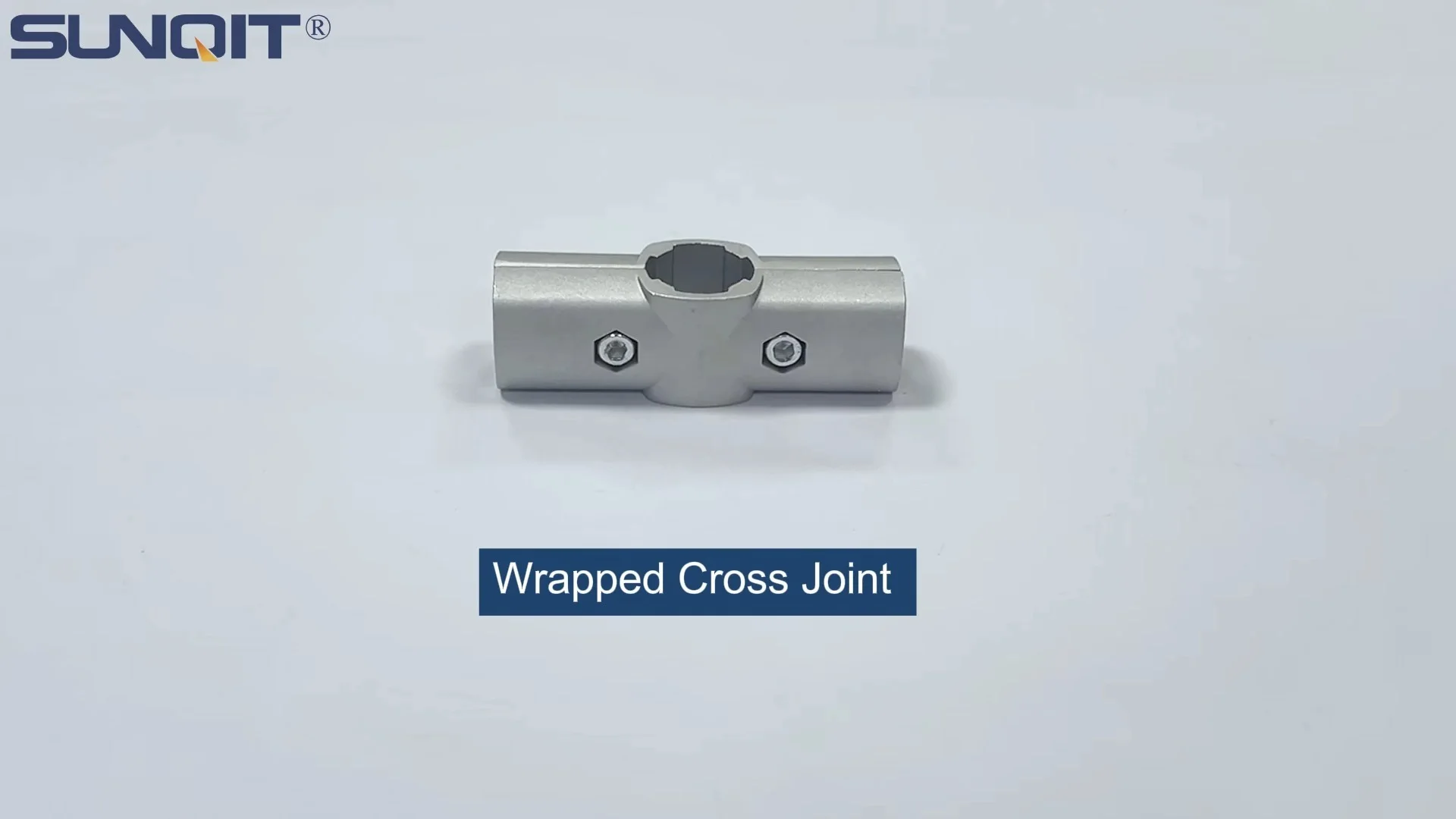
Aluminum 3 way pipe joint for 28mm aluminum pipe connection in 3 direction.
Every manufacturing floor, warehouse, or workshop has a silent backbone: the structures that hold everything together. From the workbench where precision assembly happens to the material rack that keeps inventory organized, these systems rely on one often-overlooked component: the joints that connect pipes and profiles. When it comes to heavy-duty applications—where loads can reach hundreds of pounds, and reliability is non-negotiable—choosing the right joint isn't just a matter of efficiency; it's a matter of safety, productivity, and peace of mind. Today, we're diving deep into three way aluminum pipe joints: what they are, how they work, and why they're the unsung heroes of lean systems everywhere.
What Are Three Way Aluminum Pipe Joints, Anyway?
Let's start with the basics. If you've ever walked through a factory or a well-organized workshop, you've probably seen structures made from aluminum pipes and profiles—think workbenches, conveyor systems, or material racks. These structures are built by connecting pipes at different angles, and when you need to split a pipe into three directions (say, a vertical post branching into two horizontal shelves), you need a three way joint. Simple enough, right? But not all joints are created equal.
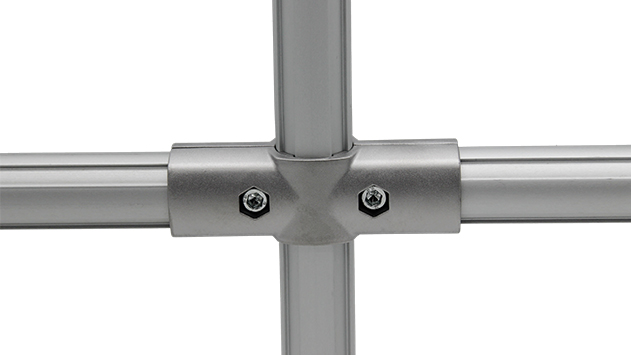
Three way aluminum pipe joints are specifically designed to connect aluminum pipes or aluminum lean pipes at three intersecting points, typically forming a T-shape or a Y-shape. Unlike plastic or steel joints, aluminum joints bring a unique blend of strength and lightness to the table. Aluminum is naturally resistant to corrosion, which means these joints hold up in humid warehouses or factories where moisture is a concern. They're also easy to assemble and disassemble—no welding required—making them a favorite for businesses that need to reconfigure their layouts quickly (hello, lean manufacturing!).
But here's the kicker: when we talk about "heavy-duty applications," we're not just talking about holding a few tools. We're talking about supporting stacks of raw materials, heavy machinery components, or even entire workstations where operators stand for hours. That's why load capacity—the maximum weight a joint can safely support—isn't just a spec on a datasheet. It's the line between a structure that hums along smoothly and one that fails when you need it most.
Why Aluminum? The Material That Makes the Difference
You might be wondering: Why aluminum? Why not steel or plastic? Let's break it down. Steel is strong, sure, but it's heavy. If you're building a mobile workstation or a turnover trolley, adding steel joints can make the whole structure cumbersome to move. Plastic joints are lightweight, but they lack the rigidity needed for heavy loads—over time, they can warp or crack under pressure. Aluminum, though? It's the sweet spot.
Aluminum lean pipes and their joints are made from high-grade aluminum alloys (often 6061-T6, a popular choice for structural applications). This alloy is heat-treated to boost its strength, making it nearly as strong as steel per pound but with a fraction of the weight. That means you can build sturdier structures without sacrificing maneuverability. Plus, aluminum's natural oxide layer acts as a barrier against rust, so you don't have to worry about joints corroding in damp environments. For businesses that deal with electronics or sensitive components, some aluminum joints even come with ESD (electrostatic discharge) coatings—though we'll circle back to that later.
Another advantage? Aluminum profiles, which are often used with these joints, have a T-slot design. These slots let you attach accessories like shelves, brackets, or conveyor rails without drilling holes, making customization a breeze. When paired with three way joints, aluminum profiles become the building blocks of almost any structure you can imagine—from a simple workbench to a complex flow rack system that moves materials from one production line to the next.
The Science of Load Capacity: What Determines How Much a Joint Can Hold?
Load capacity isn't just about how thick the metal is. It's a dance between design, material quality, and installation. Let's unpack the key factors that affect how much weight a three way aluminum pipe joint can handle.
1. Material Thickness and Alloy Grade
First, the basics: thicker aluminum means stronger joints. A joint made from 2mm-thick aluminum will almost always outperform one made from 1mm-thick aluminum, assuming the same alloy. But alloy grade matters too. As we mentioned earlier, 6061-T6 aluminum is a workhorse here. Its tensile strength (the maximum stress it can handle before breaking) is around 45,000 psi, which is more than enough for most heavy-duty applications. Cheaper alloys, on the other hand, might save you a few dollars upfront but could bend or deform under load—costing you way more in repairs later.
2. Joint Design: It's All in the Details
You could have the strongest aluminum in the world, but if the joint's design is flawed, it won't matter. Let's talk about what makes a well-designed three way joint. Look for joints with reinforced stress points—areas where the three pipes meet. These are the spots that take the most pressure, so extra material here (think: thicker walls or gussets) can significantly boost load capacity.
Another design feature to watch for is the connection mechanism. Most three way aluminum joints use set screws or clamping bolts to secure the pipes. The more contact points the joint has with the pipe, the better it distributes weight. For example, a joint with two set screws per pipe (instead of one) will grip the pipe tighter, reducing the risk of slippage under heavy loads. Some joints even have internal ridges or teeth that bite into the aluminum pipe, creating a mechanical lock that's far more reliable than friction alone.
3. Installation: Even the Best Joints Fail If Installed Wrong
Here's a truth no supplier wants to admit: even a top-of-the-line three way joint can fail if it's not installed properly. Over-tightening set screws can strip the threads or warp the pipe, weakening the connection. Under-tightening? The joint will loosen over time, and before you know it, your shelf is sagging. That's why it's crucial to follow the manufacturer's torque specifications—yes, even for "simple" joints.
Also, consider the pipe itself. If you're using a thin-walled aluminum pipe with a heavy-duty joint, you're creating a weak link. The joint might be rated for 500 lbs, but if the pipe bends under 300 lbs, the whole structure fails. Always match the joint's load capacity to the pipe's rating—think of it as a team effort.

Load Capacity 101: Static vs. Dynamic Loads
Before we dive into numbers, let's clarify two key terms: static load and dynamic load. Static load is the weight of an object that's not moving—like a stack of boxes sitting on a shelf. Dynamic load is the weight of an object that's in motion—think of a pallet being slid onto a conveyor, or a trolley being pushed across the floor. Why does this matter? Because a joint that can handle 1,000 lbs statically might only handle 600 lbs dynamically. Movement adds stress—sudden jolts or vibrations can cause the joint to flex, and over time, that flexing leads to fatigue.
For example, let's say you're building a material rack B (3 row and 3 floor) to store heavy engine parts. The static load here is the weight of the parts sitting on the shelves. But when a forklift operator places a pallet on the top shelf, that's a dynamic load—the sudden impact of the pallet hitting the shelf can create a force greater than the parts' actual weight. A good three way joint will account for both, with a dynamic load rating that's a safe percentage of its static rating (usually 60-70%).
| Joint Type | Material | Static Load Capacity (lbs) | Dynamic Load Capacity (lbs) | Best For |
|---|---|---|---|---|
| Standard Three Way Aluminum Joint | 6061-T6 Aluminum | 800 | 500 | Workbenches, Light Material Racks |
| Reinforced Three Way Aluminum Joint | 6061-T6 Aluminum (Thickened Walls) | 1,200 | 800 | Heavy Material Racks, Conveyor Supports |
| ESD-Compliant Three Way Joint | 6061-T6 Aluminum (ESD Coating) | 700 | 450 | Electronics Assembly Workstations, ESD Workbenches |
| Stainless Steel Three Way Joint* | 304 Stainless Steel | 1,500 | 1,000 | Corrosive Environments, Ultra-Heavy Loads |
*Stainless steel joints are included for comparison; aluminum remains the preferred choice for most applications due to weight and cost.

Real-World Applications: Where Three Way Joints Shine
Let's get practical. Where do three way aluminum pipe joints actually get used? The answer is: almost everywhere in a lean system. Here are a few scenarios where load capacity matters most:
1. Workbenches: The Heart of the Workshop
A workbench isn't just a table. It's where products are assembled, inspected, and packaged. If you're a manufacturer building heavy machinery, your workbench might need to support a 500-lb engine block while an operator works on it. A flimsy joint here could lead to the bench wobbling, making precise work impossible—or worse, the block tipping over. Three way joints are used to build the frame of the workbench, connecting the legs to the tabletop supports and adding shelves for tools. Look for workbench E (single deck-without caster) models, which often use three way joints to create a stable, stationary workspace.
2. Material Racks: Storing More, Safely
Material racks, like the material rack B (3 row and 3 floor), are workhorses in warehouses. They store everything from raw materials to finished goods, and they're often stacked high to save space. Each shelf in that rack is supported by three way joints connecting the vertical posts to the horizontal beams. If a joint fails on the bottom shelf, the entire rack could collapse, taking down everything above it. That's why choosing a reinforced three way joint with a static load capacity of at least 1,000 lbs per shelf is non-negotiable for heavy items like metal sheets or automotive parts.
3. Conveyor Systems: Moving Loads Without a Hitch
Conveyors are all about movement, which means dynamic load capacity is king here. Roller tracks—like the 40 steel roller track or 38 aluminum roller track—rely on three way joints to connect the track sections to the support frames. When a heavy box slides down the roller track, the joints absorb the impact. A joint with a low dynamic load rating might loosen over time, causing the track to sag and boxes to get stuck. That's a recipe for production delays (and frustrated operators).
How to Choose the Right Three Way Aluminum Pipe Joint
So, you're ready to buy three way aluminum pipe joints. How do you pick the right one? Here's a step-by-step guide to avoid buyer's remorse:
Step 1: Know Your Load
Start by calculating the maximum weight your structure will need to support. Be honest—err on the side of overestimating. If you're building a shelf for 50-lb boxes and you plan to stack 10 boxes, that's 500 lbs. But add in the weight of the shelf itself and any dynamic impacts (like boxes being dropped), and you might need a joint rated for 700 lbs or more. Write this number down—it's your baseline.
Step 2: Check the Material and Design
Look for joints made from 6061-T6 aluminum—that's the industry standard for structural applications. Avoid "generic" aluminum joints; they might be cheaper, but they're often made from lower-grade alloys that fatigue quickly. Check for reinforced stress points and multiple set screws per pipe connection. If the joint feels flimsy in your hand (yes, you can test this!), it's probably not up to heavy-duty work.
Step 3: Match the Joint to the Pipe
Remember: the joint is only as strong as the pipe it's connected to. If you're using a basic aluminum tube with a wall thickness of 1.2mm, don't pair it with a joint rated for 1,000 lbs. The pipe will bend before the joint fails. Most suppliers list recommended pipe sizes for their joints—follow those guidelines.
Step 4: Ask About Testing
Reputable suppliers test their joints under real-world conditions. Ask for test reports or certifications that show the joint's load capacity has been verified. If a supplier can't provide this, walk away. You don't want to be the one testing their product's limits.
Step 5: Think About the Future
Will you need to reconfigure your structure later? Aluminum joints are reusable, but some designs are easier to disassemble than others. Look for joints with quick-release levers or easy-to-access set screws if flexibility is important to you. And if you're in an industry where regulations change (like food processing or pharmaceuticals), consider joints that are easy to clean—smooth surfaces without crevices where bacteria can hide.
Maintenance: Keeping Your Joints Strong for the Long Haul
You've installed your three way aluminum pipe joints—now what? Like any part of your equipment, they need a little TLC to stay strong. Here's how to keep them in top shape:
- Inspect regularly: Once a month, walk around your structures and check for loose joints. A quick tug on the pipes will tell you if a joint is slipping. Tighten set screws with a torque wrench (again, follow the manufacturer's specs—over-tightening is just as bad as under-tightening).
- Clean away corrosion: Aluminum resists rust, but it can develop a white, powdery film called oxidation if exposed to salt or chemicals. Wipe it off with a damp cloth and mild soap—avoid abrasive cleaners that scratch the surface (scratches create weak points).
- Lubricate moving parts: If your joint has rotating components (like internal rotary aluminum joints), a drop of machine oil every few months will keep them moving smoothly. Avoid WD-40—it's a solvent, not a lubricant, and can attract dust.
- replace worn parts: Set screws can wear down over time, especially if they're tightened and loosened frequently. Keep spares on hand, and replace any screws that look stripped or damaged.
Troubleshooting: What to Do When Things Go Wrong
Even with the best maintenance, problems can pop up. Here are common issues and how to fix them:
Problem: Sagging Shelves or Wobbly Workbenches
Cause: Loose joints or under-rated load capacity. Solution: Tighten all set screws. If the sagging continues, check if the joint's load rating matches the weight on the shelf. You might need to upgrade to a reinforced joint or add extra supports.
Problem: Pipes Slipping Out of Joints
Cause: Under-tightened set screws or smooth pipe surfaces. Solution: Tighten set screws to the recommended torque. If the pipes still slip, try using pipe joint compound (a paste that increases friction) or switch to pipes with a textured surface.
Problem: Corrosion on Joints
Cause: Exposure to moisture, salt, or chemicals. Solution: Clean the joint with soap and water, then apply a thin coat of clear aluminum sealant to protect the surface. If corrosion is severe, replace the joint—it's not worth risking failure.
Final Thoughts: Investing in Strength, Investing in Peace of Mind
At the end of the day, three way aluminum pipe joints might seem like small parts, but they're the foundation of your lean system. They keep your workbenches stable, your material racks upright, and your conveyors moving. Choosing the right joint—one with the right load capacity, material, and design—isn't just a purchase; it's an investment in your team's safety and your business's efficiency.
So, the next time you're shopping for aluminum pipe accessories, don't just look at the price tag. Think about the operator who relies on that workbench to assemble a product. Think about the warehouse manager who needs to trust that the material rack won't collapse during a busy shift. Think about the peace of mind that comes with knowing your structures are built to last.
Heavy-duty applications demand heavy-duty solutions. And when it comes to three way joints, aluminum isn't just a choice—it's the smart choice. Strong, light, and reliable, it's the material that keeps your business moving forward, one joint at a time.