- Company Articles
- Products and Technology
- Product knowledge
- Load Capacity of 40 Steel Roller Track Yellow: What You Need to Know

Load Capacity of 40 Steel Roller Track Yellow: What You Need to Know
Related Product
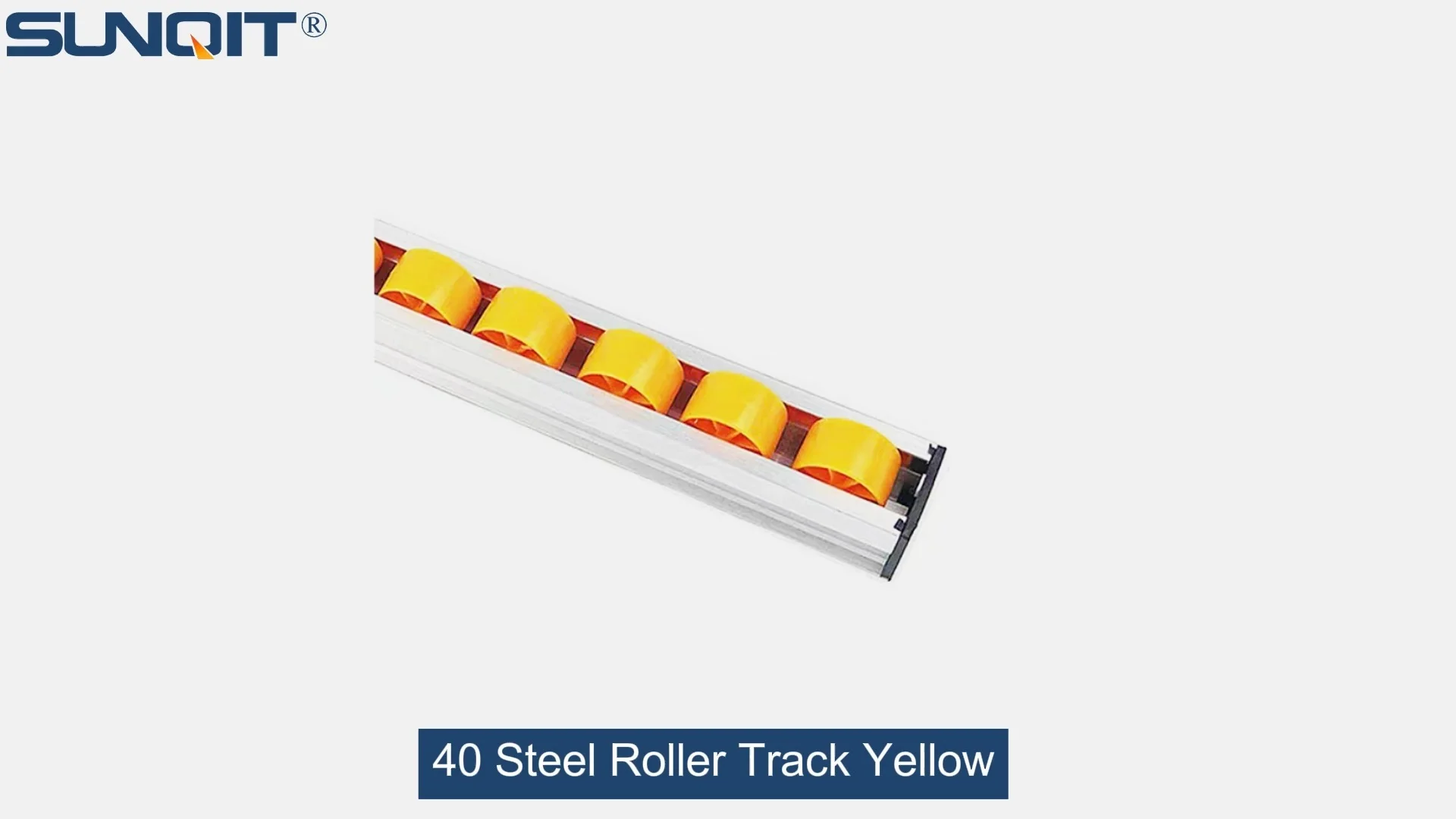
40 Steel Roller Track Yellow
The roller track can be installed with multiple accessories to create different slopes and configurations of flow racks.All steel conveyor 40 roller track accessories are engineered to perfectly fit the sliding rail.
Think about a busy assembly line where parts glide smoothly from one station to the next, or a warehouse where bins of components slide down a rack right into a worker's hands—these moments of seamless efficiency don't happen by accident. Behind them are small but critical components like the 40 Steel Roller Track Yellow, a workhorse that keeps materials moving and operations running. But here's the thing: if you don't understand its load capacity, you could be setting yourself up for unexpected breakdowns, safety hazards, or even costly delays. So, let's dive deep into everything you need to know about the load capacity of this essential roller track—from key factors that influence it to real-world applications and maintenance tips.
What Is the 40 Steel Roller Track Yellow?
The 40 Steel Roller Track Yellow is a versatile, durable component designed for material handling in manufacturing, warehousing, and logistics. As the name suggests, it features a steel frame with yellow-coated rollers—this coating isn't just for aesthetics; it provides corrosion resistance and helps the track stand up to harsh industrial environments. The "40" refers to the standard width or roller size (depending on the specific model), making it compatible with a wide range of bins, boxes, and parts used in industries like 3C assembly, automotive, and medical device manufacturing.
Key design features of this track include:
Key Factors That Affect Load Capacity
Load capacity isn't a one-size-fits-all number for the 40 Steel Roller Track Yellow. It depends on several critical factors, each of which can impact how much weight the track can safely support. Let's break them down:
1. Material Quality
The quality of the steel frame and yellow rollers directly affects load capacity. A thicker steel frame (e.g., 1.5mm or 2.0mm thickness) can support heavier loads than a thinner one. The yellow plastic rollers must be made from high-quality, impact-resistant material to avoid cracking under pressure. For example, if you're using the track in a conveyor system for heavy automotive parts, you'll want a frame with a higher steel thickness to ensure durability.
2. Roller Spacing
Roller spacing refers to the distance between each yellow roller on the track. Closer spacing means more rollers are supporting the load, which increases the track's capacity. Conversely, wider spacing reduces the number of contact points, lowering the maximum weight the track can handle. For instance, a track with 50mm roller spacing can support more weight than one with 100mm spacing.
3. Installation Method
Even the strongest track will fail if installed incorrectly. Proper alignment of the track sections is crucial—misaligned tracks can cause loads to jam or put extra stress on certain rollers, reducing overall capacity. Using the right connectors (like roller track placon mount for rail connection or roller track placon mount brackets) ensures the track is securely fastened to the frame or workbench, preventing shifting during use.
4. Environmental Conditions
Industrial environments can be tough on roller tracks. Extreme temperatures (either too hot or too cold) can affect the yellow plastic rollers—high heat may soften the plastic, while cold may make it brittle. Humidity or exposure to chemicals can corrode the steel frame if the coating is damaged. To maintain load capacity, it's important to use the track in environments that match its design specifications.
5. Usage Pattern
The way you use the track also matters. Static load capacity (when the load is sitting still) is usually higher than dynamic load capacity (when the load is moving). For example, if you're using the track in a flow rack where bins slide down, you need to consider the dynamic load capacity to ensure the track can handle the movement without breaking. Additionally, frequent use or sudden impacts (like dropping heavy bins onto the track) can reduce its lifespan and load capacity over time.

How to Calculate Load Capacity for 40 Steel Roller Track Yellow
Calculating the load capacity of the 40 Steel Roller Track Yellow starts with checking the manufacturer's specifications. Most manufacturers provide a data sheet with static and dynamic load capacities for different roller spacings. However, you can also estimate it by considering the factors above. Here's a simple guide:
| Roller Spacing (mm) | Static Load Capacity (kg/m) | Dynamic Load Capacity (kg/m) | Recommended Application |
|---|---|---|---|
| 50 | 300 | 250 | Heavy automotive parts, large bins |
| 75 | 250 | 200 | 3C assembly components, medium bins |
| 100 | 200 | 150 | Light warehouse items, small boxes |
| 125 | 150 | 120 | Electronic parts, tiny components |

Real-World Applications of 40 Steel Roller Track Yellow
The 40 Steel Roller Track Yellow is used in a variety of applications across industries. Let's look at some common ones:
1. Flow Racks
Flow racks are a staple in warehouses and distribution centers, and the 40 Steel Roller Track Yellow is often the backbone of these systems. Bins of components slide down the track due to gravity, right into the hands of pickers. For example, in a 3C assembly warehouse, flow racks with this track are used to store small parts like screws, connectors, and circuit boards. The dynamic load capacity of the track ensures that bins slide smoothly without jamming, even when the rack is fully loaded.
2. Conveyors
Conveyors are essential for moving parts between stations in assembly lines. The 40 Steel Roller Track Yellow is integrated into conveyor systems to support and move parts like automotive components, medical devices, or consumer electronics. In an automotive assembly line, this track might be used to move engine parts from the storage area to the assembly station. The static load capacity is important here because parts are often stored on the conveyor temporarily before moving to the next step.
3. Lean Pipe Workbenches
Lean pipe workbenches are designed for efficiency and flexibility, and the 40 Steel Roller Track Yellow is often added to these workbenches to create a material handling station. For example, in a medical device manufacturing facility, a lean pipe workbench with this track allows workers to slide bins of parts directly onto their workspace, reducing the time spent reaching for materials. The track's load capacity ensures that the workbench can handle the weight of the bins without collapsing.
4. Custom Lean Solutions
Many industries require custom material handling solutions, and the 40 Steel Roller Track Yellow is a key component in these. For instance, a 3C assembly plant might need a custom flow rack system to handle specific-sized bins. The track's compatibility with various connectors and its adjustable load capacity make it ideal for these custom lean solutions. Manufacturers can design systems that fit the exact needs of the plant, ensuring maximum efficiency and productivity.

Common Mistakes to Avoid When Using 40 Steel Roller Track Yellow
Even with the best track, there are common mistakes that can reduce its load capacity or lead to failure. Here are some to watch out for:
Maintenance Tips to Preserve Load Capacity
Proper maintenance is key to preserving the load capacity of the 40 Steel Roller Track Yellow. Here are some tips to keep it in top shape:
Why Choose 40 Steel Roller Track Yellow for Your Lean System?
The 40 Steel Roller Track Yellow is more than just a component—it's an investment in efficiency and reliability. Its durability, versatility, and adjustable load capacity make it ideal for lean systems, where every component must contribute to continuous improvement. Whether you're using it in a flow rack, conveyor, or lean pipe workbench, this track helps reduce waste, improve productivity, and keep operations running smoothly.
Moreover, it aligns with the lean principles of reusability and adaptability. You can easily adjust the track's spacing or reconfigure it to fit new applications, making it a cost-effective solution for growing businesses. For example, if your 3C assembly plant expands to produce larger parts, you can adjust the roller spacing to increase the track's load capacity, instead of buying a new track.
Conclusion
The 40 Steel Roller Track Yellow is an essential component for any material handling system, but understanding its load capacity is crucial to getting the most out of it. By considering factors like material quality, roller spacing, installation method, and environment, you can ensure that the track supports your operations safely and efficiently. Whether you're using it in a flow rack, conveyor, lean pipe workbench, or custom lean solution, this track will help you achieve the seamless efficiency that every business strives for. Remember to follow maintenance tips to preserve its load capacity and avoid common mistakes that can lead to failure. With the right knowledge and care, the 40 Steel Roller Track Yellow will be a reliable workhorse for your operations for years to come.