- Company Articles
- Products and Technology
- Product knowledge
- Load Capacity of Anti-Slip Adjustable Leveling Feet: What You Need to Know

Load Capacity of Anti-Slip Adjustable Leveling Feet: What You Need to Know
Related Product
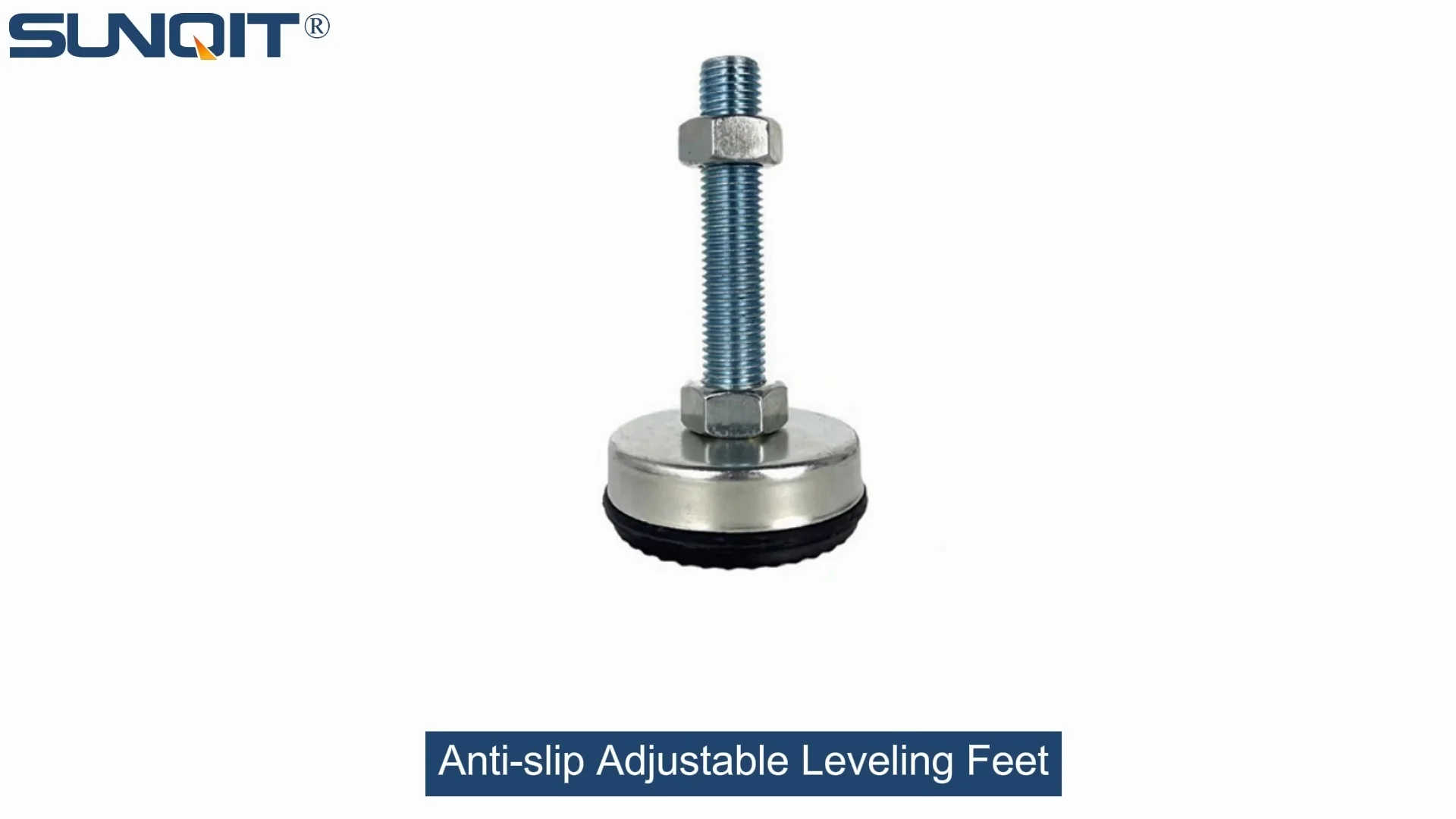
Anti-slip Adjustable Leveling Feet
Anti-slip Adjustable Leveling Feet are designed to keep machines level when placed on uneven or sloped ground, the rubber base will prevent product slip during work.
Walk into any busy workshop, manufacturing plant, or even a small garage, and you'll likely spot a familiar workhorse: the workbench. It's where ideas take shape, parts get assembled, and precision matters most. But have you ever stopped to think about what keeps that workbench steady, even when loaded with heavy tools, raw materials, or delicate components? Chances are, it's a set of unassuming but critical components: anti-slip adjustable leveling feet. These small but mighty parts play a huge role in ensuring stability, safety, and efficiency—especially when it comes to load capacity. In this article, we'll dive deep into everything you need to know about the load capacity of these essential tools, from what they are and why they matter to how to choose the right ones for your needs.
What Are Anti-Slip Adjustable Leveling Feet, Anyway?
Before we get into load capacity, let's make sure we're all on the same page about what anti-slip adjustable leveling feet actually are. Think of them as the "feet" of your workbench, machine, or equipment. They're typically made of durable materials like steel, plastic, or rubber, with a threaded stem that screws into the base of the equipment. The "adjustable" part means you can twist the foot up or down to level the equipment on uneven floors—no more wobbly tables or sloping work surfaces. The "anti-slip" feature, usually a rubber or textured base, prevents the equipment from sliding around, even when vibrations or sudden movements occur.
These feet aren't just for workbenches, though. You'll find them on everything from conveyor systems and material racks to laboratory equipment and industrial machinery. In fact, if you've ever used a lean pipe workbench—those flexible, modular workstations common in lean manufacturing setups—you've probably relied on leveling feet to keep the entire structure stable, even as you reconfigure it for different tasks.
Why Load Capacity Matters More Than You Think
Let's start with a scenario: Imagine a small electronics manufacturer that just invested in a new aluminum profile workbench. They load it up with a soldering station, a batch of circuit boards, and a tool chest weighing around 300 lbs. The workbench feels steady at first, but after a few weeks, they notice it's starting to wobble. Upon closer inspection, they find the leveling feet are bending under the weight. A few more weeks, and one foot snaps entirely, causing the workbench to tilt and damaging the circuit boards. Ouch. That's a costly mistake—one that could have been avoided by paying attention to load capacity.
Load capacity refers to the maximum weight a single leveling foot (or set of feet) can support without failing. It's not just about "can it hold the weight?"—it's about "can it hold the weight safely, over time, without deforming, breaking, or losing stability?" Choosing a leveling foot with insufficient load capacity is like putting a flimsy ladder under a heavy box: sooner or later, something's going to give. And the consequences aren't just about equipment damage; they can lead to workplace accidents, injuries, or costly downtime.
On the flip side, choosing a leveling foot with too high a load capacity isn't a problem, but it might be overkill. Why spend extra money on a foot rated for 1000 lbs if your workbench only needs to support 200 lbs? Balancing load capacity with practical needs is key to getting the most value and safety.

Factors That Affect Load Capacity
Load capacity isn't a one-size-fits-all number. It depends on several factors, each of which plays a role in how much weight a leveling foot can handle. Let's break them down:
1. Material Quality and Design
The materials used in the leveling foot make a big difference. Steel feet, for example, are generally stronger than plastic ones and can handle higher loads. But even within steel, the thickness of the stem, the design of the base plate, and the quality of the threading matter. A foot with a thin, cheap steel stem might bend under heavy weight, while a thick, reinforced stem will stay strong. The base plate (the part that touches the floor) also plays a role: a larger base distributes weight more evenly, reducing stress on the foot itself.
2. Thread Strength
Remember that threaded stem we mentioned earlier? It's not just for adjustment—it's also a critical load-bearing component. If the threads are weak or poorly cut, they might strip when the foot is under heavy load, causing the foot to sink or the equipment to become unstable. High-quality leveling feet use precision threading and durable materials (like hardened steel) to ensure the stem can handle both the weight and the stress of adjustment.
3. Anti-Slip Pad Material
While the anti-slip pad itself doesn't directly affect load capacity, it can impact how the weight is distributed. A soft, low-quality rubber pad might compress too much under heavy weight, reducing stability. A dense, high-friction rubber pad, on the other hand, will maintain its shape and grip, ensuring the foot doesn't shift—even when the load is unevenly distributed.
4. Number of Feet per Equipment
Load capacity is often listed per foot, but you need to consider how many feet your equipment has. For example, a workbench with four leveling feet will divide the total weight among all four. So if your workbench weighs 400 lbs (including tools and materials), each foot needs to support at least 100 lbs (400 lbs ÷ 4 feet). But here's the catch: you should always add a safety margin. Most experts recommend a 20-50% safety factor, meaning you'd choose feet rated for 120-150 lbs each in this case. Why? Because loads aren't always evenly distributed—maybe you set a heavy tool on one corner, or the floor isn't perfectly level, putting extra stress on one foot.

How to Determine the Right Load Capacity for Your Needs
Okay, so load capacity is important. But how do you figure out what you need? Let's walk through the steps:
Step 1: Calculate the Total Weight of Your Equipment and Load
Start by adding up all the weight that will be on the equipment. This includes the weight of the equipment itself (e.g., the workbench frame, aluminum profile structure) plus any tools, materials, or products that will be placed on it. Be thorough—don't forget things like toolboxes, power tools, or even operators who might stand or sit on the equipment (though that's less common with workbenches).
Example: A lean pipe workbench weighs 150 lbs. The manufacturer plans to place a 100 lbs tool chest, a 50 lbs soldering station, and up to 200 lbs of raw materials on it. Total weight = 150 + 100 + 50 + 200 = 500 lbs.
Step 2: Determine the Number of Leveling Feet
Most equipment has 4 leveling feet (one at each corner), but some larger or heavier equipment might have more. Check the design of your equipment or workbench to see how many feet it uses.
Example: The lean pipe workbench has 4 leveling feet.
Step 3: Divide Total Weight by Number of Feet (and Add a Safety Margin)
Take the total weight and divide by the number of feet to get the minimum load capacity per foot. Then, multiply by a safety factor (we recommend 1.2 to 1.5, or 20-50%) to ensure you're covered for uneven loads or unexpected stress.
Example: Total weight = 500 lbs, 4 feet. Minimum per foot = 500 ÷ 4 = 125 lbs. With a 20% safety margin: 125 x 1.2 = 150 lbs. So each leveling foot should be rated for at least 150 lbs.
Step 4: Consider the Environment and Usage
Are there any factors that might increase the load or stress on the feet? For example:
- Vibrations: Equipment like compressors or motors can cause repeated stress on leveling feet, which might reduce their effective load capacity over time.
- Dynamic loads: If you're constantly adding or removing heavy items (like loading/unloading parts onto a material rack), the feet will experience sudden weight changes, which can be harder on them than static loads.
- Floor conditions: Uneven floors mean some feet will bear more weight than others. In this case, you might need a higher safety margin.
- Temperature extremes: Some materials (like plastic) can become brittle in cold temperatures or soft in hot ones, affecting load capacity. If your workspace is unheated or has high temperatures, opt for metal feet or heat-resistant materials.

Real-World Load Capacity Examples: A Quick Reference Table
To make it easier, here's a table comparing common anti-slip adjustable leveling feet and their typical load capacities, along with common use cases. Remember, these are general guidelines—always check the manufacturer's specifications for exact ratings.
| Leveling Foot Type | Material | Load Capacity (per foot) | Common Use Cases |
|---|---|---|---|
| Small plastic leveling foot (1" base) | Plastic stem, rubber pad | 50-100 lbs | Light-duty shelving, small workbenches, lab equipment |
| Medium steel leveling foot (2" base) | Steel stem, rubber pad | 150-300 lbs | Standard workbenches, aluminum profile frames, small conveyors |
| Heavy-duty steel leveling foot (3" base) | Thick steel stem, reinforced rubber pad | 300-600 lbs | Lean pipe workbenches with heavy tools, material racks, industrial machinery |
| Extra-heavy-duty leveling foot (4"+ base) | Stainless steel stem, anti-slip rubber pad | 600-1000+ lbs | Large conveyor systems, heavy manufacturing equipment, automotive workstations |
Common Mistakes to Avoid When Choosing Leveling Feet
Even with the best intentions, it's easy to make mistakes when selecting leveling feet. Here are a few to watch out for:
Mistake #1: Underestimating the Total Load
It's tempting to guess the weight, but that's a risky move. Always take the time to calculate the actual weight of the equipment and everything that will go on it. A quick weigh-in with a scale (or checking the manufacturer's specs for each component) can save you from a lot of trouble later.
Mistake #2: Ignoring the Safety Margin
"The total weight is 400 lbs, and 4 feet means 100 lbs each—so I'll get 100 lbs feet." Big mistake. Without a safety margin, you're leaving no room for error. Uneven floors, dynamic loads, or unexpected weight additions can push the feet past their limit. Always add that 20-50% buffer.
Mistake #3: Choosing Based on Price Alone
We get it—budgets are tight. But skimping on leveling feet is false economy. A $5 foot with 100 lbs capacity might seem cheaper than a $10 foot with 200 lbs capacity, but if the $5 foot fails and damages $500 worth of parts, you've lost money. Invest in quality feet from reputable suppliers—your wallet (and safety record) will thank you.
Mistake #4: Forgetting About Compatibility
Not all leveling feet fit all equipment. The threaded stem size (e.g., M10, M12) needs to match the threaded hole in your workbench or equipment base. If the stem is too small, it might strip the threads; too large, and it won't fit at all. Check the equipment's specs for the correct thread size before buying.
Maintaining Your Leveling Feet: Keeping Them Strong for the Long Haul
Even the best leveling feet won't last forever if you neglect them. Here are some simple maintenance tips to keep them in top shape:
-
Inspect regularly:
Every month or so, check the feet for signs of wear, damage, or loosening. Look for bent stems, cracked rubber pads, or stripped threads. Tighten any loose feet—vibrations can cause them to unscrew over time.
-
Clean the threads:
Dirt, dust, and debris can get stuck in the threads, making it hard to adjust the feet. Wipe them down with a dry cloth and, if needed, use a small brush to clean out the threads.
-
replace worn pads:
The anti-slip pad is your first line of defense against sliding. If it's cracked, worn smooth, or coming loose, replace it. Many manufacturers sell replacement pads, so you don't have to buy a whole new foot.
-
Lubricate threads (if needed):
If the feet are hard to adjust, a drop of light machine oil on the threads can help. Just avoid over-lubricating, as it can attract dirt.
-
Re-level after moving equipment:
If you move the workbench or equipment, the leveling feet might shift. Take a minute to re-level it—this prevents uneven weight distribution and reduces stress on the feet.
Final Thoughts: Load Capacity Isn't Just a Number—It's a Safety Promise
At the end of the day, anti-slip adjustable leveling feet might seem like small, parts. But when it comes to keeping your workbench, equipment, and workspace safe and efficient, they're absolute workhorses. Load capacity isn't just a technical specification on a product sheet; it's a promise that your equipment will stay stable, your team will stay safe, and your operations will run smoothly—no wobbles, no breaks, no costly surprises.
So the next time you're setting up a new lean pipe workbench, upgrading an aluminum profile workstation, or just replacing old leveling feet, take a minute to calculate the load, check the ratings, and choose wisely. Your future self (and your bottom line) will be glad you did.