- Company Articles
- Products and Technology
- Product knowledge
- Load Capacity of Four Way Straight Lean Pipe Joint: Engineering & Design Insights

Load Capacity of Four Way Straight Lean Pipe Joint: Engineering & Design Insights
Related Product
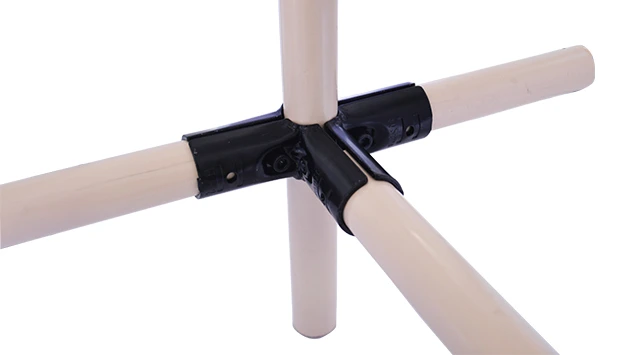
Four Way Straight Lean Pipe Joint
Four way lean pipe joint for 4 pcs 28MM lean pipe connection in straight angle, which used widely in workbench, flow rack, hand trolley frame connection.
In the fast-paced world of manufacturing, where every second and every square foot counts, lean systems have become the backbone of efficient operations. At the heart of these systems lies a network of modular components—lean pipes, joints, workbenches, and racks—that adapt to evolving production needs. Among these components, one small but mighty part often flies under the radar: the four way straight lean pipe joint. This unassuming connector is the silent architect of stability, enabling the creation of everything from lightweight workstations to heavy-duty material racks. But what determines its ability to bear weight? How do engineers ensure it doesn't buckle under pressure? Let's dive into the engineering and design insights that make the four way straight lean pipe joint a cornerstone of reliable lean systems.
What Is a Four Way Straight Lean Pipe Joint, Anyway?
Before we get into load capacity, let's start with the basics. A four way straight lean pipe joint is exactly what it sounds like: a connector designed to join four lean pipes at 90-degree angles, creating a straight, multi-directional framework. Picture it as a central hub with four equally spaced ports, each sized to fit standard lean pipes (often 28mm in diameter for traditional steel or aluminum variants). Unlike simpler two-way or three-way joints, this four-way design unlocks versatility—think of it as the "crossroads" where horizontal and vertical pipes meet to form sturdy structures like workbenches, flow racks, or turnover trolleys.
But why does this matter? In lean manufacturing, flexibility is key. A single four way joint can turn a basic lean pipe into a dynamic system that grows with your needs. Need to add a shelf to a workbench? Attach a pipe to one port. Expand a material rack to hold more inventory? Use another port. Its ability to distribute weight across four directions is what makes it indispensable—but only if its load capacity is up to the task.
Materials: The First Line of Defense Against Load
When it comes to load capacity, the material of the four way straight lean pipe joint is non-negotiable. Most joints are crafted from one of three materials: steel, aluminum, or reinforced plastic. Each brings its own strengths to the table, and the choice often depends on the application's demands.
Steel: The Heavyweight Champion
Steel joints are the workhorses of industrial settings. Made from high-carbon steel or stainless steel (for corrosion resistance), they excel in environments where heavy loads are the norm—think automotive assembly lines or warehouses storing metal parts. A typical steel four way joint can handle static loads of 500kg or more, thanks to steel's inherent tensile strength (around 400-500 MPa for carbon steel). But this strength comes with a tradeoff: weight. Steel joints add heft to structures, which can limit portability if casters are involved.
Aluminum: Lightweight and Nimble
Aluminum lean pipe joints have surged in popularity for applications where weight and corrosion resistance matter more than brute strength. Made from aluminum alloys (often 6063-T5, a common extrusion grade), they're about 30% lighter than steel equivalents while still offering impressive load capacity—typically 200-300kg for static loads. This makes them ideal for lean pipe workbenches in electronics manufacturing, where ESD (electrostatic discharge) protection is critical, or for mobile trolleys that need to be moved frequently. Aluminum's natural oxide layer also means it holds up well in humid or cleanroom environments, where rust could compromise product quality.
Reinforced Plastic: The Budget-Friendly Option
For light-duty tasks—like temporary storage racks or small parts assembly stations—reinforced plastic joints are a cost-effective choice. Made from materials like nylon or polypropylene mixed with glass fiber, they're lightweight and resistant to chemicals, but their load capacity tops out around 100-150kg. They're rarely used in heavy manufacturing but shine in low-stress settings where affordability and quick assembly are priorities.
So, which material is right for your four way joint? It boils down to this: if you're building a structure that will bear constant, heavy loads (like a material rack holding engine components), steel is your best bet. For lighter, more mobile setups (like an ESD workstation on casters), aluminum strikes the perfect balance. And for temporary or low-weight needs, plastic works—but don't push it beyond its limits.

Design Geometry: How Shape Dictates Strength
Material is only half the story. The shape and geometry of the four way straight lean pipe joint play an equally critical role in determining load capacity. Engineers don't just "wing it" when designing these joints—they use finite element analysis (FEA) to map stress points and ensure every curve and thickness is optimized for weight distribution.
Wall Thickness: The Unsung Hero of Durability
At first glance, two four way joints might look identical, but a closer inspection reveals a key difference: wall thickness. The thicker the walls of the joint's ports and central hub, the more weight it can withstand. A steel joint with 3mm thick walls, for example, will outperform one with 2mm walls when supporting heavy pipes. This is because thicker walls distribute stress more evenly, preventing cracks or deformation at the connection points where the lean pipe inserts into the joint.
Ribbing and Reinforcement: Adding Muscle to Weak Spots
Ever noticed those small, raised lines (ribs) on the exterior of some joints? Those aren't just for aesthetics. Ribbing is a design trick engineers use to strengthen areas prone to flexing, like the corners where the ports meet the central hub. By adding extra material here, they create a "web" that resists bending under load. Some high-end joints even feature internal reinforcement—think of it as a skeleton inside the hub that adds rigidity without adding excessive weight.
Port Design: A Tight Grip Matters
The way the joint's ports connect to the lean pipe also impacts load capacity. Most joints use a friction-fit design, where a setscrew or clamp tightens against the pipe to hold it in place. The angle of the port's interior taper, the depth of the pipe insertion, and the quality of the clamp all affect how securely the pipe is held. A poorly designed port might let the pipe slip under heavy load, reducing the joint's effective capacity. Conversely, a well-designed port with a deep insertion depth (at least 30mm) and a serrated clamp surface creates a grip strong enough to withstand both vertical and horizontal forces.

Load Capacity Testing: From Lab Data to Real-World Trust
You can't talk about load capacity without discussing testing. Manufacturers don't just guess how much weight a four way straight lean pipe joint can hold—they put it through rigorous trials to ensure it meets industry standards. Let's break down the two most common tests: static load testing and dynamic load testing.
Static Load Testing: How Much Can It Hold… Without Moving?
Static load testing measures the maximum weight a joint can support when the load is stationary. Here's how it works: Engineers mount the joint to a rigid frame, attach lean pipes to all four ports, and gradually add weight to the structure (often using sandbags or calibrated weights). They monitor for signs of failure—like bending, cracking, or pipe slippage—until the joint can no longer hold. The results are reported as the "static load capacity," usually in kilograms or pounds. For example, a steel four way joint might be rated for 600kg static load, meaning it can safely hold that weight indefinitely without deforming.
Dynamic Load Testing: When Things Start Moving
But in manufacturing, loads aren't always stationary. Think of a turnover trolley rolling across a factory floor, or a conveyor system vibrating as products move. Dynamic load testing simulates these conditions by applying sudden or repeated forces to the joint. This could involve shaking the structure with a vibration table, dropping a weighted plate onto it, or rolling heavy objects across a workbench built with the joint. The goal is to determine how much load the joint can handle under movement without failing. Dynamic load capacities are typically lower than static ones—for instance, a joint with a 600kg static rating might only handle 300kg dynamically, as movement amplifies stress on the connection points.
Industry Standards: Setting the Bar
To ensure consistency, most lean pipe suppliers follow international standards like ISO 9001 or specific manufacturing guidelines. For example, the Automotive Industry Action Group (AIAG) has strict requirements for components used in automotive plants, often mandating a safety factor of 2:1—meaning the joint must handle twice the expected load to account for unexpected stress. This is why you'll often see "rated capacity" and "ultimate capacity" listed: the rated capacity is the safe working load, while the ultimate capacity is the point at which failure occurs.
| Material | Static Load Capacity (kg) | Dynamic Load Capacity (kg) | Common Applications |
|---|---|---|---|
| Steel (Carbon Steel) | 500-800 | 250-400 | Heavy material racks, automotive assembly lines |
| Aluminum (6063-T5) | 200-350 | 100-175 | ESD workbenches, mobile trolleys |
| Reinforced Plastic | 100-150 | 50-75 | Light-duty storage, small parts assembly |
It's important to note that these numbers are general guidelines. Actual capacity can vary based on the joint's brand, manufacturing quality, and even the type of lean pipe used (e.g., a thicker-walled pipe might increase the joint's effective load capacity).
Real-World Applications: How Load Capacity Translates to Productivity
Now that we understand the "how" of load capacity, let's explore the "why" through real-world examples. The four way straight lean pipe joint's ability to handle weight directly impacts productivity, safety, and cost-effectiveness in manufacturing.
Case Study 1: Heavy-Duty Material Racks in Automotive Manufacturing
A leading automotive plant needed to store engine blocks (each weighing ~200kg) on a modular rack. They chose steel four way straight lean pipe joints rated for 600kg static load, paired with 2.0mm thick steel lean pipes. By designing a rack with vertical supports connected via four way joints, they created a structure with three levels, each holding 3 engine blocks (600kg total per level). The joints' high load capacity ensured the rack remained stable, even when workers loaded and unloaded blocks with forklifts. Over two years of use, there were zero incidents of joint failure, saving the plant from costly downtime.
Case Study 2: ESD Workbenches in Electronics Assembly
An electronics manufacturer required ESD-safe workbenches for assembling circuit boards. Aluminum lean pipe joints were the ideal choice here—lightweight, corrosion-resistant, and compatible with ESD mats. The workbenches needed to support tools, components, and a small testing machine (~150kg total). Using aluminum four way joints rated for 250kg static load, they built workstations that were easy to reconfigure (thanks to the joints' modularity) and safe for sensitive electronics. The joints' load capacity provided a buffer: even when workers temporarily placed heavier equipment on the bench, the joints held firm, preventing damage to both the bench and the products.
Common Mistakes to Avoid
While the four way joint is robust, misuse can reduce its effective load capacity. One common mistake is over-tightening the setscrews, which can strip the joint's threads or crack the port walls. Another is under-sizing the joint for the application—using an aluminum joint in a heavy-duty setting, for example. Even using low-quality lean pipe (e.g., thin-walled or damaged pipes) can compromise the joint's ability to bear weight. To maximize load capacity, always follow the manufacturer's guidelines for pipe thickness, joint spacing, and assembly torque.
Future Trends: Innovations in Lean Pipe Joint Design
As manufacturing evolves, so too do the components that power it. The four way straight lean pipe joint is no exception. Here are two trends shaping its future:
Lightweight, High-Strength Alloys
Manufacturers are developing aluminum alloys with higher tensile strength, aiming to bridge the gap between aluminum's lightness and steel's load capacity. New alloys like 7075-T6 (traditionally used in aerospace) offer strength approaching steel but with 30% less weight. Early tests show these alloys could push aluminum four way joint load capacities to 400kg static load, opening up new applications in heavy manufacturing.
Smart Joints with Load Sensors
Imagine a joint that tells you when it's approaching its load limit. Emerging "smart" joints integrate tiny load sensors into the hub, wirelessly transmitting data to a dashboard. This allows maintenance teams to monitor stress levels in real time, preventing overloading and predicting failures before they happen. While still in prototype stages, these joints could revolutionize predictive maintenance in lean systems.
Conclusion: The Small Component That Moves Mountains
The four way straight lean pipe joint may be small, but its role in lean systems is enormous. From the materials it's made of to the way it's designed and tested, every aspect is engineered to balance strength, flexibility, and reliability. Whether you're building a heavy-duty material rack or a lightweight workbench, understanding its load capacity ensures you create systems that not only boost productivity but also keep workers safe.
So the next time you walk through a factory, take a moment to look at the modular structures around you. Chances are, a four way straight lean pipe joint is holding it all together—quietly, steadily, and with a load capacity that's been tested, refined, and trusted by engineers worldwide. In the end, it's these small, well-designed components that make lean manufacturing possible: efficient, adaptable, and ready to handle whatever the production floor throws at them.