- Company Articles
- Products and Technology
- Product knowledge
- Load Capacity of Parallel Fixation Aluminum Pipe Joints: What You Need to Know

Load Capacity of Parallel Fixation Aluminum Pipe Joints: What You Need to Know
Related Product
Parallel Fixation Aluminum Pipe Joint
Aluminum parallel joint for two pcs 28mm aluminum pipe connected by parallel direction.
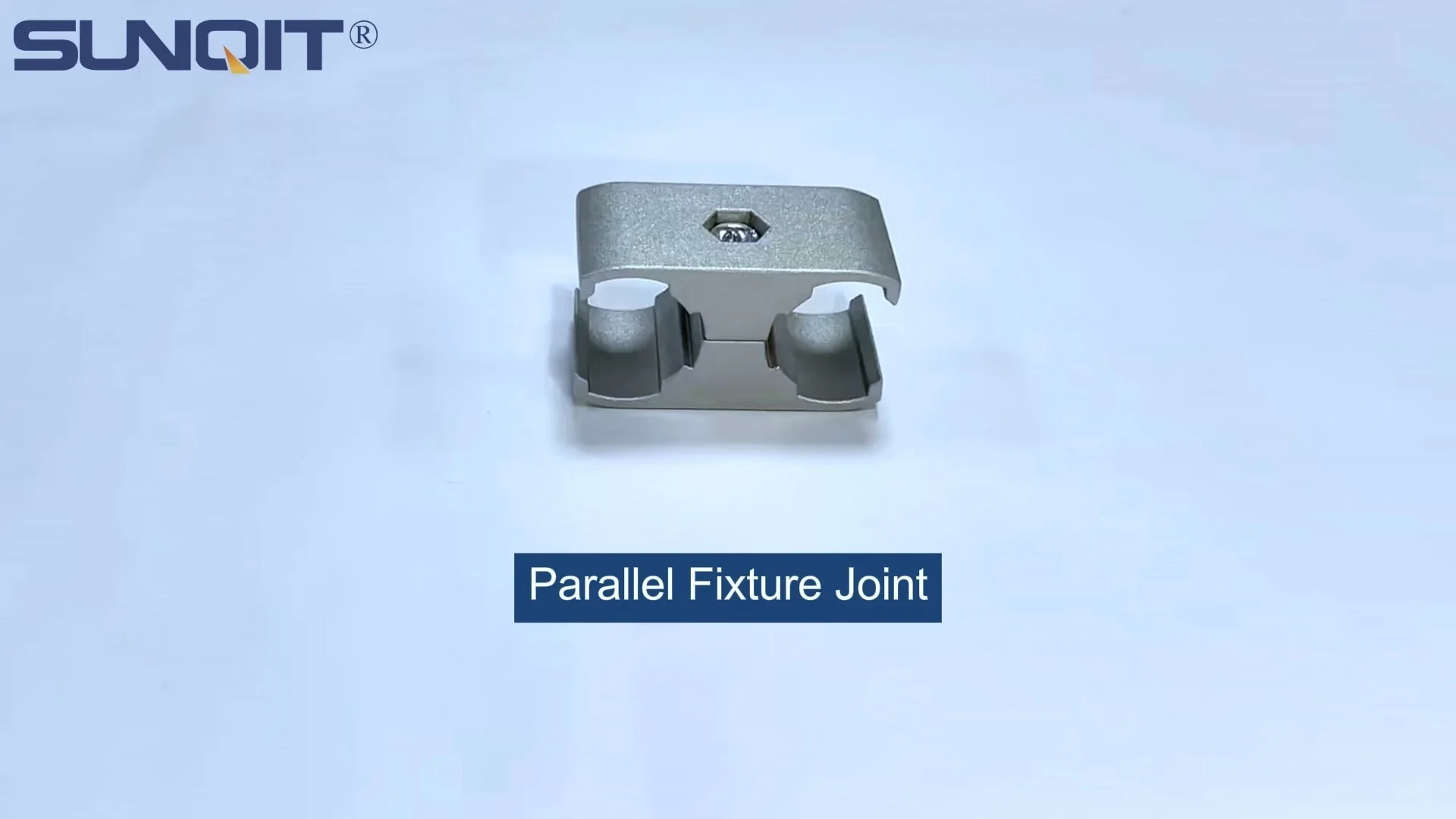
In the world of manufacturing, warehousing, and lean system setups, the unsung heroes often lie in the smallest components. Take, for instance, the parallel fixation aluminum pipe joint—a seemingly simple part that holds together everything from workbenches and material racks to conveyor systems and turnover trolleys. These joints are the backbone of modular aluminum structures, quietly ensuring stability, flexibility, and efficiency in daily operations. But here's the thing: not all joints are created equal, and one of the most critical factors that separates a reliable setup from a potential disaster is load capacity .
Whether you're a facility manager overseeing a production line, a warehouse supervisor organizing inventory, or a small business owner setting up a workshop, understanding the load capacity of parallel fixation aluminum pipe joints isn't just a technicality—it's about safety, durability, and getting the most out of your equipment. In this article, we'll dive deep into what these joints are, why their load capacity matters, the factors that influence it, and how to ensure you're choosing the right ones for your needs. Along the way, we'll touch on related components like aluminum profile, aluminum pipe accessories, and even real-world applications like material racks and workbenches, showing how these joints tie everything together.
What Are Parallel Fixation Aluminum Pipe Joints?
Before we get into load capacity, let's make sure we're on the same page about what parallel fixation aluminum pipe joints actually are. Simply put, these are specialized connectors designed to join two or more aluminum pipes (often part of an aluminum profile system) in a parallel arrangement. Unlike some joints that allow rotation or angular adjustments, parallel fixation joints are meant to keep pipes aligned side-by-side, creating stable, rigid structures. Think of them as the "glue" that holds together the horizontal rails of a workbench, the shelves of a material rack, or the side frames of a conveyor.
Made from high-grade aluminum alloys (typically 6063 or 6061, known for their strength and corrosion resistance), these joints are engineered to balance lightweight design with structural integrity. They often feature T-slot or bolt-on designs, allowing them to attach securely to aluminum pipes—whether those pipes are part of a lean system, a t-slot aluminum pipe setup, or a custom workstation. What makes them "parallel fixation" is their ability to lock pipes in a fixed, side-by-side position, preventing lateral movement even under heavy loads.
You'll find these joints in a variety of settings: manufacturing plants using lean pipe workbenches, warehouses with flow racks, assembly lines with roller conveyors, and even retail stockrooms with turnover trolleys. Anywhere modular, durable structures are needed, parallel fixation aluminum pipe joints play a role in keeping things stable.
Why Load Capacity Matters: Safety, Efficiency, and Longevity
At first glance, load capacity might seem like just another specification on a product sheet—but in reality, it's the difference between a structure that works for years and one that fails unexpectedly. Let's break down why it matters:
- Safety First: If a joint is overloaded, it can bend, crack, or even snap, causing the entire structure to collapse. This isn't just about damaged equipment—falling materials or collapsing workbenches pose serious risks to workers. In industries like automotive manufacturing or heavy machinery, where loads can be substantial, using joints with insufficient load capacity is a critical safety hazard.
- Operational Efficiency: A structure that can't handle its intended load will sag, warp, or become unstable over time. This leads to inefficiencies: material racks that can't hold full inventory, workbenches that wobble during precision tasks, or conveyors that jam because the frame is misaligned. By choosing joints with the right load capacity, you ensure smooth, uninterrupted workflows.
- Cost Savings: Replacing failed joints or repairing damaged structures is expensive. Overloading joints also shortens their lifespan, meaning you'll need to replace them more frequently. Investing in joints with adequate load capacity upfront saves money in the long run by reducing maintenance and replacement costs.
- Compliance with Standards: Many industries have strict safety regulations (OSHA, ISO, etc.) that mandate minimum load requirements for workplace structures. Using joints with verified load capacity helps you stay compliant and avoid fines or legal issues.
For example, consider a material rack B (3 row and 3 floor) in a warehouse, stocked with heavy components. If the parallel fixation joints holding the shelves together are rated for 300kg per shelf but the actual load is 400kg, the shelves could start to bow. Over time, the joints might loosen, leading to the entire rack tilting or collapsing. This not only endangers workers but also disrupts operations as the warehouse scrambles to clean up and restock.

Factors That Influence Load Capacity of Parallel Fixation Aluminum Pipe Joints
Load capacity isn't a one-size-fits-all number. It depends on a variety of factors, from the joint's design to how it's installed. Understanding these factors will help you choose the right joint for your application and ensure it performs as expected. Let's explore the key ones:
1. Material and Manufacturing Quality
The type of aluminum alloy used in the joint has a huge impact on its strength. Most parallel fixation joints are made from 6061 or 6063 aluminum alloys, which offer excellent strength-to-weight ratios. 6061 is slightly stronger (tensile strength of ~310 MPa) than 6063 (~215 MPa), making it better for heavy-load applications. However, 6063 is more malleable, which can be an advantage for complex joint designs.
Manufacturing quality also matters. Joints that are cast with air bubbles, have uneven wall thickness, or are poorly finished will be weaker. Reputable suppliers (like a trusted aluminum profile supplier) use precision extrusion or casting methods to ensure consistency and strength. When evaluating joints, look for certifications or material test reports that verify the alloy grade and manufacturing standards.
2. Joint Design and Geometry
The way a joint is designed directly affects how it distributes load. Key design elements include:
- Contact Area: Joints with larger contact areas between the joint and the aluminum pipe distribute load more evenly, reducing stress concentration. For example, a joint that wraps around 180° of the pipe's circumference will hold better than one that only contacts 90°.
- Ribbing and Reinforcements: Many high-load joints feature internal ribs or gussets that strengthen critical stress points. These reinforcements prevent the joint from bending under pressure.
- Fastener Integration: Joints that use bolts, screws, or T-slot nuts to secure the pipe rely on these fasteners to transfer load. The size, material (stainless steel vs. aluminum), and number of fasteners matter. A joint with two M8 bolts will generally handle more load than one with a single M6 bolt.
3. Installation Quality
Even the strongest joint will fail if installed incorrectly. Common installation mistakes that reduce load capacity include:
- Under-Tightening Fasteners: Loose bolts or screws allow the joint to shift under load, leading to premature wear and reduced stability.
- Over-Tightening Fasteners: Conversely, overtightening can strip threads, crack the joint, or deform the aluminum pipe, weakening the connection.
- Misalignment: If the pipes aren't perfectly parallel when the joint is installed, the load won't distribute evenly, creating stress points in the joint.
- Using the Wrong Accessories: Aluminum pipe accessories like bolts, washers, or T-slot nuts must be compatible with the joint and pipe. Using undersized or low-quality accessories can compromise the connection.
Always follow the manufacturer's installation guidelines, including torque specifications for fasteners. If you're unsure, consult with the supplier or a structural engineer.
4. Static vs. Dynamic Load
Load capacity ratings often distinguish between static and dynamic loads:
- Static Load: The weight of a stationary object (e.g., a stack of boxes on a shelf that rarely moves). Joints can typically handle higher static loads because the force is constant and predictable.
- Dynamic Load: Loads that move, vibrate, or change (e.g., materials sliding down a flow rack, or a workbench with tools being moved around). Dynamic loads create additional stress (like impact or fatigue), so joints have lower dynamic load ratings than static ones.
For example, a joint rated for 500kg static load might only handle 300kg dynamic load. Always check which rating applies to your application—confusing the two is a common mistake that leads to failure.
5. Environmental Factors
Where the joint is used can affect its load capacity over time:
- Corrosion: In humid, salty, or chemical-exposed environments (like food processing or marine facilities), aluminum joints can corrode. Corrosion weakens the material, reducing load capacity. Look for joints with anodized or powder-coated finishes to resist corrosion.
- Temperature Extremes: Aluminum's strength decreases slightly at high temperatures (above 100°C) and becomes more brittle at very low temperatures (below -20°C). If your application involves extreme temperatures, check the joint's performance specs under those conditions.
- Vibration: Constant vibration (e.g., near heavy machinery) can loosen fasteners over time, reducing the joint's clamping force and load capacity. In such cases, use lock washers or thread-locking adhesive (like Loctite) as part of your aluminum pipe accessories.

How Load Capacity Is Tested: What the Numbers Mean
When you see a load capacity rating on a parallel fixation aluminum pipe joint (e.g., "400kg static load"), it's not just a guess—it's the result of rigorous testing. Understanding how these tests work will help you interpret the numbers and make informed decisions. Let's take a look at common testing methods and what they measure:
Industry Standards and Testing Protocols
Most manufacturers follow standards set by organizations like ISO (International Organization for Standardization) or ASTM International. For example, ASTM F1554 covers the performance of metal connectors in structural applications, while ISO 898-1 specifies mechanical properties for fasteners (critical for joint accessories). These standards outline testing procedures to ensure consistency across products.
Static Load Testing
Static load testing is the most common method. Here's how it works: A sample joint is installed on two aluminum pipes (mimicking real-world conditions) and mounted to a rigid frame. A gradually increasing weight is applied to the structure until the joint fails (e.g., bends more than 2°, cracks, or the pipe slips). The maximum weight it handles before failure is the "ultimate static load." Manufacturers then assign a "rated static load" that's a fraction of this (typically 25-50%) to account for safety margins. For example, if a joint fails at 1000kg, the rated load might be 400kg (a 2.5x safety factor).
Dynamic Load Testing
Dynamic load testing is more complex. It involves applying repeated or sudden loads to simulate real-world conditions. For example:
- Fatigue Testing: A cyclic load (e.g., 200kg applied and removed 10,000 times) is used to check for wear or failure over time. This is critical for joints in conveyor systems or material handling equipment that experience constant movement.
- Impact Testing: A sudden load (e.g., dropping a weight onto the structure) is applied to test the joint's ability to withstand shocks. This is important for applications like loading docks or assembly lines where materials might be dropped.
Interpreting the Ratings
When reading a joint's load capacity rating, look for these key details:
- Safety Factor: The ratio of ultimate load to rated load (e.g., 2:1, 3:1). A higher safety factor means more margin for error.
- Load Type: Is it static, dynamic, or impact? Make sure it matches your application.
- Installation Conditions: Some ratings assume specific pipe sizes (e.g., 28mm aluminum pipe) or fastener torque (e.g., 25 Nm). Deviating from these conditions will reduce the actual load capacity.
| Joint Type | Material | Static Load (Rated) | Dynamic Load (Rated) | Best For |
|---|---|---|---|---|
| Basic Parallel Fixation Joint | 6063 Aluminum | 300kg | 150kg | Light-duty workbenches, small material racks |
| Reinforced Parallel Joint | 6061 Aluminum | 600kg | 350kg | Heavy-duty workbenches, 3-row material racks |
| Stainless Steel Parallel Joint | 304 Stainless Steel | 800kg | 500kg | Corrosive environments, high-load conveyor frames |
*Table: Example load capacities for common parallel fixation joint types (ratings may vary by manufacturer).

Choosing the Right Parallel Fixation Aluminum Pipe Joint for Your Needs
Now that you understand load capacity and the factors that influence it, how do you choose the right joint for your project? Here's a step-by-step guide to help you make the best decision:
Step 1: Calculate Your Required Load
Start by figuring out how much weight the joint will need to support. This includes the weight of the structure itself (pipes, shelves, etc.) plus the maximum weight of the materials or equipment it will hold. Be generous—overestimating is better than underestimating. For example, if you're building a workbench that will hold tools (200kg) and materials (300kg), calculate for 600kg (adding a 20% buffer for safety).
Don't forget to consider dynamic loads if the structure will be subject to movement, vibration, or impacts. Multiply your static load by 1.5-2x to get a rough dynamic load estimate, or check the manufacturer's dynamic rating for guidance.
Step 2: Consider the Environment
Where will the joint be used? If it's in a wet or corrosive area, choose anodized or stainless steel joints. For high-temperature settings, opt for 6061 aluminum (more heat-resistant than 6063). If vibration is a concern, look for joints with locking features or plan to use thread-locking accessories.
Step 3: Match Joint Design to Application
Different applications need different joint designs. For example:
- Workbenches: Need joints that provide rigid, wobble-free support. Reinforced parallel joints with large contact areas work best here.
- Material Racks: Shelves loaded with boxes or parts need joints that can handle evenly distributed static loads. Basic or reinforced parallel joints (depending on load) are ideal.
- Conveyor Systems: Experience dynamic loads from moving materials. Choose joints with high dynamic load ratings and fatigue resistance.
Step 4: Choose a Reputable Supplier
Not all joints are created equal, and a cheap, untested joint can cost you more in the long run. Look for an aluminum profile supplier with a track record of quality—one that provides load capacity data, material certifications, and technical support. Ask for samples or case studies of similar applications to ensure the joint will work for you.
Also, check if the supplier offers compatible aluminum pipe accessories (bolts, washers, end caps) to ensure everything works together seamlessly. Mismatched accessories can weaken the joint, even if the joint itself is high-quality.
Step 5: Test Before Full Deployment
If your application is critical (e.g., supporting heavy machinery), test a small prototype first. Assemble a section of the structure with the chosen joints and apply the expected load for 24-48 hours. Check for sagging, looseness, or deformation. This simple test can catch issues before you invest in a full build.
Maintaining Load Capacity: Tips for Longevity
Even the best parallel fixation aluminum pipe joints will underperform if not properly maintained. Regular upkeep ensures they retain their load capacity and last as long as possible. Here are some maintenance tips:
1. Inspect Regularly
Schedule monthly inspections (or more often for high-use structures) to check for:
- Loose fasteners: Tighten them to the manufacturer's torque specs.
- Cracks or deformation: replace any joint that shows signs of damage.
- Corrosion: Clean corroded areas with a mild detergent and consider repainting or recoating if damage is minor.
- Misalignment: Realign pipes if the structure is sagging or leaning.
2. Clean and Protect
Keep joints clean and free of debris, which can trap moisture and cause corrosion. Wipe them down with a damp cloth periodically. In corrosive environments, apply a corrosion-resistant spray (like WD-40 Specialist Long-Term Corrosion Inhibitor) to protect the aluminum.
3. replace Worn Accessories
Aluminum pipe accessories like bolts, washers, and T-slot nuts can wear out over time. replace them with new ones from a trusted supplier when they show signs of stripping, rust, or deformation. Using original equipment manufacturer (OEM) accessories ensures compatibility and maintains load capacity.
4. Avoid Overloading
Even with proper maintenance, overloading a joint will shorten its lifespan. Post load limits clearly on structures (e.g., "Max Load: 500kg") to remind workers not to exceed them.
Conclusion: Investing in the Right Joints for a Stronger, Safer Workplace
Parallel fixation aluminum pipe joints might not be the most glamorous part of your workspace, but they're the foundation of safe, efficient operations. By understanding load capacity—what it is, what affects it, and how to choose the right joint—you can build structures that stand the test of time, protect your team, and keep your business running smoothly.
Remember, the key steps are: calculate your load needs, consider the environment, choose a quality joint from a reputable aluminum profile supplier, install it correctly, and maintain it regularly. Whether you're building a simple workbench or a complex conveyor system, taking the time to get the joints right will pay off in safety, efficiency, and cost savings down the line.
So next time you're planning a project, don't overlook these small but mighty components. Your structure's strength—and your peace of mind—depend on it.