- Company Articles
- Products and Technology
- Product knowledge
- Load Capacity of Two Way Lean Pipe Joint Chrome: Safe Working Limits

Load Capacity of Two Way Lean Pipe Joint Chrome: Safe Working Limits
Related Product
Two Way Lean Pipe Joint Chrome
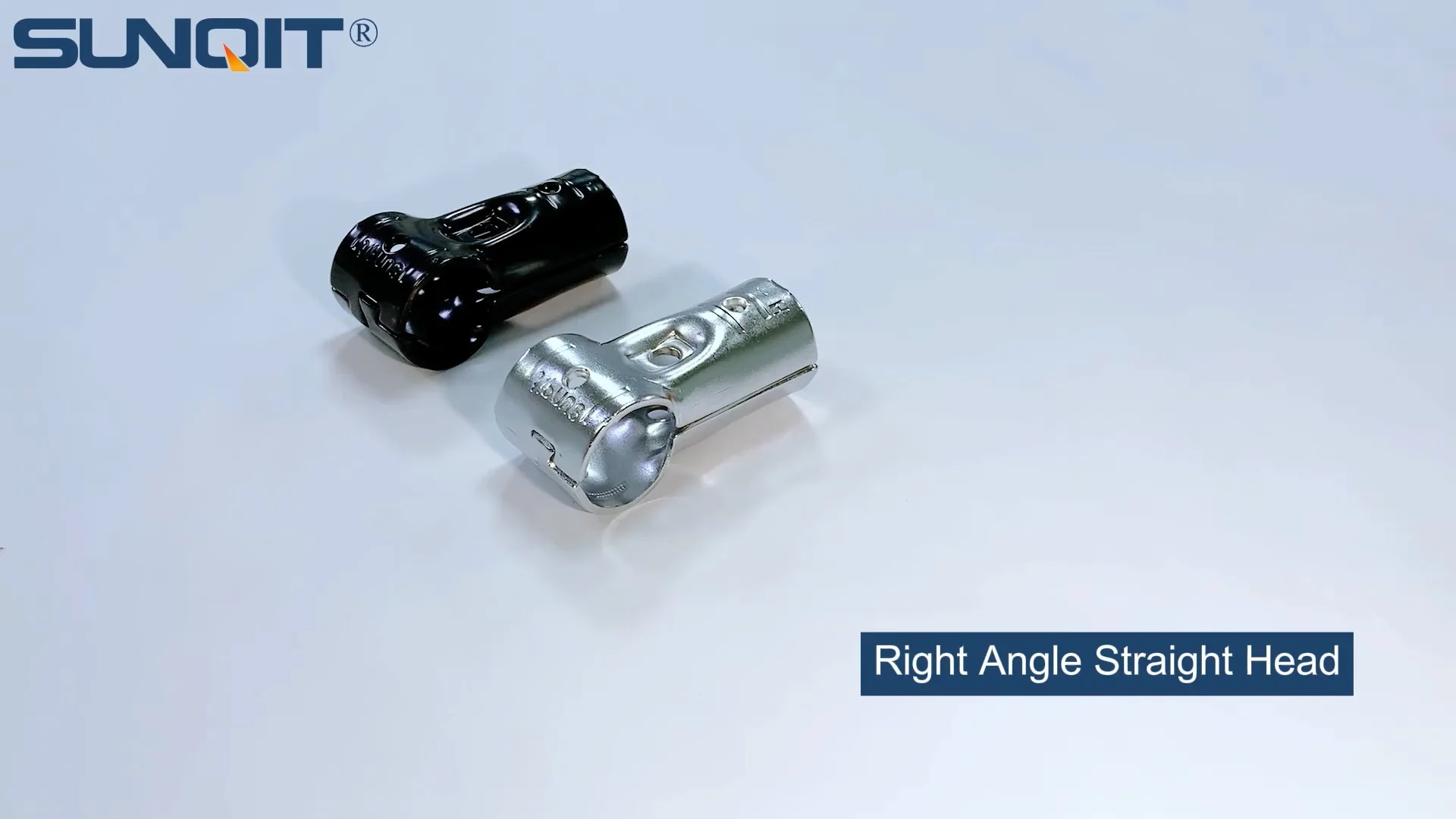
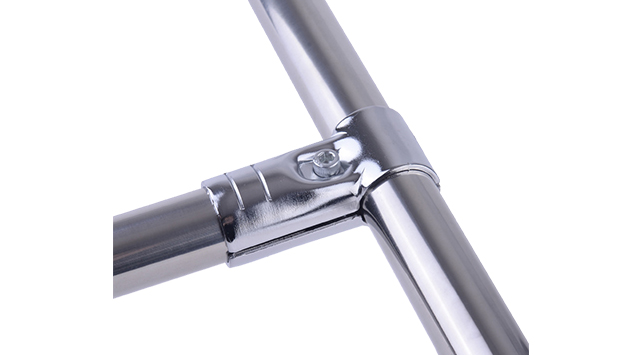
Two way lean pipe joint for 2 pcs 28MM lean pipe connection in straight angle, which used widely in workbench, flow rack, hand trolley frame connection.
In the bustling world of manufacturing and production, where efficiency and safety walk hand in hand, every component of your workspace matters. From the largest conveyor belt to the smallest connector, each part plays a role in keeping operations running smoothly. Today, we're zeroing in on a unsung hero of lean manufacturing setups: the two way lean pipe joint chrome. If you've ever walked through a factory floor, chances are you've seen structures built with lean pipes—workbenches, material racks, or assembly stations. These structures rely on joints to hold everything together, and when it comes to durability and reliability, the two way lean pipe joint chrome stands out. But here's the question that keeps facility managers and safety officers up at night: How much weight can these joints really handle? Understanding their load capacity and safe working limits isn't just about preventing equipment damage; it's about protecting the people who use these structures every day.
What Are Two Way Lean Pipe Joints Chrome, Anyway?
Before diving into load capacity, let's get clear on what we're talking about. Lean pipe systems—often called "flexible pipe systems"—are modular setups used to build custom workspaces. They're the backbone of lean manufacturing, allowing teams to design structures that adapt to changing needs. At the heart of these systems are the joints, which connect the lean pipes (hollow steel tubes, often coated in plastic or, in this case, chrome) to form angles, corners, and intersections. A two way lean pipe joint chrome, as the name suggests, is a joint designed to connect two lean pipes at a specific angle (usually 90 degrees, though some are adjustable). The "chrome" part refers to its finish—a layer of chromium plating that adds corrosion resistance and a sleek, professional look. Unlike plastic joints, which are lightweight but less durable, chrome-plated steel joints are built to withstand heavier use, making them a go-to for industrial environments.
These joints aren't just pieces of metal; they're engineered for precision. A typical two way chrome joint has a hollow core that fits over the lean pipe, secured with a setscrew or bolt. The chrome coating isn't just for show—it acts as a barrier against rust and wear, ensuring the joint remains strong even in dusty or humid factory conditions. And because they're part of a lean system, they're designed to be easy to assemble and disassemble, letting teams reconfigure workspaces without specialized tools. But here's the catch: their versatility and ease of use can sometimes lead to overconfidence. Just because you can bolt two pipes together doesn't mean the joint can support whatever you stack on top. That's where load capacity comes in.
The Basics of Load Capacity: What It Means for Your Workspace
Load capacity is the maximum weight a structure or component can safely support without failing. For two way lean pipe joints chrome, this isn't a one-size-fits-all number. It depends on a mix of factors, from the joint's design to how it's installed. Think of it like a bridge: a small footbridge can hold a few people, but a highway bridge needs to support trucks. Similarly, a two way joint used in a lightweight material rack might have a lower load capacity than one used in a heavy-duty workbench. Understanding this difference is key to avoiding catastrophic failures—like a shelf collapsing under too much weight or a workbench leg giving way during assembly.
When we talk about "safe working limits," we're referring to the maximum load a joint can handle under normal conditions, with a built-in safety margin. Manufacturers don't just test a joint until it breaks and call that the capacity; they calculate a safe limit by taking the breaking point and dividing it by a safety factor (usually 2 or 3). For example, if a joint breaks at 500 kg, its safe working limit might be 250 kg (using a safety factor of 2). This buffer accounts for unexpected stresses—like someone leaning on the structure or a sudden jolt from a dropped tool. Ignoring this limit is like driving a car with worn brakes: you might get away with it for a while, but eventually, the laws of physics will catch up.
Factors That Influence Load Capacity: It's Not Just About the Joint
To truly understand how much weight a two way lean pipe joint chrome can handle, we need to look beyond the joint itself. Several factors work together to determine its load capacity, and overlooking any of them can lead to dangerous miscalculations. Let's break them down:
1. Material Quality: Steel Thickness and Chrome Coating
At the core of every two way chrome joint is steel—and not all steel is created equal. The thickness of the steel used in the joint's body directly impacts its strength. A joint made with 2mm thick steel will handle more weight than one made with 1mm steel, as the extra material resists bending and warping. Then there's the chrome coating. While chrome doesn't add structural strength, it protects the steel from corrosion. A joint with chipped or flaking chrome is more likely to rust, weakening the steel over time. So, even if a joint starts with a high load capacity, poor material quality or a damaged coating can reduce it significantly.
2. Joint Design: How It Distributes Weight
Not all two way joints are designed the same. Some have a fixed angle (like a rigid 90-degree elbow), while others are swivel-style, allowing for adjustable angles. Fixed joints are generally stronger because their design distributes weight evenly across the connection point. Swivel joints, which have moving parts, often have lower load capacities because the pivot points create stress concentrations. The way the joint connects to the lean pipe also matters: a joint with a larger contact area (more of the pipe inserted into the joint) will spread the load better than one with a small contact area. For example, a joint that fits 10cm of the pipe inside its core will be stronger than one that only fits 5cm, as there's more surface area to distribute the weight.
3. Installation: Tightness, Alignment, and Pipe Condition
Even the strongest joint will fail if it's installed poorly. Imagine building a bookshelf with loose screws—no matter how sturdy the wood is, the shelf will sag. The same goes for lean pipe joints. If the setscrew or bolt securing the joint to the pipe is under-tightened, the pipe can slip, reducing the joint's effective load capacity. Over-tightening is just as bad: it can strip the threads or warp the joint, weakening it from the start. Alignment is another critical factor. If two pipes connected by a joint aren't straight or are at an angle the joint wasn't designed for, the weight won't distribute evenly, creating stress on one side of the joint. And let's not forget the condition of the lean pipe itself: a bent or dented pipe won't seat properly in the joint, leading to instability.
4. Environmental Factors: When the Workplace Fights Back
Factories aren't always gentle environments. Extreme temperatures, high humidity, and exposure to chemicals can all take a toll on two way lean pipe joints chrome. Chrome plating resists corrosion, but it's not invincible. In a facility with frequent water exposure (like a food processing plant) or chemical spills, the chrome can chip or peel, exposing the steel underneath to rust. Rust weakens the joint's structure, making it more likely to fail under load. Temperature fluctuations can also cause metal to expand and contract, loosening the joint over time. Even vibration—from nearby machinery or constant foot traffic—can gradually loosen bolts, reducing the joint's load capacity. In short, the environment where the joint lives plays a big role in how long it can maintain its rated capacity.
5. Static vs. Dynamic Loads: What's Being Put on the Joint?
Not all loads are created equal. A "static load" is weight that doesn't move—like a stack of boxes sitting on a shelf. A "dynamic load" is weight that's moving or changing—like a worker placing a heavy tool on the workbench, or a cart rolling over a roller track connected to the joint. Dynamic loads are harder on joints because they create sudden impacts or vibrations. For example, dropping a 20kg tool on a workbench might generate a dynamic load of 60kg or more (due to the force of impact), even though the static load is only 20kg. Most manufacturers rate joints for static loads, so if your application involves dynamic loads, you'll need to factor that in by reducing the safe working limit.

Testing Load Capacity: How Manufacturers Determine Safe Limits
You might be wondering: How do we know what a two way lean pipe joint chrome can handle? The answer lies in rigorous testing. Reputable manufacturers don't just guess at load capacities—they put their joints through a battery of tests to ensure they meet industry standards. Let's take a peek behind the curtain at how this works.
First, there's the static load test. This is the most basic test: the joint is connected to two lean pipes, mounted horizontally or vertically, and a weight is gradually added until the joint deforms or fails. The maximum weight it holds before failing is called the "ultimate load." But as we mentioned earlier, the safe working limit is this number divided by a safety factor. For example, if a joint fails at 400kg, and the safety factor is 2, the safe working limit is 200kg. This ensures there's a buffer for real-world conditions.
Then there's the fatigue test. This simulates repeated use over time. The joint is subjected to a load (usually 50-75% of its ultimate load) applied and removed thousands of times. If the joint holds up after, say, 100,000 cycles, it's considered fatigue-resistant. This is crucial for joints used in high-traffic areas, like conveyor systems or workbenches where tools are constantly placed and removed.
Some manufacturers also perform impact tests, dropping weights on the joint to simulate dynamic loads, and corrosion tests, exposing the joint to salt spray or humidity to check the chrome coating's durability. All these tests are designed to mimic real-world conditions, ensuring the joint can handle the stresses of daily use.
| Test Type | What It Measures | Why It Matters |
|---|---|---|
| Static Load Test | Maximum weight before deformation/failure | Determines the ultimate load capacity and safe working limit |
| Fatigue Test | Resistance to repeated loading/unloading | Ensures the joint holds up over long-term use |
| Impact Test | Ability to withstand sudden dynamic loads | Crucial for environments with moving parts or dropped tools |
| Corrosion Test | Durability of the chrome coating against rust/wear | Important for humid, wet, or chemical-exposed workplaces |
Typical Load Capacities: What to Expect from Two Way Chrome Joints
Now, let's get to the numbers. While exact load capacities vary by manufacturer and joint design, most two way lean pipe joints chrome have a safe working limit of 150-300 kg under ideal conditions. That might sound like a wide range, but remember: it depends on the factors we discussed earlier. For example, a small, lightweight two way joint (used for connecting pipes in a light material rack) might have a safe limit of 150 kg, while a heavy-duty version (used in a workbench with a metal top) could handle 300 kg or more. Always check the manufacturer's datasheet for your specific joint—this is the only way to get an accurate number.
To put this in perspective, let's consider a common application: a workbench built with lean pipes and two way chrome joints. A typical workbench might have four legs (each supported by multiple joints), a top surface, and shelves below. If each two way joint in the legs has a safe limit of 200 kg, and there are four legs with two joints each, the total load capacity of the legs alone would be 1600 kg (4 legs x 2 joints x 200 kg). But wait—that's not how it works. The load isn't distributed equally across all joints. The top surface, the weight of the bench itself, and how the load is placed (e.g., concentrated in one corner vs. spread out) all affect how much each joint bears. This is why it's critical to calculate the total load your structure will carry and ensure no single joint is overloaded.
Real-World Applications: How to Use This Information
Let's say you're a facility manager tasked with building a new assembly workbench. You've chosen lean pipes and two way chrome joints for their flexibility. How do you ensure the workbench is safe? Here's a step-by-step approach:
- Calculate the total load: Start by adding up all the weight the workbench will support. This includes the weight of the bench itself (pipes, top surface, shelves), tools (drills, wrenches, etc.), materials (components being assembled), and even the workers who might lean on it (average adult weight is ~75 kg). Let's say the total comes to 500 kg.
- Determine the number of joints: A simple workbench might have 8 two way joints (4 legs, each with 2 joints connecting the vertical and horizontal pipes). Divide the total load by the number of joints to get the average load per joint: 500 kg / 8 joints = 62.5 kg per joint. This is well below the 150-300 kg safe limit, so you're in the clear—right?
- Account for uneven distribution: But wait—loads are rarely evenly distributed. If a worker places a 100 kg toolbox on one corner, that corner's joints will bear more weight. In this case, the two joints supporting that corner might each take 50 kg (100 kg total), which is still under the limit. But if the toolbox is 200 kg, those joints would be at 100 kg each—still safe, but getting closer to the lower end of the range.
- Check the manufacturer's specs: Finally, confirm that your specific two way chrome joints have a safe working limit of at least 100 kg (to cover the uneven load). If the joints are rated for 150 kg, you're good. If they're only rated for 75 kg, you'll need to add more joints or choose a heavier-duty model.
This example shows why it's not enough to rely on average load per joint—you need to think about worst-case scenarios. A little extra planning can prevent a lot of headaches (and broken equipment) down the line.
Common Mistakes to Avoid: Don't Let These Errors Cost You
Even with all this knowledge, it's easy to make mistakes when working with two way lean pipe joints chrome. Here are some of the most common pitfalls—and how to steer clear of them:
- Overestimating load capacity: Just because a joint looks strong doesn't mean it can handle heavy loads. Always check the manufacturer's specs, and when in doubt, go with a higher-rated joint.
- Ignoring installation torque: Too loose, and the joint slips; too tight, and you damage the threads. Use a torque wrench to tighten setscrews to the manufacturer's recommended torque (usually 15-25 Nm for steel joints).
- Mixing and matching components: Using lean pipes from one brand with joints from another can lead to poor fit, reducing load capacity. Stick to compatible systems when possible.
- Forgetting about dynamic loads: If your structure will see moving loads (like a roller track for boxes), reduce the safe working limit by 30-50% to account for impacts.
- Neglecting maintenance: A joint that's loose or rusted won't perform at its rated capacity. Inspect joints monthly, tighten loose bolts, and replace any with chipped chrome or signs of wear.
Conclusion: Safety Starts with Understanding
Two way lean pipe joints chrome are but essential components of modern manufacturing. They're the glue that holds lean systems together, enabling the flexible, efficient workspaces that drive productivity. But their true value lies not just in their versatility, but in their reliability—and that reliability hinges on understanding their load capacity and safe working limits. By considering factors like material quality, installation, environment, and load type, you can ensure these joints do their job: keeping your workspace safe, efficient, and ready for whatever the day throws at it.
So the next time you walk past a lean pipe workbench or material rack, take a moment to appreciate the two way chrome joints holding it all together. They might not get the glory, but they're working hard to keep your team safe and your operations running smoothly. And when it comes to load capacity, remember: it's better to be cautious than sorry. After all, in manufacturing, as in life, safety isn't just a priority—it's a responsibility.