- Company Articles
- Products and Technology
- Product knowledge
- Load Capacity Ratings: Choosing Suction Cup Anti-Slip Foot Adjusters for Heavy Gear

Load Capacity Ratings: Choosing Suction Cup Anti-Slip Foot Adjusters for Heavy Gear
Related Product
Suction Cup Anti-slip Foot Adjuster
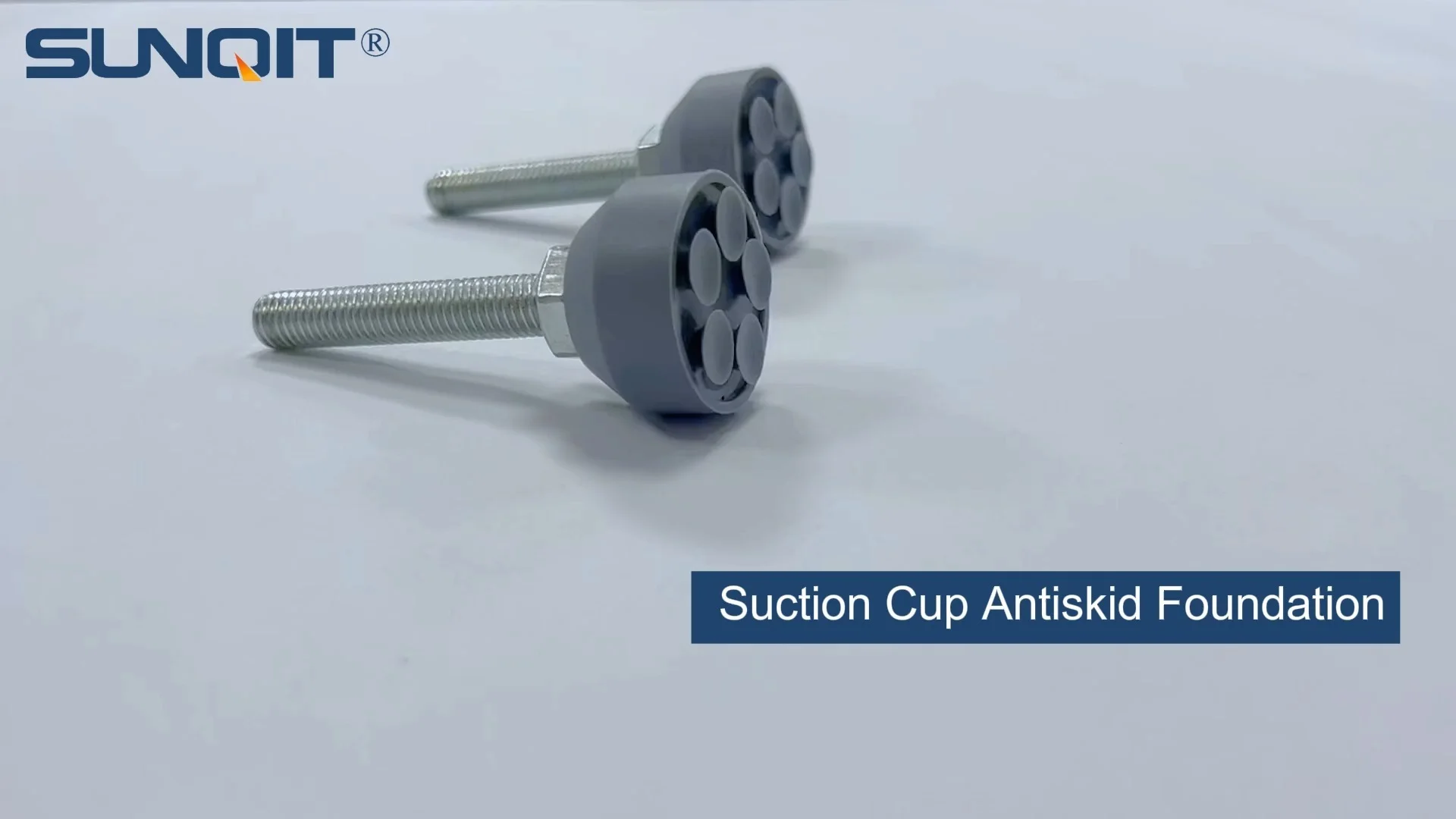
D=35mm suction cup anti-slip foot adjusterï¼screw M10*55ï¼with a blot, used for workbench, flowrack pipe contact with groud.
In the world of manufacturing, warehousing, and industrial setups, stability isn't just a nicety—it's the backbone of efficiency, safety, and productivity. Imagine a bustling factory floor where a 2,000-pound conveyor belt hums along, moving products from assembly to packaging. Now, picture that same conveyor suddenly wobbling, its feet slipping on a slightly uneven concrete floor. The result? Delays, damaged goods, and even potential injuries. This scenario isn't just hypothetical; it's why components like suction cup anti-slip foot adjusters play a starring role in keeping operations running smoothly. But with so many options on the market, how do you choose the right one—especially when heavy gear is on the line? Let's dive into the critical world of load capacity ratings and how to select the perfect foot adjusters for your heavy equipment needs.
What Are Suction Cup Anti-Slip Foot Adjusters, Anyway?
Before we get into load capacity, let's make sure we're all on the same page about what these components actually are. At their core, suction cup anti-slip foot adjusters are specialized feet designed to stabilize heavy equipment by gripping surfaces, preventing slippage, and allowing for height adjustment to compensate for uneven floors. Think of them as the "shoes" for your machinery—they need to fit well, provide traction, and support the weight without faltering.
The "suction cup" part is pretty straightforward: many models feature a rubber or silicone cup at the base that creates a vacuum seal when pressed against a smooth surface, enhancing grip. The "anti-slip" element often comes from textured materials or patterns on the cup, ensuring even on floors (like factory concrete) there's minimal sliding. And "adjuster"? That's the threaded stem or mechanism that lets you twist or extend the foot to level the equipment—no more propping up wobbly corners with scraps of wood.
These adjusters aren't one-size-fits-all. They come in various shapes, sizes, and materials, each tailored to specific loads and environments. Some are built for light-duty tasks, like a small workbench, while others—like the heavy duty split foot seat variants—are engineered to handle tons of weight. But here's the kicker: even the sturdiest-looking adjuster won't do you any good if its load capacity rating doesn't match your equipment's weight. That's why understanding load capacity is non-negotiable.
Why Load Capacity Ratings Are Non-Negotiable
Let's start with the basics: load capacity rating is the maximum weight a foot adjuster can safely support under normal conditions. It's not a suggestion or a rough estimate—it's a tested, certified number that manufacturers provide to ensure user safety and component longevity. Ignore it, and you're rolling the dice with equipment stability, worker safety, and costly downtime.
Suppose you have a 3,000-pound industrial mixer. If you slap on foot adjusters rated for 500 pounds each (and let's say the mixer has four feet), you're asking each adjuster to handle 750 pounds—way beyond its limit. Over time, the threads might strip, the suction cup could tear, or the base might crack. At best, the mixer wobbles, ruining batches and slowing production. At worst, it tips over, causing injury or equipment damage. It's a risk no facility manager should take.
Load capacity ratings are determined through rigorous testing. Manufacturers subject adjusters to static and dynamic loads (we'll explain the difference later) in controlled environments, simulating real-world conditions like vibration, temperature changes, and surface irregularities. The result is a rating that tells you: "This adjuster can handle X pounds without failing." But here's the thing: that "X" isn't a one-size-fits-all number. It depends on several factors, which we'll unpack next.

Breaking Down Load Capacity: Static vs. Dynamic Loads
Not all loads are created equal. When shopping for suction cup anti-slip foot adjusters, you'll often see two types of load capacity ratings: static and dynamic. Understanding the difference could save you from a costly mistake.
Static Load Capacity
Static load is the weight of equipment that's stationary or moving very slowly—think a heavy storage rack loaded with inventory or a workbench with tools. In these cases, the adjuster bears a constant, unchanging weight. Static load capacity is typically higher than dynamic because there's less stress on the component. For example, an adjuster might have a static rating of 2,000 pounds but a lower dynamic rating.
Dynamic Load Capacity
Dynamic load, on the other hand, is the weight exerted when equipment is in motion or vibrating. Conveyor belts, oscillating machinery, or forklifts (when parked) are all examples of dynamic loads. The movement creates additional forces—like jolts, vibrations, or sudden shifts in weight—that put extra strain on the adjuster. A conveyor belt might weigh 1,500 pounds statically, but when it's running, the motor vibrations and product movement can increase the load temporarily. That's why dynamic load ratings are usually lower than static ones—they account for these extra forces.
So, which one should you prioritize? It depends on your equipment. If you're stabilizing a stationary press, static load is king. But if you're outfitting a vibrating conveyor or a mobile workbench, dynamic load capacity is just as critical. Always check both ratings and err on the side of caution—if your equipment has both static and dynamic elements, use the dynamic rating as your baseline.

Factors That Affect Load Capacity
Load capacity ratings aren't arbitrary. They're influenced by a handful of key factors, and understanding them will help you choose the right adjuster for your needs. Let's break them down:
Material Matters: Aluminum, Steel, and Beyond
The material of the adjuster's stem, base, and suction cup plays a huge role in load capacity. For example, aluminum is lightweight and corrosion-resistant, making it great for environments with moisture (like food processing plants). But it's not as strong as steel, so aluminum-based adjusters (like those with aluminum pipe components) often have lower load capacities than steel ones. Heavy duty split foot seats, for instance, are often made with reinforced steel bases to handle higher weights, while adjustable leveling feet might use aluminum for lighter, more precise applications.
The suction cup material matters too. Rubber cups are flexible and grip well on smooth surfaces, but they can degrade in high temperatures. Silicone cups handle heat better but might not grip as tightly on rough concrete. Some manufacturers use a blend of materials to balance flexibility, heat resistance, and grip—all of which affect how much weight the cup can support without slipping.
Base Size and Suction Cup Diameter
It's simple physics: a larger base distributes weight more evenly, increasing load capacity. A suction cup with a 4-inch diameter will support more weight than a 2-inch one, assuming the materials are the same. That's because the larger surface area creates a stronger vacuum seal and reduces pressure per square inch on the floor. When comparing adjusters, check the base dimensions—don't just go by the stem size. A thick stem with a tiny suction cup is a recipe for failure.
Surface Type and Condition
Even the best suction cup anti-slip foot adjuster can't work miracles on a terrible surface. Smooth, clean concrete or tile? Great—suction cups will seal tightly, and load capacity stays true to the rating. Rough, cracked concrete or uneven asphalt? The suction cup might not seal properly, reducing grip and effective load capacity. In these cases, you might need a heavy duty split foot seat with a larger, flat base instead of a suction cup, or adjusters with anti-slip pads that grip through surface imperfections.
Environmental Factors
Heat, cold, moisture, and chemicals can all impact load capacity. For example, in a foundry with high temperatures, rubber suction cups might soften and lose grip, lowering their effective load capacity. In a cold storage facility, ice or frost can prevent a proper seal. Always check the manufacturer's specs for temperature and chemical resistance—especially if your facility has extreme conditions.

Types of Foot Adjusters: Which One Fits Your Load?
Now that you understand load capacity and the factors that affect it, let's explore the most common types of foot adjusters, including adjustable leveling feet and heavy duty split foot seats. Each has its strengths, weaknesses, and ideal use cases—so let's find the right fit for your heavy gear.
Adjustable Leveling Feet: Precision Meets Versatility
Adjustable leveling feet are the workhorses of the foot adjuster world. They feature a threaded stem that screws into the equipment's base, allowing you to raise or lower each foot independently to level the gear. Most have a flat base or a small suction cup, and they come in a range of materials, from aluminum to stainless steel.
These adjusters excel in applications where precision leveling is key, like laboratory equipment or CNC machines. Their load capacities vary widely: small aluminum-based leveling feet might handle 200–500 pounds, while steel ones can go up to 2,000 pounds or more. They're also easy to install and adjust—just twist the stem to raise or lower the foot. However, they're not always the best choice for extremely heavy loads or uneven surfaces, where a larger base (like a heavy duty split foot seat) would be better.
Heavy Duty Split Foot Seats: For When the Weight Adds Up
When you're dealing with truly heavy gear—think 5,000 pounds or more—heavy duty split foot seats are the way to go. These adjusters feature a large, split base (hence the name) that distributes weight over a wider area, reducing pressure on the floor and increasing stability. They often have reinforced steel bases and thick, threaded stems to handle high static loads, making them ideal for industrial presses, large conveyors, and storage racks.
Unlike some suction cup adjusters, split foot seats don't rely on a vacuum seal. Instead, their large, flat surface (sometimes with anti-slip pads) grips the floor through friction. This makes them better for rough or uneven surfaces where suction cups might fail. Load capacities for these bad boys can range from 3,000 pounds up to 10,000+ pounds, depending on size and material.
Suction Cup Anti-Slip Foot Adjusters: Grip for Smooth Surfaces
And then there's the star of the show: the suction cup anti-slip foot adjuster. These combine the adjustability of leveling feet with the grip of a suction cup, making them perfect for smooth, clean surfaces like polished concrete or tile. They're common in electronics manufacturing, where static-sensitive equipment needs to stay stable and grounded, or in lean system setups where every inch of space and ounce of efficiency counts.
Their load capacities vary, but most fall between 500–3,000 pounds per adjuster. The suction cup design ensures they stay put even with minor vibrations, and the adjustable stem lets you level equipment on slightly uneven floors. Just remember: they need a smooth surface to work their magic. On rough floors, their grip (and thus load capacity) drops significantly.
Comparing the Options: A Quick Reference Table
| Adjuster Type | Typical Load Capacity Range | Best For | Surface Requirements | Key Materials |
|---|---|---|---|---|
| Adjustable Leveling Feet | 200–2,000 lbs | Precision equipment, workbenches, light conveyors | Smooth to moderately rough | Aluminum, steel, rubber pads |
| Heavy Duty Split Foot Seat | 3,000–10,000+ lbs | Industrial presses, large machinery, storage racks | Rough, uneven, or cracked surfaces | Reinforced steel, anti-slip pads |
| Suction Cup Anti-Slip Adjuster | 500–3,000 lbs | Smooth surfaces, lean system setups, electronics manufacturing | Smooth, clean floors (concrete, tile) | Steel/aluminum stems, rubber/silicone suction cups |
How to Choose the Right Adjuster for Your Heavy Gear
Now that you know the types and factors affecting load capacity, let's walk through the steps to choose the perfect adjuster. It's not as hard as it sounds—just follow this checklist:
Step 1: Calculate Your Total Load (and Then Some)
First, find out how much your equipment weighs. Check the manufacturer's specs or weigh it if you're unsure. Then, divide that weight by the number of feet/legs the equipment has. That gives you the minimum load capacity each adjuster needs to handle. But here's the golden rule: add a 20–30% buffer. Why? Because equipment might vibrate, shift, or have uneven weight distribution (e.g., a conveyor loaded with products on one end). That buffer ensures you're never pushing the adjuster to its limit.
Example: A 4,000-pound machine with 4 legs. Each leg needs to handle 1,000 pounds. Add a 30% buffer, and you're looking for adjusters rated for at least 1,300 pounds each. This extra margin prevents failure and extends the adjuster's lifespan.
Step 2: Assess Your Surface and Environment
Is your floor smooth or rough? Hot or cold? Wet or dry? Answering these questions will narrow down your options. Smooth, clean floors? Suction cup anti-slip adjusters are a great fit. Rough or uneven? Go with heavy duty split foot seats. Moisture-prone? Look for corrosion-resistant materials like stainless steel or aluminum pipe components. High heat? Silicone suction cups or steel bases will hold up better than rubber.
Step 3: Consider Adjustability Needs
Does your equipment need precise leveling? If you're setting up a laser cutting machine, even a 1/8-inch wobble can ruin cuts—so adjustable leveling feet with fine threads are a must. If you just need to stabilize a heavy storage rack on a slightly uneven floor, a heavy duty split foot seat with minimal adjustability might suffice.
Step 4: Check for Certifications and Warranties
Not all manufacturers test their adjusters to the same standards. Look for adjusters certified by organizations like OSHA or ISO, which ensure load capacity ratings are accurate. Also, check the warranty—reputable brands will back their products with a warranty, giving you peace of mind if something goes wrong.
Applications: Where Suction Cup Adjusters Shine (and When to Use Split Foot Seats)
Let's talk real-world use cases. Understanding where each type of adjuster fits will help you make the right choice. Here are a few common scenarios:
Lean System Setups: Efficiency Through Stability
Lean systems are all about minimizing waste and maximizing flow. In a lean manufacturing facility, every second counts—so equipment downtime due to instability is a cardinal sin. Suction cup anti-slip foot adjusters are often used here because they're compact, adjustable, and grip tightly on the smooth floors common in lean environments (think polished concrete in assembly lines). They help keep workbenches, conveyors, and material racks stable, ensuring products move smoothly and workers stay productive. Adjustable leveling feet are also popular in lean systems for their precision—they let you fine-tune workbench heights to reduce worker fatigue, align conveyors for seamless product flow, and keep equipment level even as floors settle over time.
Heavy Machinery: When You Need Split Foot Seats
For equipment like industrial presses, injection molding machines, or large CNC routers—weights of 5,000+ pounds—heavy duty split foot seats are the way to go. Their large, flat bases distribute weight to prevent floor damage (no more cracked concrete from point-loaded feet) and their anti-slip pads grip even on rough surfaces. In steel mills or foundries, where floors are often scarred and uneven, split foot seats provide the stability that suction cups can't match.
Electronics Manufacturing: Clean Rooms and Static Control
In electronics plants, clean rooms require smooth, non-porous floors to prevent dust buildup. Suction cup anti-slip foot adjusters thrive here—their vacuum seal keeps them stable, and some models are ESD (electrostatic discharge) safe, preventing static damage to sensitive components. Adjustable leveling feet with aluminum bases are also common, as aluminum is lightweight and easy to ground, further reducing static risks.
Common Mistakes to Avoid
Even with the best intentions, it's easy to make missteps when choosing foot adjusters. Here are the most common ones—and how to steer clear:
Mistake #1: Underestimating the Load
We've said it before, but it's worth repeating: never skimp on the load capacity buffer. Assuming "close enough" is good enough is a recipe for disaster. Always calculate the load, add the buffer, and choose adjusters that meet or exceed that number.
Mistake #2: Ignoring Surface Conditions
Buying suction cup adjusters for a rough concrete floor is like using a butter knife to cut steel—it won't work. Always match the adjuster to the surface. If you're unsure, ask the manufacturer for recommendations or test a sample in your facility.
Mistake #3: Overlooking Maintenance
Foot adjusters need love too. Suction cups can get dirty, reducing grip. Threads can rust, making adjustment hard. Check them regularly: clean suction cups with mild soap, lubricate threads, and replace worn parts (like anti-slip pads on split foot seats). A little maintenance goes a long way in preserving load capacity and safety.
Wrapping Up: Stability = Productivity
At the end of the day, choosing the right suction cup anti-slip foot adjuster (or heavy duty split foot seat, or adjustable leveling feet) boils down to one thing: understanding your load, your environment, and your equipment's needs. Load capacity ratings aren't just numbers on a spec sheet—they're a promise of safety and reliability. By taking the time to calculate your load, assess your surface, and choose adjusters with the right materials and design, you'll keep your equipment stable, your workers safe, and your operations running like clockwork.
Whether you're setting up a lean system in a small workshop or outfitting a massive factory with heavy machinery, remember: the right foot adjuster is the foundation of it all. Don't cut corners—invest in quality, and you'll reap the rewards in efficiency, safety, and peace of mind.