- Company Articles
- Products and Technology
- Product knowledge
- Load Ratings for Flat Rigid Castor Wheels: From Light to Heavy-Duty Industrial Use

Load Ratings for Flat Rigid Castor Wheels: From Light to Heavy-Duty Industrial Use
Related Product
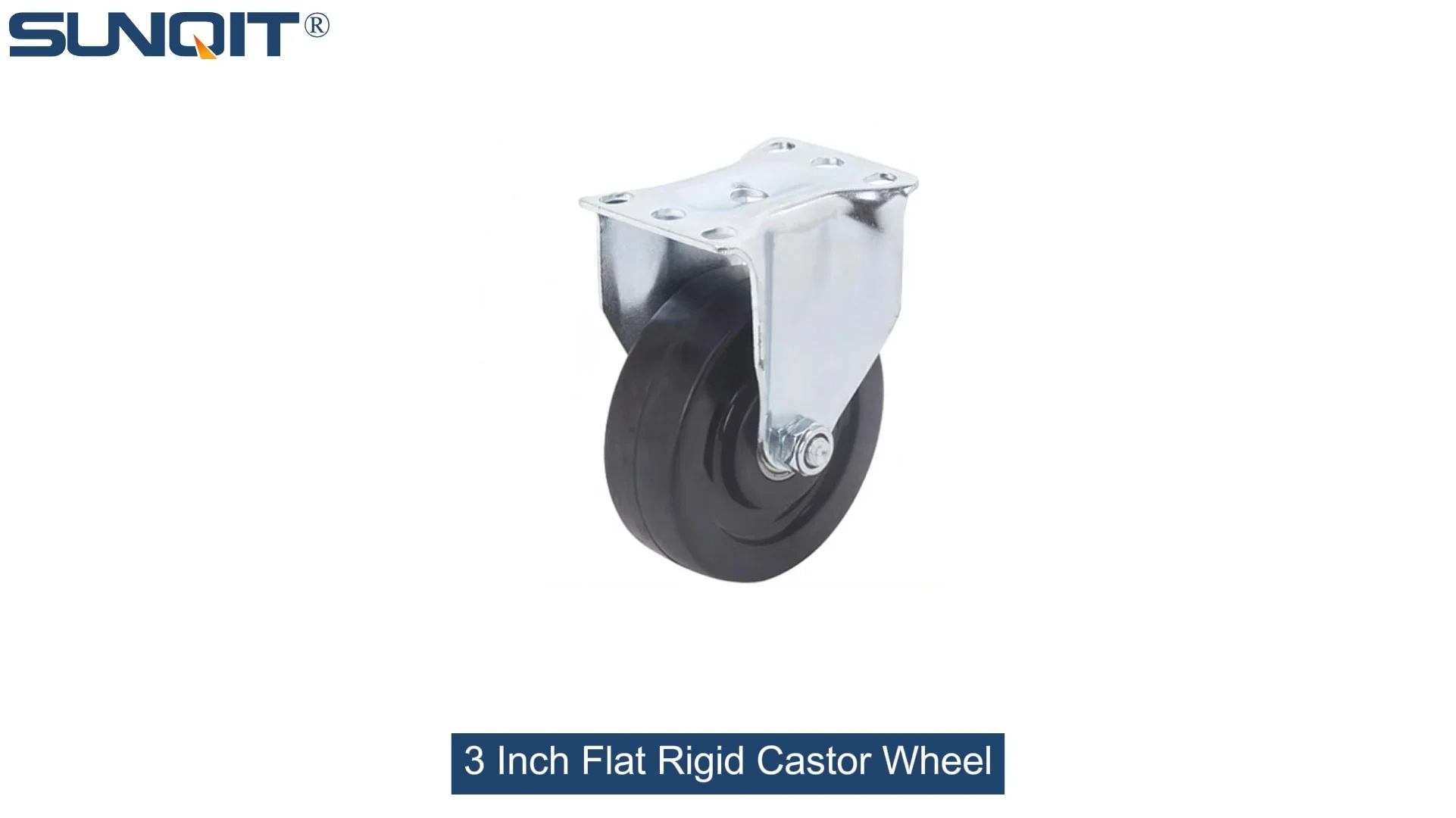
Flat Rigid Castor Wheel
Chair Casters Ball Bearing Wheels Rubber Base. Resistant to abrasion, impact and corrosion. Heavy payload can hold 70Kgs per pcs,which can make it works at a stable and smooth status.
Introduction: The Unsung Heroes of Workplace Mobility
Let's take a moment to look down—right now, as you're reading this. What's supporting the surface you're on? Maybe a desk, a table, or a workbench. And if that surface is mobile, there's a good chance it's sitting on a set of wheels. Castor wheels, those small but mighty components, are the quiet workhorses of factories, warehouses, offices, and workshops worldwide. They turn static furniture into movable assets, streamline workflows, and reduce the physical strain of moving heavy objects. But not all castors are created equal. Today, we're zooming in on a specific type: flat rigid castor wheels.
Unlike swivel castors that pivot 360 degrees, flat rigid castor wheels are fixed in direction—they roll straight, no surprises. This rigidity makes them ideal for applications where stability and predictable movement matter most. Whether you're pushing a loaded turnover trolley and rack through a warehouse or positioning a heavy workbench in a workshop, the load rating of these wheels isn't just a number; it's a promise of safety, efficiency, and longevity.
In this article, we'll walk through everything you need to know about load ratings for flat rigid castor wheels, from light-duty tasks that barely break a sweat to heavy-duty industrial jobs that demand brute strength. We'll explore how these ratings are determined, what materials make the difference, and why choosing the right one can save you from costly breakdowns (or worse, accidents). By the end, you'll be equipped to pick the perfect flat rigid castor wheel for your needs—no engineering degree required.
Unlike swivel castors that pivot 360 degrees, flat rigid castor wheels are fixed in direction—they roll straight, no surprises. This rigidity makes them ideal for applications where stability and predictable movement matter most. Whether you're pushing a loaded turnover trolley and rack through a warehouse or positioning a heavy workbench in a workshop, the load rating of these wheels isn't just a number; it's a promise of safety, efficiency, and longevity.
In this article, we'll walk through everything you need to know about load ratings for flat rigid castor wheels, from light-duty tasks that barely break a sweat to heavy-duty industrial jobs that demand brute strength. We'll explore how these ratings are determined, what materials make the difference, and why choosing the right one can save you from costly breakdowns (or worse, accidents). By the end, you'll be equipped to pick the perfect flat rigid castor wheel for your needs—no engineering degree required.
What Exactly Is a "Load Rating"—and Why Does It Matter?
Let's start with the basics: A load rating is the maximum weight a single castor wheel can safely support under normal operating conditions. Think of it as a castor's "strength limit." Exceed it, and you're not just risking a broken wheel—you could be looking at damaged equipment, workplace injuries, or even halted production.
But here's the catch: Load ratings aren't arbitrary. They're determined by rigorous testing, considering factors like the wheel's material, diameter, tread type, bearing quality, and how it's mounted to the equipment. For example, a small plastic wheel might handle 50kg, while a steel-reinforced one could take 2,000kg or more. And it's not just about the wheel itself—caster accessories like axles, brackets, and mounting plates also play a role in distributing weight evenly.
Why does this matter for you? Imagine you're running a small electronics workshop. You buy a workbench with light-duty flat rigid castors, assuming it'll handle your tools and components. But one day, you load it up with heavy testing equipment, and mid-move, a wheel buckles. Suddenly, you're dealing with a broken workbench, scattered parts, and a potential safety hazard. That's the cost of ignoring load ratings. On the flip side, overbuying—choosing a heavy-duty castor for a light load—wastes money and adds unnecessary bulk. It's all about balance.
But here's the catch: Load ratings aren't arbitrary. They're determined by rigorous testing, considering factors like the wheel's material, diameter, tread type, bearing quality, and how it's mounted to the equipment. For example, a small plastic wheel might handle 50kg, while a steel-reinforced one could take 2,000kg or more. And it's not just about the wheel itself—caster accessories like axles, brackets, and mounting plates also play a role in distributing weight evenly.
Why does this matter for you? Imagine you're running a small electronics workshop. You buy a workbench with light-duty flat rigid castors, assuming it'll handle your tools and components. But one day, you load it up with heavy testing equipment, and mid-move, a wheel buckles. Suddenly, you're dealing with a broken workbench, scattered parts, and a potential safety hazard. That's the cost of ignoring load ratings. On the flip side, overbuying—choosing a heavy-duty castor for a light load—wastes money and adds unnecessary bulk. It's all about balance.
Light-Duty Flat Rigid Castor Wheels: Small Loads, Big Convenience
s
Let's start with the lightweights: flat rigid castor wheels rated for up to 100kg per wheel. These are the castors you'll find on everything from office chairs (though those often swivel) to small utility carts and, yes, even some workbenches designed for lighter tasks.
Materials That Shine Here: Light-duty wheels are typically made from plastic (like nylon or polypropylene) or rubber, with soft treads that grip smooth floors and reduce noise. Plastic is affordable and resistant to corrosion, making it great for indoor use. Rubber, on the other hand, adds a cushion—ideal for environments where you don't want to scratch floors, like retail stores or labs.
Common Applications: Think of the rolling cart in your kitchen that holds spices, or the mobile shelving unit in a library. In industrial settings, light-duty flat rigid castors often end up on small parts bins, tool carts, or lightweight workbenches used for assembly tasks (think: assembling small electronics or packaging items). They're also popular in healthcare settings, where quiet, smooth movement is key—no one wants a squeaky cart disturbing patients.
What to Watch For: While light-duty castors are convenient, they're not built for rough-and-tumble use. Gravel, cracks in the floor, or sudden impacts can damage their thin treads or plastic cores. And remember: the load rating is per wheel. If your cart has four wheels, a 100kg per-wheel rating means a total capacity of 400kg—but that includes the cart's own weight! Always subtract the equipment's weight from the total to avoid overloading.
Materials That Shine Here: Light-duty wheels are typically made from plastic (like nylon or polypropylene) or rubber, with soft treads that grip smooth floors and reduce noise. Plastic is affordable and resistant to corrosion, making it great for indoor use. Rubber, on the other hand, adds a cushion—ideal for environments where you don't want to scratch floors, like retail stores or labs.
Common Applications: Think of the rolling cart in your kitchen that holds spices, or the mobile shelving unit in a library. In industrial settings, light-duty flat rigid castors often end up on small parts bins, tool carts, or lightweight workbenches used for assembly tasks (think: assembling small electronics or packaging items). They're also popular in healthcare settings, where quiet, smooth movement is key—no one wants a squeaky cart disturbing patients.
What to Watch For: While light-duty castors are convenient, they're not built for rough-and-tumble use. Gravel, cracks in the floor, or sudden impacts can damage their thin treads or plastic cores. And remember: the load rating is per wheel. If your cart has four wheels, a 100kg per-wheel rating means a total capacity of 400kg—but that includes the cart's own weight! Always subtract the equipment's weight from the total to avoid overloading.
Medium-Duty: Stepping Up to Daily Industrial Grind
Move up the scale, and you'll hit medium-duty flat rigid castor wheels, which typically handle loads between 100kg and 500kg per wheel. These are the workhorses of warehouses, manufacturing plants, and distribution centers—they're tough enough for daily use but still nimble enough to maneuver in tight spaces.
Materials That Mean Business: Medium-duty wheels often upgrade to polyurethane (PU) treads, which offer the best of both worlds: the durability of plastic and the grip of rubber. Nylon is another common choice here, especially for applications where chemicals or oils are present (nylon resists most solvents). Some models even have steel cores for added strength, with a PU or rubber outer layer to protect floors.
Where You'll Find Them: If you've ever pushed a loaded turnover trolley and rack through a warehouse aisle, you've probably used medium-duty flat rigid castors. These trolleys, which carry boxes, parts, or finished goods, rely on the castors' rigidity to stay on track, even when fully loaded. They're also standard on mobile workstations in assembly lines, where workers need to position tools and materials exactly where they're needed.
Key Features to Look For: Medium-duty castors often come with precision bearings, which reduce friction and make rolling easier—important when you're pushing a 400kg load. You might also see reinforced mounting plates (the metal part that attaches the wheel to the equipment) and thicker axles to prevent bending. And don't overlook caster accessories here: some medium-duty models include brake mechanisms, which lock the wheel in place to keep your trolley from rolling away on sloped floors.
Materials That Mean Business: Medium-duty wheels often upgrade to polyurethane (PU) treads, which offer the best of both worlds: the durability of plastic and the grip of rubber. Nylon is another common choice here, especially for applications where chemicals or oils are present (nylon resists most solvents). Some models even have steel cores for added strength, with a PU or rubber outer layer to protect floors.
Where You'll Find Them: If you've ever pushed a loaded turnover trolley and rack through a warehouse aisle, you've probably used medium-duty flat rigid castors. These trolleys, which carry boxes, parts, or finished goods, rely on the castors' rigidity to stay on track, even when fully loaded. They're also standard on mobile workstations in assembly lines, where workers need to position tools and materials exactly where they're needed.
Key Features to Look For: Medium-duty castors often come with precision bearings, which reduce friction and make rolling easier—important when you're pushing a 400kg load. You might also see reinforced mounting plates (the metal part that attaches the wheel to the equipment) and thicker axles to prevent bending. And don't overlook caster accessories here: some medium-duty models include brake mechanisms, which lock the wheel in place to keep your trolley from rolling away on sloped floors.
Heavy-Duty: When "Strong Enough" Isn't Enough
At the top of the heap are heavy-duty flat rigid castor wheels, designed for loads exceeding 500kg per wheel. These are the tanks of the castor world, built to handle industrial machinery, large storage racks, and even vehicles in some cases.
Materials That Withstand the Heat (and Weight): Heavy-duty wheels mean heavy-duty materials. Cast iron is a classic choice for extreme loads—it's dense, heat-resistant, and virtually indestructible. Steel is another staple, often with a hardened outer layer to resist wear. For applications where floor protection is still a concern (yes, even in factories), you'll find heavy-duty polyurethane wheels with steel cores—they can handle 1,000kg+ per wheel without scratching concrete.
Industrial Giants Rely On Them: Heavy-duty flat rigid castors are everywhere in heavy manufacturing—think automotive plants, where they support mobile tool chests or parts carts loaded with engine blocks. They're also used in construction, under temporary storage racks for building materials, and in mining, where they need to withstand dust, moisture, and rough terrain.
The Cost of Cutting Corners: Overloading a heavy-duty castor is rare (most users know better), but under-specifying is a common mistake. Using a medium-duty castor for a heavy load might save money upfront, but it'll cost you in repairs, downtime, and safety risks. For example, a steel mill once replaced a set of medium-duty castors with heavy-duty ones after a wheel failed, spilling molten metal (thankfully, no one was hurt). The lesson? When in doubt, go heavier.
Materials That Withstand the Heat (and Weight): Heavy-duty wheels mean heavy-duty materials. Cast iron is a classic choice for extreme loads—it's dense, heat-resistant, and virtually indestructible. Steel is another staple, often with a hardened outer layer to resist wear. For applications where floor protection is still a concern (yes, even in factories), you'll find heavy-duty polyurethane wheels with steel cores—they can handle 1,000kg+ per wheel without scratching concrete.
Industrial Giants Rely On Them: Heavy-duty flat rigid castors are everywhere in heavy manufacturing—think automotive plants, where they support mobile tool chests or parts carts loaded with engine blocks. They're also used in construction, under temporary storage racks for building materials, and in mining, where they need to withstand dust, moisture, and rough terrain.
The Cost of Cutting Corners: Overloading a heavy-duty castor is rare (most users know better), but under-specifying is a common mistake. Using a medium-duty castor for a heavy load might save money upfront, but it'll cost you in repairs, downtime, and safety risks. For example, a steel mill once replaced a set of medium-duty castors with heavy-duty ones after a wheel failed, spilling molten metal (thankfully, no one was hurt). The lesson? When in doubt, go heavier.
Comparing Load Classes: A Quick Reference Table
| Load Class | Per-Wheel Load Range | Common Materials | Typical Applications | Key Features | Limitations |
|---|---|---|---|---|---|
| Light-Duty | Up to 100kg | Plastic (nylon, PP), rubber | Office carts, small workbenches, lab equipment | Quiet, affordable, floor-friendly | Not for rough floors or heavy impacts |
| Medium-Duty | 100kg – 500kg | Polyurethane (PU), nylon, steel-core rubber | Turnover trolley and rack, assembly line workstations, warehouse carts | Precision bearings, chemical resistance, reinforced axles | May struggle with extreme heat or heavy oils |
| Heavy-Duty | 500kg+ | Cast iron, steel, steel-core polyurethane | Industrial machinery, large storage racks, mining equipment | Heat-resistant, impact-proof, thick steel mounting plates | Heavy, may damage soft floors without tread |
Real-World Case Studies: When Load Ratings Make or Break the Day
Let's ground this in real life with a few examples of how choosing the right (or wrong) flat rigid castor wheel load rating played out for businesses.
Case Study 1: The Warehouse Trolley That Almost Caused a Disaster
A mid-sized e-commerce warehouse in Texas was using medium-duty flat rigid castors on their turnover trolley and rack units. Each trolley was rated to carry 800kg (four wheels x 200kg per wheel). But during peak season, workers started overloading them with 1,000kg of packages to save time. One day, a trolley's wheel snapped mid-roll, sending boxes crashing to the floor. No one was hurt, but the warehouse lost hours of productivity cleaning up and restocking. The fix? Upgrading to heavy-duty castors with a 300kg per-wheel rating—total capacity 1,200kg—giving them a safety buffer for busy seasons.
Case Study 2: The Workshop Workbench That Stayed Put
A small machine shop in Ohio needed a mobile workbench for their milling tools. The owner initially chose light-duty castors (100kg per wheel) because they were cheaper. But the workbench itself weighed 150kg, and adding tools pushed it to 300kg—way over the 400kg total capacity (four wheels x 100kg). The castors bent within a week. After consulting a supplier, they switched to medium-duty castors (200kg per wheel), giving them a total capacity of 800kg. Three years later, those castors are still rolling smoothly.
Choosing the Right Flat Rigid Castor Wheel: A Step-by-Step Guide
Now that you know the basics, how do you pick the perfect flat rigid castor wheel for your needs? Here's a simple checklist to follow:
1. Calculate Your Total Load: Start with the weight of the equipment itself, then add the maximum weight of the items you'll put on it. Divide that total by the number of wheels (most equipment has 4) to get the per-wheel load. Always round up—if you get 220kg per wheel, choose a castor rated for at least 250kg to be safe.
2. Consider the Environment: Will the castors be indoors or outdoors? On concrete, tile, or gravel? Smooth floors can handle softer treads (rubber, PU), while rough surfaces need harder materials (nylon, steel). If there are chemicals or oils, avoid rubber (it can degrade) and opt for nylon or PU.
3. Think About Movement: How often will the equipment move? If it's stationary most of the time, light-duty might be enough. If it's pushed 50 times a day, medium or heavy-duty bearings will last longer.
4. Check for Caster Accessories: Do you need brakes? A locking mechanism can prevent rolling on slopes. Are the mounting plates compatible with your equipment? Measure the bolt holes to ensure a snug fit.
5. Don't Forget Longevity: Cheaper castors might save money now, but they'll wear out faster. Look for brands that offer warranties—many medium and heavy-duty models come with 1-5 year guarantees.
1. Calculate Your Total Load: Start with the weight of the equipment itself, then add the maximum weight of the items you'll put on it. Divide that total by the number of wheels (most equipment has 4) to get the per-wheel load. Always round up—if you get 220kg per wheel, choose a castor rated for at least 250kg to be safe.
2. Consider the Environment: Will the castors be indoors or outdoors? On concrete, tile, or gravel? Smooth floors can handle softer treads (rubber, PU), while rough surfaces need harder materials (nylon, steel). If there are chemicals or oils, avoid rubber (it can degrade) and opt for nylon or PU.
3. Think About Movement: How often will the equipment move? If it's stationary most of the time, light-duty might be enough. If it's pushed 50 times a day, medium or heavy-duty bearings will last longer.
4. Check for Caster Accessories: Do you need brakes? A locking mechanism can prevent rolling on slopes. Are the mounting plates compatible with your equipment? Measure the bolt holes to ensure a snug fit.
5. Don't Forget Longevity: Cheaper castors might save money now, but they'll wear out faster. Look for brands that offer warranties—many medium and heavy-duty models come with 1-5 year guarantees.
Conclusion: Small Wheels, Big Impact
Flat rigid castor wheels might not be the most glamorous part of your equipment, but they're one of the most critical. Choosing the right load rating isn't just about avoiding breakdowns—it's about creating a safer, more efficient workplace. Whether you're outfitting a small workbench or a fleet of turnover trolley and rack units, taking the time to understand load classes, materials, and applications will pay off in smoother operations and fewer headaches down the line.
So the next time you push a cart or adjust a workbench, take a second to appreciate those flat rigid castor wheels. They're not just rolling—they're supporting your business, one load at a time.
So the next time you push a cart or adjust a workbench, take a second to appreciate those flat rigid castor wheels. They're not just rolling—they're supporting your business, one load at a time.