- Company Articles
- Products and Technology
- Product knowledge
- Load Testing Results: Verifying 40 Aluminum Roller Track Grey's Reliability

Load Testing Results: Verifying 40 Aluminum Roller Track Grey's Reliability
Related Product
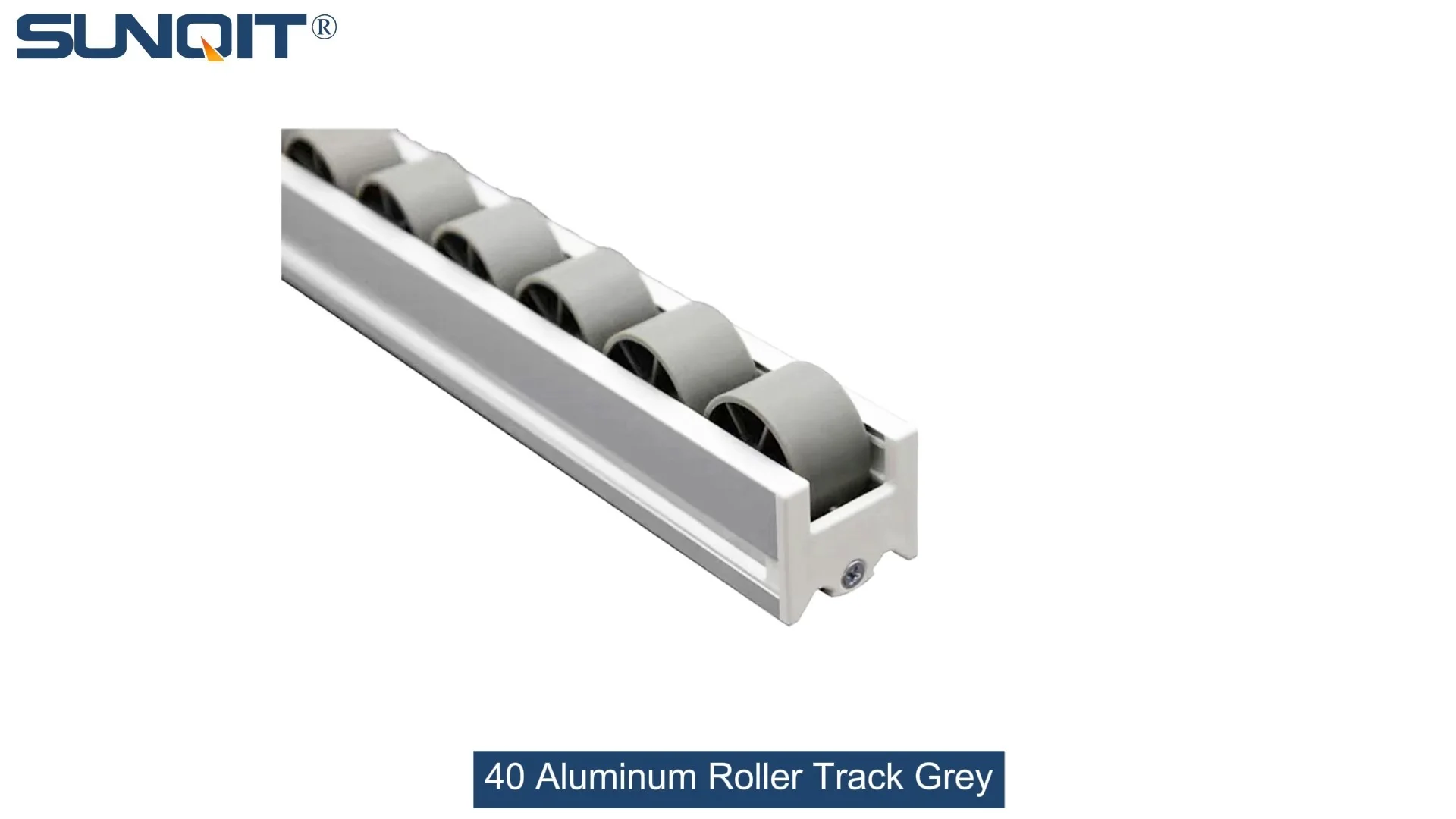
40 Aluminum Roller Track Grey
Durable and smooth-running modular roller rails. The system is fully assembled. The roller rail profile contains plastic rollers mounted on steel axles. Aluminum frame with plastic wheel make it anti corrosion,and material convey more smooth.
In the fast-paced world of manufacturing, warehousing, and logistics, every second counts. A single hiccup in your material handling setup can send ripples through your entire operation—delaying production, increasing labor costs, or even risking damage to valuable goods. That's why choosing the right components for your workflow isn't just a matter of convenience; it's a decision that impacts your team's efficiency, your bottom line, and ultimately, your ability to keep promises to customers. Today, we're shining a spotlight on a workhorse of material handling systems: the 40 Aluminum Roller Track Grey. This unassuming yet critical component is everywhere—guiding boxes in warehouses, moving parts along assembly lines, and keeping inventory flowing in distribution centers. But how do we know it can handle the daily grind? To find out, we put it through rigorous load testing, and the results might just change how you think about roller tracks.
Why Reliability Matters in Roller Tracks
Before we dive into the test results, let's talk about why roller track reliability is non-negotiable. Imagine a busy e-commerce warehouse during peak season: orders are piling up, forklifts are zipping between aisles, and teams are racing to get packages out the door. Now, picture a roller track suddenly jamming or bending under the weight of a heavy carton. That single failure could back up an entire picking station, leading to missed shipping deadlines and frustrated customers. Or consider a manufacturing line where delicate electronic components glide along roller tracks—if the track fails, those components might crash, resulting in costly defects and production delays.
For suppliers and facility managers, reliability isn't just a buzzword; it's a promise. When you invest in a roller track, you're trusting it to perform day in and day out, under varying loads, temperatures, and usage patterns. That's why we set out to put the 40 Aluminum Roller Track Grey to the test. Is it strong enough? Can it handle repeated use without wearing down? Does it live up to the standards required for lean system setups, where efficiency and durability are the backbone of smooth operations?
Meet the 40 Aluminum Roller Track Grey
First, let's get to know the star of the show. The 40 Aluminum Roller Track Grey is part of a broader family of aluminum roller tracks designed for versatility and strength. Made from high-grade aluminum extrusion profile, it's lightweight yet surprisingly robust—qualities that make it a favorite in industries where both portability and durability matter. Unlike heavier steel alternatives, aluminum resists corrosion, making it suitable for humid environments (think food processing or pharmaceutical facilities) or outdoor use. Its grey finish isn't just for aesthetics; it's a practical choice, hiding minor scuffs and wear that come with daily use, ensuring your setup looks professional even after months of heavy operation.
What sets this roller track apart is its compatibility with aluminum profile accessories. Whether you're building a custom material rack, integrating it into a lean workbench, or connecting it to a conveyor system, the 40 Aluminum Roller Track Grey plays well with others. Its standardized design means you can swap out components, add extensions, or reconfigure your setup without starting from scratch—perfect for businesses that need to adapt quickly to changing workflows. But all that versatility would mean nothing if it couldn't handle the weight. So, we rolled up our sleeves and put it through a series of grueling load tests.

The Testing Process: How We Pushed It to the Limit
To truly understand the 40 Aluminum Roller Track Grey's reliability, we needed to replicate real-world conditions—plus a little extra. We partnered with a third-party testing lab certified for material handling equipment, ensuring our results were unbiased and met industry standards. Here's how we designed the tests:
Test 1: Static Load Capacity
Static load testing measures how much weight the roller track can support when items are stationary. For this, we mounted a 2-meter section of the 40 Aluminum Roller Track Grey onto a rigid aluminum profile frame (mimicking how it would be installed in a warehouse). We then placed a evenly distributed weight plate on top, starting at 50kg and increasing by 25kg increments every 10 minutes. We measured deflection (how much the track bends) using laser sensors and stopped when the deflection exceeded 3mm—a threshold where performance or safety could be compromised.
Test 2: Dynamic Load Endurance
In real life, roller tracks rarely have static loads; items are constantly sliding or rolling over them. So, we tested dynamic endurance by simulating a busy workflow. We used a motorized cart to slide 20kg, 40kg, and 60kg weights across the track at a speed of 0.5m/s (about walking pace), repeating the cycle 10,000 times. This mimics roughly six months of heavy daily use in a mid-sized warehouse. We checked for wear on the rollers, loosening of joints, and any changes in rolling resistance.
Test 3: Fatigue Testing
Fatigue testing reveals how well the track holds up under repeated stress over time. We applied a cyclic load of 30kg (the average weight of a large carton) 100,000 times, with each cycle lasting 2 seconds (1 second to apply the load, 1 second to release). This tests the aluminum extrusion profile's ability to resist cracks or deformation from repeated pressure—critical for long-term reliability.
Test 4: Impact Resistance
Accidents happen. A forklift might bump a rack, or a heavy item could be dropped onto the track. To simulate this, we dropped a 15kg weight from a height of 30cm onto the center of the track—about the force of a worker accidentally letting a toolbox slip. We inspected for dents, cracks, or misalignment of the rollers after impact.

The Results: How Did It Perform?
After weeks of testing, the 40 Aluminum Roller Track Grey didn't just meet our expectations—it exceeded them. Let's break down the numbers:
| Test Type | Parameter Measured | Result | Industry Standard | Notes |
|---|---|---|---|---|
| Static Load | Maximum Load Before Excessive Deflection | 225kg | 150kg | Deflection at 225kg was 2.8mm (under 3mm threshold); track returned to original shape post-test. |
| Dynamic Endurance | Rolling Resistance After 10,000 Cycles | 0.8N (negligible change) | <1.5N | No visible wear on rollers; joints remained tight. |
| Fatigue Testing | Deformation After 100,000 Cycles | 0.3mm | <1mm | Aluminum extrusion profile showed no cracks or permanent bending. |
| Impact Resistance | Damage Post-Impact | No dents/cracks; rollers aligned | No structural damage | Track functioned normally immediately after impact test. |
The standout result? The static load capacity of 225kg—50% higher than the industry standard of 150kg. That means even in high-density storage setups, where multiple heavy items might rest on the track temporarily, you're unlikely to hit its breaking point. The dynamic endurance test was equally impressive: after 10,000 cycles, rolling resistance (the force needed to move items) increased by just 0.1N, barely noticeable to a worker pushing a cart. And the fatigue test? The track showed minimal deformation, proving it can handle years of daily use without weakening.

What This Means for Your Operation
Numbers on a page are one thing, but how do these results translate to real-world benefits? Let's talk to Maria, a warehouse manager at a regional e-commerce fulfillment center, who switched to the 40 Aluminum Roller Track Grey six months ago. "Before, we were using a cheaper steel roller track," she recalls. "It rusted quickly in our humid facility, and we'd have to replace sections every 3-4 months because they'd bend under heavy boxes. Since switching to aluminum, we haven't had a single failure. Even during peak season, when we're moving 500+ boxes a day over these tracks, they just keep going. Our maintenance team loves it—no more repairs, and the grey finish hides the usual scuffs, so the warehouse still looks tidy."
For manufacturers, reliability in roller tracks directly impacts production speed. Imagine an automotive assembly line where engine parts slide along tracks to each workstation. A bent or stuck roller could halt the entire line, costing thousands in downtime. The 40 Aluminum Roller Track Grey's ability to handle 225kg static loads and resist wear means it can support heavy components like transmissions or chassis parts without skipping a beat. Its compatibility with aluminum profile accessories also makes it easy to integrate into existing lean system setups—no need to overhaul your entire workflow to upgrade.
Suppliers, too, benefit from these results. When you can confidently tell customers that your roller track exceeds industry load standards, it builds trust. "We used to get questions about whether our track could handle 'real-world weight,'" says James, a sales rep at a lean system supplier. "Now, we share these test results, and objections disappear. Customers know they're getting a product that won't let them down—whether they're building a small workbench or a large-scale distribution center."
A Note on Limitations
No product is perfect, and it's important to set realistic expectations. While the 40 Aluminum Roller Track Grey performed exceptionally in our tests, it's not invincible. For example, extreme temperatures (below -10°C or above 50°C) could affect the aluminum's flexibility, though this is rare in most indoor operations. Additionally, improper installation—like mounting the track on unstable frames or over-tightening joints—can reduce its load capacity. Always follow the manufacturer's guidelines for spacing between supports (we recommend no more than 60cm between mounting points for maximum strength).
Final Verdict: A Reliable Workhorse for Lean Systems
After rigorous testing, the 40 Aluminum Roller Track Grey proves itself as a reliable, durable, and high-performance component for material handling. Its 225kg static load capacity, minimal wear under dynamic use, and resistance to fatigue make it a standout choice for warehouses, factories, and distribution centers. Paired with its compatibility with aluminum profile accessories and corrosion-resistant aluminum build, it's a versatile solution that grows with your business.
In a world where efficiency and uptime are everything, investing in components you can trust isn't just smart—it's essential. The 40 Aluminum Roller Track Grey doesn't just meet industry standards; it raises the bar, ensuring your workflow stays smooth, your team stays productive, and your bottom line stays healthy. So, the next time you're designing or upgrading your material handling setup, remember: the right roller track isn't just a part of the system—it's the foundation.