- Company Articles
- Products and Technology
- Product knowledge
- Logistics Turnaround Carts: How Aluminum Honeycomb Panels Reduce Operator Fatigue

Logistics Turnaround Carts: How Aluminum Honeycomb Panels Reduce Operator Fatigue
Related Product
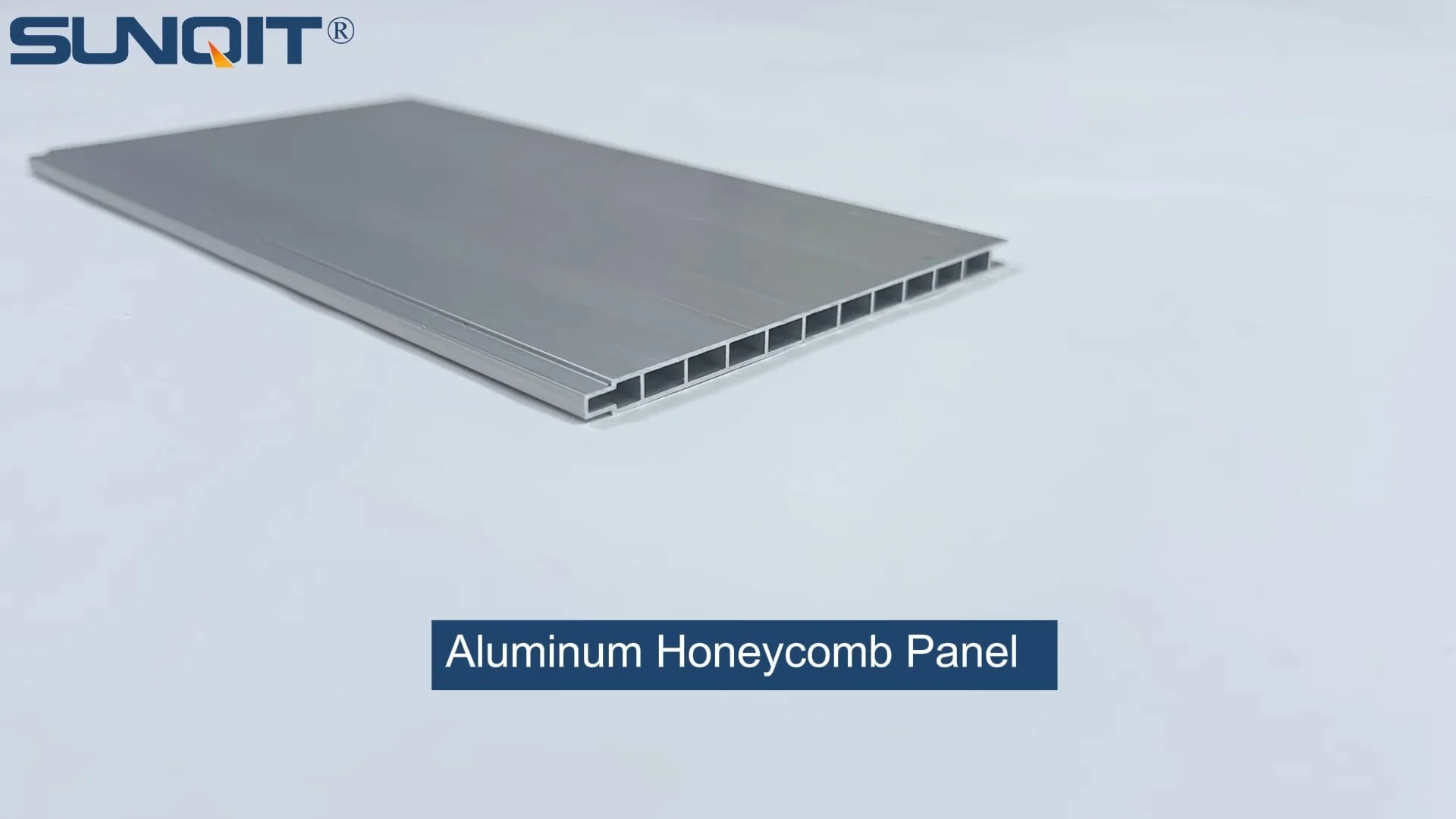
Aluminum Honeycomb Panel
Aluminum honeycomb panel used as table top, side wall, it is connected one pcs by one pcs from the side slot to make a full pieces.This panel width 105mm, 55mm, 35mm are optional for slection.
In the fast-paced world of logistics and warehousing, every second counts. From loading docks to assembly lines, the efficiency of material handling can make or break a company's bottom line. But behind the scenes of every smooth operation are the operators—men and women who spend hours pushing, pulling, and maneuvering heavy carts filled with goods. For these workers, fatigue isn't just a daily annoyance; it's a silent productivity killer, a safety risk, and a drain on morale. Enter the logistics turnaround cart: a workhorse of material handling. But not all carts are created equal. Today, we're diving into how one innovation—aluminum honeycomb panels—is revolutionizing these carts, turning them from sources of strain into tools that protect operators, boost efficiency, and align with the principles of lean systems.
The Role of Turnaround Carts in Modern Logistics
First, let's clarify what we mean by "logistics turnaround carts." These are the unsung heroes of warehouses, distribution centers, and manufacturing facilities—mobile platforms designed to transport goods between workstations, storage areas, or shipping zones. Think of them as the connective tissue of a logistics operation: they move raw materials to production lines, finished products to packaging stations, and orders to shipping docks. Some are simple flatbed carts; others are specialized, like the turnover trolley and rack, which feature shelves or racks to organize and separate items, making it easier to load and unload goods in sequence.
For decades, these carts were built using traditional materials: steel frames with wooden or steel decks, plastic bins, or even plywood. While these materials are cheap and readily available, they come with a critical flaw: weight. A fully loaded steel cart can weigh hundreds of pounds, and even empty, the cart itself might tip the scales at 50 to 100 pounds. Now, imagine pushing that cart across a warehouse floor for 8 hours a day, navigating tight corners, stopping and starting, and lifting it onto ramps or elevators. Over time, that constant strain adds up. Operators report sore backs, tired shoulders, and fatigued arms—symptoms that don't just end when the shift does. Chronic fatigue leads to slower reaction times, increased risk of accidents, and even long-term musculoskeletal injuries like tendonitis or herniated discs.
The problem isn't just physical. Fatigue also takes a toll on mental focus. An operator struggling to push a heavy cart is less likely to notice a spilled liquid on the floor, a loose caster wheel, or a mislabeled package. Mistakes happen, delays pile up, and suddenly, that "reliable" cart becomes a bottleneck in the supply chain. In short, traditional carts are a classic example of "necessary waste" in logistics—they get the job done, but at the expense of the people doing the work.
Aluminum Honeycomb Panels: A Game-Changer in Material Design
So, how do we fix this? The answer lies in reimagining the materials we use to build these carts. Enter aluminum honeycomb panels—a technology borrowed from aerospace and automotive industries, where lightweight strength is non-negotiable. But what exactly are they?
Aluminum honeycomb panels are engineered composite materials. Picture a sandwich: two thin sheets of aluminum (the "faces") bonded to a core that looks like a honeycomb—hexagonal cells made of aluminum foil. This structure is deceptively simple, but it's genius. The honeycomb core distributes weight evenly across the panel, while the aluminum faces provide rigidity and resistance to bending or denting. The result? A material that's up to 70% lighter than solid steel but just as strong, if not stronger, in terms of load-bearing capacity.
To put that in perspective: a standard 4x8-foot steel panel might weigh 50 pounds, while an aluminum honeycomb panel of the same size and load capacity weighs just 15 pounds. That difference isn't just a number—it's a game-changer for anyone who has to move that panel every day. But the benefits don't stop at weight. Aluminum honeycomb panels are also corrosion-resistant (no rust, even in damp warehouses), non-conductive (safe for electronics handling), and surprisingly flexible in design. They can be cut to custom sizes, coated with anti-slip surfaces, or even integrated with other materials like wood or plastic for specific uses.

How Aluminum Honeycomb Panels Reduce Operator Fatigue
Let's get to the heart of the matter: how does swapping traditional cart decks for aluminum honeycomb panels actually reduce operator fatigue? It starts with the most obvious factor: weight reduction . Remember that 15-pound panel vs. 50-pound steel panel? Multiply that by the size of a cart deck—say, 3x4 feet—and the cart itself becomes 100 pounds lighter before you even load it with goods. For an operator pushing that cart 20 times a day, that's 2,000 pounds less strain on their body. Over a week, that's 10,000 pounds. Over a year? It's the difference between a manageable workload and chronic overexertion.
But weight isn't the only factor. The ergonomics of movement matter just as much. A lighter cart is easier to accelerate, decelerate, and maneuver. Traditional steel carts often feel "clunky"—they resist turning, require more force to start rolling, and are harder to stop smoothly. This constant battle against inertia tires out operators' arms and shoulders, even if the cart isn't "heavy" in the abstract. Aluminum honeycomb carts, by contrast, glide more easily, especially when paired with high-quality caster wheels. The reduced rolling resistance means operators don't have to lean into the cart with their whole body; a gentle push is often enough to get it moving. This translates to less strain on muscles and joints, and less fatigue at the end of the shift.
There's also a psychological component. Fatigue isn't just physical—it's mental. When an operator knows they're pushing a lighter, more maneuverable cart, they approach the task with less dread. They're more likely to stay focused, take fewer breaks, and maintain a consistent pace. One study by the National Institute for Occupational Safety and Health (NIOSH) found that workers using ergonomically designed tools reported 30% higher job satisfaction and 25% fewer "mental fatigue" incidents, like forgetfulness or slow reaction times. Aluminum honeycomb carts, in short, don't just make the body feel better—they make the mind feel sharper, too.

Beyond Fatigue: Additional Benefits for Logistics Operations
While reducing operator fatigue is the star benefit, aluminum honeycomb panels bring a host of other advantages to logistics turnaround carts—advantages that make them a smart investment for any operation, regardless of size. Let's start with durability . Unlike wood, which warps or splinters over time, or plastic, which cracks under heavy loads, aluminum honeycomb panels are built to last. The honeycomb core resists dents and impacts, even from dropped tools or heavy boxes. The aluminum faces are scratch-resistant, and since they don't rust, they hold up in humid or wet environments—think cold storage facilities or outdoor loading docks. In fact, many manufacturers warranty these panels for 10+ years, which is far longer than the 2-3 year lifespan of a typical wooden or steel cart deck.
Then there's load capacity . You might assume a lighter material can't handle heavy loads, but aluminum honeycomb panels defy that logic. Thanks to their honeycomb structure, they distribute weight evenly across the entire deck. A standard panel can support up to 500 pounds per square foot—more than enough for most logistics needs, from boxes of electronics to bulkier items like automotive parts. This means operators can load more goods onto a single cart, reducing the number of trips they need to make. Fewer trips = less time pushing carts = more time focused on higher-value tasks, like sorting or quality control.
Maintenance is another area where these panels shine. Traditional cart decks require regular upkeep: sanding and repainting steel to prevent rust, replacing warped wood, or patching cracked plastic. Aluminum honeycomb panels? They're virtually maintenance-free. A quick wipe with a damp cloth is usually all it takes to keep them clean. And if they do get damaged (say, a forklift bumps into the cart), the modular design means you can replace just the panel, not the entire cart. Over time, this reduces repair costs and downtime—two key metrics for lean systems, which prioritize eliminating waste in all forms.
Speaking of lean systems: aluminum honeycomb carts align perfectly with lean principles. Lean is all about eliminating "muda," or waste—whether it's wasted time, wasted materials, or wasted effort. Operator fatigue is a form of "non-value-added" waste: it doesn't contribute to the product or service, but it drains resources (like sick days or workers' compensation claims). By reducing fatigue, aluminum honeycomb carts help eliminate that waste, creating a smoother, more efficient workflow. They also support other lean goals, like "flow" (faster, more consistent material movement) and "respect for people" (investing in tools that make workers' lives easier).
Real-World Impact: Case Studies and Operator Testimonials
It's one thing to talk about benefits in theory—let's look at how this plays out in real operations. Take, for example, a mid-sized electronics manufacturer in Ohio that recently switched 50 of its steel turnaround carts to aluminum honeycomb models. Before the switch, the company was struggling with a 15% turnover rate among material handlers, citing "physical strain" as the top reason for leaving. Workers compensation claims for back injuries averaged $20,000 per incident, and productivity reports showed operators taking 2-3 more breaks per shift than the company's target.
Six months after rolling out the new carts, the results were striking: Turnover dropped to 5%, a 67% improvement. Workers compensation claims fell by 80%, saving the company over $100,000 in a single year. And productivity? Operators were taking just 1-2 breaks per shift, and the time to move materials between workstations decreased by 12%. "I used to go home with my shoulders burning and my lower back aching," said one operator, Maria, who had worked at the facility for 8 years. "Now, at the end of the day, I still have energy to play with my kids. It's like night and day."
Another example: a large distribution center in Texas that handles e-commerce orders. The center uses hundreds of turnover trolley and rack carts to move packages from sorting stations to shipping lanes. The carts, originally made with wooden decks, were heavy and prone to splintering, which posed a risk of damaging packages. After switching to aluminum honeycomb panels, the center saw a 25% reduction in "damaged goods" reports, as the smooth, non-splintering surface protected packages better. More importantly, operators reported that even fully loaded carts (with up to 300 pounds of packages) felt "half as heavy" to push. As a result, the center increased the number of orders processed per shift by 10%—all without adding extra staff.
Comparison Table: Traditional Cart Materials vs. Aluminum Honeycomb Panels
| Material Type | Average Weight (per sq ft) | Load Capacity (per sq ft) | Durability | Ergonomic Impact | Long-Term Cost* |
|---|---|---|---|---|---|
| Steel | 12-15 lbs | 600-800 lbs | High (but prone to rust) | High fatigue (heavy, hard to maneuver) | High (maintenance, injuries, replacement) |
| Wood | 8-10 lbs | 300-500 lbs | Low (warps, splinters, rots) | Moderate fatigue (heavier than plastic, uneven surface) | Very high (frequent replacement, damaged goods) |
| Plastic | 5-7 lbs | 200-300 lbs | Moderate (cracks under heavy loads, fades in sunlight) | Low fatigue (light, but flexes under load) | Moderate (replacement every 2-3 years) |
| Aluminum Honeycomb Panel | 3-4 lbs | 400-600 lbs | Very high (rust-resistant, impact-resistant) | Very low fatigue (lightweight, smooth rolling) | Low (10+ year lifespan, minimal maintenance) |
*Long-term cost includes initial purchase price, maintenance, replacement, and indirect costs like worker injuries or lost productivity.
Conclusion: Investing in Operator Well-Being for Sustainable Success
Logistics turnaround carts might seem like a small part of a huge operation, but as we've seen, they have a massive impact on the people who keep the wheels turning—literally. Aluminum honeycomb panels aren't just a "nice-to-have" upgrade; they're a strategic investment in operator well-being, safety, and long-term efficiency. By reducing weight, improving maneuverability, and boosting durability, these panels turn carts from sources of strain into tools that empower operators to do their best work.
The benefits ripple outward, too: lower turnover, fewer injuries, higher productivity, and alignment with lean system principles that drive waste reduction. In an industry where margins are tight and competition is fierce, these advantages can be the difference between falling behind and staying ahead. So, the next time you walk through a warehouse or distribution center, take a look at the carts. Are they helping your operators—or holding them back?
At the end of the day, logistics isn't just about moving goods. It's about moving people—supporting them, protecting them, and giving them the tools they need to thrive. Aluminum honeycomb panels do exactly that. And in doing so, they don't just reduce fatigue—they build stronger, more resilient operations that can weather any challenge.