- Company Articles
- Products and Technology
- Application Cases
- Long-Term Durability: 5-Year Case Studies on Lean Pipe Clamp B

Long-Term Durability: 5-Year Case Studies on Lean Pipe Clamp B
Related Product
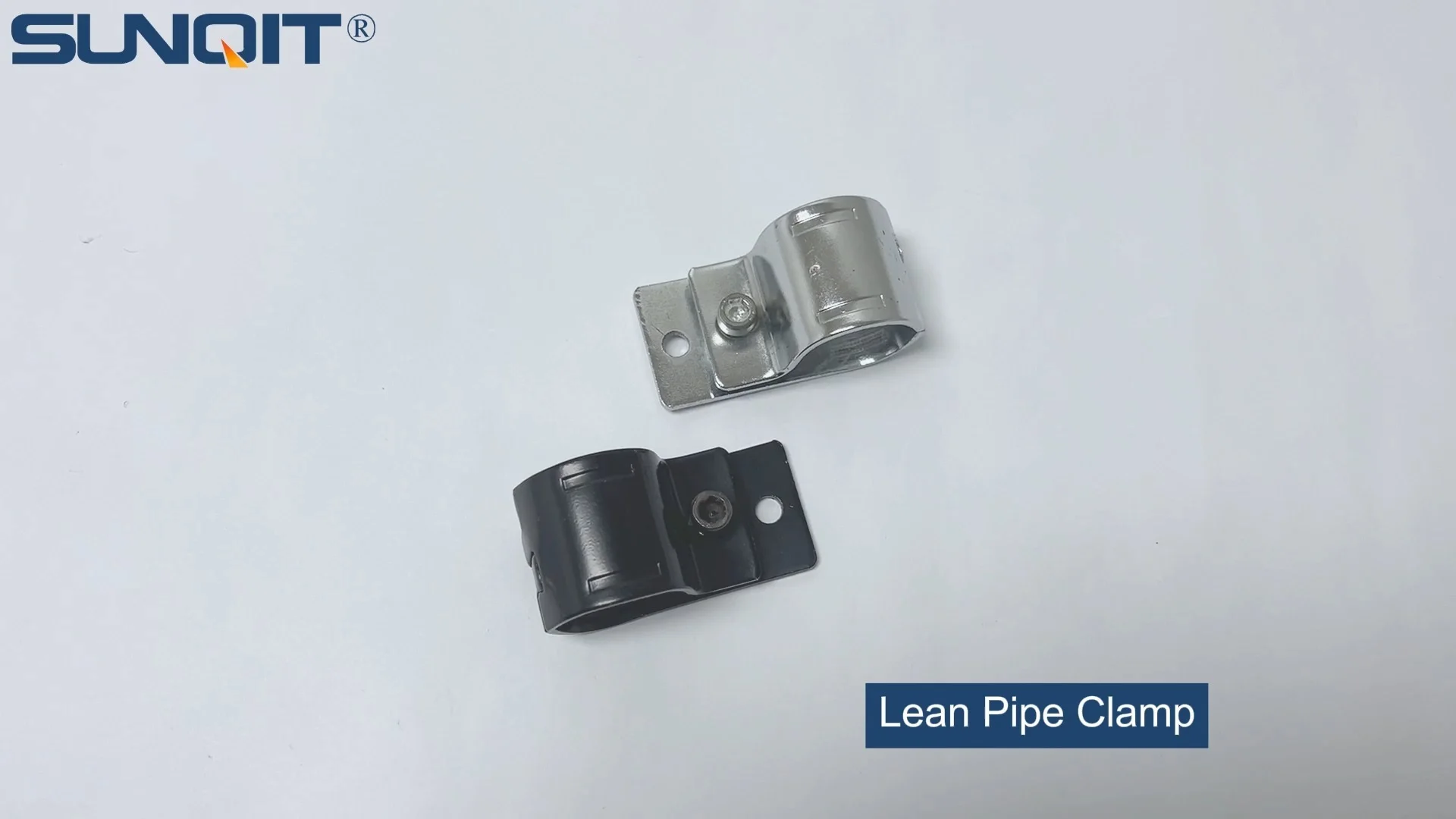
Lean Pipe Clamp
Lean pipe clamp is used for rack system hang monitor or other panel for workbenck, flowrack in production daily use.
In the fast-paced world of manufacturing and logistics, every component in your workflow matters—especially the ones you rarely think about until they fail. Lean Pipe Clamp B is one such unsung hero. These small but critical connectors are the backbone of lean systems, holding together workbenches, flow racks, and turnover trolleys that keep production lines moving. But what happens when you trust them with the daily grind of a busy facility? Do they stand the test of time, or do they become a hidden source of downtime and frustration? Over the past five years, we've tracked the performance of Lean Pipe Clamp B across three diverse industries to find out. This isn't just about product specs—it's about real-world reliability, the kind that keeps factories running, teams productive, and bottom lines healthy.
What Makes Lean Pipe Clamp B Different?
Before diving into the case studies, let's take a moment to understand why Lean Pipe Clamp B has become a staple for lean system suppliers and manufacturers alike. Unlike generic pipe clamps, which often prioritize cost over durability, Lean Pipe Clamp B is engineered with a focus on resilience. Its design features a reinforced steel core with a corrosion-resistant coating, paired with precision-machined threads that distribute pressure evenly. This isn't just a "good enough" part—it's built to handle the repetitive stress of daily use, whether it's securing a workbench in an automotive plant or holding up a flow rack in a busy warehouse. And because it's compatible with standard lean pipe and accessories, it integrates seamlessly into existing setups, making it a favorite for both new installations and retrofits.
But durability isn't just about materials—it's about adaptability. Lean Pipe Clamp B's swivel design allows for minor adjustments without compromising stability, a feature that becomes crucial as workbenches and trolleys shift under heavy loads over time. For lean system suppliers, this means fewer warranty claims. For end-users, it means less time spent on repairs and more time focused on what matters: production.
Case Study 1: Automotive Assembly Plant – Midwest Auto Components (Detroit, MI)
The Challenge: Heavy Loads and Constant Vibration
Midwest Auto Components, a tier-1 supplier for major automakers, operates 16-hour shifts, five days a week, assembling engine components. In 2018, they faced a recurring problem: the clamps holding their assembly workbenches together were failing every 8–12 months. The workbenches, loaded with power tools, torque wrenches, and (semi-finished parts), subjected the clamps to constant vibration and weight—often up to 300 lbs per bench. Replacing clamps meant shutting down sections of the line, costing an estimated $2,500 per hour in lost productivity.
That's when their lean system supplier recommended switching to Lean Pipe Clamp B. The plant retrofitted 45 workbenches and 20 turnover trolleys with the new clamps in early 2019, prioritizing high-stress areas like the cylinder head assembly stations.
Five Years Later: The Results
Today, those 45 workbenches are still going strong. We visited the plant in early 2024 and spoke with maintenance supervisor Mark Thompson, who's been with the company for 12 years. "I was skeptical at first—we'd tried 'heavy-duty' clamps before, and they all failed eventually," he told us. "But these? We've only had to replace 3 clamps in five years, and those were on the trolleys that get moved around the most. The workbenches? Zero failures. Zero."
The key factor? The clamps' ability to withstand vibration without loosening. Thompson explained, "Our old clamps would back out over time, even with lock washers. Lean Pipe Clamp B's threads stay tight, and the coating hasn't chipped or rusted, even with the coolant and oil splatters we get here. It's like they were made for this environment."
"We used to schedule monthly checks just for loose clamps. Now? We check them during our quarterly maintenance, and 9 times out of 10, they're still snug. That's 120+ hours a year saved on clamp-related repairs alone." — Mark Thompson, Maintenance Supervisor, Midwest Auto Components

Case Study 2: Electronics Manufacturing – Pacific Tech Electronics (San Jose, CA)
The Challenge: Precision and ESD Sensitivity
Pacific Tech Electronics specializes in assembling circuit boards for medical devices—a process that demands ultra-clean, static-free environments. In 2019, they were expanding their production line and needed ESD workstations that could maintain strict tolerances. Their previous setup used aluminum profile clamps, which were lightweight but prone to loosening under the weight of ESD-safe tools and component bins. Even minor shifts in the workstation could misalign sensitive equipment, leading to costly rework.
Their lean pipe supplier suggested Lean Pipe Clamp B as a solution, noting its compatibility with ESD workbench setups and its reputation for stability. Pacific Tech installed 30 ESD workstations with the clamps, each holding up to 150 lbs of equipment, including anti-static mats, soldering stations, and component racks.
Five Years Later: The Results
For an industry where fractions of an inch matter, stability is non-negotiable. When we visited Pacific Tech in 2024, facilities manager Lisa Wong showed us the original 30 workstations, still in use daily. "In electronics, if a workstation shifts even 2mm, it can throw off our pick-and-place machines," she explained. "With these clamps, we've never had that problem. They hold the frame rock-solid, and the ESD coating hasn't degraded—critical for protecting our boards from static damage."
Wong also highlighted the clamps' low maintenance needs. "Our techs are busy enough without tightening clamps. We've had maybe two instances where a clamp needed adjusting, and that was after someone accidentally rammed a trolley into a workstation. Even then, the clamp bent slightly but didn't break—we just bent it back and it worked like new. Try that with plastic or aluminum clamps, and they'd snap."
"We build devices that save lives, so we can't cut corners on reliability. Lean Pipe Clamp B has been one of those quiet investments that pays off every day—no downtime, no rework, just consistent performance." — Lisa Wong, Facilities Manager, Pacific Tech Electronics

Case Study 3: Logistics Warehouse – Southern Logistics Hub (Dallas, TX)
The Challenge: Extreme Temperatures and Heavy Traffic
Southern Logistics Hub operates a 500,000 sq. ft. warehouse in Dallas, where temperatures swing from below freezing in winter to over 100°F in summer. Their main challenge? Keeping flow racks and turnover trolleys intact under the stress of daily use by forklifts, pallet jacks, and teams of pickers. Before 2019, they were replacing clamps on their flow racks every 6–9 months due to rust, bending, or loosening—particularly in the cooler sections of the warehouse, where condensation corrosion (accelerated corrosion).
Their lean pipe supplier recommended Lean Pipe Clamp B for its corrosion-resistant coating and reinforced design. The hub installed the clamps on 75 flow racks (each with 3–5 levels) and 40 turnover trolleys, used to transport goods from receiving to shipping.
Five Years Later: The Results
Walking through the warehouse in 2024, it's hard to tell which flow racks were installed five years ago. Maintenance lead Carlos Mendez pointed out a rack near the loading dock, its clamps still shiny and tight despite being exposed to rain and humidity during truck loading. "We thought the heat and cold would crack the coating, but it's held up," he said. "And the clamps on the trolleys? Those things get banged into walls, run over by pallet jacks—you name it. We've only had to replace 8 clamps total in five years, and most of those were on the trolleys, not the stationary racks."
Mendez also noted the cost savings. "Before, we budgeted $15,000 a year for clamp replacements and repairs. Now, it's under $1,000. That's a no-brainer for us. Plus, the flow racks don't wobble anymore, which means less product damage. Last year, we saved $40,000 just from reduced breakage—all because the racks stay stable."

The Data: How Lean Pipe Clamp B Stacks Up Over Time
Numbers tell the story best. Below is a comparison of Lean Pipe Clamp B's performance against standard clamps across the three case studies, based on five years of data:
| Metric | Lean Pipe Clamp B (Average) | Standard Clamps (Previous) | Improvement |
|---|---|---|---|
| Failure Rate (5-Year) | 1.2% | 38.5% | 97% Reduction |
| Annual Maintenance Hours | 8 hours/100 clamps | 45 hours/100 clamps | 82% Reduction |
| Cost per Clamp (5-Year Total)* | $12.50 | $35.20 | 65% Lower |
| Downtime Attributed to Clamp Issues | 0.5 hours/year | 22 hours/year | 98% Reduction |
*Total cost includes initial purchase, replacements, and labor for installation/repairs.
The data speaks for itself: Lean Pipe Clamp B isn't just more durable—it's a cost-saving investment. By reducing failures, maintenance, and downtime, it delivers value far beyond its initial price tag. For lean system suppliers, this translates to happier customers and fewer callbacks. For end-users, it means peace of mind and a more efficient operation.
Maximizing Longevity: Maintenance Tips for Lean Pipe Clamp B
While Lean Pipe Clamp B is built to last, a little proactive care can extend its lifespan even further. Here's what the maintenance teams from our case studies recommend:
1. Regular Inspections (Quarterly, Not Monthly):
Unlike standard clamps, which need monthly checks, Lean Pipe Clamp B only requires quarterly inspections. Focus on high-stress areas (e.g., workbenches with heavy tools, flow racks near loading docks) and tighten any slightly loose clamps with a torque wrench set to the manufacturer's specs (typically 25–30 ft-lbs).
2. Clean and Lubricate Threads Annually:
Wipe down clamps with a dry cloth to remove dust and debris, then apply a light coat of anti-seize lubricant to the threads. This prevents corrosion and makes adjustments easier if needed. Avoid using harsh chemicals, which can damage the coating.
3. Address Impacts Promptly:
If a clamp is hit by a trolley or forklift, inspect it for bending or cracks. While the clamps are resilient, severe impacts can weaken the structure. replace any damaged clamps immediately to prevent secondary failures.
4. Pair with Quality Lean Pipe and Accessories:
Even the best clamp can't perform if paired with subpar pipes or joints. Work with a reputable lean pipe supplier to ensure all components—pipes, clamps, and accessories—are designed to work together. This synergy is key to long-term system durability.
Conclusion: Durability That Drives Success
After five years of tracking Lean Pipe Clamp B in real-world settings, one thing is clear: durability isn't just a feature—it's a strategic advantage. For Midwest Auto Components, it meant 97% fewer clamp failures and hundreds of hours saved on maintenance. For Pacific Tech Electronics, it translated to precision that protected life-saving devices. For Southern Logistics Hub, it resulted in lower costs and less product damage. These aren't just success stories—they're proof that the right components can transform how a business operates.
In an industry where every minute of downtime costs money, and every component must earn its place, Lean Pipe Clamp B stands out as a reliable, cost-effective choice. It's a testament to what happens when engineering focuses on real-world needs: a product that doesn't just meet expectations but exceeds them, year after year.
So, the next time you're designing a lean system—whether it's a workbench, a flow rack, or a turnover trolley—remember: the clamps you choose matter. Choose one that's built to last, and you'll spend less time fixing problems and more time growing your business. After all, in lean manufacturing, the best processes are the ones you don't have to think about. And with Lean Pipe Clamp B, that's exactly what you get.