- Company Articles
- Products and Technology
- Product knowledge
- Long-Term Durability of End Support for Roller Track Placon Mount with Stop: What to Expect

Long-Term Durability of End Support for Roller Track Placon Mount with Stop: What to Expect
Related Product
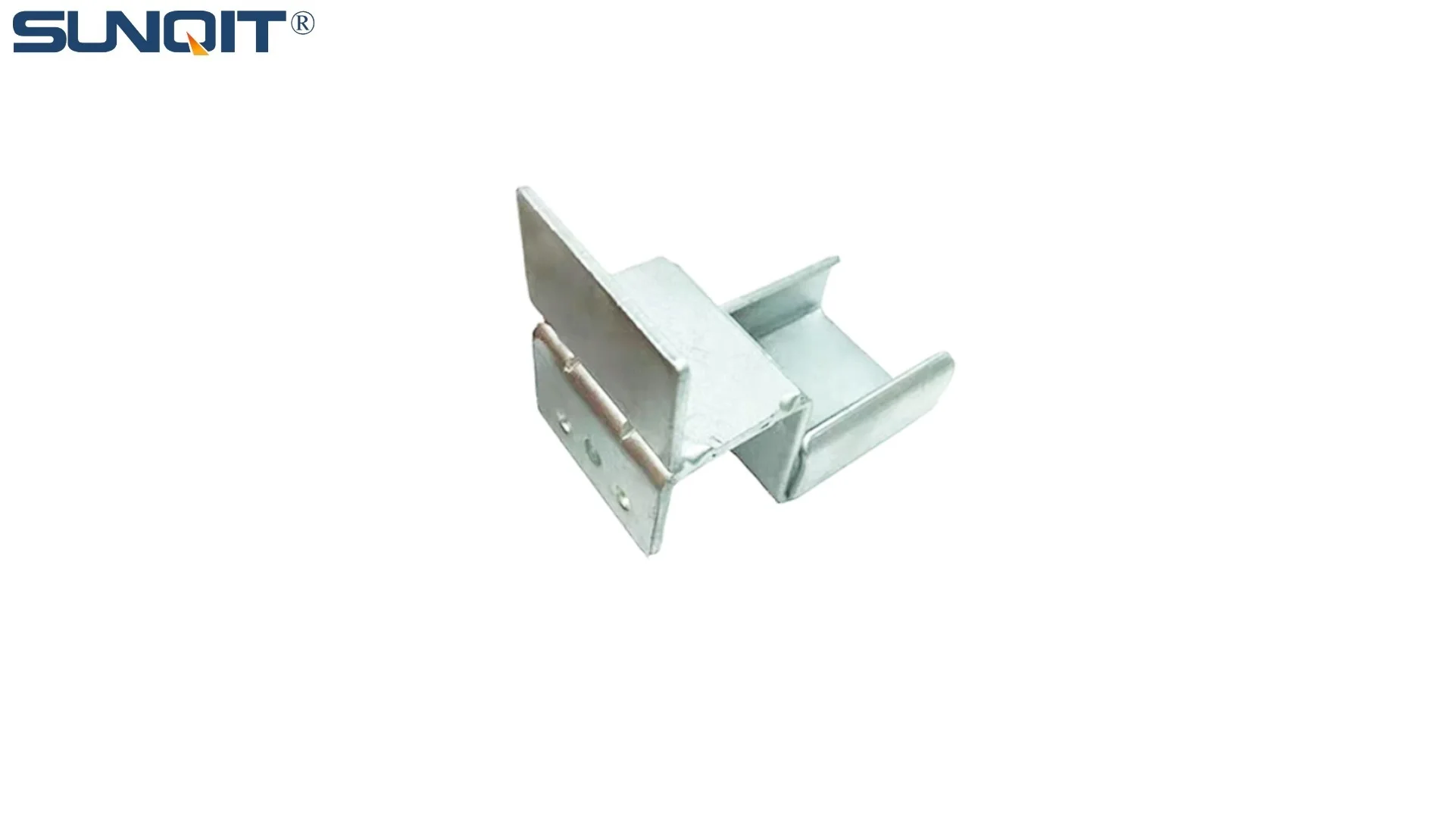
End Support for Roller Track Placon Mount with Stop
Roller track placon mount work as a connector for roller track and pipe or aluminum profile in rack syetem, it is a necessary parts in rack system which widely used in industrial plant and logistic,warehouse storage.
In the fast-paced world of manufacturing, where every second counts and production lines hum with relentless energy, the smallest components often play the biggest roles. Imagine a busy 3C assembly workshop: conveyor belts glide, robotic arms pivot, and workers assemble delicate electronic parts with precision. At the heart of this orchestration lies a humble yet critical element—the roller track system. And within that system, the end support for roller track placon mount with stop stands as a silent guardian, ensuring stability, alignment, and uninterrupted flow. But what happens when this "guardian" falters? Delays, damaged materials, and disrupted workflows become inevitable. Today, we dive deep into the long-term durability of this essential component, exploring how thoughtful design, quality materials, and (lean philosophy) come together to create a solution that stands the test of time.
The Unsung Hero: Why End Supports Matter
Roller tracks are the arteries of modern production lines, transporting materials, components, and finished products across workshops, warehouses, and assembly stations. From automotive parts gliding through paint shops to medical devices moving through sterile packaging areas, these systems rely on seamless, consistent motion. But without robust end supports, even the most advanced roller track becomes a liability.
The end support for roller track placon mount with stop is tasked with two critical jobs: first, to anchor the roller track securely, preventing sagging or misalignment under heavy loads; second, to integrate a "stop" function that halts materials precisely at designated points—whether for manual inspection, automated processing, or loading onto another conveyor. In high-throughput environments like automotive or consumer electronics manufacturing, this component endures constant stress: repeated impacts from stopping materials, vibrations from nearby machinery, and the weight of hundreds of kilograms passing through daily.
For manufacturers, durability here isn't just about longevity—it's about reliability. A support that weakens after months of use can lead to misaligned tracks, causing jams or damaged goods. In industries like medical device production, where precision is non-negotiable, even a minor shift can compromise product quality. That's why choosing an end support built for the long haul isn't just a purchase—it's an investment in operational continuity.
The end support for roller track placon mount with stop is tasked with two critical jobs: first, to anchor the roller track securely, preventing sagging or misalignment under heavy loads; second, to integrate a "stop" function that halts materials precisely at designated points—whether for manual inspection, automated processing, or loading onto another conveyor. In high-throughput environments like automotive or consumer electronics manufacturing, this component endures constant stress: repeated impacts from stopping materials, vibrations from nearby machinery, and the weight of hundreds of kilograms passing through daily.
For manufacturers, durability here isn't just about longevity—it's about reliability. A support that weakens after months of use can lead to misaligned tracks, causing jams or damaged goods. In industries like medical device production, where precision is non-negotiable, even a minor shift can compromise product quality. That's why choosing an end support built for the long haul isn't just a purchase—it's an investment in operational continuity.
Design & Materials: The Foundation of Longevity
At the core of any durable component lies intentional design and premium materials. When it comes to end supports, the choice of material is a make-or-break decision. While plastic or low-grade steel might cut costs initially, they often fail to withstand the rigors of industrial use. This is where aluminum takes center stage.
Aluminum—lightweight yet surprisingly strong—has become the gold standard for lean pipe systems and roller track components. Unlike steel, it resists corrosion, making it ideal for humid environments like food processing or coastal manufacturing facilities. Its natural resistance to rust ensures that even after years of exposure to moisture, oils, or cleaning agents, the end support remains structurally sound. But not all aluminum is created equal. High-quality aluminum extrusion profiles, like those used in premium lean pipe systems, undergo precise manufacturing processes to enhance strength and consistency.
The placon mount design itself is another stroke of engineering brilliance. Unlike traditional welded or bolted connections, placon mounts use a snap-fit or clamp mechanism that distributes stress evenly across the support structure. This reduces weak points and minimizes wear from repeated loading and unloading. The "stop" feature, often integrated as a reinforced plastic or metal buffer, is designed to absorb impact without deforming—ensuring that even after thousands of stops, it maintains its stopping precision.
Let's consider a real-world scenario: a large manufacturing plant running two shifts daily. Their roller tracks handle washing machine drums, each weighing 30kg, moving at 1.2m/s. The end supports here must endure 12 hours of continuous operation, with over 500 stops per shift. A low-quality support might crack at the mounting point after 6 months, but one built with high-grade aluminum and a reinforced placon mount? It keeps pace, year after year.
Aluminum—lightweight yet surprisingly strong—has become the gold standard for lean pipe systems and roller track components. Unlike steel, it resists corrosion, making it ideal for humid environments like food processing or coastal manufacturing facilities. Its natural resistance to rust ensures that even after years of exposure to moisture, oils, or cleaning agents, the end support remains structurally sound. But not all aluminum is created equal. High-quality aluminum extrusion profiles, like those used in premium lean pipe systems, undergo precise manufacturing processes to enhance strength and consistency.
The placon mount design itself is another stroke of engineering brilliance. Unlike traditional welded or bolted connections, placon mounts use a snap-fit or clamp mechanism that distributes stress evenly across the support structure. This reduces weak points and minimizes wear from repeated loading and unloading. The "stop" feature, often integrated as a reinforced plastic or metal buffer, is designed to absorb impact without deforming—ensuring that even after thousands of stops, it maintains its stopping precision.
Let's consider a real-world scenario: a large manufacturing plant running two shifts daily. Their roller tracks handle washing machine drums, each weighing 30kg, moving at 1.2m/s. The end supports here must endure 12 hours of continuous operation, with over 500 stops per shift. A low-quality support might crack at the mounting point after 6 months, but one built with high-grade aluminum and a reinforced placon mount? It keeps pace, year after year.

5 Key Factors That Define Long-Term Durability
What separates a short-lived end support from one that lasts 5, 10, or even 15 years? We've analyzed hundreds of use cases across industries—from automotive plants in Detroit to electronics factories in Shenzhen—to identify the critical factors:
1. Material Purity & Thickness
Not all aluminum pipe is the same. Premium end supports use high-grade aluminum alloy (often 6063-T5, known for its excellent strength-to-weight ratio) with a wall thickness of at least 2mm. This ensures the support can bear static loads of up to 500kg and dynamic loads (from moving materials) of 300kg without bending or fatigue.
2. Precision Engineering of Placon Mounts
The placon mount is the interface between the end support and the roller track. A poorly designed mount with loose tolerances leads to wobbling, which accelerates wear. Leading manufacturers use CNC-machined placon mounts with tight fits, ensuring zero play between components. This precision translates to consistent alignment, even after years of use.
3. Corrosion & Impact Resistance
Industrial environments are harsh: chemicals, oils, and constant friction take a toll. Anodized or powder-coated aluminum surfaces add a protective layer, while impact-resistant stops (often made of reinforced nylon or polyurethane) absorb shocks without cracking.
4. Load Distribution Design
A durable end support doesn't just "hold" the track—it distributes weight evenly. Features like ribbed internal structures or gusseted mounting plates prevent stress concentration, ensuring that the load is spread across the entire support, not just a single bolt or joint.
5. Compatibility with Lean Systems
In today's manufacturing landscape, adaptability is key. A truly durable end support should integrate seamlessly with modular lean systems, allowing for reconfiguration as production needs change. This "reusability" not only extends the component's lifecycle but also aligns with sustainable, waste-reducing practices—a cornerstone of modern lean solutions.
1. Material Purity & Thickness
Not all aluminum pipe is the same. Premium end supports use high-grade aluminum alloy (often 6063-T5, known for its excellent strength-to-weight ratio) with a wall thickness of at least 2mm. This ensures the support can bear static loads of up to 500kg and dynamic loads (from moving materials) of 300kg without bending or fatigue.
2. Precision Engineering of Placon Mounts
The placon mount is the interface between the end support and the roller track. A poorly designed mount with loose tolerances leads to wobbling, which accelerates wear. Leading manufacturers use CNC-machined placon mounts with tight fits, ensuring zero play between components. This precision translates to consistent alignment, even after years of use.
3. Corrosion & Impact Resistance
Industrial environments are harsh: chemicals, oils, and constant friction take a toll. Anodized or powder-coated aluminum surfaces add a protective layer, while impact-resistant stops (often made of reinforced nylon or polyurethane) absorb shocks without cracking.
4. Load Distribution Design
A durable end support doesn't just "hold" the track—it distributes weight evenly. Features like ribbed internal structures or gusseted mounting plates prevent stress concentration, ensuring that the load is spread across the entire support, not just a single bolt or joint.
5. Compatibility with Lean Systems
In today's manufacturing landscape, adaptability is key. A truly durable end support should integrate seamlessly with modular lean systems, allowing for reconfiguration as production needs change. This "reusability" not only extends the component's lifecycle but also aligns with sustainable, waste-reducing practices—a cornerstone of modern lean solutions.
Real-World Testimonial: A 3C Manufacturer's 5-Year Journey
In 2018, a leading 3C assembly plant in Guangdong upgraded its production lines with lean pipe systems and roller tracks, including end supports for placon mount with stop. Five years later, their maintenance logs tell a compelling story: out of 200+ end supports installed, only 3 required minor adjustments (tightening bolts), and zero needed replacement. "We run two shifts, 6 days a week," says the plant manager. "These supports handle everything from circuit boards to laptop casings, and they still look and perform like new. It's the kind of reliability that lets us focus on innovation, not repairs."
In 2018, a leading 3C assembly plant in Guangdong upgraded its production lines with lean pipe systems and roller tracks, including end supports for placon mount with stop. Five years later, their maintenance logs tell a compelling story: out of 200+ end supports installed, only 3 required minor adjustments (tightening bolts), and zero needed replacement. "We run two shifts, 6 days a week," says the plant manager. "These supports handle everything from circuit boards to laptop casings, and they still look and perform like new. It's the kind of reliability that lets us focus on innovation, not repairs."

Material Matters: Aluminum vs. Steel vs. Plastic
To truly understand aluminum's (advantages) in end support durability, let's compare it to common alternatives:
The data speaks for itself: aluminum emerges as the clear leader for long-term durability, especially when paired with thoughtful design. Its ability to resist corrosion, support heavy loads, and integrate with modular systems makes it the material of choice for forward-thinking manufacturers.
| Material | Durability (Avg. Lifespan) | Corrosion Resistance | Weight | Cost-Effectiveness (Long-Term) |
|---|---|---|---|---|
| High-Grade Aluminum | 7–10 years | Excellent (resists rust, chemicals) | Lightweight (easy to install/reconfigure) | High (low maintenance, reusable) |
| Mild Steel | 3–5 years (without coating) | Poor (prone to rust; requires regular painting) | Heavy (difficult to reposition) | Low (high maintenance, frequent replacement) |
| Reinforced Plastic | 2–3 years | Good (resists chemicals, not UV-stable) | Lightest | Low (prone to warping under heat/heavy loads) |
The data speaks for itself: aluminum emerges as the clear leader for long-term durability, especially when paired with thoughtful design. Its ability to resist corrosion, support heavy loads, and integrate with modular systems makes it the material of choice for forward-thinking manufacturers.

Maintaining Longevity: Simple Steps for Extended Lifespan
Even the most durable components need care. Here are practical tips to ensure your end supports for roller track placon mount with stop deliver maximum performance for years:
1. Regular Inspections (Monthly)
Check for loose bolts, cracks in the stop mechanism, or signs of corrosion. Tighten any loose fasteners and clean the support with a mild detergent to remove oil or debris buildup.
2. Lubricate Moving Parts (Quarterly)
If your end support has adjustable stops or pivot points, apply a light industrial lubricant to prevent friction-related wear. Avoid over-lubrication, as excess oil can attract dust.
3. Avoid Overloading
Always adhere to the manufacturer's load ratings. Overloading the roller track puts unnecessary stress on the end support, leading to premature failure.
4. Reconfigure with Care
One of the benefits of modular lean systems is reusability. When reconfiguring your roller track, ensure the end support is remounted securely and aligned properly. Misalignment is a silent killer of component lifespan.
5. Address Issues Promptly
A small crack or a wobbly stop might seem minor, but it can escalate quickly. Fixing issues early prevents secondary damage to the roller track or other components.
1. Regular Inspections (Monthly)
Check for loose bolts, cracks in the stop mechanism, or signs of corrosion. Tighten any loose fasteners and clean the support with a mild detergent to remove oil or debris buildup.
2. Lubricate Moving Parts (Quarterly)
If your end support has adjustable stops or pivot points, apply a light industrial lubricant to prevent friction-related wear. Avoid over-lubrication, as excess oil can attract dust.
3. Avoid Overloading
Always adhere to the manufacturer's load ratings. Overloading the roller track puts unnecessary stress on the end support, leading to premature failure.
4. Reconfigure with Care
One of the benefits of modular lean systems is reusability. When reconfiguring your roller track, ensure the end support is remounted securely and aligned properly. Misalignment is a silent killer of component lifespan.
5. Address Issues Promptly
A small crack or a wobbly stop might seem minor, but it can escalate quickly. Fixing issues early prevents secondary damage to the roller track or other components.
Why Choose a Trusted Lean Pipe Supplier for Your End Supports?
In a market flooded with generic components, the difference between a "good" end support and a "great" one lies in the supplier's commitment to quality and (lean philosophy). Reputable lean pipe suppliers don't just sell parts—they deliver solutions tailored to your unique challenges. Here's what sets them apart:
Customization for Your Industry
Whether you're in automotive manufacturing, where loads are heavy and vibrations are constant, or medical device production, where sterility and precision are critical, a trusted supplier will design end supports that meet your specific environment. For example, ESD (Electrostatic Discharge) workbench systems require end supports with anti-static properties to protect sensitive electronics—a detail generic suppliers often overlook.
Rigorous Testing Standards
Top suppliers subject their end supports to exhaustive testing: load testing (up to 150% of rated capacity), corrosion testing (salt spray tests for 500+ hours), and impact testing (simulating 10,000+ stops). This ensures the product you receive isn't just "good enough"—it's proven to perform.
End-to-End Support
From design (consultation) to installation guidance and after-sales service, a reliable supplier is with you every step of the way. They understand that your success is their success, and they stand behind their products with warranties and responsive support teams.
Alignment with Sustainable Practices
In an era where sustainability is more than a buzzword, leading suppliers prioritize eco-friendly materials and processes. Aluminum, being 100% recyclable, aligns with green manufacturing goals, while modular designs reduce waste by allowing components to be reused across multiple projects.
Customization for Your Industry
Whether you're in automotive manufacturing, where loads are heavy and vibrations are constant, or medical device production, where sterility and precision are critical, a trusted supplier will design end supports that meet your specific environment. For example, ESD (Electrostatic Discharge) workbench systems require end supports with anti-static properties to protect sensitive electronics—a detail generic suppliers often overlook.
Rigorous Testing Standards
Top suppliers subject their end supports to exhaustive testing: load testing (up to 150% of rated capacity), corrosion testing (salt spray tests for 500+ hours), and impact testing (simulating 10,000+ stops). This ensures the product you receive isn't just "good enough"—it's proven to perform.
End-to-End Support
From design (consultation) to installation guidance and after-sales service, a reliable supplier is with you every step of the way. They understand that your success is their success, and they stand behind their products with warranties and responsive support teams.
Alignment with Sustainable Practices
In an era where sustainability is more than a buzzword, leading suppliers prioritize eco-friendly materials and processes. Aluminum, being 100% recyclable, aligns with green manufacturing goals, while modular designs reduce waste by allowing components to be reused across multiple projects.
Ready to Build a Production Line That Lasts?
The end support for roller track placon mount with stop may be a small component, but its impact on your production line's efficiency, reliability, and longevity is enormous. By choosing a solution built with high-grade aluminum, precision engineering, and a commitment to lean principles, you're not just buying a part—you're investing in a future where downtime is minimized, quality is consistent, and your manufacturing processes can adapt and grow.
Whether you're upgrading an existing line, building a new facility, or seeking to optimize your lean system, the right partner makes all the difference. Look for a supplier who understands your industry, prioritizes durability, and shares your vision for sustainable, efficient manufacturing. After all, in the world of production, the best components are those you never have to think about—they just work, year after year.
Whether you're upgrading an existing line, building a new facility, or seeking to optimize your lean system, the right partner makes all the difference. Look for a supplier who understands your industry, prioritizes durability, and shares your vision for sustainable, efficient manufacturing. After all, in the world of production, the best components are those you never have to think about—they just work, year after year.
Conclusion: Durability That Drives Your Success
In the grand tapestry of manufacturing, every thread counts. The end support for roller track placon mount with stop is a thread woven with purpose—designed to endure, adapt, and support the relentless rhythm of production. Its long-term durability isn't just a feature; it's a promise: a promise that your lines will run smoothly, your materials will arrive safely, and your team can focus on what they do best—creating products that shape the world.
As you embark on your next manufacturing project, remember: the components you choose today will define your operational efficiency tomorrow. Choose wisely. Choose durability. Choose a partner who believes in building solutions that last.
As you embark on your next manufacturing project, remember: the components you choose today will define your operational efficiency tomorrow. Choose wisely. Choose durability. Choose a partner who believes in building solutions that last.