- Company Articles
- Products and Technology
- Product knowledge
- Long-Term Performance: 40 Aluminum Roller Track Grey in High-Volume Operations

Long-Term Performance: 40 Aluminum Roller Track Grey in High-Volume Operations
Related Product
40 Aluminum Roller Track Grey
Durable and smooth-running modular roller rails. The system is fully assembled. The roller rail profile contains plastic rollers mounted on steel axles. Aluminum frame with plastic wheel make it anti corrosion,and material convey more smooth.
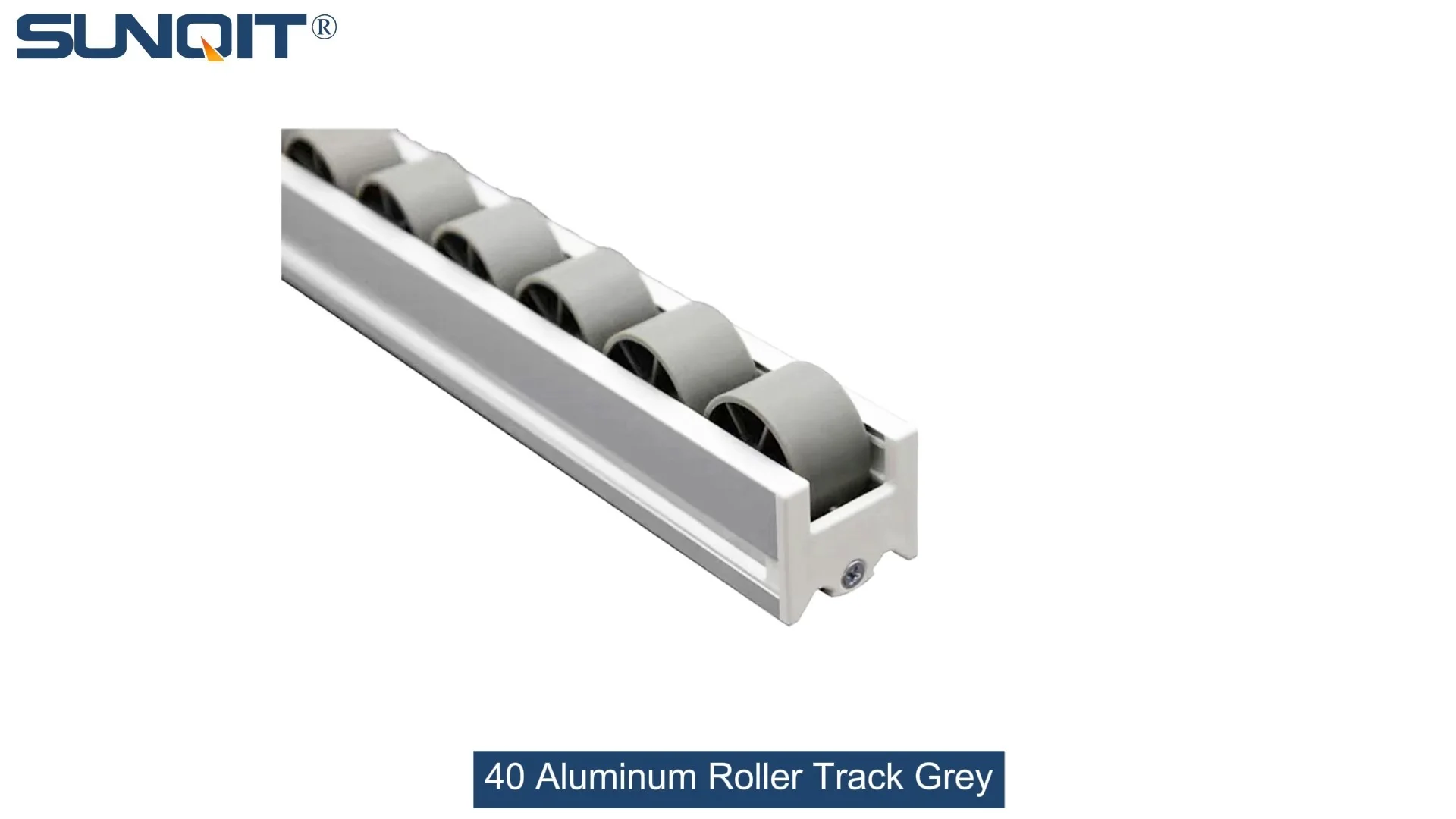
In the world of high-volume manufacturing and warehousing, every second counts. When parts, products, or materials stall mid-flow—whether due to a sticky track, a bent roller, or a system that can't keep up with constant use—production timelines slip, frustration rises, and bottom lines take a hit. That's why choosing the right material handling equipment isn't just about solving today's problems; it's about investing in solutions that stand the test of time. Enter the 40 Aluminum Roller Track Grey : a quiet workhorse that's redefining reliability in fast-paced environments. Let's unpack why this unassuming track has become a staple for operations that can't afford downtime.
What Makes the 40 Aluminum Roller Track Grey Different?
First, let's get clear on what we're talking about. The "40" in its name refers to its standard width (typically 40mm), a sweet spot that balances capacity with flexibility—wide enough to handle most small to medium-sized parts, but narrow enough to fit into tight workspaces. The "Aluminum" is self-explanatory, but that material choice is where the magic starts. And "Grey"? That's the color of its plastic rollers, a deliberate design choice for visibility and, in some cases, ESD (electrostatic discharge) protection—critical for electronics manufacturing.
But beyond the specs, what truly sets this track apart is its focus on long-term performance . High-volume operations don't just run 9-to-5; they run shifts, weekends, and sometimes around the clock. Parts slide, roll, and bump against these tracks thousands—even millions—of times a year. So, durability isn't a nice-to-have; it's non-negotiable. Let's break down the features that make this track built to last.
1. Aluminum: Lightweight, Strong, and Rust-Free
Aluminum is the unsung hero here. Unlike steel—its heavier, more traditional counterpart—aluminum brings two critical advantages: corrosion resistance and weight efficiency . In warehouses or factories with high humidity, steel tracks can rust over time, gumming up rollers and weakening the frame. Aluminum? It shrugs off moisture, even in damp environments, so you won't find flaky rust or sticky residue slowing things down after a few years.
And while aluminum is lighter than steel (about 1/3 the weight), it's far from flimsy. Thanks to modern aluminum extrusion profile techniques, the track's frame is engineered with internal reinforcement, giving it the strength to handle daily loads of up to 50kg per linear meter (depending on roller spacing). That means it can carry everything from small electronic components to metal brackets without bending or warping—even under constant use.
2. Grey Rollers: Smooth, Quiet, and Low-Maintenance
The track's grey plastic rollers are another star feature. Made from high-density polyethylene (HDPE) or ESD-safe materials, these rollers are designed to minimize friction, so parts glide across them with minimal effort. Unlike metal rollers, which can clang and scratch delicate parts, these plastic wheels operate almost silently—a small detail that makes a big difference in noisy factories.
But what really matters is their durability. These rollers are resistant to wear, even when exposed to oils, coolants, or cleaning chemicals common in manufacturing. They also don't require frequent lubrication (unlike steel rollers, which can seize up if neglected). In fact, most users report only needing to check for debris or occasional tightening of axle bolts—no messy oil changes or part replacements required.
Durability in Action: How It Stands Up to High-Volume Grind
Let's put this into context. Imagine a automotive parts supplier running two 12-hour shifts, five days a week. Their 40 Aluminum Roller Track Grey lines a workbench where workers assemble brake components. Each hour, 50+ parts slide down the track—metal brackets, rubber gaskets, small hardware. Over a year, that's over 400,000 passes. Steel tracks might start showing dents or rust after 6 months; plastic tracks could warp under the weight. But aluminum? After two years, the frame still looks new, and the rollers still spin as smoothly as day one.
Another example: a fulfillment center using the track as part of a conveyor system for sorting packages. Boxes of all shapes (up to 15kg) zip along the track 24/7, bouncing slightly as they hit the rollers. The aluminum frame absorbs the impact without bending, and the grey rollers don't crack or chip—even when a misaligned box scrapes against them. Compare that to a cheaper plastic track, which might develop stress fractures after a month of such abuse.
| Feature | 40 Aluminum Roller Track Grey | Steel Roller Track | Plastic Roller Track |
|---|---|---|---|
| Material | Aluminum frame + HDPE/ESD grey rollers | Steel frame + steel or rubber rollers | Plastic frame + plastic rollers |
| Weight (per meter) | ~1.2kg (lightweight, easy to install) | ~3.5kg (heavy, requires sturdy supports) | ~0.8kg (light, but less stable) |
| Corrosion Resistance | Excellent (no rust, ideal for humid environments) | Poor (requires painting/coating; rusts over time) | Good (but prone to UV damage if exposed to sunlight) |
| Lifespan (high-volume use) | 5–7+ years (minimal wear) | 3–4 years (rust/ denting reduces performance) | 1–2 years (prone to warping/ cracking) |
| Maintenance Needs | Low (occasional debris cleaning; bolt checks) | High (lubrication, rust treatment, roller replacement) | Moderate (rollers wear quickly; frame warps) |

Flexibility: Adaptable to Your Changing Needs
High-volume operations rarely stay the same. New products, updated workflows, or facility expansions mean your material handling setup needs to evolve. The 40 Aluminum Roller Track Grey excels here, thanks to its modular design and compatibility with roller track accessories .
Want to extend the track? Use roller track placon mount for aluminum profile flat —simple brackets that attach the track to standard aluminum profiles, letting you build custom lengths in minutes. Need to redirect parts? Add a 90-degree connector or a swivel joint. Working with ESD-sensitive parts? Swap in ESD-safe grey rollers (already an option for many models). Even better, the track is lightweight enough that a single person can reconfigure it—no heavy machinery or specialized tools required.
One electronics manufacturer we worked with recently needed to adjust their assembly line to accommodate a new, larger circuit board. Their old steel track required cutting and welding to extend—costing downtime and labor. With their 40 Aluminum Roller Track Grey, they simply added two extension pieces and a few brackets, and were back up and running in under an hour. That's the flexibility high-volume operations demand.

Cost-Effective in the Long Run
Let's talk numbers. Yes, aluminum track costs more upfront than basic plastic or even some steel options. But when you factor in total cost of ownership —maintenance, replacement parts, downtime, and lifespan—the math shifts dramatically. A steel track might cost 30% less initially, but if it needs replacement in 3 years (vs. 7+ for aluminum), and requires quarterly lubrication and annual rust treatment, the long-term savings disappear.
Consider this: A mid-sized warehouse using 50 meters of track. Steel track: $15/meter = $750 initial cost. Maintenance: $200/year (lubrication, rust treatment, occasional roller replacement). Lifespan: 3 years. Total cost over 7 years: ~$2,150 (including replacing the track twice). Aluminum track: $30/meter = $1,500 initial cost. Maintenance: $50/year (minimal checks). Lifespan: 7+ years. Total cost over 7 years: ~$1,850. Aluminum saves $300—and that's not counting the value of avoided downtime.

Final Thoughts: More Than a Track—A Foundation for Efficiency
The 40 Aluminum Roller Track Grey isn't flashy. It doesn't have fancy sensors or AI-powered features. But in high-volume operations, reliability is the ultimate luxury. It's the track that doesn't quit when you need it most—the one that keeps parts moving, workers productive, and deadlines on track, year after year.
Whether you're setting up a new assembly line, upgrading a workbench , or building out a conveyor system, this track delivers where it counts: durability, flexibility, and long-term value. It's not just equipment—it's a partner in keeping your operation running smoothly, today and tomorrow.
So, the next time you're evaluating material handling solutions, ask yourself: "Will this still be performing in 5 years?" For the 40 Aluminum Roller Track Grey, the answer is a resounding yes.