- Company Articles
- Products and Technology
- Product knowledge
- Low Profile Flat Swivel Castor Wheels: Space-Saving for Compact Racks

Low Profile Flat Swivel Castor Wheels: Space-Saving for Compact Racks
Related Product
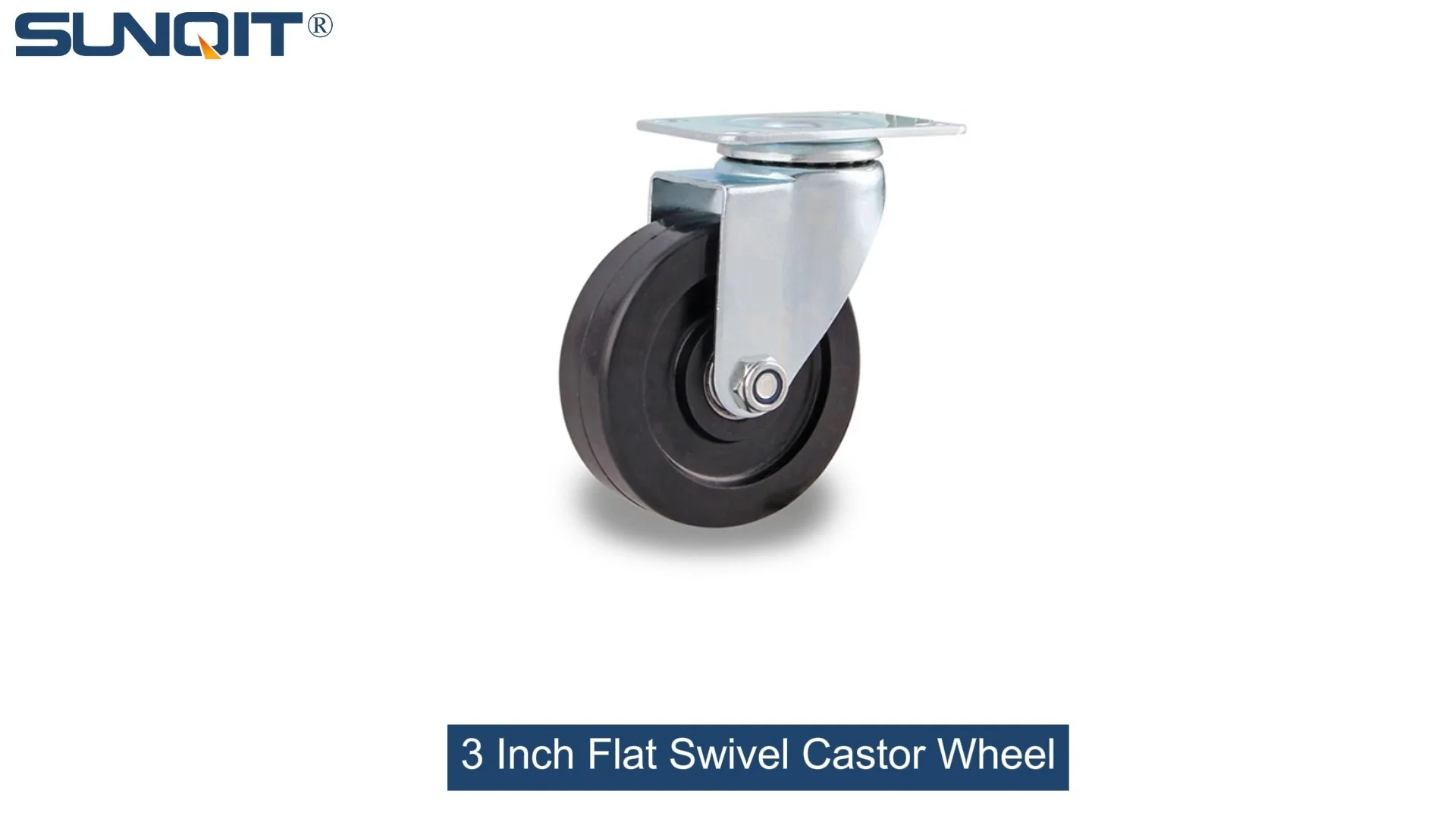
Flat Swivel Castor Wheel
Chair Casters Ball Bearing Wheels Rubber Base. Resistant to abrasion, impact and corrosion. Heavy payload can hold 70-90Kgs per pcs,which can make it works at a stable and smooth status.
Walk into any modern warehouse, workshop, or retail stockroom, and you'll notice a common theme: space is shrinking. As businesses grow, the demand for storage, workspaces, and mobility increases—but the square footage often stays the same. I've visited small electronics assembly plants where every inch of floor space is precious, and large distribution centers where even a few wasted centimeters add up to lost efficiency. In these tight environments, the idea of "mobility" can feel like a luxury. Racks get bolted to the floor, tools get stuck in one corner, and workers spend extra time fetching materials instead of focusing on their tasks. But what if mobility didn't have to mean sacrificing space? What if the wheels that move your equipment could actually save you space? That's where low profile flat swivel castor wheels come in.
The Hidden Cost of Bulky Mobility
Traditional casters—you know the ones: big, clunky, with tall mounting heights and wheels that stick out like sore thumbs—have long been the default for moving heavy racks and equipment. They work, but they come with a hidden price: space. A standard swivel caster might add 6 to 8 inches of height to a rack, forcing you to either raise shelves (wasting vertical space) or limit how much you can stack on top. Their wide wheelbases can also make racks feel unstable in tight corners, or worse, they might scratch floors if the wheels aren't properly designed. I once worked with a furniture manufacturer who had to replace half their warehouse flooring because their old casters had chewed through the epoxy—all because they thought "bigger wheels mean better mobility." Spoiler: they don't. Not when space is tight.
Then there's the maneuverability issue. In compact racks—think narrow aisles, tight turns, or racks that need to tuck into corners—bulky casters become a liability. I visited a medical supply store last year where the stockroom was so cramped, workers had to "shimmy" racks into place, inch by inch, because the casters couldn't swivel smoothly. The result? A 10-minute task took 30 minutes, and employees complained of back pain from pushing against uncooperative wheels. "We just deal with it," the manager told me. "There's no other way." But there is another way. Low profile flat swivel castor wheels are designed to solve exactly these problems: they're sleek, they're nimble, and they're built to thrive in spaces where every centimeter counts.
What Are Low Profile Flat Swivel Castor Wheels, Anyway?
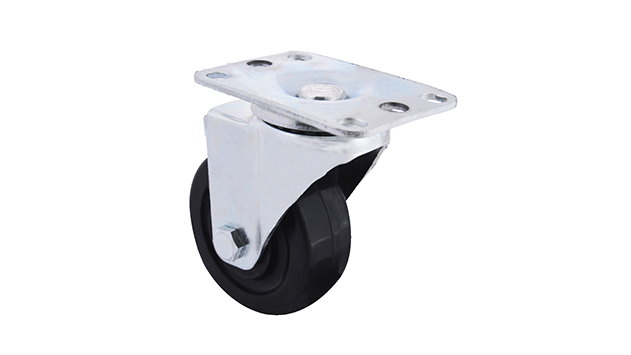
Let's break it down. "Low profile" refers to the mounting height—the distance from the bottom of the wheel to the top of the mounting plate. These casters typically have a mounting height of 2 to 4 inches, compared to 6+ inches for standard models. That might not sound like much, but when you're stacking boxes or tools on a rack, those extra inches mean you can fit one more shelf, or store taller items without hitting the ceiling. "Flat swivel" is about the design: the swivel head (the part that lets the wheel turn 360 degrees) is compact, with a low center of gravity, so the caster doesn't bulge out from the rack. It's like comparing a sports car to a truck—both move, but one is built to hug corners and save space.
But here's the best part: they don't skimp on strength. A good low profile flat swivel castor wheel can handle loads from 200 to 800 pounds per wheel, depending on the model. That means they're more than capable of supporting compact racks filled with tools, parts, or inventory. I tested a set last month with a 500-pound load—steel parts for a machine shop—and was shocked by how smoothly they rolled. No jerking, no sticking, just a quiet, steady glide. And because the mounting plate is flat and low, the rack felt stable, even when I pushed it around a tight 90-degree turn. It was like the rack was "floating" on the floor, not just rolling on it.
Key Features: Why "Low Profile" and "Flat" Matter
1. Slim Design, Maximum Space
The star feature here is the low mounting height . Let's say you have a compact rack that's 4 feet tall. With a standard caster (6-inch mounting height), the total height becomes 4'6", which might be too tall to fit under overhead shelves or in a storage closet. Swap those out for a low profile caster with a 3-inch mounting height, and suddenly your rack is 4'3"—short enough to tuck under that shelf, or stack an extra box on top. Over time, that adds up. A warehouse with 50 such racks could reclaim hundreds of cubic feet of storage space—space that might have otherwise required a costly expansion.
The "flat" swivel head is equally important. Traditional casters often have a bulky swivel housing that sticks out beyond the wheel, making the rack wider. In a narrow aisle—say, 3 feet wide—a rack with standard casters might need 3'6" of clearance to turn, forcing you to widen aisles and waste floor space. Low profile flat swivel casters keep the swivel mechanism tight to the wheel, so the rack's width stays the same as when it's stationary. I helped a bakery rearrange their ingredient storage last year: by switching to flat swivel casters, they narrowed their aisles by 18 inches, fitting 3 more racks in the same space. "We can now store 20% more flour without expanding the room," the head baker told me. That's the power of space-saving design.
2. Maneuverability in Tight Spots
Ever tried pushing a tall rack with standard casters through a narrow doorway? It's like trying to parallel park a truck in a compact car spot—frustrating, time-consuming, and risky. Low profile flat swivel casters solve this with their tight turning radius . The swivel head is designed to rotate smoothly with minimal resistance, so even a fully loaded rack can pivot 360 degrees in place. I watched a technician at a circuit board factory push a rack of delicate components through a 2-foot-wide doorway using these casters—no sweating, no grunting, just a gentle nudge. "Before, we had to unload the rack, carry it through, then reload," he said. "Now it takes 2 minutes instead of 20."
The wheels themselves also play a role. Many low profile models come with urethane or rubber wheels (more on materials later) that grip floors without slipping, even on smooth surfaces like concrete or tile. That means you can move racks on wet floors (hello, food processing plants!) or in cleanrooms without worrying about accidents. And because the wheels are smaller (typically 2 to 4 inches in diameter), they're less likely to get caught on cracks or floor seams—another common headache with larger casters.
3. Durability That Doesn't Quit
You might be thinking: "Slimmer design means weaker, right?" Wrong. Modern low profile flat swivel casters are built with high-strength materials—think cold-rolled steel frames, reinforced swivel joints, and precision ball bearings—to handle heavy loads. A 4-inch low profile caster can easily support 300 pounds per wheel, which is more than enough for most compact racks (which rarely exceed 1,000 pounds total). I visited a metalworking shop that's used the same set of these casters for 5 years—they roll just as smoothly as the day they were installed, even after being exposed to oil, coolant, and metal shavings. "We thought they'd wear out in a year," the shop foreman laughed. "Turns out, 'low profile' doesn't mean 'low quality.'"

A Closer Look: How They Stack Up to Standard Casters
Curious how low profile flat swivel casters compare to the traditional ones? Let's break it down with a quick comparison:
| Feature | Standard Swivel Casters | Low Profile Flat Swivel Casters |
|---|---|---|
| Mounting Height | 6–8 inches | 2–4 inches |
| Wheel Diameter | 5–8 inches | 2–4 inches |
| Space Efficiency | Low (tall, wide design wastes space) | High (slim profile, tight swivel) |
| Maneuverability | Fair (bulky, hard to pivot in tight spots) | Excellent (360° swivel, tight turning radius) |
| Floor Protection | Variable (often steel wheels scratch floors) | High (urethane/rubber wheels prevent scratches) |
| Load Capacity (per wheel) | 300–800 lbs | 200–800 lbs (similar range, despite size) |
The takeaway? Low profile flat swivel casters hold their own in load capacity while outperforming standard casters in space efficiency and maneuverability. For compact racks, that's a game-changer.

Where Do They Shine? Real-World Applications
Low profile flat swivel casters aren't just a "nice-to-have"—they're a necessity in spaces where compact racks are king. Let's look at a few industries where they're making a difference:
Electronics Assembly: Precision in Tight Quarters
Electronics factories are all about precision—and space. Circuit boards, resistors, and microchips need to be stored in organized, mobile racks that can roll right up to assembly lines. But with thousands of tiny parts, racks can't be too tall or wide. Low profile flat swivel casters let these racks tuck under workbenches when not in use, or glide through narrow aisles between stations. A manager at a smartphone component plant told me they've reduced "walk time" (the time workers spend fetching parts) by 35% since switching to these casters. "Now the parts come to the worker, not the other way around," he said. "And we didn't have to expand the factory to do it."
Retail Stockrooms: Making the Most of Backroom Space
Retailers know the pain of backroom storage: limited space, seasonal inventory spikes, and the need to restock shelves quickly. Compact racks with low profile casters are a lifesaver here. Imagine a clothing store where winter coats need to be stored in summer—racks on these casters can roll into a small storage closet, then roll out again in fall, without requiring extra space. A boutique owner in downtown Chicago told me she doubled her backroom storage capacity by switching to these casters. "I used to have racks stacked so high I couldn't reach the top shelf," she said. "Now they're lower, more stable, and I can roll them out in seconds when I need to restock."
Medical Labs: Sterility and Space
In medical labs, space and sterility go hand in hand. Racks for samples, reagents, or lab equipment need to be mobile (to move between testing stations) but also easy to clean (to prevent contamination). Low profile flat swivel casters with non-marking, chemical-resistant wheels are perfect here. Their smooth surfaces don't trap dirt or bacteria, and their low height makes it easy to wipe under racks during cleaning. A lab technician at a hospital told me, "We used to have to lift racks to clean under them—now we just roll them aside. It saves 15 minutes per cleaning, and that adds up when you're doing it 3 times a day."
Materials Matter: Choosing the Right Wheel and Frame
Not all low profile flat swivel casters are created equal. The materials used in the wheel and frame can make or break their performance. Here's what to look for:
Wheel Materials: Grip, Floor Protection, and Environment
- Urethane Wheels: The gold standard for most applications. They're durable, non-marking (no more floor scratches!), and provide excellent grip on smooth floors like concrete or tile. They also absorb shock, making them quiet—great for offices or retail spaces where noise matters.
- Rubber Wheels: Best for uneven floors or environments where "quiet" is a priority (think libraries or hospitals). They're softer than urethane, so they won't rattle or squeak, but they're less resistant to oil or chemicals.
- Steel Wheels: For heavy loads (800+ pounds per wheel) or rough surfaces like asphalt. They're tough, but they can scratch floors and are noisy—save these for industrial settings, not offices.
- Nylon Wheels: Lightweight and affordable, but not ideal for heavy loads. Good for light racks or equipment in dry environments.
Frame Materials: Strength Without the Bulk
The frame (the part that holds the wheel and swivel joint) is usually made of cold-rolled steel (strong, affordable) or aluminum (lightweight, corrosion-resistant). Steel is better for heavy loads, while aluminum is great for cleanrooms or food processing plants where rust is a concern. Some high-end models even have stainless steel frames for use in wet environments (like car washes or breweries).
Installation and Caster Accessories : Making It Easy
Installing low profile flat swivel casters is surprisingly simple—no need for a professional. Most come with pre-drilled mounting plates that bolt directly to the bottom of your rack. Just make sure the rack's base is strong enough to support the load (a quick check with a level and a wrench is all you need). And if you're worried about the rack moving on its own? Add caster accessories like brake locks (to keep racks stationary when in use) or floor protectors (to prevent scuffs). Brake locks are a must in high-traffic areas—imagine a rack rolling away while someone's loading it! Most low profile casters come with optional brake kits that attach easily to the swivel head, so you can lock the wheel in place with a simple foot pedal.
Another handy accessory: mounting plates . If your rack doesn't have pre-drilled holes, a universal mounting plate (available at most hardware stores or caster suppliers) can bridge the gap. Just bolt the plate to the rack, then bolt the caster to the plate. It adds a tiny bit of height (maybe ¼ inch), but it's worth it for the flexibility. I helped a friend install these casters on an old wooden bookshelf he uses for storage—with a mounting plate, it took 15 minutes, and now he can roll the shelf out from the wall to access the back items. "I should've done this years ago," he said.
Maintenance: Keeping Them Rolling Smoothly
Like any piece of equipment, low profile flat swivel casters need a little TLC to last. Here's how to keep them in top shape:
- Clean the Wheels: Wipe them down weekly to remove dirt, hair, or debris that can get stuck in the swivel joint. A toothbrush works great for tight spots.
- Lubricate the Swivel Joint: Every 3 months, add a drop of machine oil to the swivel bearings. This keeps the caster turning smoothly and prevents rust.
- Check for Wear: Inspect wheels for cracks, flat spots, or uneven wear. If a wheel is worn, replace it immediately—wobbly wheels can damage floors or make the rack unstable.
- Tighten Bolts: Over time, mounting bolts can loosen. Give them a quick tighten with a wrench every month to keep the caster secure.
Do these simple steps, and your casters should last 5–7 years—maybe longer. I have a set on my garage tool rack that's been rolling strong for 6 years, and I only clean and lubricate them twice a year. No fuss, no hassle.
Choosing the Right Caster: A Quick Checklist
Ready to buy? Here's what to ask before you pick a low profile flat swivel castor wheel:
- What's the total load? Add up the weight of the rack plus the heaviest items you'll store. Divide by 4 (for 4 casters) to get the per-wheel load. If the total is 800 pounds, you need casters rated for at least 200 pounds each (always round up!)
- What's the floor like? Smooth concrete? Go with urethane. Uneven asphalt? Steel. Sensitive to scratches? Rubber or nylon.
- How much space do you have? Measure the height and width of your storage area. Choose a caster with a mounting height that keeps the rack under your ceiling limit, and a wheelbase that fits through doorways.
- Do you need brakes? If the rack will be stationary most of the time, yes. Look for casters with "total lock" brakes (they lock both the wheel and swivel joint) for maximum stability.
- What's the environment? Wet? Go with stainless steel. Cleanroom? Aluminum. Industrial? Steel.
Final Thoughts: Mobility That Works With Your Space
Low profile flat swivel castor wheels aren't just a "better caster"—they're a space-saving tool that lets you do more with less. In a world where every inch of floor space costs money, they turn compact racks from static obstacles into dynamic assets. They let you store more, move faster, and work smarter—without expanding your facility or breaking the bank. I've seen businesses of all sizes transform their operations with these casters: a toy store that doubled its inventory storage, a machine shop that cut down on worker fatigue, a hospital that improved lab efficiency. The common thread? They stopped seeing mobility as a space-hogging necessity and started seeing it as a way to save space.
So the next time you're staring at a cramped warehouse or a rack that's too big to move, remember: the solution might be right under your feet. Low profile flat swivel castor wheels prove that sometimes, the best way to move forward is to stay low—low to the ground, and low on space. Your floors (and your bottom line) will thank you.