- Company Articles
- Products and Technology
- Product knowledge
- Low-Volume vs High-Volume Production: 1.2mm Stainless Steel Pipe Scalability

Low-Volume vs High-Volume Production: 1.2mm Stainless Steel Pipe Scalability
Related Product
1.2mm Stainless Steel Pipe
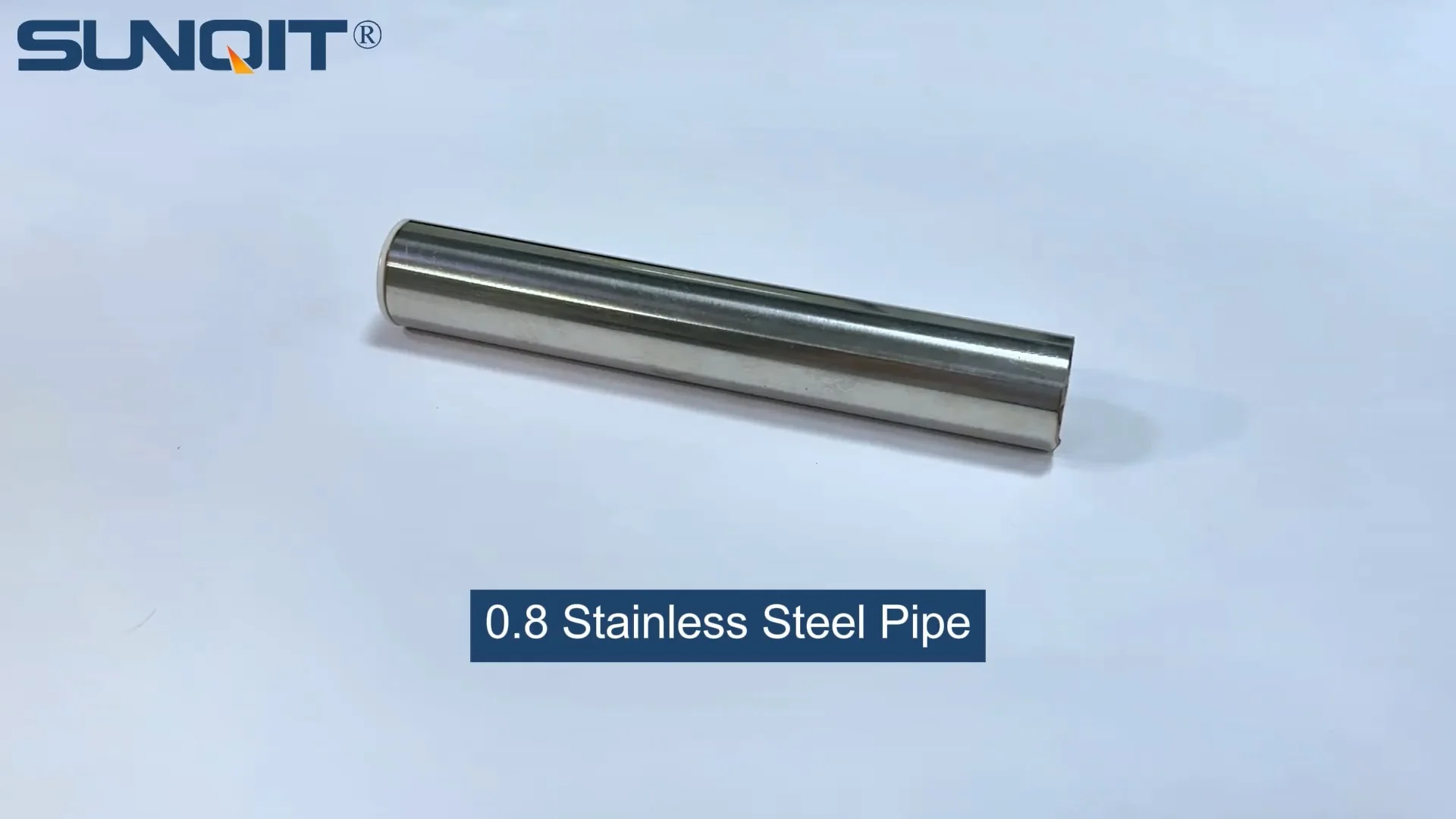
Stainless steel pipe, lean pipe, diameter is 28mm, material is SS201 or SS304, SS201 is normally used in the market. It knows a KARAKURI, KAIZEN material for industrial plant to improve efficiency, save labor cost, standard management.
Picture this: A small manufacturing shop in the outskirts of town, where a team of five craftsmen spends their days carefully bending, cutting, and polishing 1.2mm stainless steel pipes. These pipes are destined for a local medical device company, which orders 500 units each month. The shop relies on manual workbenches, hand tools, and a tight-knit workflow—every pipe is inspected twice, and the team knows each order like the back of their hands. Then, overnight, the medical company lands a national contract. Suddenly, the order jumps to 10,000 units a month. The shop owner stares at the email, heart racing: How do you go from crafting 500 pipes with care to churning out 10,000 without sacrificing quality? That's the scalability puzzle—one that haunts manufacturers of all sizes, especially those working with precision components like 1.2mm stainless steel pipe.
Stainless steel pipes, particularly the 1.2mm variety, are the unsung heroes of countless industries. They're thin enough to fit into tight medical (instruments), corrosion-resistant for food processing lines, and durable enough for electronics assembly. But their precision makes production tricky—too much pressure, and the pipe bends; too little, and it's uneven. So when demand spikes (or dips), manufacturers can't just flip a switch. They need systems that flex with them, whether they're making 500 pipes or 50,000. Today, we're diving into the world of low-volume and high-volume production, exploring how tools like lean systems, flow racks, and conveyors bridge the gap between "small batch" and "mass production" for 1.2mm stainless steel pipe.
What Even Is Low-Volume vs High-Volume Production?
Let's start with the basics. Low-volume production is exactly what it sounds like: making small batches of a product. Think 100 to 5,000 units per month. It's common for niche markets, custom orders, or startups testing a new design. For 1.2mm stainless steel pipe, this might mean crafting specialized lengths for a prototype robotics project or small-batch medical tools. The vibe here is flexible—machines are easy to reconfigure, workers wear multiple hats, and quality control is hands-on (hello, those double inspections we mentioned earlier).
High-volume production, on the other hand, is about scale. We're talking 10,000 units and up, month after month. This is where you'll find standardized pipes rolling off assembly lines for automotive parts, HVAC systems, or large-scale food processing plants. Here, the focus shifts to efficiency: minimizing downtime, streamlining workflows, and reducing per-unit costs. You'll see conveyor belts moving pipes from cutting to polishing to packaging without a human touch, and every step is documented in spreadsheets thicker than a phone book.
But here's the kicker: Scalability isn't just about "making more." It's about making more without breaking —without sacrificing quality, blowing budgets, or burning out your team. And for 1.2mm stainless steel pipe, where a 0.1mm variance can ruin a product, that balance is everything.
| Aspect | Low-Volume Production (1.2mm Stainless Steel Pipe) | High-Volume Production (1.2mm Stainless Steel Pipe) |
|---|---|---|
| Batch Size | 100–5,000 units/month | 10,000+ units/month |
| Setup Time | Short (30 mins–2 hours) – easy to switch between custom orders | Long (4–8 hours) – machines are calibrated for one specific pipe design |
| Equipment | Manual workbenches, basic cutting tools, handheld polishers | Automated conveyors, CNC machines, flow racks for material storage |
| Cost Per Unit | Higher (labor and material waste eat into profits) | Lower (economies of scale: bulk materials, automated labor) |
| Scalability Challenge | How to increase output without adding 10x more workers | How to avoid bottlenecks when a single machine breaks down |
The Low-Volume Struggle: When "Small Batch" Feels Like a Tightrope Walk
Low-volume production has its perks. For one, it's personal. The team at that small shop we mentioned earlier? They know exactly which customer needs pipes with a 45° bend vs. a 90°, and they can tweak the process on the fly. But when demand grows, that intimacy becomes a liability. Let's say the medical device company orders 10,000 units instead of 500. The shop's workbenches, which once held 20 pipes at a time, now look tiny. Workers are tripping over piles of raw material. Quality checks, which used to take 10 minutes per batch, now take hours. And worst of all, the per-unit cost skyrockets—paying overtime, rushing orders, and scrapping more pipes due to fatigue.
This is where many small manufacturers get stuck. They think, "If we just hire more people, we can keep up!" But adding bodies without changing the system is like trying to fill a bucket with a hole in it. More workers mean more coordination, more mistakes, and more chaos. Instead, they need to start thinking like high-volume producers—without the high-volume budget. Enter: lean systems.
Lean systems, at their core, are about cutting waste. Not just physical waste (like scrap metal) but wasted time, motion, and effort. For low-volume shops, that might mean rearranging workbenches so workers don't walk 10 extra steps to grab a polisher. Or using color-coded bins to separate raw pipe from finished product, so no one wastes 20 minutes hunting for a batch. Even small changes—like installing a basic flow rack to hold tools at eye level—can turn a chaotic workbench into a mini production line. Suddenly, that 500-unit order becomes 1,000 units, with the same team, because they're not fighting the system anymore.

High-Volume Headaches: When "Mass Production" Feels Like a Jenga Tower
Now, let's flip the script. High-volume production sounds glamorous—big factories, robots, conveyor belts humming 24/7. But it's also a high-stakes game. Imagine a plant cranking out 50,000 1.2mm stainless steel pipes daily. The line runs like clockwork: raw pipe enters one end, gets cut by a CNC machine, polished by robots, and boxed by workers at the end. But if the conveyor belt jams? Suddenly, 500 pipes pile up, and the whole line grinds to a halt. An hour of downtime here costs thousands of dollars. Or worse: a sensor fails, and a batch of pipes comes out 0.3mm too thick. Now, you've got 10,000 defective units—and a customer breathing down your neck.
High-volume scalability isn't about adding more machines; it's about building resilience. That's where flow racks and conveyors become lifesavers. Flow racks—those slanted shelves with rollers—keep raw materials moving smoothly to the production line. No more workers hauling heavy bundles of pipe; gravity does the work. And conveyors? They're not just for moving products—they're for balancing workloads. Smart conveyor systems can redirect pipes to backup machines if one breaks down, so the line never fully stops. Pair that with a lean system that tracks every pipe (via barcodes or sensors), and you can spot defects before they turn into a 10,000-unit disaster.
But here's the secret: High-volume plants still need a little low-volume flexibility. Maybe a customer wants a custom bend on 1,000 pipes. If the line is so rigid it can't handle small batches, the plant misses out. That's why modern facilities blend automation with modular tools. For example, some use adjustable conveyors that can switch between standard and custom pipe sizes in 30 minutes, instead of 8 hours. Or they set up "micro-lines"—small workbenches tucked into the factory where a handful of workers handle special orders, without disrupting the main conveyor.

Bridging the Gap: How Lean Systems, Flow Racks, and Conveyors Make Scalability Possible
So, what's the common thread here? Whether you're making 500 pipes or 50,000, scalability boils down to systems , not just size. Let's break down the tools that make this possible:
1. Lean Systems: The "Common Sense" of Scalability
Lean systems get a bad rap for being "corporate jargon," but they're really just common sense. At its heart, lean is about asking: "Why are we doing this the hard way?" For 1.2mm stainless steel pipe production, that might mean:
- Mapping the workflow: Drawing a diagram of how a pipe moves from raw material to shipping. If it takes 15 steps, but 5 of them are just moving the pipe from one bench to another, that's waste. Fix it by grouping workbenches in a U-shape, so the pipe never travels far.
- Standardizing tasks: Writing down exactly how to cut a pipe (speed, pressure, angle) so every worker does it the same way. No more "Bob's method" vs. "Lisa's method"—just one best way, which cuts down on defects.
- Pulling, not pushing: Instead of making 10,000 pipes and hoping they sell, make only what the customer orders (this is called "just-in-time" production). For low-volume shops, that means no extra inventory cluttering the floor. For high-volume plants, it means less waste if demand suddenly drops.
A small shop in Ohio tried this recently. They made 2,000 1.2mm pipes/month, with 10% waste (pipes that were too bent or uneven). After adopting lean principles—rearranging workbenches, standardizing tools, and using a whiteboard to track orders—their waste dropped to 3%, and they hit 3,500 pipes/month with the same 5 workers. Lean didn't make them a high-volume plant overnight, but it made their low-volume production scalable .
2. Flow Racks: The "Silent Helpers" of Material Handling
Flow racks are like the organizational gurus of the factory floor. They're shelves with rollers or slides, so materials "flow" to the front as you take them. For 1.2mm stainless steel pipe, which comes in long, delicate bundles, this is a game-changer. Instead of workers lifting heavy bundles off a high shelf (and risking dropping them), the pipe rolls down to waist level. No more back pain, no more bent pipes, and no more wasted time.
In low-volume shops, a single flow rack can replace a messy corner of raw material, turning "hunting for pipes" into "grabbing the next bundle." In high-volume plants, flow racks line the conveyor system, feeding raw pipe to the cutting machine exactly when it's needed. Some even use gravity-fed flow racks for finished pipes, so they roll straight into shipping boxes—no extra handling required. It's small, it's simple, and it's one of the cheapest ways to scale production without adding staff.
3. Conveyors: The "Backbone" of High-Volume, the "Boost" for Low-Volume
Conveyors often get typecast as "high-volume only," but that's not true. Even small shops can benefit from a basic conveyor—like a 10-foot belt that moves pipes from the cutting bench to the polishing bench. Suddenly, one worker can cut pipes while another polishes, instead of both walking back and forth. For high-volume, conveyors are non-negotiable. Modern systems use sensors to detect jams, variable speeds to match production rates, and even magnetic belts to hold thin 1.2mm pipes in place so they don't slip.
The key is choosing the right conveyor for the job. A small shop might start with a manual roller conveyor (workers push pipes along) for $500. As they grow, they upgrade to a motorized belt conveyor for $5,000, which can handle 10x the volume. And when they hit high-volume? A $50,000 automated conveyor system with built-in quality checks (like laser sensors that measure pipe thickness) becomes worth every penny. Conveyors don't just move pipes—they move the needle on scalability.
Real Talk: A Shop That Did It Right
Let's meet "PipeMasters," a fictional (but realistic) manufacturer of 1.2mm stainless steel pipe. Five years ago, they were a low-volume shop with 3 workbenches and 4 employees, making 1,000 pipes/month for local aerospace companies. Then, a major order came in: 10,000 pipes/month for a satellite parts supplier. Here's how they scaled:
- Step 1: Leanify the workbenches. They rearranged benches into a "U" shape, installed a small flow rack for tools, and standardized their cutting process. Output jumped to 2,500 pipes/month with the same team.
- Step 2: Add a basic conveyor. A $2,000 motorized roller conveyor connected the cutting and polishing stations. Now, one worker could cut while another polished, doubling output to 5,000 pipes/month.
- Step 3: Invest in flow racks for materials. Raw pipe was stored on gravity-fed flow racks, so workers didn't waste time lifting. Defects dropped by 15% because pipes weren't bent during handling.
- Step 4: Go high-volume with CNC machines and automated conveyors. Finally, they added two CNC cutters and a $30,000 conveyor system with built-in sensors. Today, they make 20,000 pipes/month, with 6 employees (not 20!) and lower per-unit costs than ever.
PipeMasters didn't just buy bigger machines—they built a system that grew with them. And that's the secret to scalability: It's not about size. It's about smarts .
The Bottom Line: Scalability Is About Adaptability
Whether you're in low-volume or high-volume production, scaling 1.2mm stainless steel pipe manufacturing isn't about flipping a switch. It's about using tools like lean systems to eliminate waste, flow racks to organize chaos, and conveyors to keep things moving. It's about starting small, measuring what works, and upgrading incrementally. And most importantly, it's about remembering that even the biggest factories started with a single workbench and a dream.
So, to all the manufacturers out there staring at that big order, wondering how to keep up: Breathe. Scalability isn't magic. It's about building a system that bends, not breaks—whether you're making 500 pipes or 50,000. And with the right tools? You've already got this.