- Company Articles
- Products and Technology
- Procurement Guidelines
- M10*56 Rubber Leveling Feet Buying Guide: What to Consider

M10*56 Rubber Leveling Feet Buying Guide: What to Consider
Related Product
M10*56 Rubber Leveling Feet
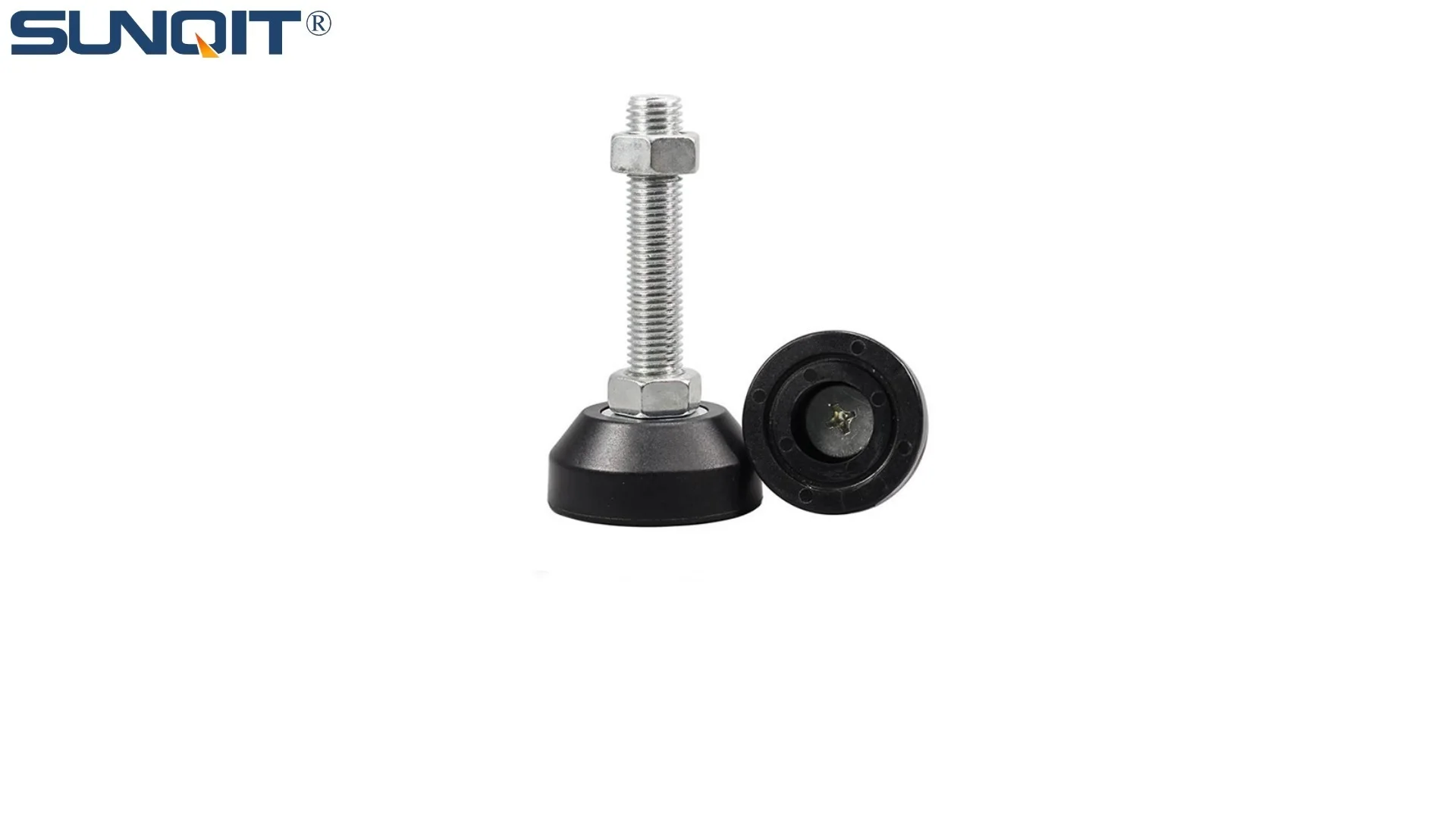
Adjustable leveling feet are designed to keep machines level when placed on uneven or sloped ground. Otherwise known as adjustable equipment feet, they are available to order in a wide variety of size and load capacity combinations.
Introduction: The Unsung Hero of Stable Workspaces
In the bustling world of manufacturing, workshops, and even home garages, stability is the silent foundation of productivity. A wobbly workbench can throw off measurements, cause tools to slide, and turn a simple assembly task into a frustrating ordeal. Yet, among the array of components that make up a functional workspace—from heavy-duty frames to ergonomic surfaces—one small part often gets overlooked: the leveling foot. Specifically, the M10*56 rubber leveling foot. These unassuming devices might not grab attention, but they play a critical role in keeping workbenches, racks, and machinery steady, even on the most uneven floors.
If you've ever struggled with a table that rocks back and forth, or a production line where parts keep misaligning due to an uneven surface, you know the value of a reliable leveling foot. And when it comes to precision and durability, the M10*56 rubber leveling foot stands out as a popular choice for professionals across industries. But with so many options on the market—different materials, load capacities, and designs—how do you choose the right one for your needs? This guide will walk you through everything you need to know, from understanding the basics of M10*56 leveling feet to selecting a supplier you can trust.
What Are M10*56 Rubber Leveling Feet?
Before diving into the buying process, let's start with the basics: What exactly is an M10*56 rubber leveling foot? At its core, it's a type of adjustable leveling foot—a device designed to stabilize equipment by compensating for uneven surfaces. The "M10*56" designation refers to its thread size: "M" indicates metric threading, "10" is the diameter of the thread (10mm), and "56" is the length of the threaded rod (56mm). The "rubber" part, of course, refers to the soft, grippy pad at the bottom, which helps prevent slipping and reduces vibration.
These leveling feet typically consist of three main components: a metal threaded rod (usually steel or stainless steel), a metal base plate (which connects the rod to the rubber pad), and the rubber pad itself. Some models also include a lock nut, which secures the foot in place once adjusted, preventing it from loosening over time. Together, these parts work to provide both height adjustment and stability—two key features that make them indispensable for everything from small workbenches to large industrial machinery.
While M10*56 is a specific size, adjustable leveling feet come in a range of thread diameters (e.g., M8, M12) and lengths (e.g., 40mm, 60mm). The M10*56 size is particularly popular for medium-duty applications, such as lean pipe workbenches, material racks, and assembly stations, where a balance of strength and adjustability is needed. Its 10mm thread diameter offers enough rigidity to support substantial weight, while the 56mm length provides ample room for height adjustment—typically between 10mm and 50mm, depending on the model.

Key Considerations When Buying M10*56 Rubber Leveling Feet
Choosing the right M10*56 rubber leveling foot isn't just about picking the first option you see online. To ensure you get a product that meets your needs and lasts, there are several critical factors to evaluate. Let's break them down one by one.
1. Material Quality: The Backbone of Durability
The materials used in an M10*56 leveling foot directly impact its lifespan, load capacity, and performance in different environments. Let's start with the metal components: the threaded rod and base plate.
Threaded Rod and Base Plate Materials: Most leveling feet use steel for the threaded rod and base plate, as it's strong and affordable. However, not all steel is created equal. Look for rods and plates that are zinc-plated, nickel-plated, or powder-coated. These finishes add a layer of protection against rust and corrosion, which is especially important if the foot will be used in damp or humid environments (e.g., workshops with frequent cleaning, or outdoor settings). For even greater corrosion resistance—such as in food processing facilities or marine environments—stainless steel is a better choice, though it comes at a higher cost.
Rubber Pad Materials: The rubber pad is perhaps the most critical part of the leveling foot, as it's the point of contact with the floor. Different rubber compounds offer varying levels of grip, wear resistance, and tolerance to temperature and chemicals. Here are the most common types:
- Natural Rubber: Offers excellent grip and flexibility, but is less resistant to oils, solvents, and high temperatures (typically maxes out at around 80°C). Best for dry, indoor environments.
- EPDM Rubber: Resistant to water, ozone, and UV light, making it ideal for outdoor use or damp indoor areas. It also handles temperature extremes well (-40°C to 120°C). However, it's less oil-resistant than other options.
- Neoprene Rubber: A good all-around choice, with resistance to oils, chemicals, and moderate temperatures (-20°C to 100°C). It balances grip, durability, and chemical tolerance, making it suitable for most industrial settings.
- Nitrile Rubber (Buna-N): Excellent oil and solvent resistance, making it perfect for environments with lubricants, fuels, or cleaning agents. It has good abrasion resistance but is less flexible in cold temperatures (-10°C to 120°C).
When evaluating material quality, ask suppliers for details about the rubber compound (e.g., "Is this EPDM or neoprene?") and the metal plating (e.g., "Is the steel zinc-plated or powder-coated?"). A reputable supplier will be happy to provide this information, as it demonstrates transparency about their product's performance.
2. Load Capacity: Don't Underestimate the Weight
One of the biggest mistakes buyers make is choosing a leveling foot based solely on size, without considering its load capacity—the maximum weight it can support without failing. Overloading a leveling foot can lead to bent rods, cracked base plates, or collapsed pads, which not only compromises stability but also poses a safety risk.
Load capacity is typically measured in kilograms (kg) or pounds (lbs) and is determined by the strength of the metal components and the integrity of the rubber pad. For M10*56 leveling feet, most models have a load capacity ranging from 200kg to 500kg per foot, depending on the materials and design. However, it's important to note that this is the static load capacity—the weight the foot can support when the equipment is stationary. If the equipment will be moved or subjected to dynamic forces (e.g., vibrations from machinery), you'll need to factor in a safety margin, often 20-30% above the expected load.
To calculate the required load capacity for your application, start by determining the total weight of the equipment or structure, including any tools, materials, or people who might be on it. Then, divide that total by the number of leveling feet. For example, a lean pipe workbench that weighs 300kg, plus 200kg of tools and materials, has a total weight of 500kg. If the workbench has four leveling feet, each foot needs to support at least 125kg (500kg ÷ 4). To be safe, choose a foot with a load capacity of 150kg or more (adding a 20% safety margin).
Keep in mind that load capacity can also be affected by the surface area of the rubber pad. A larger pad distributes weight more evenly, reducing stress on the floor and improving stability. So, if you're working with heavy loads, look for leveling feet with wider base plates (e.g., 50mm x 50mm or larger) in addition to a high load capacity rating.
3. Thread Size & Compatibility: Measure Twice, Buy Once
We've already touched on the "M10*56" designation, but thread size compatibility is more than just matching the numbers. If the threading on the leveling foot doesn't match the tapped hole in your equipment (e.g., the leg of a workbench), you won't be able to install it properly. This can lead to stripped threads, loose connections, or the need for expensive adapters—none of which are ideal.
First, confirm the thread diameter (M10 in this case) and pitch. The pitch is the distance between threads, measured in millimeters. For metric threads, coarse pitch is standard (e.g., M10 has a coarse pitch of 1.5mm), but fine pitch (e.g., 1.25mm) is also available for certain applications. Most M10*56 leveling feet use coarse pitch, but it's always worth checking to ensure compatibility with your equipment's tapped holes. If you're unsure of the pitch, you can measure it with a thread gauge or ask the manufacturer of your workbench or machinery for specifications.
Next, consider the length of the threaded rod (56mm). This determines how much height adjustment you'll have. The total adjustable range is typically the length of the rod minus the portion that's screwed into the equipment. For example, if 30mm of the 56mm rod is screwed into the workbench leg, you'll have 26mm of adjustment available. If you need more adjustability (e.g., for very uneven floors), you may need a longer rod, but M10*56 is a common length that works for most standard applications.
Compatibility is especially important when working with lean pipe workbenches, which often use standardized frames and components. Many lean pipe systems are designed to accept M10 threads, but it's always a good idea to double-check with the workbench supplier or refer to the assembly manual. Using mismatched threads can weaken the connection between the leveling foot and the workbench, leading to instability over time.
4. Rubber Pad Design: Grip, Vibration, and Floor Protection
The rubber pad might seem like a minor detail, but its design has a big impact on performance. A well-designed pad should provide three key benefits: grip (to prevent slipping), vibration dampening (to reduce noise and wear), and floor protection (to avoid scratches or dents).
Grip: Look for pads with a textured surface—ridges, dimples, or a diamond pattern. These features increase friction between the pad and the floor, even on smooth surfaces like concrete or tile. Avoid pads with a smooth, shiny finish, as they're more likely to slide, especially if the floor is damp or oily.
Vibration Dampening: Rubber is naturally elastic, which helps absorb vibrations from machinery or foot traffic. Softer rubber (lower durometer) tends to dampen vibrations better than harder rubber, but it may wear out faster under heavy loads. Most industrial leveling feet use rubber with a durometer (hardness) between 60 Shore A and 80 Shore A—60 being softer and more flexible, 80 being firmer and more durable. For applications with high vibration (e.g., near a punch press), a softer pad (60-70 Shore A) is better; for heavy loads with minimal vibration, a firmer pad (70-80 Shore A) is more suitable.
Floor Protection: The rubber pad acts as a buffer between the metal base plate and the floor, preventing scratches, scuffs, or indentations. This is particularly important for finished floors (e.g., epoxy, hardwood) or sensitive surfaces (e.g., lab floors). Some pads are even designed with a non-marking formula, which ensures they won't leave black streaks or stains behind—ideal for cleanrooms or showrooms.
Another design consideration is how the rubber pad is attached to the base plate. Some pads are glued on, while others are mechanically fastened (e.g., with a screw through the center). Mechanically fastened pads are generally more durable, as the glue can degrade over time, especially in high-temperature or chemical environments. If you're unsure, ask the supplier about the attachment method—this small detail can save you from having to replace pads prematurely.
5. Environmental Resistance: Adapting to Your Workspace
Your workspace's environment—temperature, moisture, chemicals, and even exposure to sunlight—can take a toll on leveling feet. Choosing a foot that's not suited to its environment will lead to premature failure, whether it's a rusted rod, a cracked rubber pad, or a disintegrated finish.
Temperature Extremes: If your workspace is subject to very high or low temperatures (e.g., a freezer, a foundry, or an outdoor patio), the rubber pad and metal components must be able to withstand these conditions. As mentioned earlier, EPDM rubber handles extreme cold and heat well, while nitrile is better for moderate temperatures. For metal parts, stainless steel is more resistant to thermal expansion and contraction than plain steel, making it a good choice for temperature-fluctuating environments.
Moisture and Humidity: In damp areas (e.g., car washes, breweries, or coastal workshops), rust is a major concern. Look for leveling feet with corrosion-resistant finishes, such as stainless steel rods, zinc-plated steel with a clear coat, or powder-coated metal. The rubber pad should also be water-resistant—EPDM or neoprene are good options here, as they won't degrade when exposed to moisture.
Chemicals and Oils: If your workspace uses oils, solvents, or cleaning agents (e.g., a mechanic's shop, a printing press, or a chemical lab), the rubber pad must be resistant to these substances. Nitrile rubber is the best choice for oil and solvent resistance, while neoprene offers moderate chemical tolerance. Avoid natural rubber in these environments, as oils can cause it to swell and break down.
UV Exposure: For outdoor use or areas with direct sunlight (e.g., a warehouse with skylights), UV radiation can cause rubber to dry out and crack over time. EPDM rubber is UV-resistant, making it the top choice for these applications. Additionally, metal components should have a UV-stable finish to prevent fading or peeling.
By considering your environment, you can ensure that your M10*56 rubber leveling feet will perform reliably for years, rather than failing prematurely due to avoidable damage.
6. Installation & Adjustability: Ease of Use Matters
Even the best leveling foot is useless if it's difficult to install or adjust. When evaluating options, think about how easy it will be to screw the foot into place, adjust its height, and lock it in position—especially if you'll need to make adjustments frequently.
Installation: Most M10*56 leveling feet are designed to be installed by hand, but some may require a wrench or pliers, especially if the threads are tight. Look for feet with a hexagonal or square head on the threaded rod, which makes it easier to grip with a tool if needed. Some models also have a flange or a knurled surface near the top of the rod, allowing for hand-tightening without tools—a convenient feature for quick setup or on-the-fly adjustments.
Height Adjustment: The range of adjustability depends on the length of the threaded rod. As mentioned earlier, a 56mm rod might offer 20-40mm of adjustment, depending on how much is screwed into the equipment. The ease of adjustment is also important—turning the rod should feel smooth, without sticking or binding. If the threads are poorly cut or the rod is bent, adjustment will be difficult, leading to frustration and imprecise leveling.
Lock Nuts: A lock nut (or jam nut) is a small nut that screws onto the threaded rod above the equipment,.Once the leveling foot is adjusted to the desired height, tightening the lock nut against the leg prevents the foot from loosening due to vibration or movement. While not all leveling feet include lock nuts, they're highly recommended for applications with any amount of vibration—without one, you may find yourself constantly readjusting the feet to keep your workbench stable.
When testing adjustability, ask the supplier if you can see a sample of the leveling foot. Turn the rod by hand to see how smoothly it moves, and check if the lock nut tightens securely without stripping the threads. A quality foot should adjust with minimal effort, even after repeated use.

Application Scenarios: Where M10*56 Rubber Leveling Feet Shine
Now that we've covered the key considerations, let's explore some of the most common applications for M10*56 rubber leveling feet. Understanding where these feet are used can help you better assess whether they're the right fit for your needs.
Lean Pipe Workbenches: The Perfect Match
One of the most popular uses for M10*56 rubber leveling feet is on lean pipe workbenches. Lean pipe systems—also known as "flexible pipe systems"—are modular workbenches and structures made from metal pipes (often aluminum or steel) and connectors, designed to be easily customized for specific tasks. They're widely used in manufacturing, assembly, and logistics for their versatility, cost-effectiveness, and adaptability.
Lean pipe workbenches need to be stable to ensure precision during assembly, but they're often used in facilities with uneven concrete floors—especially older factories or warehouses. M10*56 leveling feet solve this problem by allowing each leg of the workbench to be adjusted individually, compensating for dips or bumps in the floor. This stability is crucial for tasks like electronics assembly, where even a small wobble can lead to soldering mistakes or misaligned components.
Additionally, lean pipe workbenches often support heavy tools, such as drills, saws, or testing equipment. The M10*56 foot's load capacity (typically 200-500kg per foot) is well-suited to these medium-duty applications, ensuring the workbench remains steady even when fully loaded. The rubber pad also helps reduce vibration from power tools, which not only makes the workspace quieter but also prevents tools from "walking" across the bench during use.
Material Racks and Shelving Units
Material racks and shelving units—used to store parts, boxes, or raw materials—also benefit from M10*56 leveling feet. These structures are often tall and narrow, making them prone to tipping if not properly stabilized. Leveling feet help distribute the weight evenly and keep the rack upright, even if the floor is uneven. The rubber pad's grip is especially important here, as it prevents the rack from sliding when heavy items are loaded or unloaded.
For example, a material rack with three rows and three floors (like "Material Rack B" in some product lines) might weigh several hundred kilograms when fully loaded. With four M10*56 leveling feet—each supporting 150kg or more—the rack remains stable, reducing the risk of collapse and injury.
Assembly Stations and Production Lines
In production environments, assembly stations and conveyor systems require precise alignment to ensure parts move smoothly and workers can operate efficiently. M10*56 leveling feet are used to level these stations, ensuring that conveyors are flat (preventing parts from getting stuck) and work surfaces are at the correct height for ergonomics. The vibration-dampening properties of the rubber pad also help protect sensitive components, such as circuit boards or delicate machinery, from damage caused by constant movement.
Laboratory and Medical Equipment
In labs and medical facilities, precision is paramount. Equipment like microscopes, centrifuges, and analytical balances must be perfectly level to ensure accurate results. M10*56 leveling feet with soft rubber pads are ideal for these applications, as they provide fine height adjustment and won't scratch or damage laboratory floors. Additionally, stainless steel versions are available for use in sterile environments, where corrosion resistance and easy cleaning are essential.

Choosing the Right Supplier: What to Look For
Once you've determined your needs for M10*56 rubber leveling feet, the next step is finding a reliable supplier. With so many options online, it can be challenging to separate reputable vendors from those selling low-quality products. Here are some tips to help you choose the right supplier:
1. Quality Certifications
A trustworthy supplier will have certifications that demonstrate their commitment to quality. Look for ISO 9001 certification, which indicates that the supplier follows strict quality management standards. For applications involving chemicals or food contact, RoHS compliance (restriction of hazardous substances) is also important, ensuring the leveling feet don't contain lead, mercury, or other harmful materials. If you're unsure, ask the supplier to provide copies of their certifications—reputable companies will be happy to share this information.
2. Customer Reviews and Testimonials
Reading customer reviews can give you insight into the supplier's product quality and customer service. Look for reviews on independent platforms (e.g., Google, Alibaba, or industry forums) rather than just the supplier's website, as these are more likely to be unbiased. Pay attention to comments about durability ("Lasted two years with heavy use!") and customer support ("Quickly replaced a defective foot without hassle"). If most reviews mention issues like premature wear or unresponsive service, it's best to look elsewhere.
3. Sample Availability
Before placing a large order, ask the supplier if you can purchase a sample of the M10*56 leveling foot. This allows you to test the material quality, adjustability, and load capacity firsthand. A supplier that refuses to provide samples may be hiding poor quality, so this is a red flag. Testing a sample can save you from wasting money on a bulk order of subpar feet.
4. Customization Options
While M10*56 is a standard size, you may need customizations, such as a specific rubber compound (e.g., ESD-safe rubber for electronics manufacturing), a different base plate size, or a colored rubber pad for branding. A good supplier will offer customization options, even for small orders, and will work with you to meet your specific needs. Be sure to ask about minimum order quantities for custom items, as some suppliers require larger volumes for personalized products.
5. Price vs. Quality
It's tempting to choose the cheapest leveling feet available, but remember: you get what you pay for. Low-cost feet may use thin steel rods, low-quality rubber, or poor plating, which can fail prematurely. Instead of focusing solely on price, compare the total value—consider the load capacity, material quality, and expected lifespan. A slightly more expensive foot that lasts five years is a better investment than a cheap one that needs replacing after six months.
Common Mistakes to Avoid When Buying
Even with careful research, it's easy to make mistakes when buying M10*56 rubber leveling feet. Here are some of the most common pitfalls and how to avoid them:
- Ignoring Load Capacity: As discussed earlier, overloading a leveling foot is dangerous. Always calculate the required load per foot and choose a model with a safety margin.
- Mismatched Thread Size: Assuming all M10 feet are the same can lead to compatibility issues. Check the thread pitch and rod length to ensure they match your equipment.
- Choosing the Wrong Rubber Compound: Using natural rubber in an oily environment or EPDM in a chemical lab will lead to premature failure. Match the rubber to your environment.
- Overlooking Corrosion Resistance: In damp or humid areas, uncoated steel will rust quickly. Invest in corrosion-resistant finishes like stainless steel or zinc plating.
- Buying Without Samples: Ordering in bulk without testing a sample is risky. Always request a sample to check quality and performance.
- Forgetting Lock Nuts: Without lock nuts, leveling feet can loosen over time, leading to instability. Choose models that include lock nuts, or purchase them separately.
Maintenance Tips: Extending the Life of Your Leveling Feet
With proper care, M10*56 rubber leveling feet can last for years. Here are some maintenance tips to keep them performing at their best:
- Clean Regularly: Wipe the rubber pad and metal components with a damp cloth to remove dirt, debris, and oil. This prevents buildup that can reduce grip or cause corrosion.
- Check for Loose Threads: Periodically inspect the leveling feet to ensure they haven't loosened. Tighten the lock nuts if needed to maintain stability.
- replace Worn Pads: If the rubber pad becomes cracked, flattened, or loses its grip, replace it immediately. Many suppliers sell replacement pads separately, which is more cost-effective than buying new feet.
- Lubricate Threads: If the threaded rod becomes stiff, apply a small amount of lubricant (e.g., silicone spray or machine oil) to keep it moving smoothly. Avoid oil-based lubricants on rubber pads, as they can cause swelling.
- Inspect for Rust: In humid environments, check the metal components for rust spots. Sand off small spots and apply a rust-resistant paint to prevent further damage.
FAQs: Answering Your Most Pressing Questions
To wrap up, let's address some frequently asked questions about M10*56 rubber leveling feet:
Q: Can M10*56 leveling feet be used on wooden workbenches?
A: Yes! Wooden workbenches often have tapped holes or can be drilled to accept M10 threads. The rubber pad will protect the wood floor from scratches, and the leveling foot will stabilize the bench on uneven surfaces.
Q: How do I measure the thread size of my existing leveling feet?
A: Use a thread gauge to measure the pitch, and a caliper to measure the diameter of the threaded rod. Alternatively, take the foot to a hardware store, where they can help identify the size.
Q: What's the difference between EPDM and neoprene rubber pads?
A: EPDM is better for water, ozone, and UV resistance, while neoprene offers better oil and chemical resistance. Choose EPDM for outdoor or damp areas, and neoprene for industrial settings with moderate chemical exposure.
Q: Can I use M10*56 feet on a mobile cart?
A: Leveling feet are designed for stationary equipment. For mobile carts, consider using casters with brake locks instead. However, some carts use a combination of casters and leveling feet for stability when parked.
Q: Are M10*56 leveling feet suitable for ESD (electrostatic discharge) applications?
A: Standard rubber pads are not ESD-safe, but some suppliers offer conductive rubber pads that dissipate static electricity. If you work with sensitive electronics, look for ESD-rated leveling feet.
Conclusion: Invest in Stability, Invest in Quality
M10*56 rubber leveling feet may be small, but their impact on workspace stability and productivity is enormous. By taking the time to consider material quality, load capacity, thread size, rubber pad design, and environmental resistance, you can choose a leveling foot that meets your needs and lasts for years. Whether you're setting up a lean pipe workbench, a material rack, or an assembly station, the right leveling feet will provide the stability and precision you need to work efficiently and safely.
Remember, when it comes to leveling feet, quality matters. Don't cut corners to save a few dollars—invest in a reputable supplier and a well-designed product. With proper selection and maintenance, your M10*56 rubber leveling feet will be a silent partner in your success, keeping your workspace steady and your operations running smoothly.