- Company Articles
- Products and Technology
- Product knowledge
- M10*56 Rubber Leveling Feet: Cost-Effective Stability for Factories

M10*56 Rubber Leveling Feet: Cost-Effective Stability for Factories
Related Product
M10*56 Rubber Leveling Feet
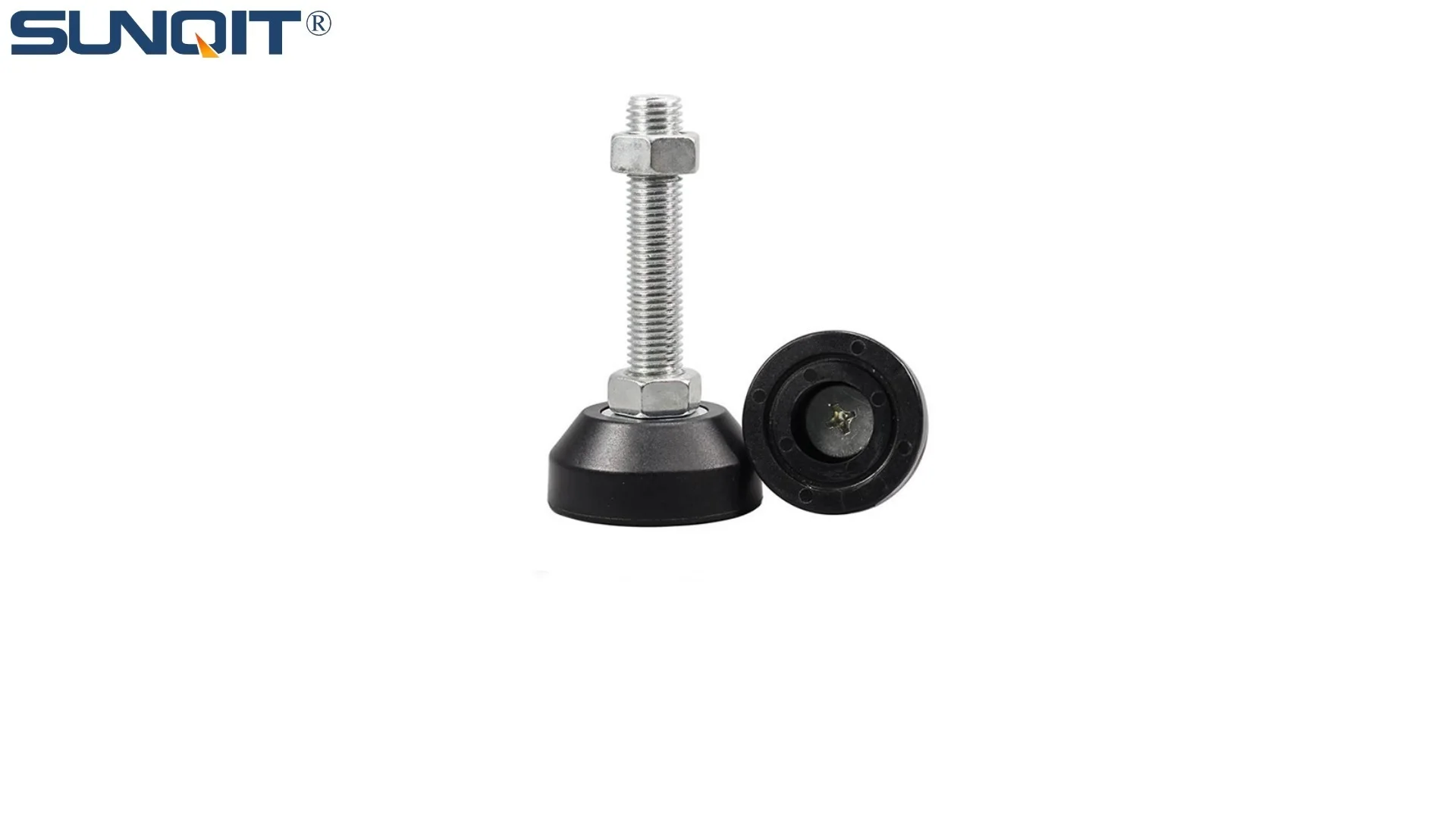
Adjustable leveling feet are designed to keep machines level when placed on uneven or sloped ground. Otherwise known as adjustable equipment feet, they are available to order in a wide variety of size and load capacity combinations.
Walk into any busy factory, and you'll notice the heartbeat of production lies in its workbenches. These sturdy surfaces are where assembly lines hum, tools find their home, and products take shape—from tiny electronics components to heavy machinery parts. But here's a quiet truth: even the most well-designed workbench is only as reliable as its foundation. Uneven floors, shifting surfaces, or wobbly legs can turn a productive workspace into a source of frustration, errors, and even safety risks. That's where but essential components like M10*56 rubber leveling feet come into play. In this article, we'll explore how these small, cost-effective parts deliver big benefits for factories, especially when paired with flexible setups like lean pipe workbenches and aluminum profile systems. We'll also dive into why stability matters, the unique advantages of these leveling feet, and how they fit into the bigger picture of lean manufacturing efficiency.
What Are M10*56 Rubber Leveling Feet, Anyway?
Let's start with the basics. M10*56 rubber leveling feet are adjustable supports designed to stabilize equipment—most commonly workbenches, shelving, and machinery—on uneven floors. The "M10" refers to the metric thread size (10mm diameter), while "56mm" is the length of the metal stem that screws into the workbench leg. At the bottom, a durable rubber pad provides grip, and the metal stem (often made of steel or zinc-plated steel) ensures strength and corrosion resistance. Think of them as the "shock absorbers" for your workbench: they bridge the gap between uneven floors and wobbly legs, creating a level, steady surface.
What sets these apart from generic leveling feet? The rubber base is key. Unlike hard plastic or metal bases, rubber conforms slightly to the floor surface, enhancing friction to prevent slipping—a critical feature in factories where oil, coolant, or debris might make floors slippery. The M10 thread size is a sweet spot for versatility: it's strong enough to support heavy workbenches (up to several hundred kilograms, depending on the model) but not so large that it's cumbersome to install. And at 56mm in length, the stem offers enough adjustability to compensate for minor floor irregularities without being overly long or prone to bending. For factories using modular setups like lean pipe workbenches—where flexibility and quick adjustments are priorities—this balance of strength and adjustability is a game-changer.
Why Stability Matters More Than You Think
You might be thinking, "So my workbench wobbles a little—does it really matter?" In short: yes. Stability isn't just about comfort; it's about precision, safety, and bottom-line efficiency. Let's break it down:
Precision in Production: In industries like electronics assembly or medical device manufacturing, even a millimeter of wobble can ruin a product. Imagine soldering a tiny circuit board on a shaky workbench—one wrong move, and the component is damaged, leading to rework, waste, and delays. Stable workbenches ensure tools stay in place, measurements are accurate, and assembly steps are consistent. This is especially true for lean pipe workbenches , which are often used in high-precision environments. Lean systems thrive on eliminating waste, and unstable workbenches create waste in the form of errors and rework.
Safety First: A wobbly workbench isn't just annoying—it's a hazard. Tools, parts, or even heavy components can slide off, risking injury to workers or damage to equipment. In busy factories, where workers are focused on speed and efficiency, the last thing anyone needs is a preventable accident. Anti-slip rubber leveling feet (like the M10*56 model) reduce this risk by keeping the workbench anchored, even during fast-paced tasks. OSHA and other safety standards often mandate stable work surfaces, so compliance is another key factor here.
Longevity of Equipment: Constant wobbling doesn't just affect products—it wears down the workbench itself. Loose joints, cracked tabletops, or bent legs are common in unstable workbenches, leading to frequent repairs or replacements. Over time, those small repair costs add up. By investing in quality leveling feet, factories extend the life of their workbenches and machinery, saving money in the long run.

The Benefits of M10*56 Rubber Leveling Feet: More Than Just "Stable"
Now that we understand why stability is critical, let's explore why M10*56 rubber leveling feet are a standout choice for factories. These little components punch above their weight in terms of value, offering benefits that align with both practical needs and budget constraints.
1. Cost-Effective Stability: Factories are always looking to cut costs without sacrificing quality, and these leveling feet deliver. Compared to custom floor leveling or expensive machinery stabilizers, M10*56 rubber leveling feet are budget-friendly—often costing just a few dollars per unit. For a factory with 50 workbenches, outfitting each with four leveling feet would cost a fraction of replacing a single damaged workbench or fixing a production error caused by instability. It's a small investment with big returns.
2. Easy to Install and Adjust—No Expertise Needed: You don't need a professional installer to add these leveling feet to your workbench. Most come with a standard M10 thread that screws directly into pre-drilled holes in workbench legs (common in lean pipe workbenches and aluminum profile systems). To adjust, simply twist the foot clockwise or counterclockwise to raise or lower the height—no special tools required. This is a huge plus for factories with rotating shifts or frequent reconfigurations (a hallmark of lean manufacturing). If you move a workbench to a new area with uneven floors, a quick twist of the leveling feet gets it stable again in minutes.
3. Durable Enough for Factory Life: Factories are tough environments—dust, moisture, heavy loads, and occasional impacts are par for the course. M10*56 rubber leveling feet are built to handle this. The rubber pad resists wear and tear, even with constant contact with concrete floors, and the metal stem (often zinc-plated or stainless steel) resists rust and corrosion. Unlike cheap plastic feet that crack or harden over time, these can last for years with minimal maintenance—another cost-saver in the long run.
4. Anti-Slip, Anti-Vibration, and Noise-Reducing: The rubber base isn't just for grip—it also dampens vibrations. In factories with heavy machinery, vibrations can travel through floors and disrupt sensitive tasks (like assembling small electronics). The rubber acts as a buffer, reducing noise and vibration transfer. And let's not forget the anti-slip feature: even if a spill occurs, the rubber pad's textured surface keeps the workbench from sliding, protecting both workers and products. This ties directly to anti-slip adjustable leveling feet benefits, making them a safer choice than smooth plastic or metal alternatives.
5. Compatible with Modular Workbenches: Modern factories love modular setups—think lean pipe workbenches, aluminum profile workstations, and adjustable shelving. These systems are designed to be reconfigured as production needs change, and M10*56 leveling feet fit right in. Whether your workbench is made of steel pipes, aluminum extrusions, or a mix of materials, these feet screw into standard leg designs. They're also easy to remove and reuse if you repurpose a workbench for a new task—no need to buy new stabilizers every time you rearrange your layout.

Lean Pipe Workbenches and Aluminum Profiles: The Perfect Match for Leveling Feet
If you're familiar with lean manufacturing, you know that lean pipe workbenches are a cornerstone of efficient production. These workbenches use lightweight, modular pipes (often aluminum or steel) and joints to create customizable surfaces that adapt to tasks—from assembly to packaging to quality control. They're popular because they're affordable, easy to build, and endlessly reconfigurable. But even the most flexible lean pipe workbench is useless if it's wobbly. That's where M10*56 rubber leveling feet shine.
Lean pipe workbenches are often lightweight compared to traditional steel workbenches, which makes them more prone to tipping or wobbling on uneven floors. Adding leveling feet adds that missing stability without sacrificing flexibility. For example, a factory might use a lean pipe workbench for small-part assembly in the morning and reconfigure it as a packing station in the afternoon. With leveling feet, both setups stay steady, ensuring workers can focus on tasks rather than adjusting the workbench.
The same goes for aluminum profile workbenches. Aluminum profiles are popular for their strength-to-weight ratio and sleek design, often used in cleanrooms or high-tech manufacturing. Their precision-machined legs are designed to accept standard hardware—including M10*56 leveling feet. Pairing aluminum profiles with these feet creates a stable, lightweight, and corrosion-resistant workstation that's ideal for environments where cleanliness and precision matter (like electronics or pharmaceutical production).
In short, M10*56 rubber leveling feet act as the "glue" that holds modular workbenches together, ensuring they're not just flexible, but reliably stable. They turn a good lean setup into a great one by eliminating the hidden waste of unstable work surfaces.

A Closer Look: Technical Specs (Including a Handy Table)
To help you understand if M10*56 rubber leveling feet are right for your factory, let's break down their key specs. The table below compares them to other common leveling feet sizes, highlighting why M10*56 is such a versatile choice:
| Feature | M10*56 Rubber Leveling Feet | M8*40 Rubber Leveling Feet | M12*70 Rubber Leveling Feet |
|---|---|---|---|
| Thread Size | M10 (10mm diameter) | M8 (8mm diameter) | M12 (12mm diameter) |
| Stem Length | 56mm | 40mm | 70mm |
| Load Capacity (per foot) | 200-300kg | 100-150kg | 300-500kg |
| Rubber Pad Diameter | 30-40mm | 25-30mm | 40-50mm |
| Best For | Lean pipe workbenches, aluminum profile workstations, medium-weight machinery | Light shelving, small workbenches, lab equipment | Heavy machinery, industrial shelving, large assembly tables |
| Adjustment Range | Up to 15mm (via stem length) | Up to 10mm | Up to 20mm |
| Typical Cost (per unit) | $3-$5 | $2-$4 | $5-$8 |
As you can see, M10*56 hits the "goldilocks zone" for most factory workbenches: it supports enough weight for medium-duty tasks (like assembling circuit boards or small appliances), offers enough adjustability for typical floor unevenness, and costs less than larger, heavier-duty options. Unless you're supporting a 1-ton machine, M10*56 is likely the right fit.
Real-World Impact: How One Factory Fixed Its Stability Issues
Let's put this all into context with a real-world example (names changed for privacy). PrecisionTech, a mid-sized electronics assembly plant in Ohio, was struggling with a frustrating problem: their lean pipe workbenches kept wobbling, leading to frequent soldering errors on circuit boards. Workers reported "fighting the workbench" to keep components steady, and quality control checks found a 12% defect rate in batches assembled on the wobbliest benches. The team tried shimming the legs with cardboard (a temporary, messy fix) and even replacing some workbenches—all with no long-term success.
Then, their lean manufacturing consultant suggested installing M10*56 rubber leveling feet. The team was skeptical at first—how could small feet fix such a big problem? They ordered 200 feet (enough for 50 workbenches) and installed them over a weekend. The results were immediate: workbenches that stayed level, even on the factory's older, cracked concrete floors. Within a month, defect rates dropped to 3%, and workers reported less fatigue from steadying tools. "We were overcomplicating it," said the plant manager. "These feet cost pennies compared to the rework we were doing. It was a no-brainer."
This story isn't unique. Factories across industries—automotive, aerospace, medical devices—have similar "aha!" moments when they realize how much instability was holding them back. M10*56 rubber leveling feet aren't a flashy solution, but they deliver tangible results that bottom-line-focused managers care about: fewer errors, happier workers, and lower costs.
Choosing the Right Leveling Feet: What to Look For
Not all leveling feet are created equal. When shopping for M10*56 rubber leveling feet, keep these tips in mind to ensure you get the best value:
Check the Rubber Quality: Look for feet with non-marking, oil-resistant rubber. Cheaper rubber can harden or crack in cold or hot environments, losing grip over time. High-quality rubber should feel firm but pliable, even after months of use.
Opt for Corrosion-Resistant Stems: Factories are often damp or dusty, so a zinc-plated or stainless steel stem is a must. This prevents rust, which can seize the thread and make adjustments impossible.
Load Capacity Matters: Don't skimp on load capacity. If your workbench holds heavy tools or materials, ensure the feet can support the weight (remember, each foot bears a quarter of the total load). Most M10*56 feet handle 200-300kg per foot, which is more than enough for typical lean pipe workbenches.
Buy from a Reputable Supplier: Stick with suppliers who specialize in lean manufacturing components or industrial hardware. They'll have better quality control and can help you choose the right size if you're unsure. Avoid generic "no-name" feet—they may have inconsistent threading or weak stems.
Installation and Maintenance Tips
Installing M10*56 rubber leveling feet is simple, but a few best practices will ensure they work their best:
Prep the Workbench: Clean the threads in the workbench legs to remove dust or debris, which can make screwing in the feet difficult.
Hand-Tighten First: Screw the feet in by hand until they're snug, then use a wrench for a final quarter-turn. Over-tightening can strip the threads or damage the workbench leg.
Adjust in a Cross Pattern: Like tightening lug nuts on a car, adjust the feet in a cross pattern (front-left, back-right, front-right, back-left) to ensure even weight distribution.
Check Regularly: Every few months, inspect the feet for loose threads or worn rubber. Tighten any loose feet and replace ones with cracked or flattened rubber pads.
Wrapping Up: Small Feet, Big Results
In the world of factory equipment, it's easy to get excited about high-tech machinery or flashy automation systems. But as we've seen, the unsung heroes—like M10*56 rubber leveling feet—often have the biggest impact on day-to-day efficiency. These small, cost-effective components turn unstable workbenches into pillars of reliability, supporting lean manufacturing goals by reducing waste, improving precision, and keeping workers safe.
Whether you're running a lean pipe workbench, an aluminum profile workstation, or a traditional steel bench, stability should never be an afterthought. M10*56 rubber leveling feet offer a simple, affordable way to ensure your workbenches are up to the task—today, tomorrow, and for years to come. So the next time you walk through your factory, take a look at those workbench legs. If they're missing leveling feet, you might just be leaving efficiency (and money) on the floor.