- Company Articles
- Products and Technology
- Product knowledge
- M10*56 Rubber Leveling Feet: Essential for Medical Equipment Workstations

M10*56 Rubber Leveling Feet: Essential for Medical Equipment Workstations
Related Product
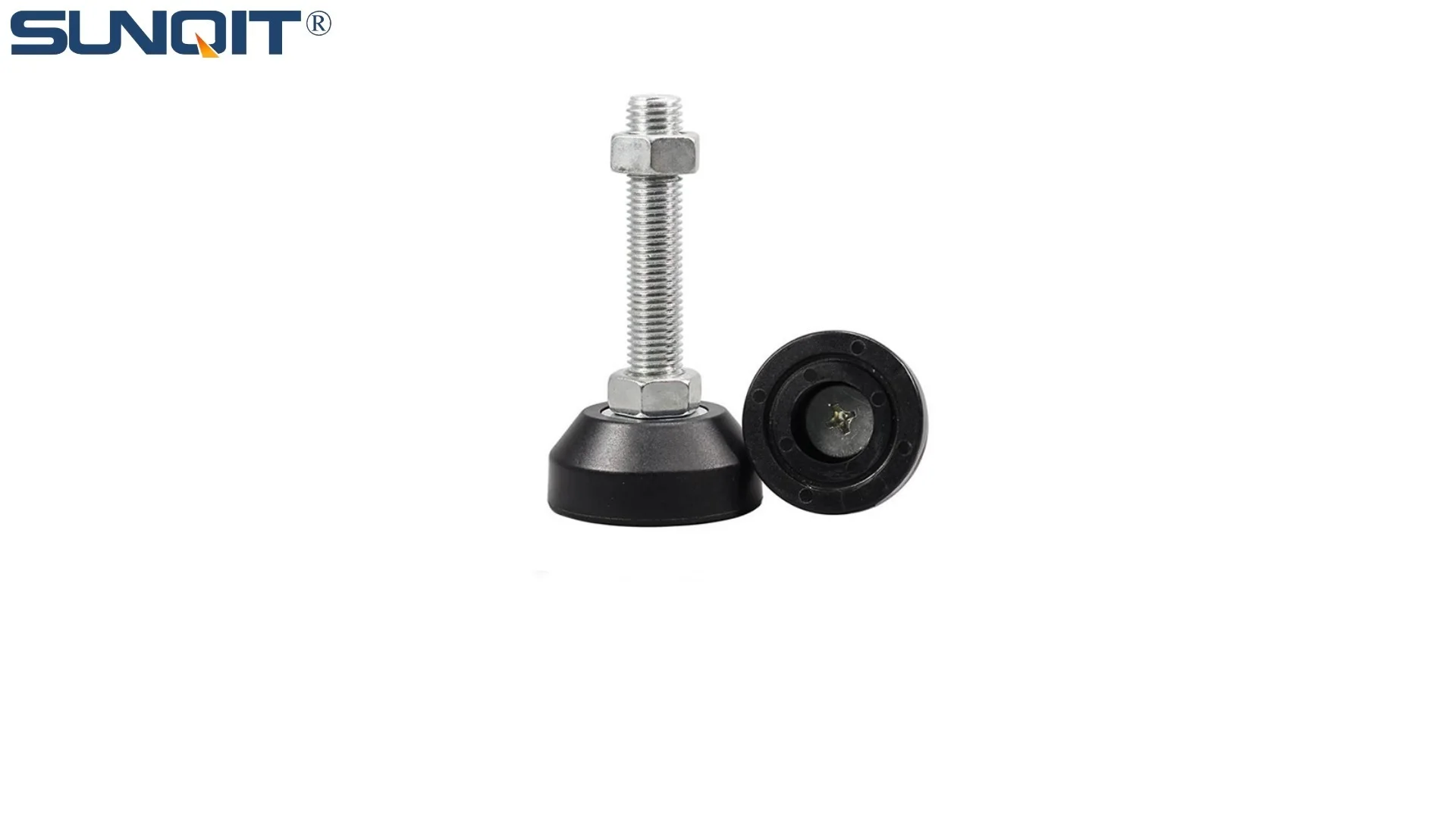
M10*56 Rubber Leveling Feet
Adjustable leveling feet are designed to keep machines level when placed on uneven or sloped ground. Otherwise known as adjustable equipment feet, they are available to order in a wide variety of size and load capacity combinations.
The Hidden Backbone of Medical Workstations
Walk into any hospital lab, surgical prep room, or diagnostic center, and you'll notice rows of workstations lined with precision equipment—centrifuges humming softly, microscopes focused on tissue samples, PCR machines processing critical tests. What you might not notice, though, is the unsung hero keeping all these tools stable: the humble leveling foot. In the high-stakes world of healthcare, where even the smallest vibration or wobble can compromise results or endanger patients, stability isn't just a convenience—it's a necessity. And when it comes to reliable stability, the M10*56 rubber leveling foot stands out as a quiet yet crucial component in medical workbench design.
Imagine a scenario in a busy hospital lab: a technician is preparing a blood sample for analysis, carefully pipetting tiny droplets into a vial. The workbench beneath them, however, isn't quite level. A slight nudge from a passing colleague sends a ripple through the surface, causing the pipette to slip. The sample is ruined, and now the patient waits longer for results. This isn't just a hypothetical—it's a real risk in facilities where workstations aren't properly stabilized. That's where the M10*56 rubber leveling foot comes in. Designed to anchor workbenches firmly to the ground, absorb vibrations, and adjust for uneven floors, these small but mighty components play a big role in keeping medical workflows smooth and error-free.
The Problem: Unstable Workstations in Medical Settings
Medical facilities are rarely perfect environments for precision work. Floors, even in newly built hospitals, can have subtle unevenness from years of foot traffic, equipment movement, or settling foundations. Add to that the constant hum of HVAC systems, the buzz of medical carts rolling by, and the occasional bump from staff rushing to urgent tasks, and you've got a recipe for workstation instability. For equipment that requires pinpoint accuracy—like a mass spectrometer analyzing a cancer biomarker or a cell counter tallying white blood cells—even a 1mm wobble can throw off readings, leading to misdiagnoses or delayed treatments.
Traditional workbenches, often made from basic materials like wood or generic steel, might come with simple plastic glides or fixed metal feet. But these solutions fall short in medical settings. Plastic glides wear down quickly, losing their grip and allowing the workstation to shift. Fixed metal feet can't adjust for uneven floors, leaving gaps that turn into rocking motion when the bench is touched. And neither option does much to absorb vibrations, which can interfere with sensitive equipment like electron microscopes or DNA sequencers. Over time, this instability doesn't just affect equipment performance—it also takes a toll on staff. Technicians and nurses end up compensating for wobbly surfaces, straining their wrists or backs as they steady themselves, or double-checking results to ensure accuracy—wasting precious time that could be spent on patient care.
Real-World Impact: A 2023 study in the Journal of Medical Laboratory Technology found that 12% of repeat tests in hospital labs were due to equipment errors caused by unstable workstations. For a busy lab processing 500 tests daily, that's 60 unnecessary retests—translating to hours of lost time and increased stress for staff.

Meet the M10*56 Rubber Leveling Foot: More Than Just a "Foot"
At first glance, the M10*56 rubber leveling foot might seem like a simple piece of hardware. But look closer, and you'll see it's a carefully engineered solution designed to address the unique challenges of medical work environments. Let's break down what makes it special.
First, the basics: the "M10*56" refers to the threading (specification). The "M10" means the bolt has a metric thread with a 10mm diameter, while "56" indicates the length of the threaded shaft is 56mm. This size is ideal for medical workbenches, which often need a bit of height adjustment to accommodate different users or floor slopes, but not so long that the foot becomes unstable. The threaded design allows for precise height tuning—turning the foot clockwise or counterclockwise raises or lowers the workstation, ensuring it sits perfectly level even on uneven ground.
Then there's the rubber component. The base of the leveling foot is made from high-density, oil-resistant rubber, chosen for its exceptional grip and vibration-dampening properties. Unlike hard plastic or metal, rubber conforms slightly to the floor surface, creating a stronger bond that prevents slipping. It also acts as a shock absorber, reducing the transfer of vibrations from the floor (or nearby equipment) to the workstation. This is critical for tools like centrifuges, which generate their own vibrations—without proper dampening, those vibrations can travel through the bench and interfere with neighboring equipment. The rubber is also non-marking, so it won't scuff or damage hospital floors, and resistant to common medical cleaners like disinfectants, ensuring it holds up to daily sanitization without degrading.
The upper part of the leveling foot is typically made from galvanized steel or stainless steel, providing the strength needed to support heavy workbenches and equipment. Medical workstations often hold hundreds of pounds—think of a fully loaded lean pipe workbench with reagents, glassware, and machinery. The steel shaft and housing ensure the leveling foot can handle that weight without bending or breaking, even over years of use. Some models also include a locking nut, which secures the foot in place once the desired height is set, preventing it from loosening due to vibrations or frequent use.

Why Medical Workstations Need This Specific Leveling Foot
So, why not just use any adjustable leveling foot? What makes the M10*56 rubber version essential for medical settings? Let's dive into the key benefits that set it apart.
1. Unmatched Stability for Precision Work
Medical work often involves tasks that demand steady hands and stable surfaces. A pathologist examining a tissue slide under a microscope can't afford the slide to shift mid-view. A phlebotomist drawing blood needs the armrest on their workstation to stay put. The M10*56 rubber leveling foot's combination of threaded height adjustment and grippy rubber base ensures the workbench stays locked in place, even during heavy use. The rubber base spreads the workstation's weight evenly across the floor, reducing pressure points that could cause sinking or tilting over time. And because the height is adjustable per foot, you can fine-tune each corner of the bench individually—perfect for floors with subtle slopes or dips, which are common in older medical buildings.
2. Vibration Dampening: Protecting Sensitive Equipment
Many medical devices are incredibly sensitive to vibrations. Take a PCR machine, which amplifies tiny segments of DNA. The machine uses precise temperature cycling—fluctuations as small as 0.5°C can ruin the reaction. If the workstation is vibrating, even slightly, it can disrupt the thermal block's stability, leading to inaccurate results. The M10*56's rubber base acts as a buffer, absorbing vibrations from nearby equipment (like a centrifuge in the next bay) or from the floor (like a rolling cart passing by). This isn't just about protecting the equipment—it's about protecting patient outcomes. A misdiagnosis due to a vibration-induced test error could have life-altering consequences.
3. Compatibility with Medical Workbench Designs
Medical workstations come in all shapes and sizes, but many are built using aluminum profile frames. Aluminum profiles are popular in healthcare because they're lightweight, durable, and easy to customize with accessories like shelves, hooks, or tool holders. The M10*56 rubber leveling foot is designed to work seamlessly with these aluminum profile workbenches—its threaded shaft fits into standard mounting holes on the profile legs, making installation straightforward. Whether you're building a new workstation or upgrading an existing one, you won't need special tools or adapters; the leveling foot screws right into place. This compatibility is key for hospitals and labs that often modify their workspaces to adapt to new equipment or workflows—no need to replace the entire bench when you can just swap out the feet.
4. Ergonomics and Staff Well-Being
Stability isn't just about equipment—it's also about people. Medical staff spend hours a day standing at workstations, performing repetitive tasks like pipetting, labeling samples, or preparing medications. An uneven workstation forces them to shift their weight constantly to maintain balance, leading to muscle fatigue, back pain, or even repetitive strain injuries (RSIs). By ensuring the bench is perfectly level, the M10*56 leveling foot lets staff stand comfortably, with their weight evenly distributed. This reduces physical stress, allowing them to focus on their work instead of compensating for a wobbly surface. Over time, this can lower absenteeism due to injuries and improve overall job satisfaction—a win for both staff and patients.

How It Compares: M10*56 vs. Other Leveling Feet
To truly appreciate the value of the M10*56 rubber leveling foot, it helps to compare it to other common options used in workbench design. Let's look at how it stacks up against plastic glides, fixed metal feet, and generic adjustable feet.
| Feature | M10*56 Rubber Leveling Foot | Plastic Glides | Fixed Metal Feet | Generic Adjustable Feet (Metal Base) |
|---|---|---|---|---|
| Stability on Uneven Floors | Excellent (adjustable height for precise leveling) | Poor (no adjustment; wobbles on uneven surfaces) | Poor (fixed height; gaps cause rocking) | Good (adjustable, but metal base may slip on smooth floors) |
| Vibration Absorption | Excellent (rubber base dampens shocks) | Fair (some cushioning, but wears quickly) | Poor (transfers vibrations directly) | Poor (metal base doesn't absorb vibrations) |
| Load Capacity | High (steel shaft supports 200-300 lbs per foot) | Low (plastic bends under heavy weight) | High (but stability issues limit practical use) | High (similar to M10*56, but less stable) |
| Durability in Medical Environments | Excellent (rubber resists cleaners; steel resists rust) | Poor (plastic cracks from disinfectants and wear) | Good (metal resists wear, but can rust if not stainless) | Fair (metal base may scratch floors; no vibration protection) |
| Compatibility with Aluminum Profiles | Excellent (standard M10 threading fits profile legs) | Limited (often requires custom adapters) | Limited (fixed size may not fit profile holes) | Good (adjustable, but may need additional hardware) |
As the table shows, the M10*56 rubber leveling foot outperforms alternatives in the areas that matter most for medical workstations: stability, vibration control, and durability. While generic adjustable feet might offer height adjustment, their metal bases lack the grip and shock absorption of rubber. Plastic glides are cheap but wear out quickly, and fixed metal feet can't adapt to real-world floor conditions. For healthcare facilities, the investment in M10*56 feet pays off in fewer errors, less equipment downtime, and happier, healthier staff.
Applications: Where M10*56 Leveling Feet Shine in Healthcare
The M10*56 rubber leveling foot isn't a one-size-fits-all solution—but in medical settings, its versatility makes it indispensable across a range of workstations. Let's explore some key applications where it makes a real difference.
1. Laboratory Workbenches
Lab workstations are ground zero for precision. Whether it's a chemistry bench for mixing reagents, a microbiology station for culturing samples, or a molecular biology setup for PCR testing, these workbenches need to stay stable. The M10*56 leveling feet ensure that even when a technician leans on the bench to reach a pipette or shifts a heavy reagent bottle, the surface doesn't budge. For equipment like balances (which measure mass down to the milligram), vibration absorption is critical—without it, air currents or floor vibrations could throw off readings by 0.1mg or more. By dampening those vibrations, the rubber feet help ensure accurate results the first time.
2. Surgical Prep Tables
In operating rooms, every tool and surface must be sterile and secure. Surgical prep tables, where instruments are laid out before procedures, are no exception. A wobbly table could cause a scalpel or forceps to slide off, risking contamination or injury. M10*56 leveling feet keep these tables rock-steady, even when nurses and surgeons are leaning over them to organize tools. The rubber base also prevents the table from sliding during the procedure, which is crucial in small ORs where space is tight and every movement matters.
3. Diagnostic Equipment Stations
Imaging machines like ultrasound units, portable X-ray machines, or blood gas analyzers are often mounted on mobile carts or fixed workstations. These devices are sensitive to movement—even a slight tilt can affect image quality or test accuracy. M10*56 leveling feet on their stands or carts ensure they stay level, whether parked in a exam room or rolled between departments. The adjustable height also helps technicians position the equipment at eye level, reducing neck strain during use.
4. Pharmacy Compounding Benches
Pharmacists compounding medications must measure ingredients with extreme precision—even a 1% error in dosage can be dangerous for patients. Compounding benches, often built with aluminum profiles for easy customization, rely on stable surfaces to ensure accurate measurements. M10*56 leveling feet keep these benches level, so scales and measuring tools don't tip, and liquids don't slosh in beakers. The rubber base also minimizes noise, creating a quieter environment where pharmacists can focus on their exacting work.
Installation and Maintenance: Simple Steps for Long-Lasting Performance
One of the best things about M10*56 rubber leveling feet is how easy they are to install and maintain. You don't need to be a hardware expert to get them set up, and keeping them in good shape is straightforward—perfect for busy medical facilities where staff don't have time for complicated upkeep.
Installation in 3 Easy Steps
Step 1: Prepare the Workbench. Flip the workbench upside down (or tip it onto its side) so the legs are accessible. If you're upgrading an existing bench, remove the old feet by unscrewing them or prying them off (for glued-on plastic glides). Clean the threaded holes in the legs with a cloth to remove dust or debris—this ensures the new leveling feet screw in smoothly.
Step 2: Screw in the Leveling Feet. Take the M10*56 rubber leveling foot and align the threaded shaft with the hole in the workbench leg. Turn it clockwise by hand until it's snug—you don't need to use tools yet; hand-tightening is enough to hold it in place. Repeat for all legs.
Step 3: Level the Workbench. Stand the bench upright and place a spirit level on the surface. Check both front-to-back and side-to-side. If the bubble isn't centered, adjust the leveling feet: turn the foot clockwise to lower that corner, or counterclockwise to raise it. Once the bench is level, use a wrench to tighten the locking nut (if included) against the leg to secure the foot in place. Give the bench a gentle shake to test stability—if it wobbles, double-check the leveling and tighten any loose feet.
Maintenance Tips
M10*56 rubber leveling feet require minimal upkeep, but a little care goes a long way:
- Clean Regularly: Wipe the rubber base with a damp cloth weekly to remove dirt or debris that could reduce grip. Avoid harsh abrasives, which can scratch the rubber.
- Check Tightness Monthly: Over time, vibrations can loosen the leveling feet. Give each foot a gentle twist to ensure it's still snug. If it spins easily, tighten it by hand or with a wrench.
- replace Worn Rubber: The rubber base will wear down eventually (after 3-5 years, depending on use). If you notice cracks, flattening, or reduced grip, replace the foot—don't wait for it to fail.
- Lubricate Threads Annually: A drop of silicone lubricant on the threaded shaft (avoid oil-based lubes, which can degrade rubber) will make height adjustments smoother, especially if the feet haven't been moved in a while.
Choosing the Right Supplier: Why Quality Matters
Not all M10*56 rubber leveling feet are created equal. The market is flooded with cheap, low-quality versions that might look the part but fail quickly—rubber that cracks after a few months, steel shafts that bend under weight, or threads that strip when adjusted. For medical facilities, where reliability is non-negotiable, choosing a reputable supplier is just as important as choosing the right product.
Look for suppliers that specialize in medical-grade or industrial workbench components—many lean pipe workbench suppliers also carry high-quality leveling feet, as they're a key part of workstation design. These suppliers understand the strict standards of healthcare environments and offer products that meet or exceed industry requirements, like ISO certifications for materials and manufacturing. They'll also provide detailed specs, so you can confirm the load capacity, rubber hardness (measured in Shore A durometer), and thread accuracy before buying.
Don't hesitate to ask for samples. A good supplier will send you a few leveling feet to test—install them on a bench, adjust the height, and see how they perform. Check if the rubber grips well on your facility's floors (whether they're tile, vinyl, or concrete), and if the adjustment is smooth. This small step can save you from ordering hundreds of feet that don't work in your specific environment.
Pro Tip: Avoid suppliers that offer "one-size-fits-all" leveling feet without specifying materials or load capacity. Medical workstations have unique needs, and generic products rarely measure up. A trusted supplier will take the time to understand your workflow and recommend the right foot for your equipment and floors.
The Bottom Line: Stability That Saves Time, Money, and Lives
In the grand scheme of medical equipment, M10*56 rubber leveling feet might seem. But their impact is huge. By keeping workstations stable, they reduce errors in testing and medication preparation, protect expensive equipment from damage, and make staff more comfortable and efficient. They're a small investment that pays off in fewer retests, lower equipment repair costs, and happier, healthier teams.
The next time you walk into a hospital lab or exam room, take a moment to look under the workbench. Chances are, you'll see these unsung heroes hard at work—keeping everything steady, so the people above can focus on what matters most: caring for patients. And that, in the end, is what makes the M10*56 rubber leveling foot not just essential, but irreplaceable in modern healthcare.