- Company Articles
- Products and Technology
- Product knowledge
- M10*56 Rubber Leveling Feet for 3C Assembly Benches: Precision Support

M10*56 Rubber Leveling Feet for 3C Assembly Benches: Precision Support
Related Product
M10*56 Rubber Leveling Feet
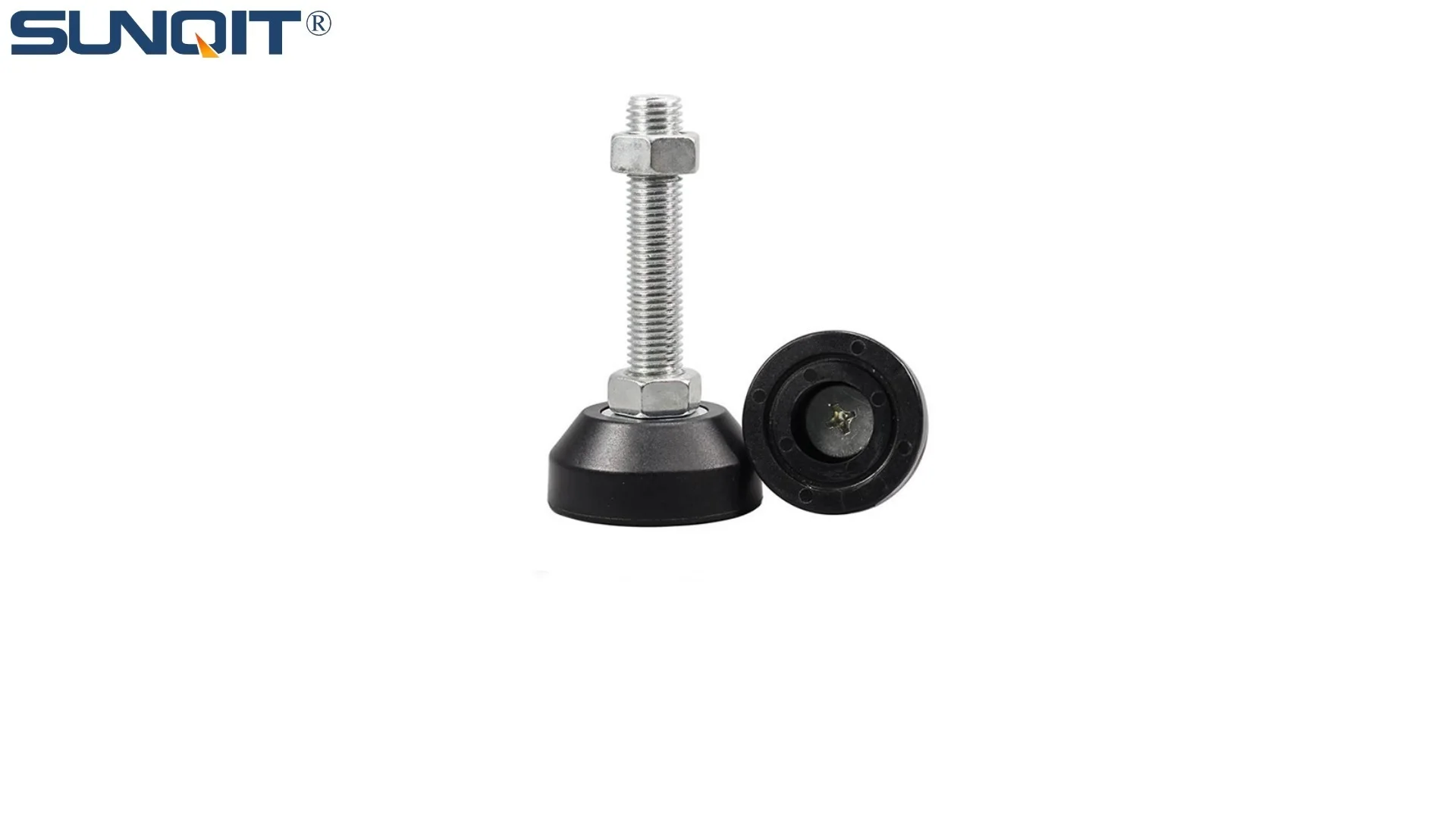
Adjustable leveling feet are designed to keep machines level when placed on uneven or sloped ground. Otherwise known as adjustable equipment feet, they are available to order in a wide variety of size and load capacity combinations.
In the high-stakes world of 3C manufacturing—where smartphones, laptops, and wearable devices are born from tiny, delicate components—precision isn't just a buzzword. It's the difference between a flawless product and a costly defect. Every tool, every machine, and every surface plays a role in this dance of accuracy. Yet, there's one unsung hero that often goes unnoticed: the humble leveling foot. Specifically, the M10*56 rubber leveling feet. These small, unassuming components might not grab headlines, but they're the quiet guardians of stability, ensuring that the workbench—where the magic of assembly happens—stands firm, level, and ready to support the most intricate tasks. Let's dive into why these "feet" are more than just accessories; they're the foundation of 3C assembly excellence.
The 3C Assembly Bench: More Than Just a Table
First, let's clarify what a 3C assembly bench is—and why it matters. 3C, short for Computers, Communications, and Consumer Electronics, encompasses the gadgets we rely on daily: think smartphones with millimeter-thin bezels, smartwatches with microscopic sensors, and laptops with precision-engineered circuit boards. Assembling these devices requires a workspace that's not just a flat surface, but a controlled environment tailored to the unique demands of small-part manufacturing.
A typical 3C assembly bench is often built with aluminum profile frames—lightweight, durable, and easy to customize with accessories like tool holders, ESD mats, and component trays. Many are also designed as ESD workbench setups, meaning they dissipate static electricity to protect sensitive electronics from electrostatic discharge (ESD), a silent killer that can fry microchips without warning. But even the sturdiest aluminum frame or the most advanced ESD mat can't overcome a fundamental problem: an uneven floor. That's where leveling feet step in.
Why Stability Matters: The Hidden Costs of an Uneven Workbench
Imagine assembling a smartphone's camera module, where misalignment by just 0.1mm can result in blurry photos or failed autofocus. Now, imagine doing this on a workbench that wobbles slightly every time you lean on it, or tilts imperceptibly because the factory floor isn't perfectly level. The consequences? Defective products, rework, wasted materials, and frustrated workers. But the costs go beyond the assembly line.
An uneven workbench isn't just a quality risk—it's a safety and efficiency hazard, too.
Workers hunched over a tilted bench to keep components from sliding off develop muscle strain over time, leading to higher absenteeism and lower productivity. Delicate tools like soldering irons or precision screwdrivers, when placed on an unlevel surface, can roll off, causing damage or injury. Even ESD protection suffers: if the bench isn't stable, ESD mats may not make consistent contact with the ground, compromising their ability to dissipate static. In short, stability isn't a luxury in 3C manufacturing—it's a necessity.

Enter the M10*56 Rubber Leveling Feet: Engineering for Precision
So, what exactly are adjustable leveling feet , and why does the M10*56 rubber variant stand out? At their core, adjustable leveling feet are threaded components attached to the bottom of workbench legs (or other equipment) that let you "tweak" each corner's height, compensating for uneven floors. They're like the knobs on a picture frame, but for industrial stability.
The M10*56 rubber leveling feet take this concept a step further with thoughtful engineering. Let's break down the specs: "M10" refers to the thread size (10mm diameter), a common standard for medium-load applications like workbenches. "56mm" is the length of the threaded rod, which determines how much height adjustment is possible—critical for overcoming floor irregularities. The "rubber" part? That's the base, and it's where the magic happens.
Rubber is chosen for its dual superpowers: grip and vibration dampening. Unlike metal bases, which can slip on smooth factory floors (especially common in cleanrooms), rubber creates friction, anchoring the workbench in place. It also absorbs minor vibrations—say, from nearby machinery or foot traffic—preventing them from rippling through the bench and disrupting delicate assembly tasks. For 3C work, where even a tiny tremor can misalign a 0.5mm component, this is game-changing.

Why M10*56? The Perfect Fit for 3C Workbenches
Not all leveling feet are created equal. So why is the M10*56 rubber variant a go-to for 3C assembly benches? Let's unpack the reasons:
- Thread Precision: M10 threading is coarse enough to allow quick height adjustments (no endless twisting) but fine enough to dial in micro-adjustments—essential when you need the bench level to within a fraction of a millimeter.
- 56mm Length: The Sweet Spot for Adjustment Factory floors, even in new facilities, are rarely perfectly flat. Cracks, uneven concrete, or slight slopes can create height differences of up to 50mm between bench legs. At 56mm, the M10*56 provides enough adjustment range to bridge these gaps without being overly long (which would make the bench wobbly). It's the Goldilocks of leveling foot lengths: not too short, not too long.
- Load Capacity: 3C workbenches often hold tools, component bins, and semi-assembled products—easily totaling 100-200kg. M10 threads are strong enough to support this weight without stripping, even with repeated adjustments.
- Rubber Base Design: The rubber pad on these feet is typically textured for extra grip and made from a durable, oil-resistant compound (important in factories where lubricants or coolants might spill). Some are even ESD-safe, ensuring they don't interfere with the ESD workbench 's static-dissipating properties.

Comparing Leveling Feet: M10*56 vs. Other Sizes
To truly appreciate the M10*56, let's compare it to other common leveling foot sizes used in industrial settings. The table below highlights key differences in load capacity, adjustment range, and ideal use cases:
| Thread Size | Length (mm) | Typical Load Capacity (per foot) | Adjustment Range (mm) | Best For |
| M8 | 40 | Up to 80kg | 30-40 | Light-duty workbenches, small carts |
| M10 | 56 | 100-200kg | 45-56 | 3C assembly benches, ESD workbenches, medium-load setups |
| M12 | 75 | 200-300kg | 60-75 | Heavy machinery, large assembly lines |
As the table shows, M8 feet are too light for most 3C workbenches, while M12 feet are overkill—bulkier, heavier, and more expensive than needed. The M10*56 hits the sweet spot, balancing strength, adjustability, and practicality for the demands of 3C assembly.
Installation and Maintenance: Getting the Most Out of Your M10*56 Feet
Even the best leveling feet won't perform if installed poorly. Here's how to set up M10*56 rubber leveling feet for optimal stability:
1. Pre-Installation Check: Before attaching the feet, inspect the bench legs. Ensure the mounting holes are tapped for M10 threads (most aluminum profile benches come pre-tapped, but double-check!). Clean any debris from the threads to avoid cross-threading.
2. Hand-Tighten First: Screw each foot into the leg by hand until it's snug. Avoid using tools initially—this prevents over-tightening, which can strip threads or warp the leg.
3. Leveling the Bench: Place a spirit level on the bench surface (both lengthwise and crosswise). Adjust the feet one by one: turn clockwise to lower the leg, counterclockwise to raise it. Go slow—small turns make a big difference. Once level, lock the feet in place with a jam nut (if included) to prevent them from loosening over time.
4. Maintenance: Check the feet monthly for signs of wear. The rubber base may degrade over time (especially if exposed to chemicals), so replace them if you notice cracks or loss of grip. Also, retighten jam nuts periodically—vibration from the assembly line can loosen them.
Real-World Impact: A Case Study in Stability
To put this in perspective, let's look at a real example. A mid-sized 3C manufacturer in Shenzhen was struggling with a 5% defect rate in their smartphone camera module assembly line. After investigating, engineers found that the workbenches—though new—were slightly uneven, causing component misalignment during bonding. They switched out the generic M8 plastic leveling feet with M10*56 rubber adjustable leveling feet , re-leveled the benches, and retrained operators on proper maintenance. Within two weeks, the defect rate dropped to 1.2%. The ROI? Tens of thousands of dollars saved in rework and material costs—all from upgrading a $10 component.
Choosing the Right Supplier: Quality Matters
Not all M10*56 rubber leveling feet are created equal. To ensure you're getting a product that performs, look for a supplier that:
- Uses high-grade steel for the threaded rod (to prevent bending or stripping).
- Specifies rubber hardness (Shore A 60-70 is ideal for grip and durability).
- Offers ESD-compliant options if you're using an ESD workbench .
- Provides test reports for load capacity and thread strength.
Remember: a cheap leveling foot might save a few dollars upfront, but it could cost you far more in defects down the line.
Conclusion: Invest in the Foundation, Elevate the Outcome
In the world of 3C manufacturing, where precision is non-negotiable, the M10*56 rubber leveling feet are more than just "feet"—they're precision tools. They transform an ordinary aluminum profile bench into a stable, reliable workspace that supports the intricate tasks of assembling our most beloved gadgets. They protect against defects, reduce waste, and keep workers comfortable and productive. So the next time you pick up your smartphone, take a moment to appreciate the quiet stability that made it possible—starting with the feet that hold its assembly bench firm.
After all, in 3C assembly, excellence isn't just about the parts you see—it's about the parts you don't.