- Company Articles
- Products and Technology
- Product knowledge
- M10*56 Rubber Leveling Feet for Automated Production Lines: Stability Tips

M10*56 Rubber Leveling Feet for Automated Production Lines: Stability Tips
Related Product
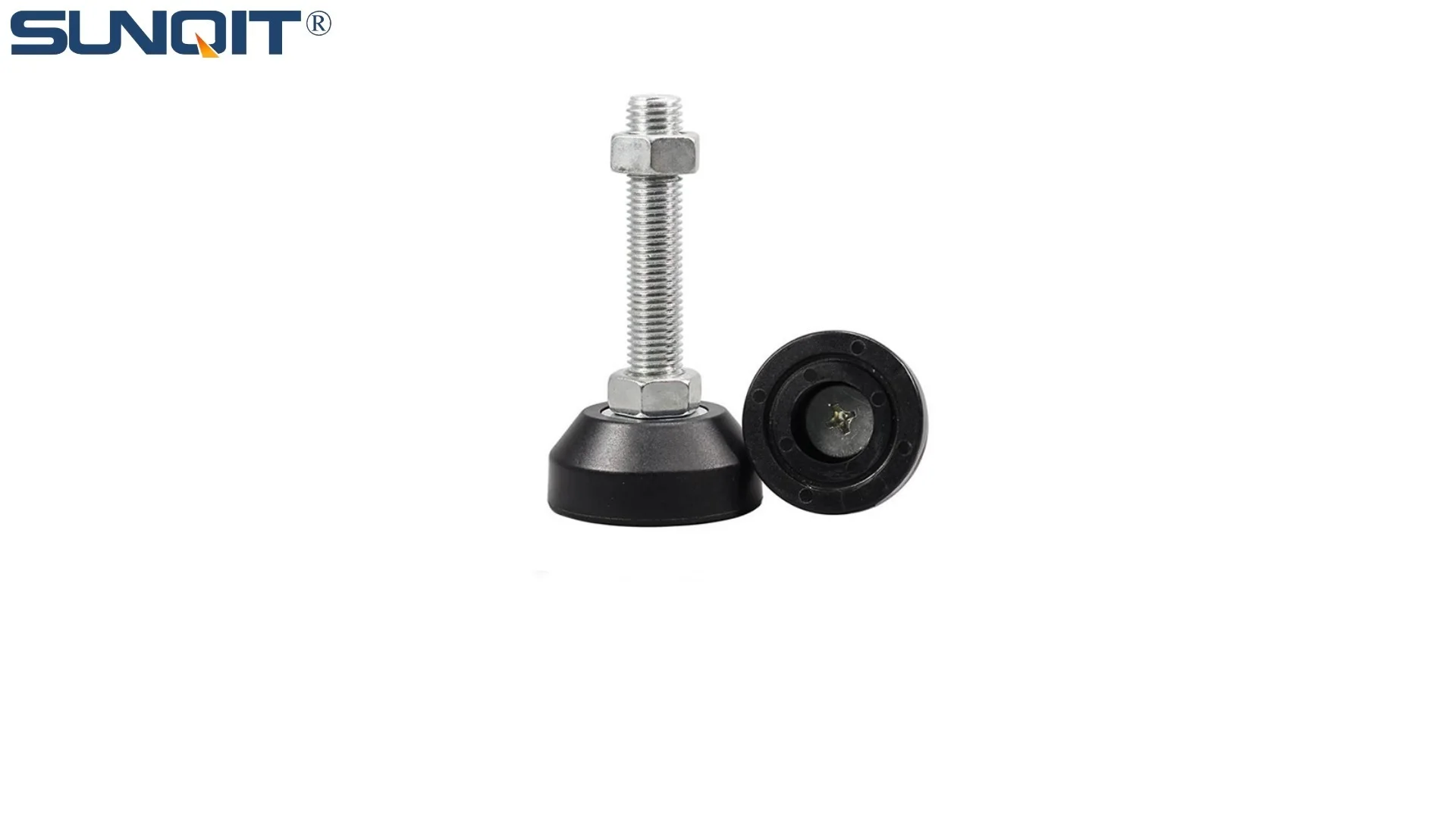
M10*56 Rubber Leveling Feet
Adjustable leveling feet are designed to keep machines level when placed on uneven or sloped ground. Otherwise known as adjustable equipment feet, they are available to order in a wide variety of size and load capacity combinations.
Walk through any modern automated production facility, and you'll notice a symphony of moving parts: conveyor belts gliding, robotic arms pivoting, and workbenches holding components with pinpoint precision. But beneath this seamless operation lies a critical, often overlooked foundation—stability. Even the most advanced machinery can falter if its base isn't level, leading to misaligned parts, production delays, or worse, defective products. That's where but essential components like M10*56 rubber leveling feet come into play. These small but mighty tools are the unsung heroes of production line stability, ensuring everything from lean pipe workbenches to aluminum profile frames stays grounded, aligned, and ready to perform. In this article, we'll dive into why stability matters, how M10*56 rubber leveling feet work, and share actionable tips to keep your automated line running smoothly.
The Hidden Cost of Instability in Automated Lines
Instability in production lines isn't just a minor annoyance—it's a silent profit killer. Let's say your facility manufactures circuit boards. A workbench that wobbles by just 2mm might seem insignificant, but when a robotic soldering arm relies on that bench for stability, that tiny could misplace a solder joint, rendering the board useless. Multiply that by hundreds of boards a day, and the costs add up fast: wasted materials, rework time, and missed delivery deadlines.
Or consider a conveyor system transporting fragile glass panels. If the conveyor's legs aren't properly leveled, the panels might tilt, leading to cracks or scratches. Suddenly, you're not just replacing damaged goods—you're also dealing with unhappy customers and a tarnished reputation. Even subtler issues, like uneven weight distribution on a material rack, can cause premature wear on equipment bearings or motor burnout, leading to costly downtime for repairs.
The good news? Many of these problems are preventable with the right stability solutions. And that's where M10*56 rubber leveling feet shine. Designed to compensate for uneven floors, absorb vibrations, and distribute weight evenly, they're a low-cost investment that pays dividends in reliability and efficiency.
What Are M10*56 Rubber Leveling Feet, Exactly?
At first glance, M10*56 rubber leveling feet might look like simple bolts with rubber caps—but their design is surprisingly thoughtful. Let's break down the name: "M10" refers to the metric thread size, meaning the threaded rod that screws into the equipment has a diameter of 10 millimeters. The "56" indicates the length of the threaded portion (56mm), giving you ample adjustability to level surfaces even when floors are uneven by up to several centimeters.
The real star, though, is the rubber base. Unlike metal-only leveling feet, which can scratch floors or slip on smooth surfaces, the rubber provides two key benefits: grip and vibration dampening. The soft, textured rubber bottom creates friction with the floor, preventing the equipment from shifting during operation. Meanwhile, its elastic properties absorb shocks—like when a heavy component is placed on a workbench—reducing noise and minimizing stress on the equipment's frame.
These feet are typically made from durable materials: the threaded rod is often steel (zinc-plated for corrosion resistance), and the rubber is a high-density, oil-resistant compound that holds up to industrial environments. They're also easy to install—simply screw them into the pre-drilled holes on your equipment's base, adjust the height by twisting the rod, and lock them in place with a nut if needed. Whether you're outfitting a new lean pipe workbench or retrofitting an old conveyor, M10*56 rubber leveling feet are designed to integrate seamlessly.

Why Rubber? The Advantages Over Other Materials
You might be wondering: Why rubber? Couldn't I just use metal leveling feet or even wooden shims? While those options work in a pinch, they lack the versatility and long-term benefits of rubber. Let's compare:
| Feature | M10*56 Rubber Leveling Feet | Metal-Only Leveling Feet | Wooden Shims |
|---|---|---|---|
| Floor Protection | Rubber base prevents scratches and dents | Metal can scratch or mar concrete/tiles | May compress over time, leaving marks |
| Vibration Absorption | Excellent—rubber dampens shocks and noise | Poor—vibrations transfer directly to floor | Limited—wood absorbs some, but not as effectively |
| Adjustability | Precise height adjustment via threaded rod | Adjustable, but no grip—may slip | Fixed height—requires replacing shims to adjust |
| Durability | Resistant to oil, chemicals, and wear | Durable, but prone to rust without coating | Prone to rot, warping, or crumbling |
As the table shows, rubber leveling feet strike the perfect balance between grip, adjustability, and protection. They're especially valuable in environments where floors aren't perfectly smooth—think old factories with cracked concrete or facilities that have settled over time. And when paired with adjustable leveling feet, they become a dynamic solution that adapts to your space, not the other way around.

Key Features of M10*56 Rubber Leveling Feet
Not all leveling feet are created equal, and M10*56 rubber leveling feet stand out for several reasons. Here's what makes them a top choice for automated production lines:
1. 56mm Threaded Length for Versatility
The 56mm threaded portion isn't arbitrary—it's long enough to handle most common floor irregularities. If your facility has a section where the floor dips by 30mm, you can extend the rod to compensate. If another area is slightly raised, you can shorten it. This flexibility means you don't need to stock multiple sizes of leveling feet; M10*56 can adapt to most situations.
2. High Load Capacity
Typically rated to support 500-800kg per foot (depending on the manufacturer), these feet can handle heavy equipment like industrial workbenches, material racks, or even small conveyors. That's crucial for automated lines, where equipment often carries constant, sometimes shifting loads.
3. Oil and Chemical Resistance
The rubber used in these feet is often formulated to resist oils, coolants, and common industrial chemicals. In automotive or machining facilities, where spills happen, this resistance prevents the rubber from degrading or becoming slippery—maintaining grip even in messy environments.
4. Easy Locking Mechanism
Most M10*56 feet come with a lock nut that, once you've set the desired height, tightens against the equipment base to prevent the foot from twisting loose over time. This is vital for long-term stability, especially in high-vibration areas like near stamping machines or compressors.

5 Essential Stability Tips for Automated Lines
Now that you understand why M10*56 rubber leveling feet matter, let's get practical. Here are five actionable tips to ensure your production line stays stable, efficient, and problem-free:
Tip 1: Start with a Level Floor Assessment
Before installing or adjusting leveling feet, map out your floor's unevenness. Use a laser level or a long spirit level to check for slopes or dips in the areas where equipment will sit. Note the highest and lowest points—this will help you set the initial height of each leveling foot and avoid over-adjusting. For example, if a corner of your lean pipe workbench sits on a 20mm dip, you'll know to extend that foot's rod by 20mm to match the others.
Pro tip: Mark the floor with tape or chalk to note uneven spots. This saves time during installation and helps during future maintenance checks.
Tip 2: Distribute Loads Evenly Across Feet
A common mistake is overloading one or two leveling feet while others bear little weight. For instance, if you place a heavy machine tool on one side of a workbench, the feet under that side will compress more, leading to uneven wear and potential instability. To avoid this, calculate the total weight of your equipment (including any materials it will hold) and divide it by the number of leveling feet. Aim for each foot to carry roughly the same load.
If your equipment has an irregular shape, use a load cell or weigh scale to check each foot's load after installation. Adjust the feet as needed—sometimes raising a lightly loaded foot can redistribute weight more evenly.
Tip 3: Tighten Lock Nuts Properly (But Don't Overdo It)
The lock nut is your friend, but overtightening it can cause problems. If you crank it too hard, you might strip the threads or warp the equipment's base, making future adjustments impossible. Instead, tighten the nut until it's snug against the base, then give it a quarter-turn more with a wrench. This ensures the foot stays in place without damaging components.
For high-vibration equipment (like a shaker table or a stamping press), consider using a thread-locking compound (like Loctite) on the nut. This adds an extra layer of security against loosening over time.
Tip 4: Inspect and Clean Feet Regularly
Dirt, debris, or oil buildup under the rubber base can reduce grip and throw off leveling. Make it a habit to inspect leveling feet monthly (or more often in dirty environments). Wipe the rubber base with a damp cloth to remove grime, and check for cracks or wear in the rubber. If the rubber is hardening, cracking, or losing texture, replace the foot immediately—damaged rubber can't provide the grip or vibration absorption you need.
Also, check the threaded rod for rust or corrosion. A quick spray of lubricant (like WD-40) can keep the threads moving smoothly, making adjustments easier when needed.
Tip 5: Pair with Complementary Components
Leveling feet work best when integrated with other stability-focused components. For example, if you're building a lean pipe workbench, use aluminum profile frames for rigidity—they won't bend under load, ensuring the leveling feet can do their job. If your equipment needs occasional mobility (like a material trolley), combine leveling feet with caster and accessories: lock the casters in place, then lower the leveling feet to lift the casters off the floor for stable operation. When you need to move the trolley, raise the feet and unlock the casters.
Another pairing: Use anti-slip mats under leveling feet in extremely smooth or oily areas. The mat adds an extra layer of friction, preventing even the slightest shifting during operation.
Integrating M10*56 Feet with Lean Pipe Workbenches and Aluminum Profiles
Lean pipe workbenches and aluminum profile structures are staples in modern manufacturing, thanks to their modularity and flexibility. But even the most well-designed modular system needs a stable base—and that's where M10*56 rubber leveling feet excel.
Lean Pipe Workbenches: Stability Meets Adaptability
Lean pipe workbenches (often made with aluminum lean pipe or stainless steel pipe) are built by connecting pipes and joints to create custom work surfaces. When adding leveling feet to these workbenches, position the feet at the corners and along the legs—avoid spacing them too far apart, as this can create "wobble zones" in the middle of the bench. For a standard 1200mm x 600mm workbench, four feet (one at each corner) are usually sufficient, but if you're adding a heavy vice or tool mount, add a fifth foot near the center of the load to distribute weight.
Most lean pipe workbench legs have pre-drilled holes that accept M10 threads, making installation a breeze. Simply screw in the feet, adjust to level, and lock. The result? A workbench that stays steady even when operators lean on it or heavy tools are placed on top.
Aluminum Profiles: Rigidity + Adjustability
Aluminum extrusion profiles are used to build everything from machine guards to material racks. Their T-slot design makes attaching leveling feet easy—you can bolt feet directly to the profile's base or use bracket accessories for a custom fit. For example, if you're building a material rack with aluminum profile frames, mount M10*56 feet to the bottom of each vertical profile. This allows you to level each section of the rack independently, ensuring shelves stay horizontal even if the floor is uneven.
Pro tip: When using aluminum profiles, choose feet with a larger base diameter (at least 60mm) to distribute weight over the profile's surface, preventing the profile from bending or deforming under load.
Maintenance Best Practices for Long-Term Stability
Like any component, M10*56 rubber leveling feet need regular care to perform their best. Here's a quick maintenance checklist to keep them in top shape:
- Monthly inspection: Check for rubber cracks, thread rust, or loose lock nuts. Clean rubber bases with mild soap and water.
- Quarterly adjustment: Use a spirit level to verify equipment is still level. Floors can settle over time, so a small tweak may be needed.
- Annual replacement: Even with good care, rubber degrades over time (especially in harsh environments). Plan to replace feet every 1-2 years to maintain optimal performance.
- Spare parts storage: Keep a few extra M10*56 feet on hand. If a foot fails unexpectedly, you can replace it immediately without halting production.
Final Thoughts: Stability as a Foundation for Success
In the fast-paced world of automated manufacturing, it's easy to focus on flashy technologies like AI-driven robots or IoT sensors. But without a stable foundation, those technologies can't reach their full potential. M10*56 rubber leveling feet may be small, but they play a critical role in ensuring your production line runs smoothly, efficiently, and safely.
By following the tips outlined here—assessing your floor, distributing loads evenly, maintaining feet regularly, and integrating them with complementary components like lean pipe workbenches and aluminum profiles—you can minimize downtime, reduce defects, and keep your operation running at peak performance. Remember: stability isn't just about keeping equipment from wobbling; it's about building a production line that you can rely on, day in and day out.
So the next time you walk through your facility, take a moment to look down at those rubber feet. They're not just holding up your equipment—they're holding up your bottom line.