- Company Articles
- Products and Technology
- Product knowledge
- M10*56 Rubber Leveling Feet for Lean Pipe Conveyors: Stability Enhancement

M10*56 Rubber Leveling Feet for Lean Pipe Conveyors: Stability Enhancement
Related Product
M10*56 Rubber Leveling Feet
Adjustable leveling feet are designed to keep machines level when placed on uneven or sloped ground. Otherwise known as adjustable equipment feet, they are available to order in a wide variety of size and load capacity combinations.
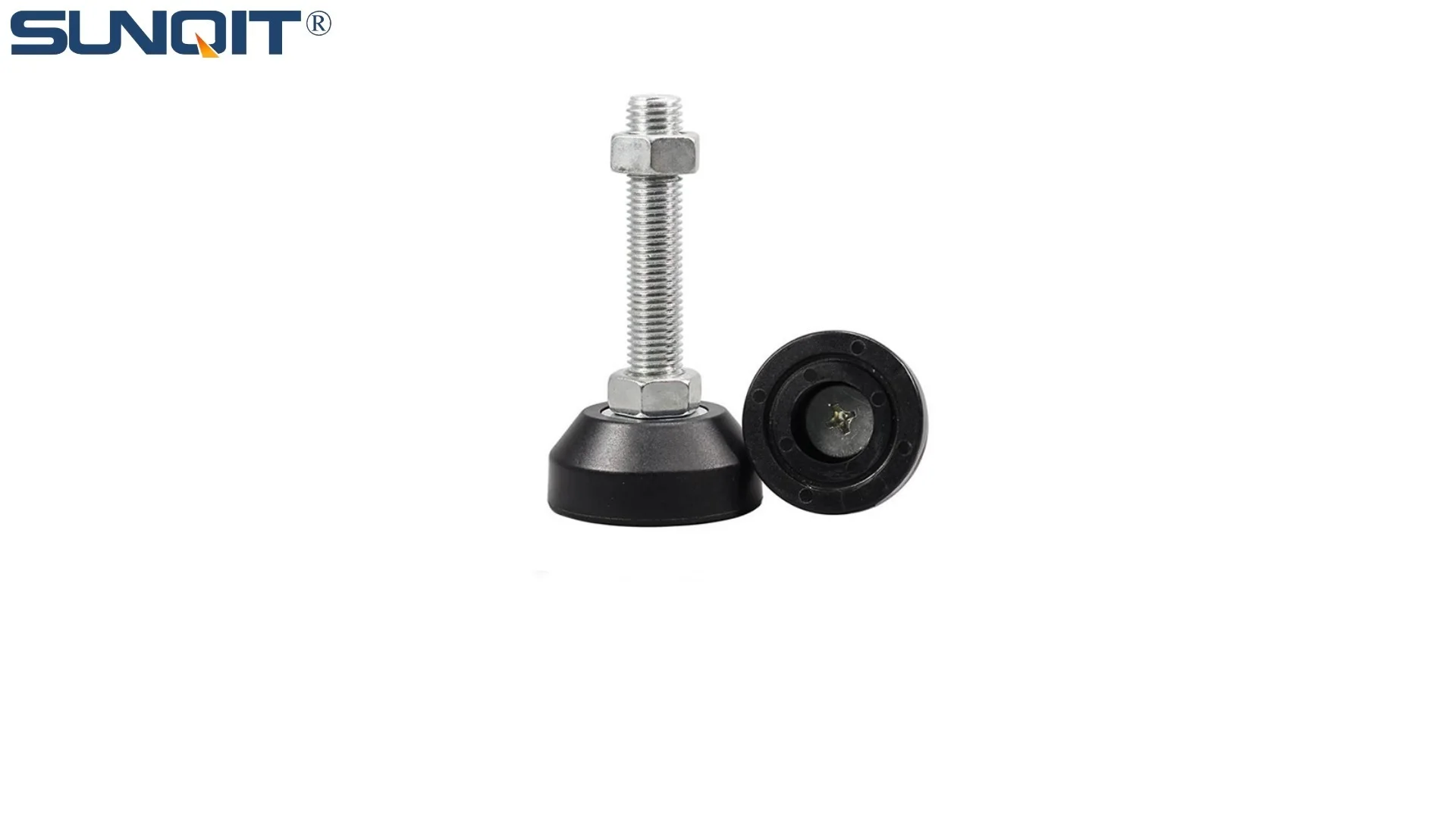
In the bustling world of manufacturing and production, where every second counts and precision is non-negotiable, there's a silent hero working behind the scenes: the components that keep operations steady. Today, we're shining a spotlight on one such unsung champion: the M10*56 rubber leveling feet, a small but mighty tool that plays a critical role in enhancing stability for lean pipe conveyors. Whether you're running a high-speed assembly line or managing a warehouse workflow, these unassuming feet could be the difference between smooth operations and costly disruptions. Let's dive into why they matter, how they work, and why they're an essential part of any lean solution.
The Backbone of Efficiency: Lean Pipe Conveyors in Production
Before we get to the stars of the show—those M10*56 rubber leveling feet—let's set the stage by talking about the systems they support: lean pipe conveyors. If you've ever walked through a manufacturing plant, distribution center, or even a busy workshop, you've likely seen these hardworking structures in action. Lean pipe conveyors are the arteries of modern production lines, designed to move materials, components, and finished products from point A to point B with minimal effort and maximum efficiency. They're a cornerstone of lean manufacturing, a philosophy centered on eliminating waste, streamlining workflows, and boosting productivity.
What makes lean pipe conveyors so special? For starters, they're incredibly versatile. Built using lightweight yet durable lean pipe (often paired with aluminum profile for added strength in heavier applications), these conveyors can be customized to fit almost any space or task. Need a straight line for bulk items? A curved section to navigate around machinery? A decline to let gravity do the work? Lean pipe conveyors can handle it all. They're also easy to assemble and reconfigure, which means as your production needs change, your conveyor system can change with you—no need for costly overhauls.
But here's the thing: even the most well-designed conveyor system is only as good as its foundation. If the conveyor isn't stable, everything falls apart—literally. Wobbly conveyors can cause products to shift, jostle, or even fall off mid-transit, leading to damaged goods, production delays, and frustrated workers. Over time, instability can also put extra strain on the conveyor's structure, leading to premature wear and tear on components like roller tracks or joints. That's where leveling feet come in—and why the M10*56 rubber leveling feet are such a game-changer.
The Stability Challenge: Why Floors (and Conveyors) Are Seldom Perfect
Let's be real: very few factory floors are perfectly level. Over time, concrete can settle, crack, or develop uneven patches from heavy machinery, foot traffic, or environmental factors like temperature changes. Even new facilities might have minor imperfections that go unnoticed until you install a sensitive piece of equipment—like a lean pipe conveyor. Add to that the fact that conveyors themselves can become unbalanced over time (due to loose bolts, worn components, or uneven loading), and you've got a recipe for instability.
Picture this: You're running a small electronics assembly line. Your lean pipe conveyor is supposed to smoothly transport circuit boards from the soldering station to the testing area. But lately, you've noticed that some boards are sliding off the edge as they move along the roller track. At first, you blame the workers for loading them unevenly, but the problem persists. Then you take a closer look and realize the conveyor frame is slightly tilted to one side—probably because the floor under one of the support legs has a small dip. That tiny incline is enough to throw off the entire flow, leading to wasted materials and extra time spent retrieving fallen boards.
Or consider a larger operation: a warehouse using a long lean pipe conveyor to move heavy turnover trolleys. If the conveyor isn't level, the trolleys might get stuck halfway, requiring workers to manually push them—defeating the purpose of the conveyor and increasing the risk of injury. In worst-case scenarios, persistent instability can even lead to the conveyor frame warping, which could compromise its structural integrity and safety.
The solution? Adjustable leveling feet. These small, unassuming components are designed to compensate for uneven floors, keep the conveyor stable, and ensure smooth, consistent operation. And among the many options on the market, the M10*56 rubber leveling feet stand out for their durability, versatility, and ability to tackle even the trickiest stability challenges.

Meet the M10*56 Rubber Leveling Feet: Small Component, Big Impact
So, what exactly are M10*56 rubber leveling feet? Let's break down the name first: "M10" refers to the metric thread size (10mm diameter), which is standard for many industrial applications, ensuring compatibility with most lean pipe conveyor frames and support legs. "56" indicates the length of the threaded rod (56mm), which gives you plenty of adjustability to compensate for larger floor unevenness. The "rubber" part is the key, though—it's the material that makes these feet so effective at enhancing stability.
At their core, these leveling feet consist of three main parts: a threaded metal rod (usually steel, for strength), a hexagonal or square base (to make adjustment easy with a wrench), and a rubber pad at the bottom. The rod screws into a threaded hole in the conveyor's support leg, and by turning the base, you can raise or lower that leg to level the conveyor. The rubber pad sits between the metal base and the floor, providing traction, absorbing vibrations, and protecting the floor from scratches or indentations.
Key Features That Make Them Stand Out
- Adjustable Height: With 56mm of threaded rod, you can raise or lower each foot by up to several centimeters, making it easy to level the conveyor even on significantly uneven floors. This adjustability also comes in handy if you need to align the conveyor with other equipment, like a lean pipe workbench, to create a seamless workflow.
- Rubber Traction Pad: The rubber pad is designed with a textured surface to grip the floor, preventing the conveyor from sliding or shifting during operation—even when handling heavy loads. Unlike plastic pads (which can become slippery when wet) or metal pads (which scratch floors and offer less traction), rubber provides a reliable, non-slip base.
- Vibration Dampening: Manufacturing environments are rarely quiet—machinery hums, tools clatter, and conveyors vibrate as they move materials. Over time, that vibration can loosen components and contribute to instability. The rubber pad acts as a shock absorber, reducing the amount of vibration transferred from the conveyor to the floor (and vice versa), helping to keep the system stable and extend its lifespan.
- Corrosion Resistance: Many M10*56 rubber leveling feet feature a zinc-plated or powder-coated metal rod and base, which protects against rust and corrosion—essential for use in damp or dusty factory environments. This means they'll hold up well over time, even with minimal maintenance.
- Easy Installation: You don't need to be a mechanical engineer to install these feet. Simply screw the threaded rod into the conveyor's support leg (most lean pipe and aluminum profile frames come with pre-drilled, threaded holes for this purpose), place the conveyor in position, and adjust each foot until the frame is level. A quick check with a spirit level, and you're good to go.
How They Enhance Stability: A Closer Look
Let's circle back to that electronics assembly line example. After noticing the conveyor was tilted, the maintenance team decides to replace the old plastic feet with M10*56 rubber leveling feet. They start by loosening the bolts holding the old feet in place, removing them, and screwing in the new rubber feet. Then, using a wrench, they adjust each foot: raising the ones on the low side of the floor dip and lowering the others until the conveyor frame is perfectly level (checked with a spirit level). The rubber pads grip the concrete floor, preventing any sliding, and the vibration from the nearby soldering machines is noticeably reduced.
The result? The circuit boards now glide smoothly along the roller track, no more slipping off. Workers spend less time retrieving fallen parts, and the conveyor runs more quietly. Over the next few weeks, the team also notices that the roller track joints seem tighter—probably because the reduced vibration has prevented them from loosening. That small upgrade to M10*56 rubber leveling feet has transformed a frustrating bottleneck into a seamless part of the workflow, embodying the lean solution mindset of eliminating waste and improving efficiency.

M10*56 Rubber Leveling Feet vs. Other Options: Why Rubber Wins
You might be wondering: Are there other types of leveling feet out there? Absolutely. So why choose M10*56 rubber ones over plastic, metal, or even other sizes? Let's compare to see why rubber stands out for lean pipe conveyors.
| Feature | M10*56 Rubber Leveling Feet | Plastic Leveling Feet | Metal (Steel/Aluminum) Leveling Feet |
|---|---|---|---|
| Traction/Grip | High—rubber pad grips floor, prevents sliding | Low—smooth plastic can slip on wet/dusty floors | Medium—metal can scratch floors, reducing grip over time |
| Vibration Absorption | Excellent—rubber dampens vibrations | Poor—rigid plastic transfers vibrations | Very Poor—metal conducts vibrations, amplifying noise |
| Floor Protection | Excellent—rubber prevents scratches/indentations | Good—softer than metal but can mark floors under heavy loads | Poor—metal can scratch, dent, or corrode floors |
| Adjustability | High—56mm thread allows significant height adjustment | Medium—often shorter threads; less range | High—similar thread length, but heavier and harder to adjust |
| Durability | High—rubber resists wear; metal parts corrosion-resistant | Low—plastic can crack/break under heavy loads or impact | High—metal is strong, but prone to rust without coating |
As the table shows, rubber leveling feet excel in the areas that matter most for lean pipe conveyors: grip, vibration dampening, and floor protection. While metal feet might be stronger in sheer load capacity, they lack the finesse needed for precision systems like conveyors, where stability and noise reduction are key. Plastic feet are cheaper but wear out quickly and offer little traction—hardly a long-term lean solution.
Size-wise, M10*56 hits the sweet spot for most lean pipe conveyors. The M10 thread is standard enough to fit most frames, while the 56mm length provides more adjustability than shorter options (like M10*30), making it suitable for both minor and moderate floor unevenness. For extremely heavy-duty conveyors, you might see larger threads (like M12), but for the majority of production and warehouse applications, M10*56 is more than sufficient.

Beyond Conveyors: Other Applications for M10*56 Rubber Leveling Feet
While we've focused on lean pipe conveyors, these leveling feet are versatile enough to enhance stability in other equipment too—making them a valuable addition to any manufacturing or warehouse setup. Here are a few examples:
Lean Pipe Workbenches
A stable workbench is essential for precision tasks like assembly, inspection, or packaging. M10*56 rubber leveling feet can keep your lean pipe workbench steady, even if the floor under it isn't perfect. This is especially important for tasks that require fine motor skills—like soldering tiny components or sorting small parts—where a wobbly bench could lead to mistakes or injuries.
Material Racks and Turnover Trolleys
Material racks (like the "material rack b (3 row and 3 floor)" from our keyword list) and turnover trolleys often hold heavy loads. Leveling feet ensure these structures don't tip over or shift, protecting both the materials and the workers moving them. For trolleys that stay in one place (like those used as temporary storage), the rubber feet prevent them from rolling accidentally on uneven floors.
Aluminum Profile Structures
Aluminum profile is widely used to build custom frames, shelving, and machinery guards. Adding M10*56 rubber leveling feet to these structures ensures they're stable and level, whether they're holding tools, parts, or sensitive equipment. The rubber also complements the aluminum's lightweight nature, providing a secure base without adding unnecessary weight.
Maintenance Tips: Keeping Your Leveling Feet (and Conveyors) Stable for Years
Like any component, M10*56 rubber leveling feet need a little care to perform their best. Here's how to keep them (and your conveyor) in top shape:
- Check Level Regularly: At least once a month, use a spirit level to check if the conveyor is still level. Floors can shift over time, and feet can loosen with vibration, so a quick adjustment might be needed.
- Clean the Rubber Pads: Dust, oil, and debris can build up on the rubber pads, reducing traction. Wipe them down with a damp cloth periodically to keep the surface clean and grippy.
- Inspect for Wear: Over time, the rubber pads can crack or wear thin, especially in high-traffic areas. If you notice the pad is damaged or no longer gripping well, replace the foot immediately—don't wait for instability to become a problem.
- Tighten Threads: Vibration can cause the threaded rod to loosen. Every few months, give each foot a gentle tighten with a wrench to ensure it stays securely attached to the conveyor leg.
- Protect from Chemicals: Avoid exposing the rubber pads to harsh chemicals (like strong solvents or acids), as these can degrade the rubber. If your facility uses such chemicals, consider placing a protective mat under the conveyor feet.
Conclusion: The Unsung Heroes of Lean Manufacturing
In the world of lean manufacturing, where every detail counts, M10*56 rubber leveling feet are the unsung heroes. They might be small, but they play a critical role in keeping your lean pipe conveyors, workbenches, and material racks stable, efficient, and safe. By compensating for uneven floors, absorbing vibrations, and providing reliable traction, these simple components help eliminate waste (in the form of damaged goods, delays, and rework) and keep your production line running smoothly.
Whether you're setting up a new lean pipe system or upgrading an existing one, don't overlook the importance of quality leveling feet. Investing in M10*56 rubber leveling feet is a small cost compared to the headaches (and expenses) that come with instability. After all, a stable foundation is the first step toward a truly efficient, lean solution.
So the next time you walk past a smoothly running conveyor or a steady workbench, take a moment to appreciate the little components holding it all together. Chances are, there's an M10*56 rubber leveling foot down there, quietly doing its job—and making lean manufacturing work.